Pennsylvania's Economy: Major Industries, Labor Market, and Growth Drivers
Pennsylvania’s economy ranks as one of the largest in the United States, anchored by a shift from legacy heavy industry to healthcare, biotechnology, energy, and advanced manufacturing. With an annual gross domestic product exceeding $...
Pennsylvania’s economy ranks as one of the largest in the United States, anchored by a shift from legacy heavy industry to healthcare, biotechnology, energy, and advanced manufacturing. With an annual gross domestic product exceeding $950 billion, the Commonwealth leverages major commercial centers in Philadelphia and Pittsburgh alongside powerful logistics and agricultural corridors.
Contents
Core Structural Drivers of Pennsylvania's Economy
Pennsylvania’s economic output is built upon a diverse baseline of industrial sectors. The Commonwealth has systematically moved away from an over-reliance on primary metals production toward a knowledge-driven and technology-enabled service framework.
- Healthcare & Life Sciences: Cell/Gene Therapy, Hospital Networks
- Energy & Resources: Marcellus Shale, Nuclear, Renewables
- Advanced Manufacturing: Precision Machining, Food Processing
- Tech & Higher Education: Robotics, AI Research, University R&D
- Logistics & Supply Chain: I-81/I-78 Corridors, PhilaPort Hub
Healthcare and Life Sciences
Healthcare and social assistance represent the single largest employment sector in Pennsylvania. Major integrated delivery networks, such as the University of Pittsburgh Medical Center (UPMC) and Penn Medicine, act as economic foundation institutions in their respective regions. UPMC stands as the largest non-governmental employer in the Commonwealth.
Beyond direct patient care, Pennsylvania—specifically the Greater Philadelphia region—has established itself as an international hub for biotechnology and pharmaceutical commercialization. Frequently referred to as "Cellicon Valley," the region houses pioneering researchers in cell therapy, gene editing, and immunology. Supported by institutions like the Wistar Institute and the Children's Hospital of Philadelphia (CHOP), startups and global pharmaceutical companies capitalize on federal grants from the National Institutes of Health (NIH) alongside private venture capital investments.
Energy and Natural Resources
Pennsylvania occupies a major position in North American energy production. Driven by the development of the Marcellus Shale formation, Pennsylvania ranks as the second-largest producer of natural gas in the United States, behind only Texas, according to data from the U.S. Energy Information Administration (EIA).
The state's energy portfolio extends across multiple primary sources:
- Natural Gas: High-yield extraction across northern and southwestern counties supplies domestic heating, industrial feedstock, and electric power generation.
- Nuclear Power: Facilities like Peach Bottom and Susquehanna provide high-capacity, zero-carbon baseload electricity to the regional PJM Interconnection grid.
- Renewable Transition: Solar and wind generation projects are expanding, backed by state incentives and federal clean energy mandates aimed at modernizing regional energy infrastructure.
Advanced Manufacturing and Logistics
While traditional steel manufacturing has consolidated, Pennsylvania maintains a dense manufacturing footprint focused on value-added industrial goods, chemical processing, plastics, and food manufacturing. Food and beverage production is a primary subsector, featuring corporate operations such as The Hershey Company, Utz Quality Foods, and Bimbo Bakeries USA.
Geographically, Pennsylvania sits within a single day's drive of roughly 60 percent of the U.S. and Canadian populations. This strategic proximity has catalyzed rapid growth in warehousing, e-commerce distribution, and freight transportation. The Lehigh Valley and the South Central Interstate 81/Interstate 78 corridor serve as central fulfillment hubs for national supply networks.
Technology, Robotics, and Higher Education
Pennsylvania’s research universities generate multi-billion-dollar annual expenditures, serving as primary catalysts for technology commercialization. Carnegie Mellon University (CMU) and the University of Pittsburgh have transformed Pittsburgh into an internationally recognized hub for artificial intelligence, computer vision, and autonomous vehicle technology.
Spun out of university research labs, spin-offs in robotics, space tech, and software development regularly attract major corporate investment. Across the state, higher education institutions—including the Pennsylvania State University system, Temple University, and Drexel University—supply specialized talent to rising technological sectors.
Economic Indicators and Labor Market Landscape
Pennsylvania maintains a total civil labor force exceeding 6.4 million workers, as tracked by the U.S. Bureau of Labor Statistics (BLS). The state's economic structure exhibits distinct demographic and geographic variance, influencing labor force participation and regional wage metrics.
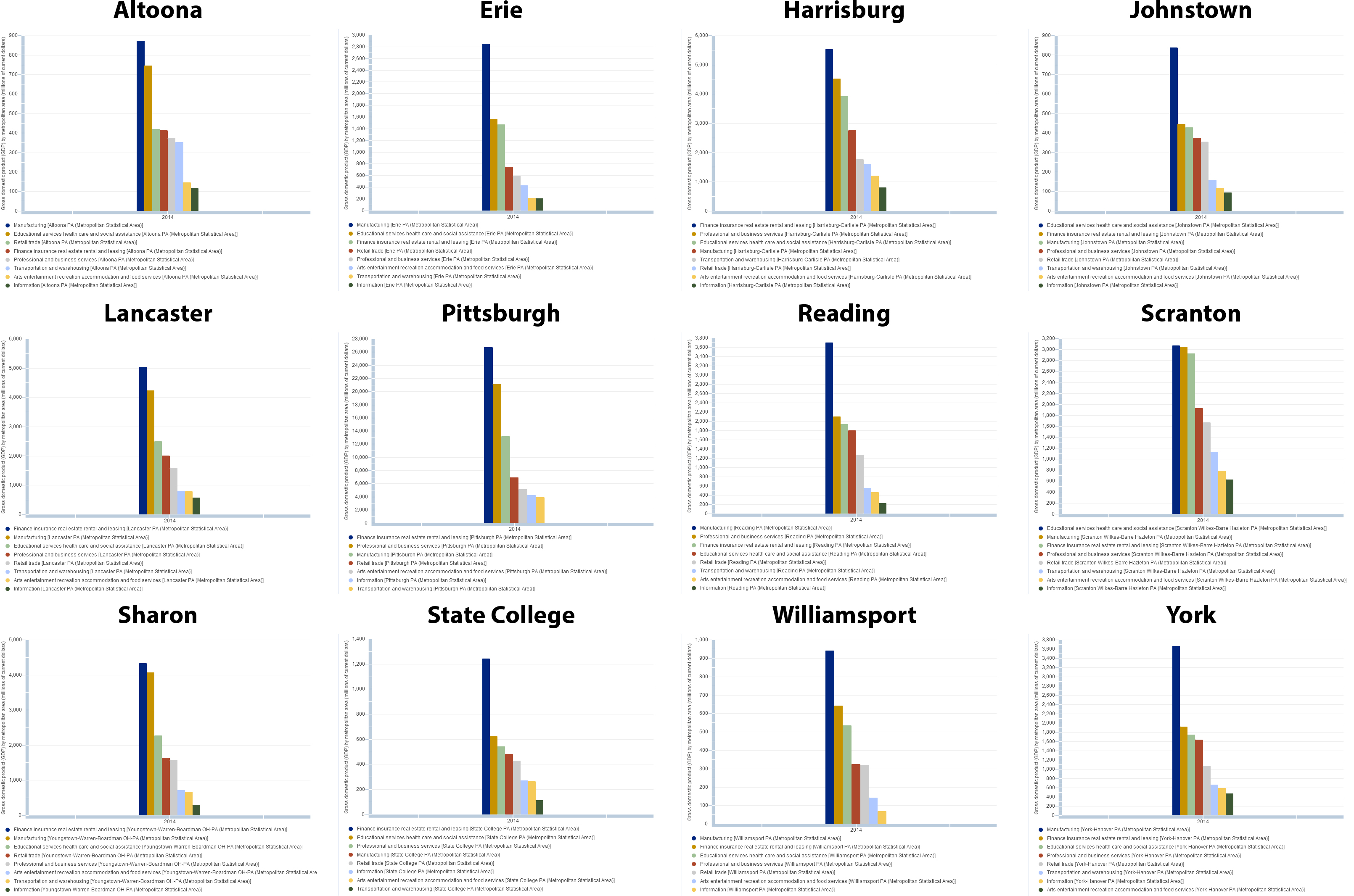
- Northwest / Erie: Precision Manufacturing
- Northeast / Lehigh: Logistics & E-Commerce
- Central / Harrisburg: Government & Agriculture
- Southwest / Pittsburgh: Robotics, Tech & Energy
- Southeast / Philadelphia: Life Sciences & Finance
Labor Force Dynamics
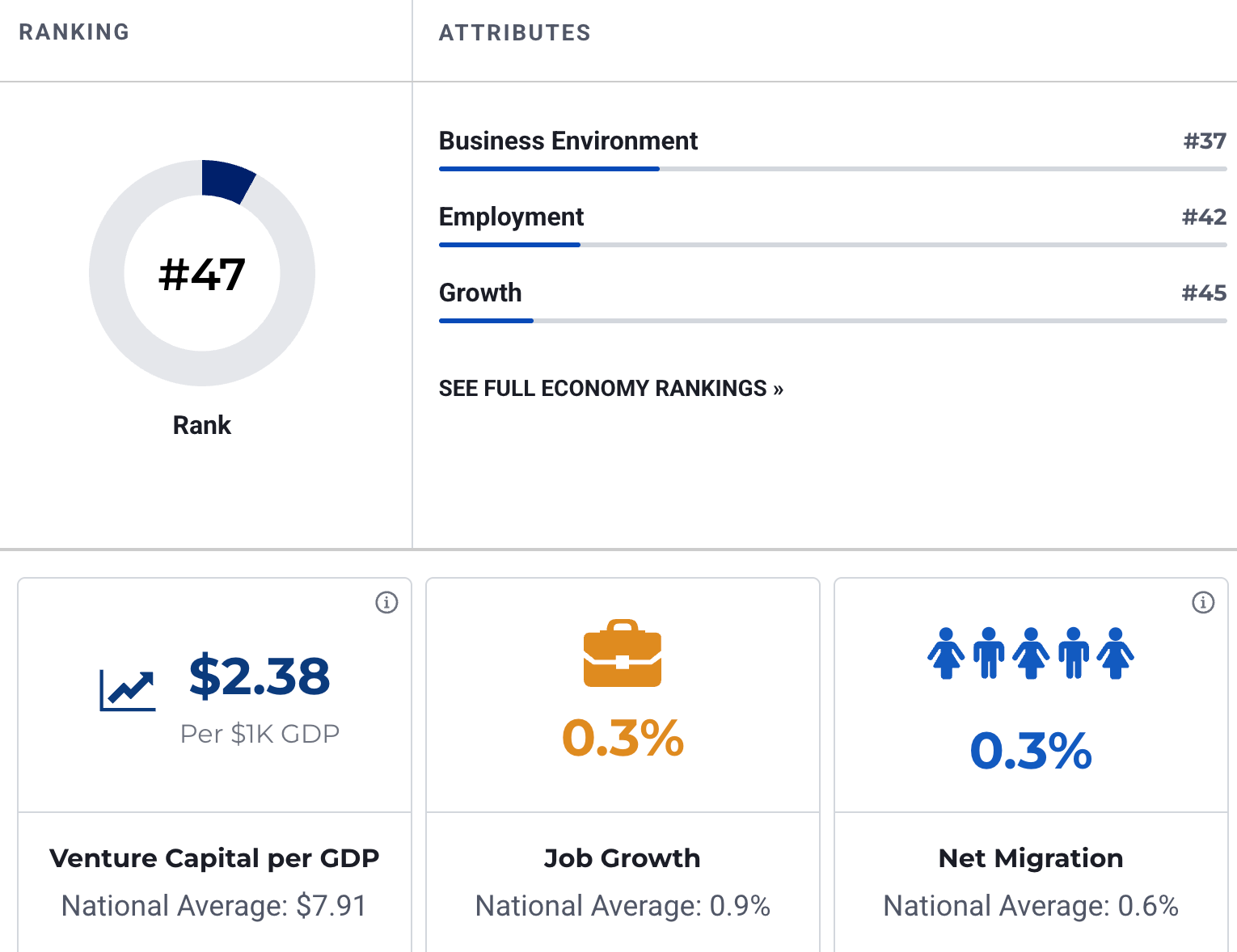
Statewide employment trends reflect steady labor market fundamentals alongside structural demographic headwinds. Like much of the Rust Belt and the Northeast, Pennsylvania faces an aging workforce. Population growth rates have remained relatively flat compared to rapid expansions in the Sun Belt states, creating localized labor tightness in technical trades, nursing, specialized manufacturing, and engineering fields.
Wage Distribution and Regional Income Disparities
Per capita income vary considerably across Pennsylvania’s 67 counties:
- Southeastern Pennsylvania: Counties such as Chester, Montgomery, and Bucks consistently report high median household income, supported by professional services, financial asset management, and executive corporate roles.
- Western Pennsylvania: Allegheny County delivers steady income growth driven by tech-sector expansion, healthcare management, and advanced services.
- Rural Regions: Northern Tier and Central Pennsylvania counties rely heavily on agriculture, natural resource extraction, tourism, and light manufacturing, where average wages align lower than the urban centers.
Regional Economic Engines Across the Commonwealth
Pennsylvania operates as a polycentric economy, where distinct geographic regions specialize in specific market sectors.
| Region | Primary Sector Focus | Key Drivers |
|---|---|---|
| Greater Philadelphia | Biotech, Finance, Logistics | PhilaPort, University R&D |
| Greater Pittsburgh | AI, Autonomous Systems, Energy | CMU, Pitt, UPMC Network |
| Lehigh Valley | Freight, Advanced Manufacturing | I-78/I-81 Hubs, B. Braun |
| South Central & Central | Agriculture, State Government | Hershey, State Capitol |
| Northwestern (Erie) | Plastics, Heavy Transportation | Maritime, Precision Mfg |
Greater Philadelphia Metropolitan Area
As the economic hub of the Commonwealth, Philadelphia relies heavily on professional services, life sciences, banking, and international maritime trade. The Port of Philadelphia (PhilaPort) processes significant volumes of imported perishable goods, automobiles, and bulk break-cargo. Financial asset managers, including Vanguard in nearby Malvern, alongside commercial lending institutions, solidify the region's position as a financial center.
Greater Pittsburgh Metropolitan Area
Following the decline of integrated steel manufacturing in the late 20th century, Pittsburgh executed a successful structural pivot. Today, its market focuses on high-tech engineering, medical technologies, autonomous platforms, and nuclear engineering through legacy defense and energy firms like Westinghouse. The region also remains the corporate base for major energy producers operating in the Appalachian Basin.
The Lehigh Valley and South Central Pennsylvania
Comprising Lehigh and Northampton counties, the Lehigh Valley is one of Pennsylvania's fastest-growing sub-regions. Transitioning from legacy operations like Bethlehem Steel, the region has attracted medical device manufacturers (e.g., B. Braun Medical), global industrial firms, and extensive logistics distribution facilities.
To the southwest, South Central Pennsylvania—anchored by Harrisburg, York, and Lancaster—combines state government operations with food production and precision tooling. Lancaster County stands as a national hub for agricultural production and processing.
Sectoral Output and Employment Breakdown
The table below provides a structural overview of key economic sectors in Pennsylvania based on macroeconomic data from the U.S. Bureau of Economic Analysis (BEA).
| Economic Sector | Relative GDP Contribution | Primary Regional Hubs | Key Drivers & Major Employers |
|---|---|---|---|
| Healthcare & Social Assistance | High (~16–18%) | Statewide; concentrated in Philadelphia & Pittsburgh | UPMC, Penn Medicine, Geisinger, Allegheny Health Network |
| Professional, Tech & Financial Services | High (~18–20%) | Philadelphia Metro, Pittsburgh Metro | Vanguard, PNC Financial Services, Susquehanna International Group (SIG), CMU Spin-offs |
| Manufacturing (Advanced & Traditional) | Moderate-High (~11–13%) | Lehigh Valley, Erie, South Central PA | Industrial equipment, specialty chemicals, Hershey, Utz, B. Braun |
| Energy & Utilities | Moderate (~5–7%) | Southwestern PA, Northern Tier, Susquehanna Valley | Marcellus Shale gas extraction, EQT Corporation, Constellation Energy, PPL Electric |
| Transportation, Warehousing & Logistics | Moderate (~6–8%) | Lehigh Valley, I-81 Corridor, PhilaPort Hub | Amazon fulfillment networks, FedEx hubs, PhilaPort maritime services, Norfolk Southern |
| Agriculture & Food Processing | Moderate (~3–5%) | Lancaster County, Chester County, South Central PA | Dairy operations, commercial mushroom farming, specialized crop yields, food packaging |
Tax Policy and Business Climate in Pennsylvania
The tax structure and regulatory environment in Pennsylvania significantly impact business operations, capital deployment, and labor force recruitment.
- Personal Income Tax: Flat 3.07% (One of the nation's lowest)
- State Sales Tax: 6.00% (Philly: +2.0%, Allegheny: +1.0%)
- Corporate Net Income: Phasing down to 4.99% by 2031
Corporate Net Income Tax (CNIT) Phased Reduction
Pennsylvania historically maintained one of the highest statutory Corporate Net Income Tax (CNIT) rates in the nation at 9.99%. However, major tax reform legislation enacted under Act 53 of 2022 established a multi-year schedule to reduce the CNIT rate by 0.5 percentage points annually until reaching a target flat rate of 4.99% by 2031.
According to official publications from the Pennsylvania Department of Revenue, this policy trajectory aims to enhance the Commonwealth’s competitive baseline against neighboring mid-Atlantic and Rust Belt states.
Personal Income Tax Structure
Pennsylvania levies a flat Personal Income Tax (PIT) rate of 3.07%, which stands among the lowest flat state income tax rates in the nation. The flat rate applies uniformly across taxable income categories, providing predictability for small business owners, sole proprietorships, and S-corporations operating within the state.
Local Taxes and Special Tax Zones
Business owners operating in Pennsylvania must navigate a multi-layered local tax system:
- Local Earned Income Tax (EIT): Municipalities and school districts frequently assess local income taxes on residents and workers.
- Philadelphia Wage Tax: The City of Philadelphia assesses a distinct wage tax on both residents and non-residents working within municipal limits.
- Keystone Opportunity Zones (KOZ): The state offers tax-free zones designed to revitalize distressed property sites by waiving specific state and local taxes for qualifying companies.
Detailed incentive structures and enterprise zone maps are maintained by the Pennsylvania Department of Community and Economic Development (DCED).
Challenges and Long-Term Economic Outlook
While Pennsylvania’s diversified economic model offers stability against single-sector down cycles, structural hurdles remain.
- Demographics: Workforce aging & slow net population growth
- Infrastructure: Aging bridge networks, roads & locks/dams
- Energy Transition: Balancing gas production with carbon targets
- Tax Reform Dates: Accelerating local business competitiveness
Demographic Headwinds and Talent Retention
Pennsylvania's median age is higher than the national average. Mitigating out-migration of university graduates to higher-growth sunbelt metro areas is critical. State initiatives increasingly focus on retaining STEM talent from top-tier research universities through targeted venture funds and regional incubators.
Infrastructure Modernization
As a major freight hub, Pennsylvania requires capital investment to maintain its extensive network of highways, bridges, rail lines, and river locks. Funding mechanisms to support highway safety, bridge repairs, and public transit systems (such as SEPTA in Philadelphia and PRT in Pittsburgh) remain primary legislative topics in Harrisburg.
Energy Transition Balancing Act
Policymakers face the complex task of balancing economic revenues from natural gas extraction with aggressive decarbonization targets. Transitioning legacy industrial infrastructure to accommodate hydrogen hubs, carbon capture systems, and utility-scale solar power requires clear regulatory direction and grid integration strategies.
Actionable Recommendations for Investors and Businesses
Organizations evaluating expansion, capital investments, or commercial entry into Pennsylvania should take the following strategic steps:
- Engage Regional Economic Development Corporations (EDCs): Coordinate early with regional development entities such as the Philadelphia Regional Port Authority, the Allegheny Conference on Community Development, or the Lehigh Valley Economic Development Corporation to leverage local tax credits and site selection support.
- Evaluate State Business Incentives: Utilize programs administered by the Pennsylvania DCED, including the PA First Program, R&D Tax Credits, and Keystone Opportunity Expansion Zones (KOEZ) to optimize capital allocation.
- Analyze Local Tax Liability: Factor local EIT rates, municipal property taxes, and regional transit taxes into total cost-of-operation models, particularly when choosing between suburban business parks and urban cores.
- Partner with Higher Education Systems: Build direct workforce pipelines and cooperative research ventures with regional universities to access qualified engineering, computer science, and clinical talent pools.
Frequently Asked Questions
What are the main drivers of Pennsylvania's economy?
Pennsylvania's economy is driven primarily by healthcare and social assistance, professional and financial services, advanced manufacturing, life sciences, energy production (especially Marcellus Shale natural gas), and regional logistics networks.
How does Pennsylvania rank in natural gas production?
Pennsylvania is the second-largest natural gas-producing state in the United States behind Texas. Natural gas extraction from the Marcellus Shale formation supports local jobs, manufacturing feedstocks, and electricity generation throughout the region.
What is Pennsylvania's flat personal income tax rate?
Pennsylvania maintains a flat Personal Income Tax (PIT) rate of 3.07%. This flat rate applies uniformly to individuals and pass-through business entities operating across the Commonwealth.
How is Pennsylvania's Corporate Net Income Tax (CNIT) changing?
Under legislation passed in Act 53 of 2022, Pennsylvania is systematically reducing its Corporate Net Income Tax (CNIT) rate. The rate decreases by 0.5 percentage points each year until reaching a target rate of 4.99% by 2031.
Why is logistics a major industry in Pennsylvania?
Pennsylvania’s geographical position puts it within a single day's drive of roughly 60 percent of the U.S. and Canadian populations. Dense highway corridors (including Interstate 81 and Interstate 78) and port access via PhilaPort make the state a critical distribution hub for East Coast commerce.
Image Gallery