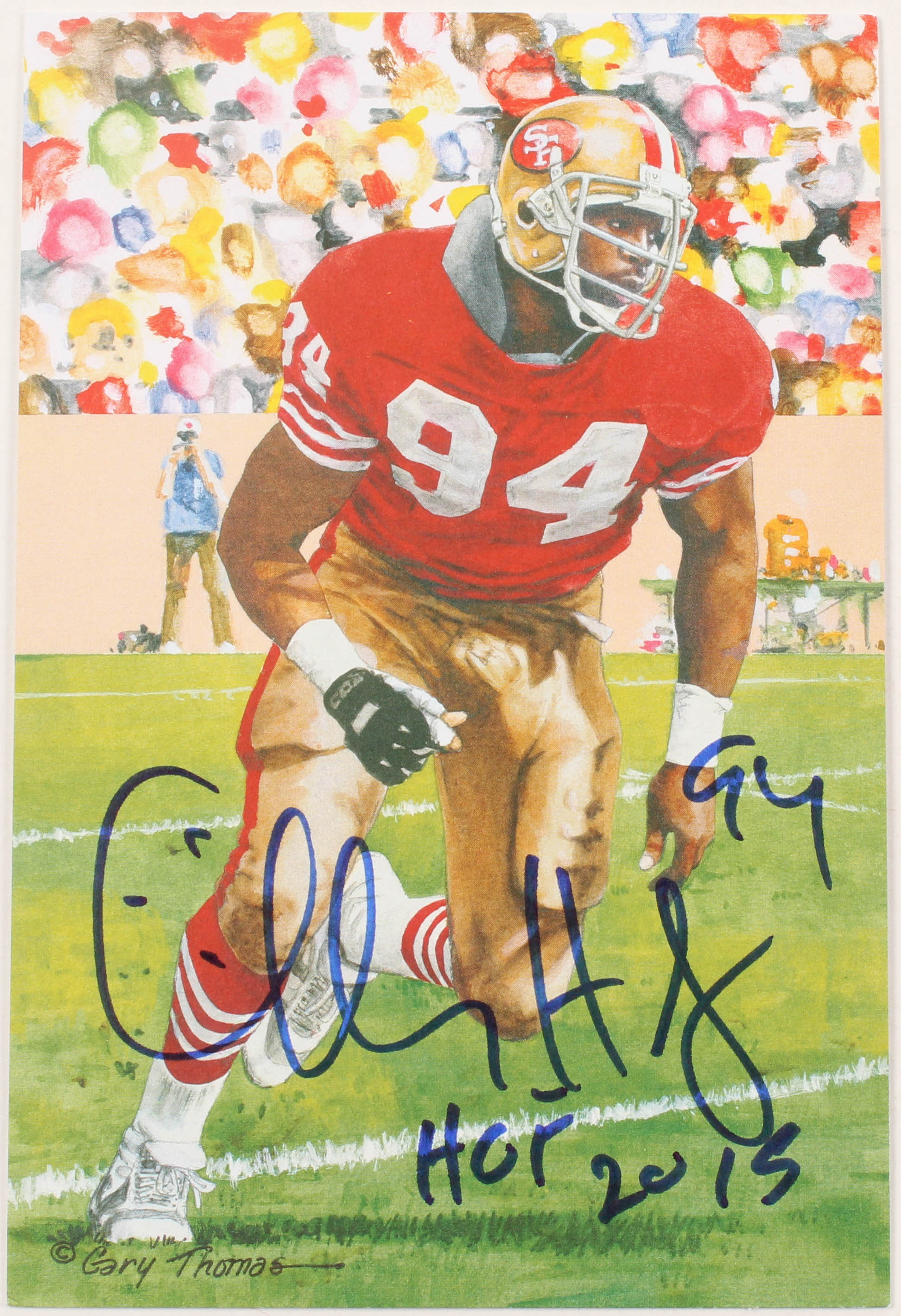
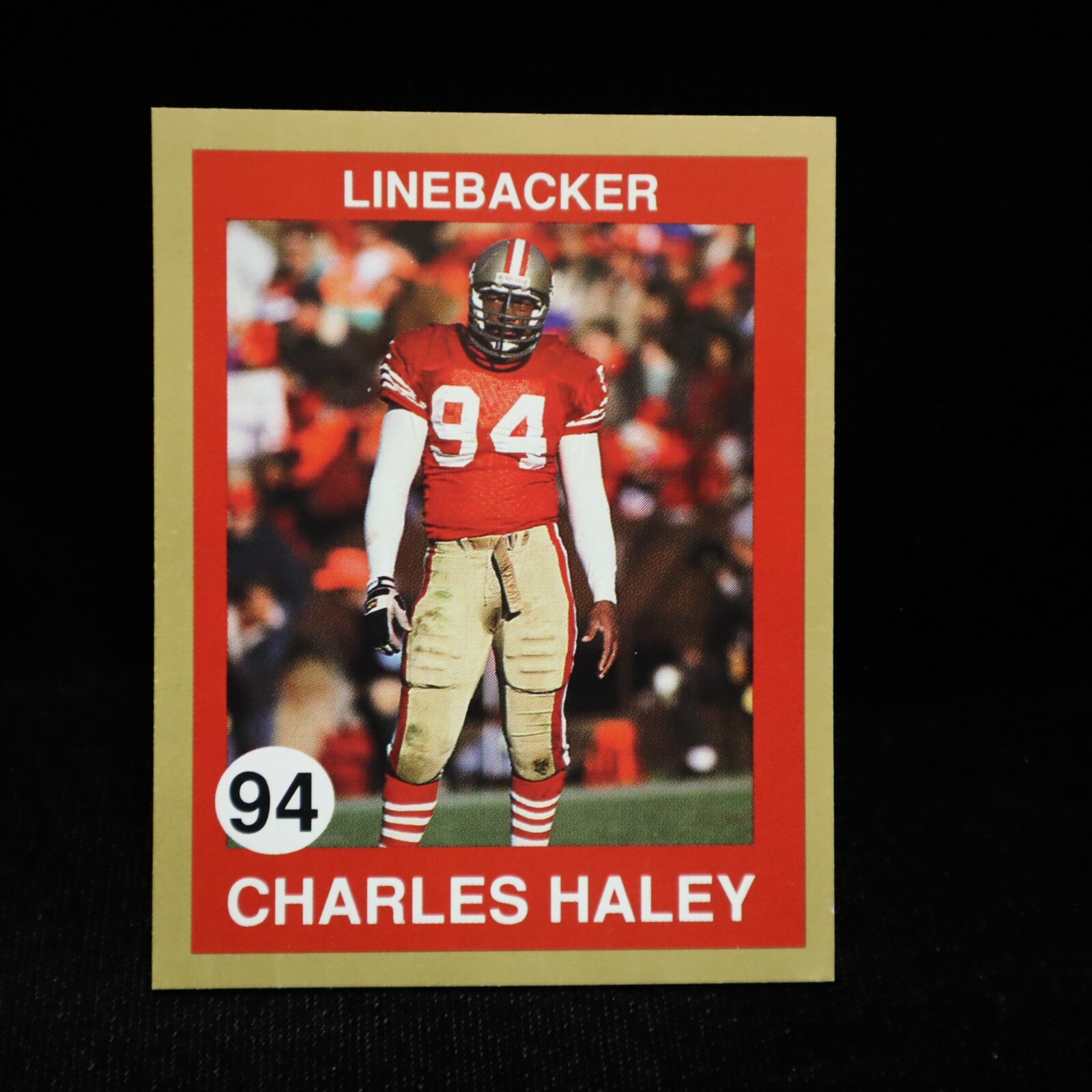
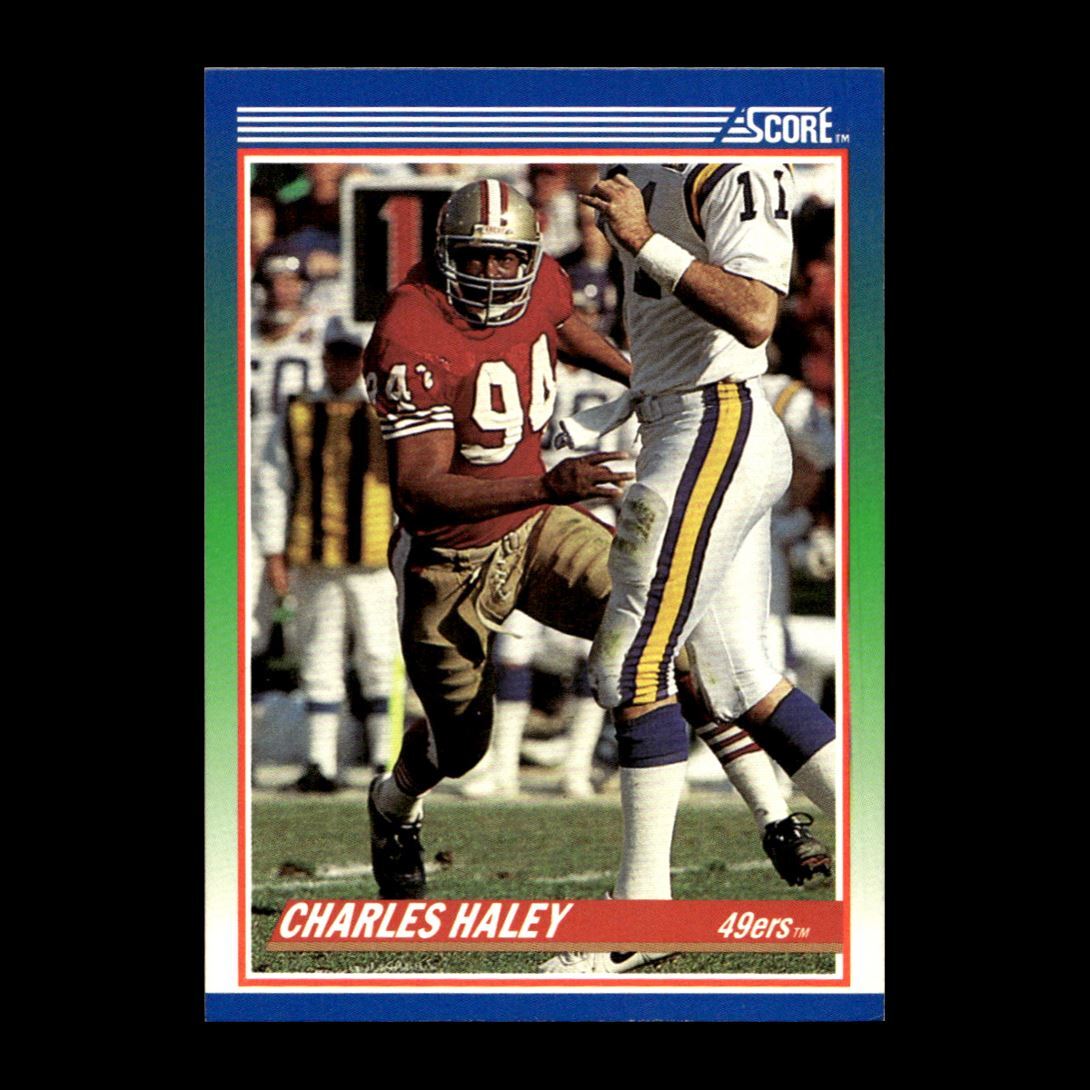
Charles Haley’s 49ers Legacy: The Architect of San Francisco’s Defensive Dominance
Charles Haley’s legacy with the San Francisco 49ers is defined by his role as the pioneering "Elephant" pass rusher who bridged the gap between the team's early 1980s finesse and their late 80s defensive ferocity. A five-time Super Bow...
Charles Haley’s legacy with the San Francisco 49ers is defined by his role as the pioneering "Elephant" pass rusher who bridged the gap between the team's early 1980s finesse and their late 80s defensive ferocity. A five-time Super Bowl champion, Haley provided the critical edge-rushing presence that secured two Lombardi Trophies for San Francisco.
Contents
Charles Haley remains one of the most complex and impactful figures in the history of the San Francisco 49ers. Often overshadowed by the offensive brilliance of Joe Montana, Jerry Rice, and Bill Walsh, Haley was the foundational piece of a defense that allowed the West Coast Offense to flourish. As we look back from the vantage point of 2026, Haley’s tenure in San Francisco (1986–1991, 1998–1999) represents a masterclass in tactical evolution and pure athletic dominance. He was the first player to win five Super Bowl rings, and while three of those came with the Dallas Cowboys, his transformation from a fourth-round draft pick into a Hall of Fame terror began in the red and gold.
The Genesis of the "Elephant" Position
When the 49ers drafted Charles Haley out of James Madison University in the fourth round of the 1986 NFL Draft, they weren't just picking a player; they were searching for a solution. Under Bill Walsh and defensive coordinator George Seifert, the 49ers were looking for a way to maximize pass-rush pressure without sacrificing coverage flexibility.
The result was the creation of the "Elephant" position. This role required a unique athlete who possessed the size of a defensive end but the speed and lateral agility of an outside linebacker. Haley was the prototype. Standing 6'5" and weighing approximately 250 pounds, he was too fast for the era’s lumbering offensive tackles and too powerful for running backs to chip effectively.
Haley’s impact was immediate. In his rookie season in 1986, he recorded 12 sacks, a staggering number for a newcomer. His ability to line up in a two-point stance (standing) or a three-point stance (hand on the ground) created schematic nightmares for opposing coordinators. This versatility allowed the 49ers to disguise blitzes and maintain a "speed" defense that complemented their high-scoring offense.
Statistical Dominance and Tactical Impact
Haley’s first stint with the 49ers (1986–1991) was a period of statistical brilliance that forced the NFL to rethink edge protection. He led the team in sacks in five of those six seasons. His career-high of 16 sacks in 1990 remains one of the greatest single-season defensive performances in franchise history.
Beyond the raw numbers, Haley’s presence altered the geometry of the field. By demanding constant double-teams, he freed up interior linemen like Pierce Holt and Michael Carter to collapse the pocket from the inside. This "compounded pressure" was a hallmark of the 49ers' defenses that won Super Bowl XXIII and Super Bowl XXIV.
Key Statistics: Haley’s First 49ers Stint (1986–1991)
| Season | Games | Sacks | Forced Fumbles | Primary Achievement |
|---|---|---|---|---|
| 1986 | 16 | 12.0 | 1 | All-Rookie Team |
| 1987 | 12 | 6.5 | 1 | Divisional Leader |
| 1988 | 16 | 11.5 | 3 | Super Bowl XXIII Champion |
| 1989 | 15 | 10.5 | 1 | Super Bowl XXIV Champion |
| 1990 | 16 | 16.0 | 3 | First-Team All-Pro / Pro Bowl |
| 1991 | 16 | 7.0 | 2 | Pro Bowl |
The Super Bowl Pedigree: 1988 and 1989
While Joe Montana’s 92-yard drive against the Cincinnati Bengals in Super Bowl XXIII is the stuff of legend, that victory was only possible because of a defense that held a high-powered Bengals offense to just 16 points. Haley was the heartbeat of that unit, consistently flushing Boomer Esiason out of the pocket and disrupting the timing of the Bengals' passing game.
The following year, in Super Bowl XXIV against the Denver Broncos, Haley and the 49ers defense delivered arguably the most dominant performance in championship history. In a 55-10 rout, Haley contributed to a defensive effort that limited John Elway to a 19.4 passer rating. This back-to-back success cemented Haley as the premier pass rusher of his generation and established the 49ers as a true dynasty.
The Complexity of the Locker Room: Personality and Dynamics
It is impossible to discuss Charles Haley’s 49ers legacy without addressing the volatility that eventually led to his departure. Haley was known for a mercurial temperament that often brought him into conflict with teammates and coaches. He famously clashed with quarterback Steve Young and head coach George Seifert.
In later years, Haley spoke openly about his struggles with bipolar disorder, providing context to the behavioral outbursts that occurred during his playing days. In the late 80s and early 90s, however, the NFL had few resources for mental health, and the tension in the 49ers' locker room reached a breaking point after the 1991 season.
Despite the friction, many of his teammates from that era, including Ronnie Lott and Jerry Rice, have maintained that Haley’s competitive fire was a primary reason the team stayed sharp. He pushed everyone around him to a level of intensity that bordered on the uncomfortable, but the results on the field were undeniable.
The 1992 Trade: A Turning Point for Two Franchises
In August 1992, in one of the most consequential trades in NFL history, the 49ers sent Charles Haley to the Dallas Cowboys in exchange for a second-round and a third-round draft pick. At the time, George Seifert felt that the team needed to prioritize locker room harmony over Haley’s production.
The trade backfired spectacularly for San Francisco. Haley became the missing piece for a young Cowboys team, helping them win three Super Bowls in four years (1992, 1993, and 1995). For the 49ers, the trade meant they had to face their own greatest defensive weapon in the NFC Championship games of the early 90s. Many analysts argue that had the 49ers kept Haley, the balance of power in the NFC would have remained in the Bay Area, potentially giving the 49ers several more titles during the Steve Young era.
The Return and Final Act (1998–1999)
In 1998, after a brief retirement following his years in Dallas, Haley made a surprising return to the 49ers. While he was no longer the explosive athlete of his youth, his veteran presence and situational pass-rushing skills were invaluable to a 49ers team transitioning into a new era.
His second stint was less about the stats—recording 3 sacks in 1999—and more about closure. By returning to the team that drafted him, Haley was able to mend fences with the organization. This period solidified his status as a "49er for life" in the eyes of the fans, despite his legendary success with a rival.
Hall of Fame Recognition and Historical Standing
Charles Haley was inducted into the Pro Football Hall of Fame in 2015. His induction was a long-awaited acknowledgment of a player whose impact couldn't be measured by sacks alone. As of 2026, he remains a benchmark for the "hybrid" defender.
When comparing Haley to other 49ers defensive greats, he occupies a unique tier. While Ronnie Lott was the soul and Patrick Willis was the technician, Haley was the disruptor. Modern 49ers stars like Nick Bosa often draw comparisons to Haley in terms of their ability to take over a game from the edge, but Haley’s ability to do so across two different positions (LB and DE) remains a distinct achievement.
Comparative Pass Rushers in 49ers History
- Fred Dean: The 1981 acquisition who proved a pass rusher could change a season. Haley took Dean’s blueprint and expanded it into a full-time, multi-positional role.
- Bryant Young: While Young was an interior force, his career overlapped with Haley’s return. They represent two different ways of dominating the line of scrimmage.
- Nick Bosa: The modern equivalent of Haley’s efficiency. Bosa utilizes modern sports science, whereas Haley relied on raw violence and refined hand-fighting techniques.
Frequently Asked Questions
How many Super Bowls did Charles Haley win with the 49ers?
Charles Haley won two Super Bowls with the San Francisco 49ers: Super Bowl XXIII (1988 season) and Super Bowl XXIV (1989 season). He later won three more with the Dallas Cowboys, making him the first player in NFL history to win five rings.
What position did Charles Haley play for the 49ers?
Haley played a specialized role known as the "Elephant." This was a hybrid position that combined the responsibilities of an outside linebacker in a 3-4 defense and a defensive end in a 4-3 defense. He was primarily used as an edge rusher tasked with disrupting the quarterback.
Why did the 49ers trade Charles Haley to the Cowboys?
The trade was primarily due to personality conflicts and locker room tension. Haley had significant friction with head coach George Seifert and quarterback Steve Young. The 49ers management decided that the disruption to team chemistry outweighed his on-field production, a decision that remains controversial among fans today.
Is Charles Haley in the 49ers Hall of Fame?
Yes, Charles Haley is a member of the Edward J. DeBartolo Sr. 49ers Hall of Fame. He was also inducted into the Pro Football Hall of Fame in Canton, Ohio, in 2015.
What was Charles Haley's sack total with the 49ers?
During his two stints with San Francisco, Haley recorded 66.5 official sacks. This total does not include his 34 sacks with the Cowboys or his production before the sack became an official stat in 1982 (though his entire career post-dated that change).
Final Recommendation for 49ers Historians
To truly appreciate Charles Haley's 49ers legacy, one must look beyond the highlight reels of sacks. Study the game film of the 1988–1990 seasons to see how his alignment forced offenses to change their protection schemes. For those looking to dive deeper into his personal journey and the challenges he overcame, his autobiography, Fear No Evil, provides essential context for his behavior and his ultimate redemption within the NFL community. Haley wasn't just a player; he was the tactical shift that allowed a dynasty to defend its crown.
Image Gallery