How to Find a Bank Account With No Fees
To find a bank account with no fees, prioritize online-only banks and local credit unions, which typically offer "no-strings-attached" checking and savings. Research the institution’s fee schedule to confirm the absence of monthly main...
To find a bank account with no fees, prioritize online-only banks and local credit unions, which typically offer "no-strings-attached" checking and savings. Research the institution’s fee schedule to confirm the absence of monthly maintenance, overdraft, and ATM fees. Verification through the "Truth in Savings" disclosure ensures no hidden requirements exist.
Contents
Understanding the Landscape of Banking Fees in 2026
The banking industry has undergone a significant transformation leading into 2026. Regulatory pressure on "junk fees" and fierce competition from fintech startups have forced many traditional institutions to re-evaluate their revenue models. However, despite these shifts, many "big-box" banks still rely on monthly maintenance charges and penalty fees to pad their bottom lines. Finding a truly no-fee account requires a systematic approach to identifying where these costs hide and which institutions have abandoned them entirely.
A "no-fee" bank account is generally defined as an account that does not charge a monthly maintenance fee, regardless of the account balance or activity level. In the past, "free" banking often came with significant caveats, such as a minimum of ten debit card transactions per month or a high minimum daily balance. In the current market, however, the standard for a no-fee account has evolved to mean "no maintenance fees and no minimum balance requirements."
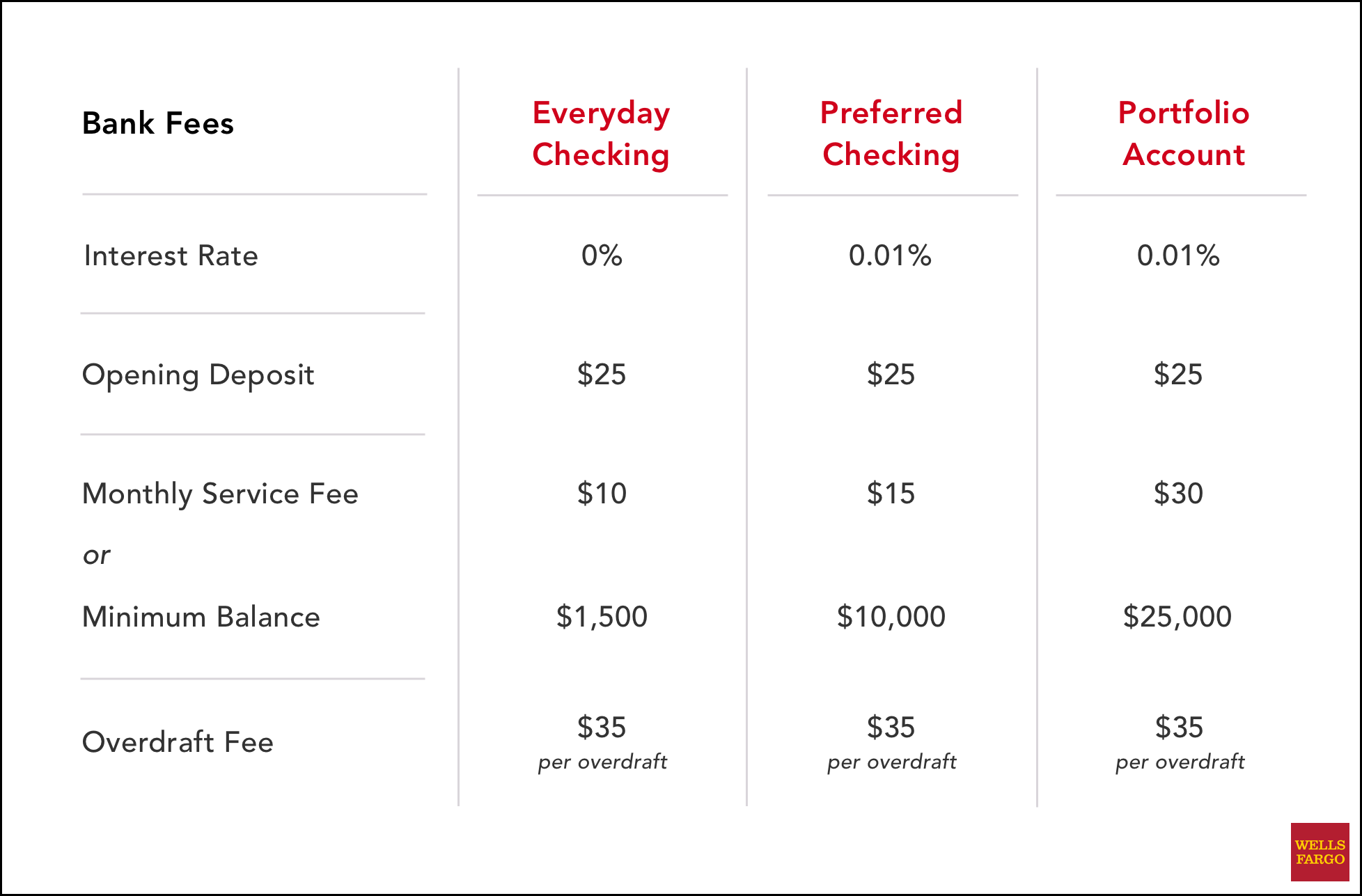
Understanding the different types of fees is the first step in avoiding them. Monthly maintenance fees are the most common, often ranging from $5 to $25. Beyond these, consumers must watch for out-of-network ATM fees, overdraft and non-sufficient funds (NSF) fees, wire transfer fees, and even paper statement fees. While it is rare to find an account that is free of every possible service charge (such as international outgoing wires), it is entirely possible to find an account where daily usage costs nothing.
The Primary Categories of Fee-Free Bank Accounts
When searching for an account that won't drain your balance, you should focus your search on three primary types of institutions. Each has a different business model that allows them to offer lower costs to the consumer.
Online-Only Banks and Neo-Banks
Online banks are the leaders in the no-fee movement. Because they do not maintain expensive physical branch networks, their overhead is significantly lower than that of national legacy banks. They pass these savings on to customers in the form of zero monthly fees and higher interest rates on savings.
In 2026, major online players continue to dominate this space by offering robust mobile apps that handle everything from check deposits to integrated budgeting tools. These banks typically offer a massive network of fee-free ATMs through partnerships with networks like Allpoint or MoneyPass. When evaluating an online bank, ensure they are FDIC-insured, which guarantees your deposits up to $250,000.
Credit Unions
Credit unions are member-owned, not-for-profit cooperatives. Because their goal is to serve their members rather than generate profit for shareholders, they are much more likely to offer truly free checking accounts. Many credit unions offer "Basic" or "Essential" checking accounts that have no monthly fees and very low or no minimum balance requirements.
While credit unions often have limited physical footprints, most participate in "shared branching" networks and CO-OP ATM networks. This allows members to use thousands of other credit union branches and tens of thousands of ATMs nationwide without incurring fees. To join, you usually need to live in a certain area, work for a specific employer, or belong to an associated organization.
"No-Fee" Tiers at Traditional National Banks
While large national banks are notorious for fees, many have introduced specific account tiers designed to compete with fintechs. These are often digital-first accounts that do not allow for paper checks or in-person teller transactions without a fee, but they waive the monthly maintenance charge and overdraft fees. These accounts are often marketed as "SafeBalance" or "Essential" accounts and are compliant with "BankOn" standards, which aim to provide low-cost banking to everyone.
Step-by-Step Guide: How to Find and Verify a No-Fee Account
Finding the right account involves more than just reading a landing page. Marketing language can be deceptive, so following a standardized verification process is essential.
1. Identify Your Must-Have Features
Before searching, decide what you need. Do you require a physical branch for cash deposits? If so, focus on local credit unions. If you do everything via smartphone, an online bank is likely better. List your requirements for ATM access, mobile check deposit limits, and person-to-person (P2P) payment integrations like Zelle.
2. Use Comparison Aggregators
Utilize financial comparison websites to filter banks by "No Monthly Fee." These platforms allow you to compare multiple banks side-by-side. Look specifically for the "Fine Print" or "Account Details" section on these sites, as they often summarize the requirements needed to keep the account free.
3. Locate the "Truth in Savings" Disclosure
This is the most critical technical step. Every bank in the United States is required by law to provide a Truth in Savings Act (TISA) disclosure, often found in a "Fee Schedule" or "Account Agreement" PDF at the bottom of their website.
Search this document for the following keywords:
- Monthly Maintenance Fee: Look for "$0" or "None."
- Minimum Balance to Avoid Fee: Ensure this is also "$0."
- Overdraft/NSF Fee: See if the bank has eliminated these or if they offer a "no-overdraft" setting.
- ATM Fees: Check if they charge for out-of-network use and if they reimburse fees charged by other operators.
4. Verify the ATM Network
A "no-fee" account can quickly become expensive if you have to pay $3.00 to $5.00 every time you withdraw cash. Verify that the bank belongs to a large network (like Allpoint, MoneyPass, or SUM). Most online banks provide an "ATM Locator" tool on their website; use it to see if there are convenient machines near your home and workplace.
Common "Hidden" Fees to Watch Out For
Even if an account has no monthly maintenance fee, other charges can accrue based on specific behaviors. As of 2026, savvy consumers should be aware of these potential costs:
- Inactivity Fees: Some banks charge a fee if you do not use your account for a period of six to twelve months. This is common with "secondary" accounts that people forget they own.
- Paper Statement Fees: Many banks now charge $2.00 to $5.00 per month to mail you a physical statement. Opting into "e-statements" or "paperless billing" is usually a requirement for keeping the account fee-free.
- Out-of-Network ATM Fees: While the bank itself may not charge you, the owner of the ATM will. Look for banks that offer "ATM Fee Reimbursements," where they credit your account back for those external charges.
- Foreign Transaction Fees: If you travel internationally or buy from overseas websites, some banks charge 1% to 3% on every transaction. Many top-tier no-fee online banks have eliminated this.
- Official Check or Money Order Fees: If you frequently need cashier's checks for rent or large purchases, check if these are included or if they carry a heavy per-item cost.
Comparison of Common No-Fee Banking Structures
| Account Type | Monthly Fee | Min. Balance | ATM Access | Best For |
|---|---|---|---|---|
| Online Direct Bank | $0 | $0 | Large National Networks | High interest, low overhead users |
| Local Credit Union | $0 | $5 - $25 (Share) | CO-OP / Shared Branching | In-person service & local community |
| Big Bank "Basic" | $0 (often restricted) | $0 | Large Proprietary Network | Users who only need digital tools |
| Fintech Spending Account | $0 | $0 | Partner Networks | Early direct deposit & app features |
The Impact of Direct Deposit and Balance Minimums
While many accounts are now "truly free," some institutions still use a "waivable fee" model. In this scenario, the bank technically charges a monthly fee (e.g., $12), but they will subtract it if you meet certain criteria.
The most common waiver is the Direct Deposit Requirement. Typically, if you have a total of $250 to $500 in qualifying direct deposits (like a paycheck or Social Security) hitting the account each month, the fee is waived. Another common waiver is the Minimum Daily Balance, where the fee is waived if you keep at least $1,500 in the account at all times.
For most consumers in 2026, it is better to find an account that is $0 by default. Relying on waivers is risky; if you lose your job or have an emergency that drains your balance, the bank will start charging you fees at the exact moment you can least afford them.
Frequently Asked Questions
Can I find a no-fee account if I have bad credit?
Yes. Many banks offer "Second Chance" or "Basic" accounts that do not use ChexSystems or traditional credit reports for approval. These accounts are specifically designed to be no-fee and often lack overdraft capabilities to prevent the user from falling into debt. Look for accounts with the "BankOn" certification.
Do no-fee accounts pay interest?
Online-only no-fee accounts often pay significantly higher interest (Annual Percentage Yield or APY) than traditional banks. While a big bank might pay 0.01%, an online no-fee account in 2026 might pay 4.00% or more on savings. Always check if the "no-fee" checking account requires a linked "no-fee" savings account to get the best rates.
Is my money safe in a no-fee online bank?
As long as the institution is insured by the Federal Deposit Insurance Corporation (FDIC) or the National Credit Union Administration (NCUA), your money is protected up to $250,000 per depositor, per ownership category. Always verify the insurance status on the official FDIC "BankFind" tool before opening an account.
Are there "no-fee" business bank accounts?
Yes, several fintechs and online banks offer no-fee business checking. These are ideal for freelancers and small business owners who don't have high cash-deposit needs. However, traditional banks often still charge for business accounts unless high balances are maintained.
What is the catch with no-fee banking?
The primary "catch" is usually the lack of physical branches. If you need to deposit large amounts of cash regularly or need a notary public frequently, an online no-fee bank may be inconvenient. Additionally, these banks may have lower limits for mobile check deposits compared to premium, fee-based accounts.
Practical Recommendation for Moving Forward
To secure a no-fee bank account today, start by listing your last three months of banking activity. Note how many times you used an ATM, whether you deposited cash, and if you ever triggered an overdraft. If your activity is primarily digital, search for an FDIC-insured online bank with a high-rated mobile app and a $0 monthly maintenance fee.
Before signing up, download the "Fee Schedule" and confirm that "Monthly Maintenance" and "Minimum Balance" are listed as $0. Once the account is open, set up a small test transfer to ensure the link to your old bank works, then move your direct deposit and recurring bills. Transitioning to a no-fee environment can save the average consumer between $150 and $300 annually in unnecessary administrative costs.
Image Gallery