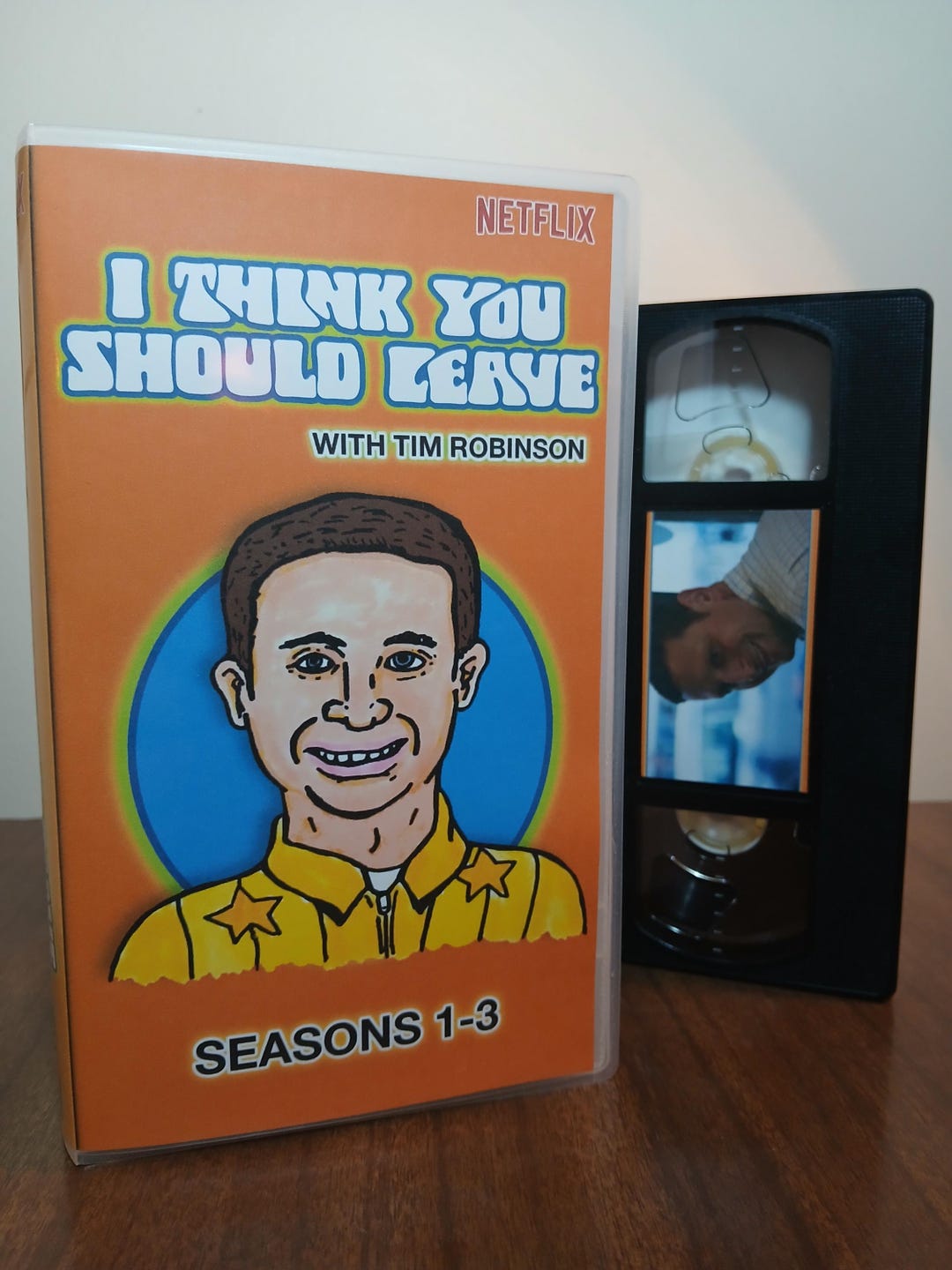
Understanding the I Think You Should Leave Shark Tank Parody
The Shark Tank parody in I Think You Should Leave with Tim Robinson (ITYSL) is a central sketch in Season 3, Episode 4, titled "Street Sets." It features a high-stress pitch where a character proposes portable backdrops designed to dec...
The Shark Tank parody in I Think You Should Leave with Tim Robinson (ITYSL) is a central sketch in Season 3, Episode 4, titled "Street Sets." It features a high-stress pitch where a character proposes portable backdrops designed to deceive social media followers, brilliantly satirizing the aggressive, ego-driven atmosphere and cinematic tropes of the actual business reality show.
Contents
The Anatomy of a Parody: I Think You Should Leave and Shark Tank
By 2026, the cultural impact of I Think You Should Leave with Tim Robinson has solidified its place as a cornerstone of surrealist comedy. One of its most effective techniques is the "genre parody," where the show meticulously recreates the visual and auditory language of specific television formats. The Shark Tank parody is perhaps the most precise example of this.
To understand why this sketch works, one must first look at the mechanics of the original Shark Tank program. The ABC hit is built on a foundation of high-stakes drama: the "walk-in" of the entrepreneur, the silent staring of the investors, the sudden dramatic musical stings, and the rapid-fire questioning. ITYSL replicates these elements with startling accuracy, from the blue-tinted studio lighting to the specific camera angles used for the "Sharks" as they lean back in their leather chairs, looking skeptical.
The parody succeeds because it doesn't just mock the idea of a business pitch; it mocks the specific hustle culture and the performative nature of venture capitalism. In the ITYSL universe, the "Sharks" are just as self-serious and prone to catchphrases as the real-life counterparts, but the logic they are dealing with is fundamentally broken.
The "Street Sets" Pitch: Logic and Absurdity
The core of the "Shark Tank" sketch is the product being pitched: Street Sets. Tim Robinson plays a desperate entrepreneur who believes he has solved a major problem in the modern social media landscape. His product consists of large, physical cardboard backdrops that look like the interiors of exclusive nightclubs, high-end restaurants, or tropical beaches.
The Problem Being Solved
The "pitcher" argues that people are exhausted by the effort required to actually go to interesting places. In his view, the value of an experience is not the experience itself, but the proof of it on social media. By using a "Street Set" in their backyard or a parking lot, a user can take a photo that makes them look like they are living a high-flying lifestyle without ever leaving their home.
The Escalation
In classic ITYSL fashion, the sketch does not stay on the product for long. It quickly pivots to the pitcher's extreme emotional fragility. When the Sharks begin to ask basic logical questions—such as why someone wouldn't just use a digital filter or why the backdrops look so flimsy—Robinson’s character reacts with a mix of intense defensiveness and bizarre non-sequiturs. He begins to treat the Sharks' skepticism as a personal betrayal, leading to a breakdown that exposes the hollowness of the "entrepreneurial spirit" being lampooned.
Character Archetypes: The ITYSL "Sharks"
The sketch features a panel of investors who are clearly modeled after the famous personalities on the real Shark Tank. While they are played by actors rather than the actual Mark Cuban or Barbara Corcoran, their performances capture the essence of the "Shark" persona.
- The Cynical Tech Mogul: One Shark focuses entirely on the "scalability" of the backdrops, using buzzwords that mean nothing in the context of a cardboard cutout.
- The "I'm Out" Specialist: Replicating the dramatic exit of an investor, this character uses the "I'm out" phrase not because the business is bad, but because they are personally offended by the pitcher's demeanor.
- The Branding Expert: This Shark attempts to find a "story" or "heart" behind the product, leading to an even more confusing and absurd backstory from the pitcher.
The interaction between these archetypes and Robinson creates a "pressure cooker" environment. The humor comes from the contrast between the professional, cold reality of the business world and the chaotic, infantile logic of the product being offered.
Production Design: Mimicking the Shark Tank Aesthetic
A significant reason the "Shark Tank" sketch resonated so deeply with audiences is its high production value. The creators of ITYSL, including Tim Robinson and Zach Kanin, alongside directors like Alice Mathias and Akiva Schaffer, ensured that the sketch felt "expensive."
- The Set: The lighting is dark and moody, with the familiar blue and orange highlights seen in the Sony Pictures Television production.
- The Sound: The "thrumming" ambient music that builds tension during a pitch is used to hilarious effect, often peaking just as the pitcher says something completely nonsensical.
- The Editing: Fast cuts between the pitcher's sweating face and the Sharks' unimpressed reactions mimic the rhythmic editing of reality TV, which is designed to manufacture tension where none exists.
By 2026, this sketch is often cited in film and media studies as a prime example of aesthetic mimicry—using the exact tools of a serious medium to undermine its own credibility.
Comparison: Real Shark Tank vs. ITYSL Satire
The following table breaks down the differences between the actual Shark Tank format and the satirical version presented in I Think You Should Leave.
| Feature | Real Shark Tank | ITYSL "Street Sets" Parody |
|---|---|---|
| Primary Goal | Secure capital and a business partner. | Validation for a bizarre personal obsession. |
| The "Shark" Reaction | Skepticism based on profit margins and CAC. | Pure confusion and increasing hostility. |
| Pitch Quality | Polished, rehearsed, and data-heavy. | Manic, defensive, and logic-defying. |
| The Product | Solves a market gap or consumer need. | Solves a non-existent problem created by vanity. |
| Social Commentary | Celebrates the "American Dream" and meritocracy. | Satirizes social media falsity and "hustle" egos. |
| Outcome | A handshake deal or a walk of shame. | A total psychological collapse of the pitcher. |
Why the Sketch Resonated in the 2020s
When Season 3 premiered, the "Shark Tank" sketch immediately went viral. In the context of 2026, we can see that it tapped into a specific cultural anxiety regarding digital authenticity. The concept of "Street Sets" isn't actually far from reality; during the early 2020s, there were several real-life reports of "fake private jet" sets used by influencers to bolster their online image.
Robinson’s character takes this real-world phenomenon to its logical, absurd conclusion. The humor is found in the entrepreneur's insistence that his lie is actually a "service" for the people. It critiques a world where the appearance of success is more valuable than success itself—a theme that fits perfectly within the Shark Tank environment, where people often pitch their "personal brand" as much as their product.
Key Technical Specifications of ITYSL Season 3
- Release Date: May 30, 2023.
- Platform: Netflix.
- Episode with Shark Tank Sketch: Season 3, Episode 4.
- Creators: Tim Robinson, Zach Kanin.
- Executive Producers: The Lonely Island (Andy Samberg, Akiva Schaffer, Jorma Taccone), Ali Bell, Alex Bach, Dan Powell.
Frequently Asked Questions
Which episode of I Think You Should Leave features the Shark Tank parody?
The Shark Tank parody, specifically the "Street Sets" sketch, appears in Season 3, Episode 4. While other sketches in the series involve business pitches (like the "Darmine Door" or "Eggman"), Episode 4 contains the most direct visual and structural parody of the Shark Tank television show.
Are any of the real Sharks from the TV show in the sketch?
No, the real Sharks (such as Mark Cuban or Kevin O'Leary) do not appear in the sketch. The investors are played by character actors who mimic the archetypes of the real Sharks. This allows the show to maintain its own internal logic and prevents the sketch from feeling like a promotional "crossover" event, which would undermine the satire.
What is the product being pitched in the Shark Tank sketch?
The product is called Street Sets. It consists of physical, portable backdrops that allow users to take photos that make them look like they are at high-end locations like clubs or beaches. The joke is that the backdrops are clearly fake and low-quality, but the pitcher insists they are the future of social media.
Why is Tim Robinson's character so upset in the sketch?
A recurring theme in I Think You Should Leave is characters who cannot handle being told they are wrong or that their behavior is "weird." In the Shark Tank sketch, the character becomes upset because the Sharks refuse to accept the "rules" of the world he has created. He views their logical questions as an attack on his dignity, leading to the aggressive shouting and emotional spiraling that the show is known for.
Is the Shark Tank sketch considered one of the best in Season 3?
While subjective, "Street Sets" is frequently cited by critics and fans as a highlight of Season 3. Its popularity stems from its accurate parody of reality TV tropes and Tim Robinson's high-energy performance. By 2026, it has become a frequently memed segment, particularly in discussions about social media influencers and "fake it 'til you make it" culture.
Practical Recommendation for Viewers
If you are looking for the "Shark Tank" parody to share or rewatch, navigate directly to Season 3, Episode 4 on Netflix. To fully appreciate the satire, it is helpful to have a passing familiarity with the real Shark Tank (or Dragons' Den in the UK/Canada), as many of the jokes rely on the viewer recognizing the specific editing and musical cues of the reality business genre. For those interested in the broader theme of business satire in ITYSL, follow this up with the "Darmine Door" sketch (Season 3, Episode 1) and the "Gelutol" pitch (Season 3, Episode 5), which explore similar themes of corporate absurdity.
Image Gallery