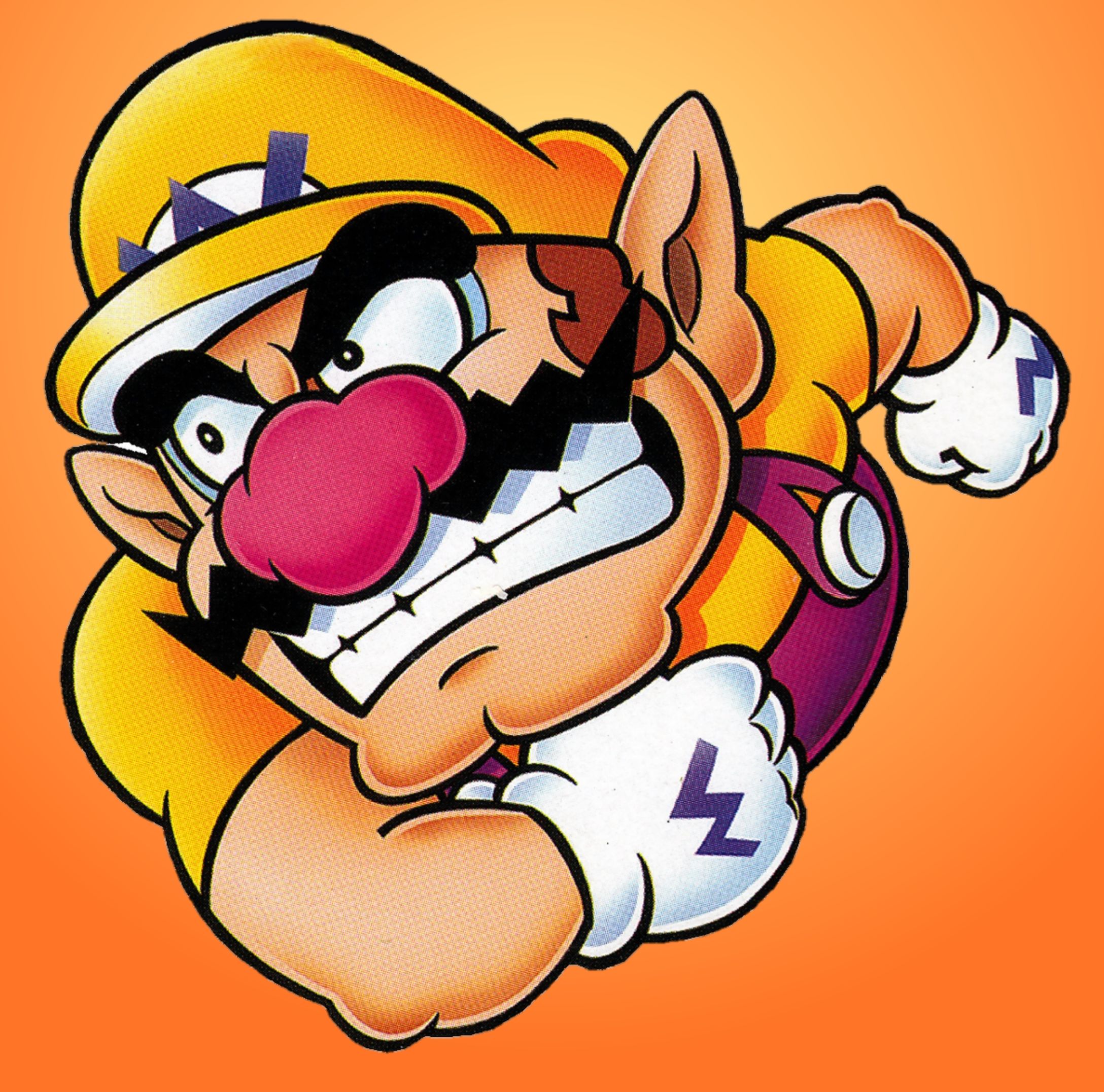
When Wario Was Introduced to Gaming: The History and Origin of Nintendo's Anti-Hero
Wario was officially introduced to video gaming on October 21, 1992, with the release of Super Mario Land 2: 6 Golden Coins for the Nintendo Game Boy in Japan. Created by character designer Hiroji Kiyotake at Nintendo R&D1, Wario debut...
Wario was officially introduced to video gaming on October 21, 1992, with the release of Super Mario Land 2: 6 Golden Coins for the Nintendo Game Boy in Japan. Created by character designer Hiroji Kiyotake at Nintendo R&D1, Wario debuted as the main antagonist who seized Mario’s castle while Mario was away.
Contents
The Origin of Wario: Super Mario Land 2: 6 Golden Coins (1992)
When Nintendo released Super Mario Land 2: 6 Golden Coins on the handheld Game Boy platform in late 1992 (reaching North America in November 1992 and Europe in January 1993), players met a radically different adversary from Bowser or Donkey Kong. Wario was designed not as a mysterious monster or a wild animal, but as a distorted, greed-driven mirror image of Mario himself.
- 1992: Super Mario Land 2: Introduced as Antagonist / Final Boss
- 1994: Wario Land (SML 3): Shifted to Playable Anti-Hero Protagonist
- 1996: Mario Kart 64: Mainstay in Multiplayer Roster
- 2003: WarioWare, Inc.: Launch of Microgame Franchise
The team behind Wario's creation was Nintendo Research & Development 1 (R&D1), led at the time by legendary producer Gunpei Yokoi. Character designer Hiroji Kiyotake directed the visual aesthetic and concept of Wario. According to retrospective developer accounts, R&D1 felt a sense of creative restriction while working on games starring Mario, a character originally forged by Shigeru Miyamoto's Entertainment Analysis & Development (EAD) branch. Building a new villain allowed R&D1 artists to express their own humor and subvert the standard platforming conventions of the Mario universe.
Etymology and Visual Concept
The name Wario is a portmanteau of the Japanese adjective warui (悪い), meaning "bad" or "evil," and "Mario." Beyond the linguistic pun, the character design cleverly inverted Mario's iconic visual identity:
- The classic red cap and blue overalls were swapped for a yellow cap, purple overalls, and green shoes.
- Mario's neatly groomed mustache was replaced with a sharp, zig-zagging mustache.
- Mario's athletic, earnest silhouette was converted into a stout, heavily muscular frame with an exaggerated pink nose and an aggressive grin.
In the narrative of Super Mario Land 2, Wario hypnotizes the citizens of Mario Land, takes over Mario's private castle, and locks the gates using six magical golden coins scattered across distinct thematic zones. Players had to navigate six worlds to reclaim the coins and defeat Wario in his throne room.
Technical Specifications and Boss Mechanics of the 1992 Debut
During the final battle in Super Mario Land 2, Wario demonstrated abilities that mirrored Mario’s own power-up system—a novel mechanic for Game Boy platformers at the time. The fight took place across three distinct phases, forcing players to adapt to shifting movement patterns on the monochrome Game Boy screen.
| Wario Boss Battle Stages (1992) | Description |
|---|---|
| Phase 1: Base Form | Uses ground pounds and aggressive physical charges |
| Phase 2: Super Wario | Uses Fire Flower abilities to shoot fireballs at Mario |
| Phase 3: Carrot Wario | Uses rabbit ears to hover above the arena floor |
- Base Form: Wario attacks using direct physical charges and jump maneuvers, requiring Mario to dodge his aggressive ground pounds.
- Super Wario (Fire Form): After taking damage, Wario uses a magic power-up to increase his size and fire high-speed fireballs across the arena.
- Carrot Wario (Bunny Form): In his final phase, Wario sprouts rabbit ears—mirroring the Carrot power-up introduced in Super Mario Land 2—allowing him to hover in the air and drop down on top of the player.
This boss fight established Wario not merely as a stationary boss, but as an agile, adaptable rival who possessed the exact same magical tools as the hero.
From Villain to Playable Protagonist: The Rise of Wario Land
Following his positive reception in 1992, Nintendo quickly pivoted Wario from a one-off final boss to a primary franchise protagonist. This transition began in 1994 with Wario Land: Super Mario Land 3 for the Game Boy.
| MARIO GAMEPLAY (1985–1992) | WARIO GAMEPLAY (1994+) |
|---|---|
| • Fragile (one-hit reduction) | • Durable / Invulnerable in key entries |
| • Altruistic mission (rescue the princess) | • Self-serving mission (acquire maximum wealth) |
| • Precise precision-jumping mechanics | • Heavy shoulder-bashing & brute physical force |
Rather than copying Mario’s traditional gameplay style, Wario Land redefined how a platformer could play:
- Brute Force Mechanics: Instead of simply jumping on enemies, Wario could tackle foes using a heavy Shoulder Bash, pick up stunned enemies, and throw them as projectiles.
- Greed-Driven Motivation: Wario’s core objective was not saving a kingdom or rescuing a princess; it was collecting as much treasure and gold as possible to buy the largest castle available in the game's ending sequence.
- Transformative Power-Ups: Instead of standard mushrooms, Wario used specialized helmets—such as the Bull Helmet for enhanced bashing power, the Jet Helmet for horizontal flight, and the Dragon Helmet for breathing flame.
Subsequent entries, such as Wario Land II (1998) on the Game Boy and Game Boy Color, completely discarded traditional health lives. Wario became functionally immortal; taking enemy attacks caused humorous physical transformations (such as Flat Wario, Zombie Wario, or Vampire Wario) that served as puzzle-solving tools to access new areas of the map.
Key Milestones in Wario's Gaming History (1992–2003)
The decade following Wario's debut saw the character expand across multiple hardware generations, puzzle spin-offs, and flagship multiplayer franchises.
| Release Year | Game Title | Platform | Primary Role | Key Significance |
|---|---|---|---|---|
| 1992 | Super Mario Land 2: 6 Golden Coins | Game Boy | Final Boss / Antagonist | Official debut of Wario in the gaming industry. |
| 1993 | Mario & Wario | Super Famicom (Japan) | Main Antagonist | Mouse-controlled puzzle game directed by Satoshi Tajiri. |
| 1994 | Wario Land: Super Mario Land 3 | Game Boy | Playable Protagonist | First playable appearance; introduced Wario's treasure-hunting mechanics. |
| 1994 | Wario's Woods | NES / SNES / Satelliteview | Antagonist / Boss | Final officially licensed NES software release in North America. |
| 1995 | Virtual Boy Wario Land | Virtual Boy | Playable Protagonist | Critically acclaimed platformer using 3D depth planes on Virtual Boy. |
| 1996 | Mario Kart 64 | Nintendo 64 | Playable Roster | First 3D appearance; replaced Koopa Troopa in the driver lineup. |
| 1998 | Wario Land II | Game Boy / GB Color | Playable Protagonist | Eliminated standard health systems in favor of status-effect transformations. |
| 2000 | Wario Land 3 | Game Boy Color | Playable Protagonist | Deepened non-linear exploration and day-night cycle mechanics. |
| 2001 | Wario Land 4 | Game Boy Advance | Playable Protagonist | Introduced high-fidelity sprite animation and timed escape missions. |
| 2003 | WarioWare, Inc.: Mega Microgame$! | Game Boy Advance | Protagonist / Director | Created the microgame genre; introduced Diamond City and Wario's biker suit. |
Expanding the Brand: WarioWare and Mainstream Multiplayer Integration
By the late 1990s and early 2000s, Nintendo integrated Wario into two distinct pillars of their software line-up: spin-off multiplayer titles and experimental original IPs.
The Genesis of WarioWare (2003)
In 2003, Nintendo R&D1 introduced WarioWare, Inc.: Mega Microgame$! on the Game Boy Advance. The game shifted Wario out of traditional platforming and into the modern urban setting of Diamond City, where Wario founded a rogue video game development company to get rich quick.
| Feature | The Warrowware Formula (2003+) |
|---|---|
| Mechanics | Rapid-fire "Microgames" lasting 3 to 5 seconds each |
| Aesthetics | Bizarre, surreal visual styles ranging from line drawings to photos |
| Persona | Wario trades yellow overalls for a yellow biker helmet and denim vest |
The game replaced traditional, multi-minute levels with rapid-fire "microgames" that required players to perform actions within three to five seconds (e.g., picking a nose, catching an object, or jumping over a hurdle). The WarioWare series spawned numerous sequels across hardware iterations, including WarioWare: Twisted! (utilizing built-in gyro sensors) and WarioWare: Smooth Moves (utilizing the Motion-sensing Wii Remote).
Integration into Mario Multiplayer Franchises
Wario made his leap to 3D gaming in 1996's Mario Kart 64, taking the heavy-weight driver spot previously occupied by Koopa Troopa in Super Mario Kart. His inclusion established him as a core roster staple across major Nintendo multiplayer franchises:
- Party Games: Featured prominently across the Mario Party franchise starting in 1998.
- Sports Titles: Playable in Mario Tennis (2000) for the Nintendo 64—a game that famously introduced Waluigi as Wario’s tall, lanky doubles partner created by Camelot Software Planning.
- Fighting Games: Joined the fighting game roster in Super Smash Bros. Brawl (2008) on the Wii, using his WarioWare biker costume as his default attire alongside his classic yellow-and-purple outfit as an alternate costume.
How Wario Changed Nintendo's Approach to Game Design
The introduction of Wario in 1992 allowed Nintendo developers to test mechanics and themes that were inappropriate for Mario’s main-line adventures.
- Wario's Creative Impact
- Mechanical Freedom: Immortality, puzzle-based damage, shoulder bashing
- Tonal Diversity: Slapstick, toilet humor, and exaggerated animation
- Subversion of Tropes: Greed as a primary motivator rather than heroic altruism
- Subversion of Heroic Tropes: Mario represented selfless chivalry; Wario represented unapologetic greed, laziness, and brute force. This contrast gave writers and animators a canvas for slapstick comedy.
- Experimental Invulnerability Systems: Wario Land II and Wario Land 3 demonstrated that platforming games could create high difficulty through puzzle solving and spatial awareness rather than the threat of a "Game Over" screen.
- Micro-Paced Gameplay: The WarioWare series pioneered short-form micro-challenges long before casual mobile gaming established bite-sized interaction loops as an industry standard.
Frequently Asked Questions
What exact game did Wario first appear in?
Wario made his debut appearance as the primary antagonist and final boss in Super Mario Land 2: 6 Golden Coins, released for the Nintendo Game Boy in Japan on October 21, 1992, and in North America on November 2, 1992.
Who created the character of Wario?
Wario was created by character designer Hiroji Kiyotake alongside the team at Nintendo R&D1 under the supervision of producer Gunpei Yokoi.
Why was Wario created?
Nintendo R&D1 created Wario while developing Super Mario Land 2: 6 Golden Coins. The team wanted a unique villain that mirrored Mario's abilities while allowing the developers to express their own humorous design ideas outside the strict guidelines of Shigeru Miyamoto's main-line Mario team.
When did Wario become a playable character?
Wario became playable for the first time in Wario Land: Super Mario Land 3, released for the Game Boy in 1994. This title officially launched the Wario Land spin-off franchise.
Is Wario related to Mario?
No, official Nintendo material states that Wario is not related to Mario by blood. He is a childhood rival and evil counterpart who envied Mario's fame and accomplishments.
Next Steps for Retro Collectors and Gaming Historians
For fans and historians looking to experience Wario's historical debut and subsequent mechanical evolution:
- Original Game Boy Hardware & Emulation: To play Wario's 1992 debut (Super Mario Land 2: 6 Golden Coins) and his 1994 playable debut (Wario Land), check official classic game catalogs on the Nintendo Switch Online Classic Library service, which hosts Game Boy and Game Boy Color releases.
- Exploring the Handheld Evolution: Trace Wario's mechanical transformation by playing Wario Land II (1998) to experience the elimination of lives/health, followed by Wario Land 4 (2001) on the Game Boy Advance for peak 2D sprite work.
- Archival Interviews: Consult developer archives preserved by organizations like the Internet Archive and official Nintendo developer notes to review original R&D1 concept art and interviews regarding Hiroji Kiyotake's early design process.
Image Gallery