The History of the United Kingdom Flag: Evolution of the Union Jack
The Union Jack, or Union Flag, is the national flag of the United Kingdom. Its design combines the red cross of Saint George for England, the white saltire of Saint Andrew for Scotland, and the red saltire of Saint Patrick for Ireland,...
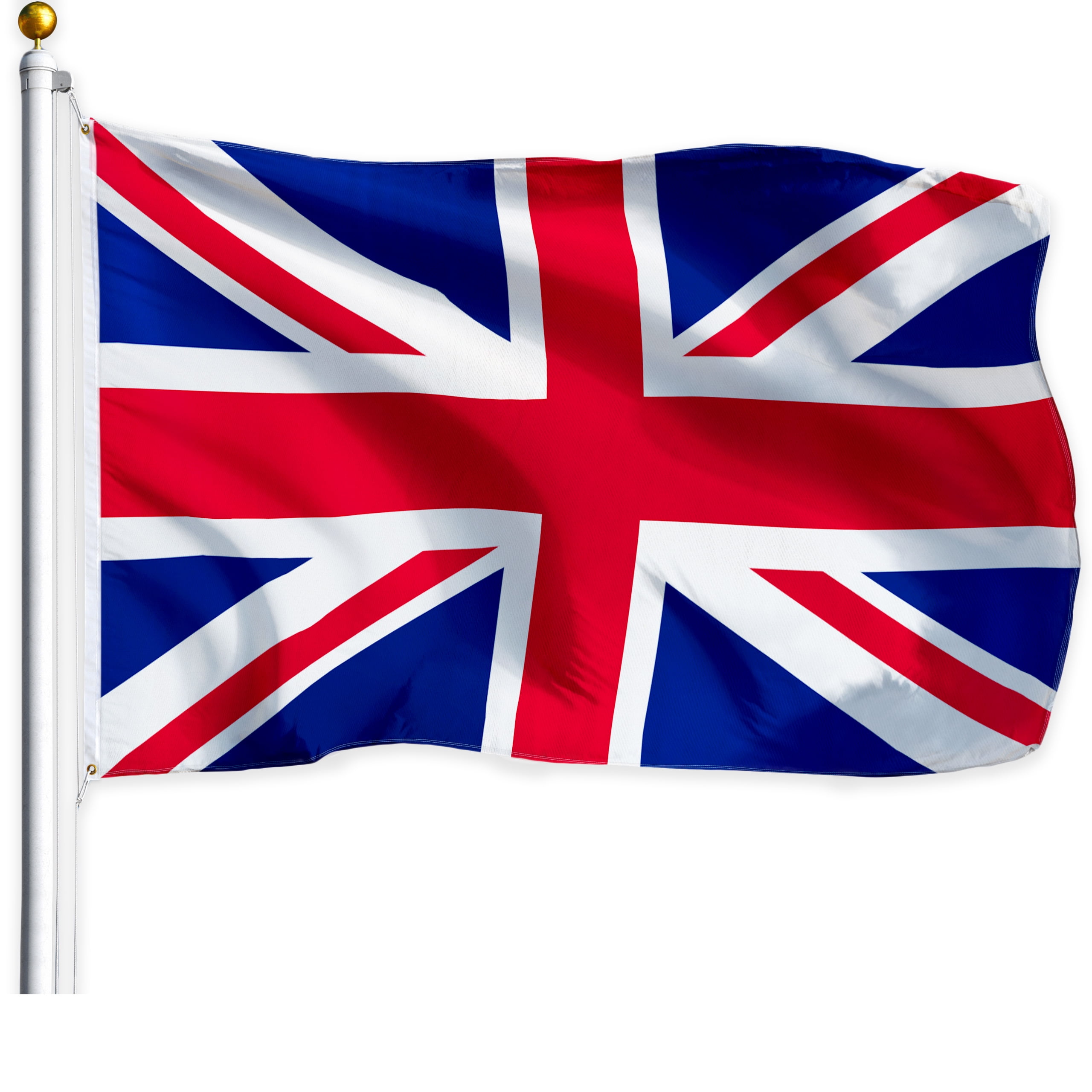
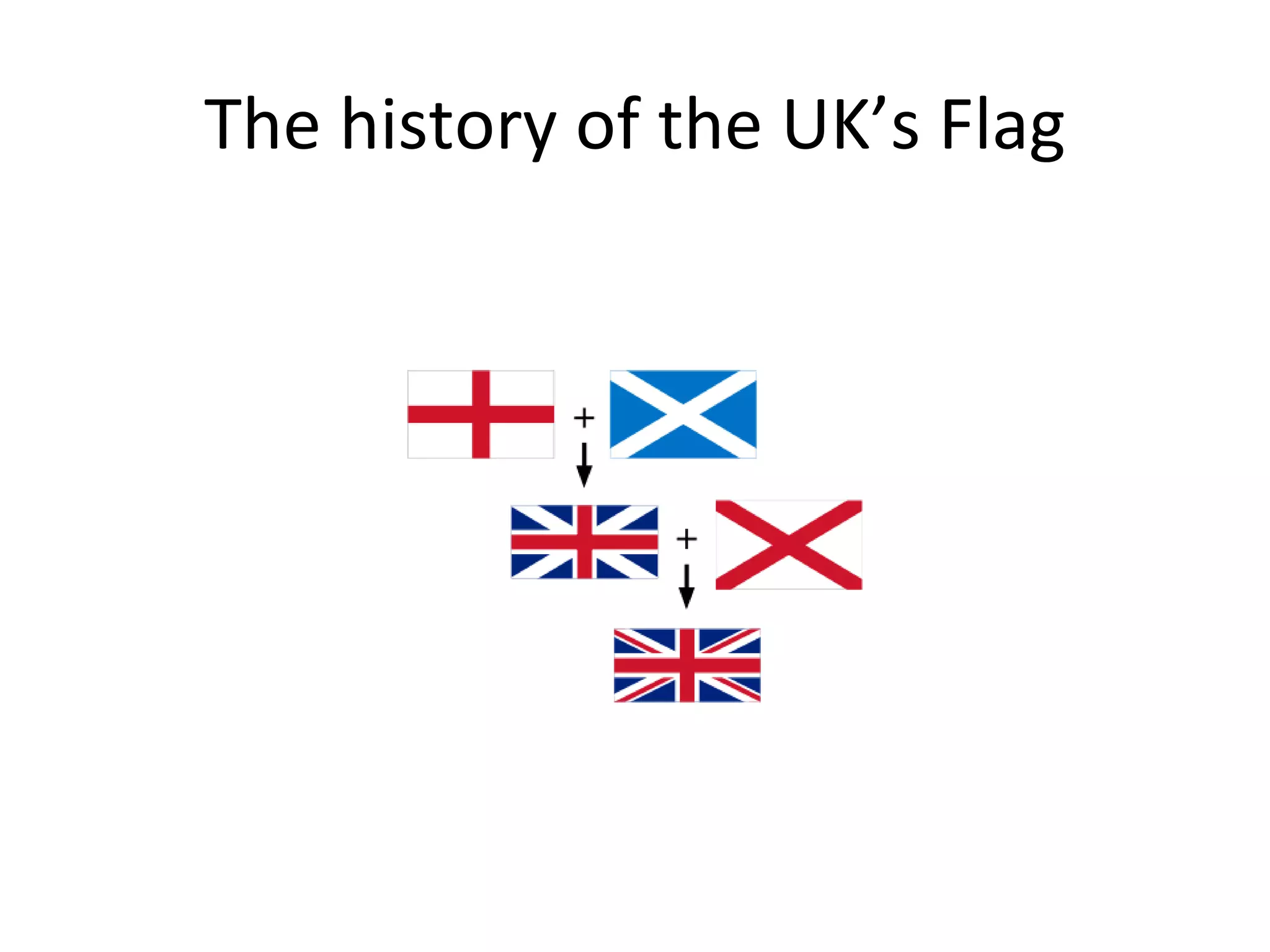
The Union Jack, or Union Flag, is the national flag of the United Kingdom. Its design combines the red cross of Saint George for England, the white saltire of Saint Andrew for Scotland, and the red saltire of Saint Patrick for Ireland, representing the historical union of these nations under a single sovereign state.
Contents
Introduction to the Union Jack
The history of the United Kingdom flag is a complex narrative of political unions, royal heraldry, and centuries of compromise. Often referred to interchangeably as the Union Jack or the Union Flag (though naval tradition prefers the former when flown at sea), the banner is one of the most recognizable national symbols in the world.
Understanding its evolution requires examining how separate kingdoms merged over hundreds of years. The flag did not appear in its current form overnight; rather, it developed in stages as England, Scotland, and Ireland formed constitutional alliances. Wales, having been annexed by England centuries earlier, is notably absent from the design, a historical quirk that occasionally sparks modern debate.
The First Union Flag (1606)
The genesis of the modern flag dates back to the early 17th century, specifically to the event known as the Union of the Crowns in 1603.
The Reign of King James VI and I
When Queen Elizabeth I died without issue in 1603, King James VI of Scotland ascended the English throne as James I. This unified the crowns of England and Scotland under a single monarch, although the two nations remained legally and politically distinct for another century.
To reflect this dynastic union at sea and on land, King James issued a royal proclamation in 1606 ordering the creation of a new flag.
The 1606 Design
The first version of the Union flag was a direct composite of the two existing flags:
- The Cross of Saint George: A red cross centered on a white background, representing England.
- The Saltire of Saint Andrew: A white diagonal cross (or saltire) centered on a blue background, representing Scotland.
To prevent the dominant English red cross from completely obscuring the Scottish white saltire, royal heralds devised a superimposition technique. They placed the red cross of Saint George over the white saltire, but added a white border (fimbriation) around the red cross. This optical separation preserved the visibility of both national emblems, creating the foundational template for the flag we know today.
The Union of 1707 and the Great Britain Flag
While the 1606 flag served as a maritime and royal standard for a century, the political union of the two countries required a formalization of national symbols.
The Acts of Union
Under the Acts of Union passed by the Parliaments of England and Scotland in 1707, the two kingdoms merged into a single sovereign state known as the Kingdom of Great Britain.
With this political consolidation, Queen Anne formally adopted the 1606 design as the official flag for all land and sea operations of the new British state. It was flown by military forces, merchant vessels, and government installations, cementing its status as a symbol of British identity across the burgeoning empire.
The Addition of Saint Patrick's Saltire (1801)
The final evolution of the United Kingdom flag occurred at the turn of the 19th century, driven by major geopolitical shifts in Ireland.
The Act of Union 1800
Following the suppression of the Irish Rebellion of 1798, the British government sought to integrate Ireland more closely with Great Britain. The Acts of Union passed in 1800 (taking effect on January 1, 1801) created the United Kingdom of Great Britain and Ireland.
Incorporating Ireland
To update the national flag, heralds had to incorporate a symbol for Ireland. They chose the Cross of Saint Patrick, a red saltire on a white field.
Integrating a third cross into an already complex design without violating heraldic rules presented a significant challenge. The heraldic rule of tincture states that color cannot be placed directly upon color, meaning the red cross of Saint Patrick could not simply be laid directly over the blue background or across the red cross of Saint George.
The Solution: Counterchanging
To resolve this, designers offset the red saltire of Saint Patrick against the white saltire of Saint Andrew.
- The red diagonal stripes of Saint Patrick are paired side-by-side with the white diagonal stripes of Saint Andrew.
- Each red stripe is counterchanged (alternated in position) so that it appears to sit beneath the white stripe on one side and above it on the other, creating a complex, asymmetrical pattern.
- A narrow white fimbriation separates the red Saint Patrick cross from the blue background to maintain visibility and heraldic correctness.
This final configuration of English, Scottish, and Irish elements remains the current flag of the United Kingdom.
| Flag Version | Active Years | Represented Nations | Key Design Characteristics |
|---|---|---|---|
| First Union Flag | 1606–1707 | England and Scotland | Red cross of St. George overlaid on the white saltire of St. Andrew with a white border. |
| Great Britain Flag | 1707–1801 | Great Britain | Official adoption of the 1606 design following the political union of England and Scotland. |
| Modern Union Jack | 1801–Present | United Kingdom (Great Britain and Ireland) | Addition of the red saltire of St. Patrick combined with St. Andrew's saltire. |
Why is Wales Not on the Union Flag?
One of the most common questions regarding the Union Jack concerns the omission of Wales. The explanation lies in medieval legal and political history.
Historical Context
By the time the first Union flag was designed in 1606, Wales had already been legally and administratively annexed to the Kingdom of England through the Laws in Wales Acts 1535 and 1542 during the reign of Henry VIII. Consequently, Wales was not viewed as a separate kingdom on par with Scotland or Ireland; rather, it was considered a principality integrated directly into the English realm.
Because the 1606 flag was a union of crowns and kingdoms, Wales was legally represented under the banner of England.
Modern Discussions
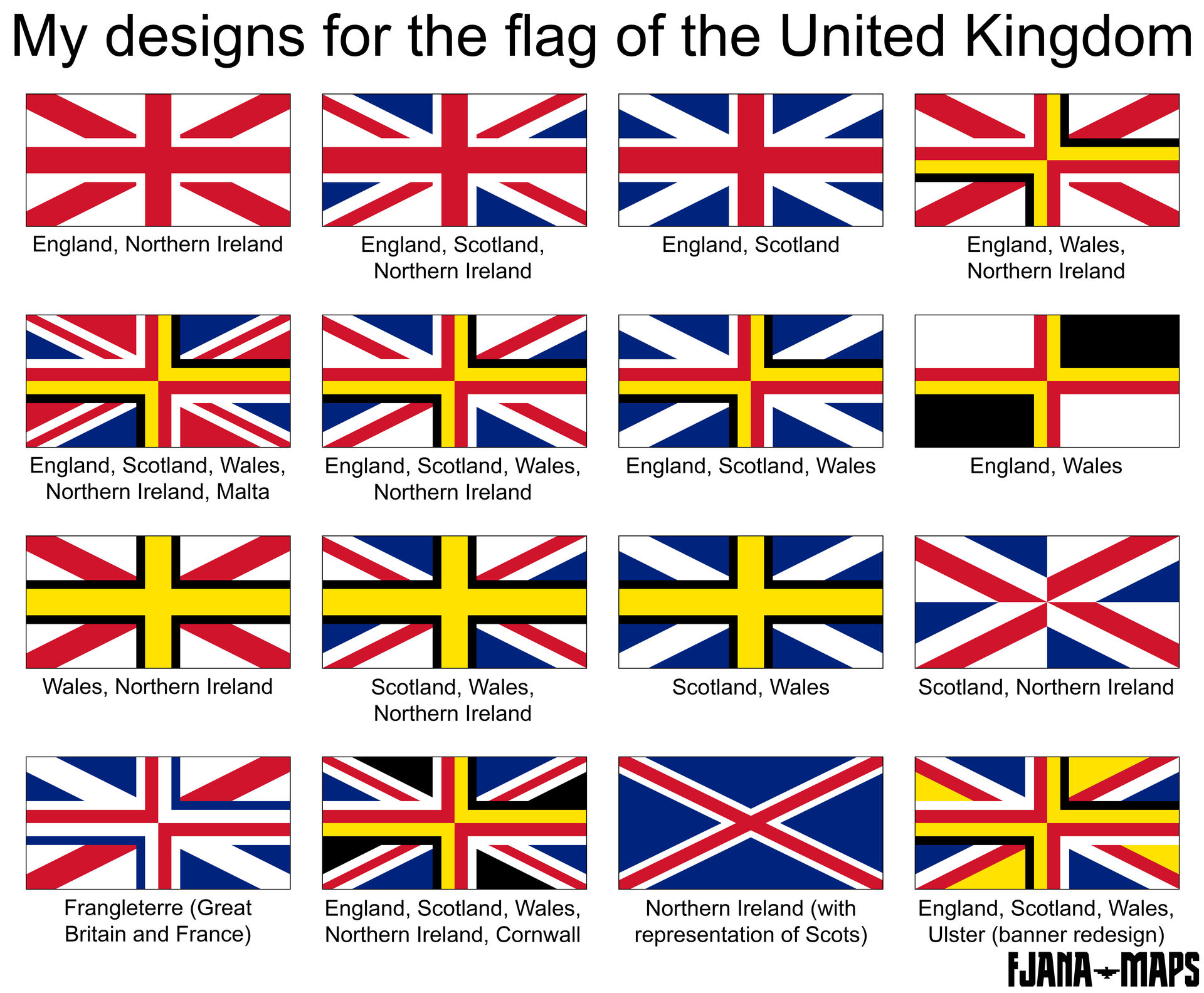
While proposals to incorporate the Welsh Dragon (Y Ddraig Goch) or the Black and Yellow Cross of Saint David have occasionally been raised in the UK Parliament, no official steps have been taken to redesign the flag. Doing so would require complex heraldic redesigns to integrate a fourth national emblem into an already intricate geometric layout.
Protocol, Usage, and the Name "Union Jack"
The flag is subject to specific protocols regarding how it is flown, hoisted, and displayed on official buildings.
Union Jack vs. Union Flag
Strictly speaking, naval purists argue that the term "Union Jack" should only apply when the flag is flown from the jackstaff of a warship at anchor. When flown on land, it should be called the "Union Flag." However, this distinction has largely eroded in common parlance. In 1908, the UK Parliament officially stated that "the Union Jack should be regarded as the National Flag," cementing both terms in official and public use.
Correct Orientation
Because the flag is asymmetrical, flying it upside down is considered a signal of distress (though it is rarely recognized as such by the general public).
To fly the flag correctly:
- The wider diagonal white stripe (belonging to Saint Andrew) must be above the red diagonal stripe (belonging to Saint Patrick) in the upper corner closest to the flagpole (the canton).
- A helpful mnemonic is that the broad white stripe should form a "cap" over the red stripe on the side nearest the pole.
Frequently Asked Questions
What does the Union Jack represent?
The Union Jack represents the political union of the countries that make up the United Kingdom. It combines the patron saints' crosses of England (Saint George), Scotland (Saint Andrew), and Ireland (Saint Patrick).
When was the current version of the flag finalized?
The current design was finalized on January 1, 1801, following the political union of Great Britain and Ireland under the Act of Union 1800, which added the red saltire of Saint Patrick to the flag.
Why isn't Wales represented on the Union Flag?
Wales is not represented because it was annexed and legally integrated into the Kingdom of England during the 16th century, long before the creation of the first union flag in 1606. Consequently, it was historically subsumed under the English heraldic banner.
Is it legal to burn or desecrate the UK flag?
Unlike in some other nations, there are no specific statutory laws in the United Kingdom that criminalize flag burning or desecration. Public order laws, however, may apply if the act causes a breach of the peace, harassment, alarm, or distress.
Does the Union Flag have to be flown upside down during an emergency?
Flying the flag upside down is a traditional maritime signal of distress. While recognized in naval protocol, doing so on land is rare and generally holds no legal weight in modern civil emergencies.
Conclusion and Further Historical Exploration
The history of the United Kingdom flag mirrors the constitutional evolution of the British Isles, transitioning from royal compromise to imperial standard. For those looking to study its development further, examining primary sources such as the Royal Proclamations of 1606 and 1801 housed within The National Archives provides deeper insight into the heraldic debates that shaped one of the world's most enduring national emblems.
Image Gallery