Understanding InterTech Testing: Methods, Standards, and Industrial Applications
InterTech Testing encompasses specialized engineering evaluation, quality assurance, and compliance validation methodologies utilized across manufacturing, automotive, aerospace, and medical device sectors to verify product integrity,...
InterTech Testing encompasses specialized engineering evaluation, quality assurance, and compliance validation methodologies utilized across manufacturing, automotive, aerospace, and medical device sectors to verify product integrity, leak tight integrity, and operational safety.
Contents
Modern industrial manufacturing relies heavily on rigorous validation to ensure that components, subassemblies, and finished goods meet exacting regulatory and performance standards. Among the specialized disciplines in this field, InterTech Development Company has historically pioneered mass flow, pressure decay, and functional testing systems that dictate how modern factories execute quality control. Understanding how these testing procedures operate, the technological standards they follow, and the specific industrial scenarios they address is essential for quality engineers, plant managers, and compliance officers seeking to eliminate defects and ensure absolute reliability.
The Core Principles of Industrial Leak and Functional Testing
At the heart of industrial testing methodologies is the necessity to detect micro-defects before products reach the end consumer. Whether dealing with automotive fuel rails, pacemaker housings, or household appliance valves, a microscopic flaw can lead to catastrophic field failures, environmental hazards, or severe regulatory penalties.
Pressure Decay vs. Mass Flow Technology
The choice of testing methodology depends heavily on the physical properties of the test part and the required sensitivity thresholds.
- Pressure Decay Testing: This method involves pressurizing a test part with air to a specified level, isolating it from the pressure source, and monitoring pressure loss over a fixed time period. It is robust, cost-effective, and ideal for parts with moderate leak rate requirements.
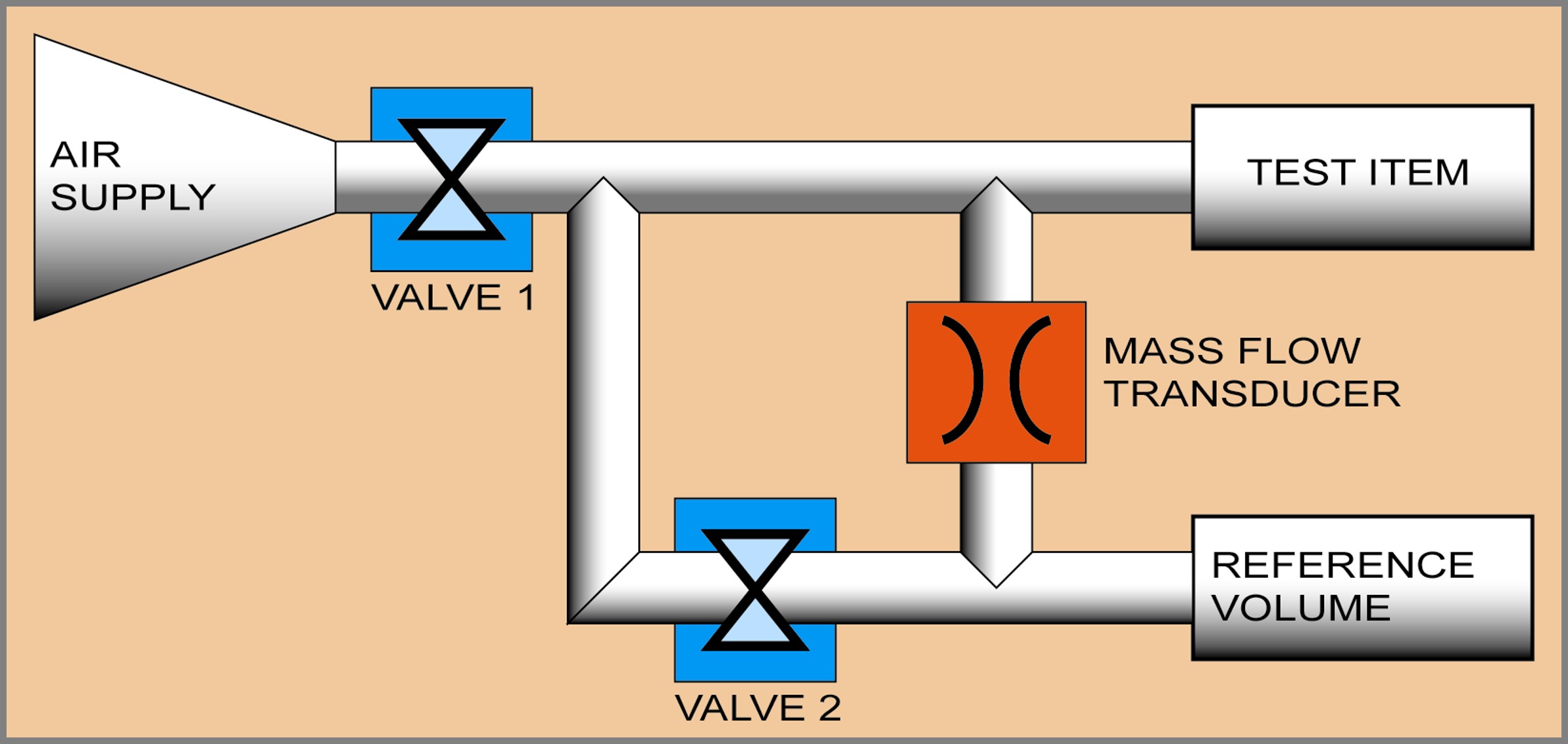
- Mass Flow Testing: Instead of monitoring pressure drop, mass flow sensors measure the actual movement of air molecules through a leak or into a part. This approach is faster and less susceptible to ambient temperature fluctuations, making it the preferred choice for high-volume automated assembly lines.
- Tracer Gas Testing: For ultra-sensitive applications, such as refrigeration components or lithium-ion battery housings, tracer gases like helium or hydrogen are used. Mass spectrometers detect minuscule quantities of these gases escaping through defects, providing extreme sensitivity down to $10^{-6}$ standard cubic centimeters per second (scc/sec).
The Role of Microprocessor-Based Instrumentation
Modern testing regimens have largely moved away from analog gauges and manual observation. Contemporary systems utilize advanced microprocessors and digital transducers to filter out environmental noise, compensate for temperature variations, and calculate leak rates in real time. These instruments feature sophisticated calibration protocols that ensure repeatability and traceability across multi-shift manufacturing environments.
--
Key Industry Sectors Utilizing Advanced Testing Solutions
Different industrial verticals enforce distinct regulatory frameworks and performance thresholds. Consequently, testing equipment and methodologies must adapt to the unique operating conditions of each market segment.
| Industry Sector | Primary Test Focus | Typical Regulatory Standards |
|---|---|---|
| Automotive | Powertrain, EV batteries, fuel | ISO/TS 16949, USCAR, OEM-specific protocols |
| Medical Devices | Packaging seals, catheters, infusion pumps | ISO 11607, FDA 21 CFR Part 820, ISO 13485 |
| Consumer Goods | Appliance valves, water meters, HVAC components | NSF/ANSI, UL, CE directives |
| Aerospace | Hydraulic actuators, fuel lines, environmental control systems | FAA, AS9100, MIL-STD |
Automotive and Electric Vehicle (EV) Manufacturing
The automotive sector demands high-speed, 100% inline quality verification. Traditional internal combustion engine components—such as cylinder heads, transmission housings, and brake boosters—require rigorous pressure testing. With the global transition toward electric vehicles, testing requirements have expanded to include battery pack enclosures, cooling plates, and high-voltage inverter housings. These components must achieve strict ingress protection (IP) ratings, often IP67 or IP68, to prevent moisture and particulate contamination that could cause electrical shorts or thermal runaway.
Medical Devices and Pharmaceutical Packaging
In the medical device industry, testing directly impacts patient safety. Sterile barrier packaging, intravenous (IV) bags, catheters, and implantable enclosures must maintain absolute integrity throughout their shelf life. Non-destructive leak testing methods are increasingly favored over destructive burst tests or dye penetrant assays, allowing manufacturers to screen every single production unit without compromising sterility.
--
Implementation Prerequisites and System Integration
Deploying an advanced testing station on a production floor requires careful planning, mechanical integration, and environmental control. Organizations must evaluate several operational prerequisites before procuring and installing testing equipment.
Part Preparation and Sealing Fixtures
The accuracy of any leak or functional test relies on the interface between the part and the test fixture.
- Quick-Disconnect Seals: Custom elastomeric seals must securely close off ports and orifices without distorting the test part under pressure.
- Cleanliness: Debris, machining oils, or residual coolant inside a part can block micro-leaks, resulting in false passes. Pre-test cleaning and drying stations are frequently integrated upstream of the test module.
- Thermal Equilibrium: Parts that have undergone recent welding, heat treatment, or washing may retain residual heat. Temperature differentials between the test air and the part can induce thermal expansion or pressure drift, skewing test results. Part cooling buffers are often required in high-throughput lines.
Data Management and Industry 4.0 Connectivity
Modern testing systems do not operate in isolation. They function as critical data nodes within factory automation networks. Industrial test instruments must support standard communication protocols such as Ethernet/IP, PROFINET, Modbus TCP, and OPC UA. This connectivity enables:
- Real-time statistical process control (SPC) monitoring.
- Traceability of individual serial numbers linked to specific test pass/fail metrics.
- Automated segregation of defective parts via programmable logic controllers (PLCs).
--
Comparative Analysis: Traditional vs. Modern Automated Testing
To understand the operational evolution of industrial quality assurance, it is helpful to contrast legacy testing methods with contemporary automated solutions.
- Speed and Throughput: Legacy water bath immersion tests required operators to manually submerge pressurized parts and look for rising bubbles. This method was slow, subjective, and prone to human error. Modern automated pneumatic testing systems complete cycles in seconds, seamlessly integrating into palletized transfer lines.
- Data Integrity: Manual logs introduce transcription errors and lack granularity. Automated digital testers record exact pressure values, flow rates, and ambient parameters for every cycle, generating auditable digital footprints for quality management systems (QMS).
- Safety and Ergonomics: High-pressure pneumatic or hydrostatic testing poses significant kinetic risks if a part catastrophically fails during the test. Modern fixtures incorporate safety enclosures, two-hand anti-tie-down controls, and automated locking mechanisms to protect operators.
--
Common Challenges and Troubleshooting in Industrial Testing
Even the most sophisticated testing infrastructure can encounter operational hurdles. Identifying and resolving these issues prevents costly production downtime and false rejections.
Addressing False Rejects and False Passes
A "false reject" occurs when an acceptable part fails the test, often due to environmental instability or worn sealing components. Conversely, a "false pass" lets a defective part through, which is catastrophic for field quality.
- Check Ambient Stability: Drafts from HVAC systems or direct sunlight can alter the temperature of test instruments or parts, causing pressure drift. Isolating test stations from thermal currents stabilizes readings.
- Inspect Seals Regularly: Elastomeric seals degrade over repeated clamping cycles. Establishing a preventative maintenance schedule for seal replacement eliminates leakage across the fixture interface.
- Validate Master Parts: Operators should run calibrated "master parts" containing known reference leaks at regular intervals during shifts to verify that instrument sensitivity has not drifted.
--
Frequently Asked Questions
What is the primary purpose of InterTech testing methods?
InterTech testing methods are engineered to verify product integrity, structural durability, and leak-tight performance in manufactured components. By utilizing quantitative air flow and pressure measurements, these methods ensure that parts comply with strict industry specifications before final assembly or market release.
How does pressure decay testing differ from tracer gas testing?
Pressure decay testing uses compressed air to monitor pressure drops over time, making it ideal for general industrial components with moderate leak specifications. Tracer gas testing utilizes helium or hydrogen detected via mass spectrometry, offering ultra-high sensitivity for applications requiring detection of microscopic permeation or micro-cracks.
Can automated testing systems integrate with factory PLC networks?
Yes. Modern testing instruments feature industrial communication protocols such as PROFINET, Ethernet/IP, and Modbus. This allows them to interface directly with plant automation systems for real-time data logging, pass/sort control, and statistical process control (SPC) tracking.
What causes false rejects during high-speed leak testing?
False rejects are frequently caused by temperature fluctuations, part-to-part dimensional variations, contaminated or worn sealing elastomers, or trapped air within complex internal geometries. Maintaining thermal stability and rigorous fixture maintenance minimizes these occurrences.
How often should industrial leak testing equipment be calibrated?
Calibration frequency depends on regulatory requirements, usage intensity, and internal quality policies. However, most industrial facilities perform verification checks using calibrated reference standards at the start of every shift, with full-scale traceable calibrations conducted annually.
--
Next Steps for Implementation
For organizations looking to upgrade or implement advanced testing protocols, the initial step involves conducting a comprehensive audit of current quality requirements, cycle time constraints, and regulatory mandates. Partnering with experienced engineering teams ensures that test fixtures, instrumentation sensitivities, and automation interfaces are properly matched to the specific mechanical characteristics of the product line, protecting brand reputation and manufacturing efficiency.
Image Gallery