Samsung Galaxy S10e Versus Samsung Galaxy S10: A Comprehensive Comparison
When Samsung launched its tenth-anniversary flagship smartphone lineup, it introduced a strategic shift by offering multiple tiers to suit varying consumer preferences and budgets. The Samsung Galaxy S10 and the Galaxy S10e represented...
When Samsung launched its tenth-anniversary flagship smartphone lineup, it introduced a strategic shift by offering multiple tiers to suit varying consumer preferences and budgets. The Samsung Galaxy S10 and the Galaxy S10e represented two distinct approaches to high-end mobile engineering. While the standard Galaxy S10 targeted users seeking a no-compromise multimedia and performance powerhouse, the Galaxy S10e was engineered as a more accessible, compact alternative that retained core flagship processing power without demanding top-tier pricing. Understanding the technical divergences, physical footprint differences, and feature compromises between these two devices helps clarify how they serve different user profiles.
Contents
Introduction to the Galaxy S10 Generation
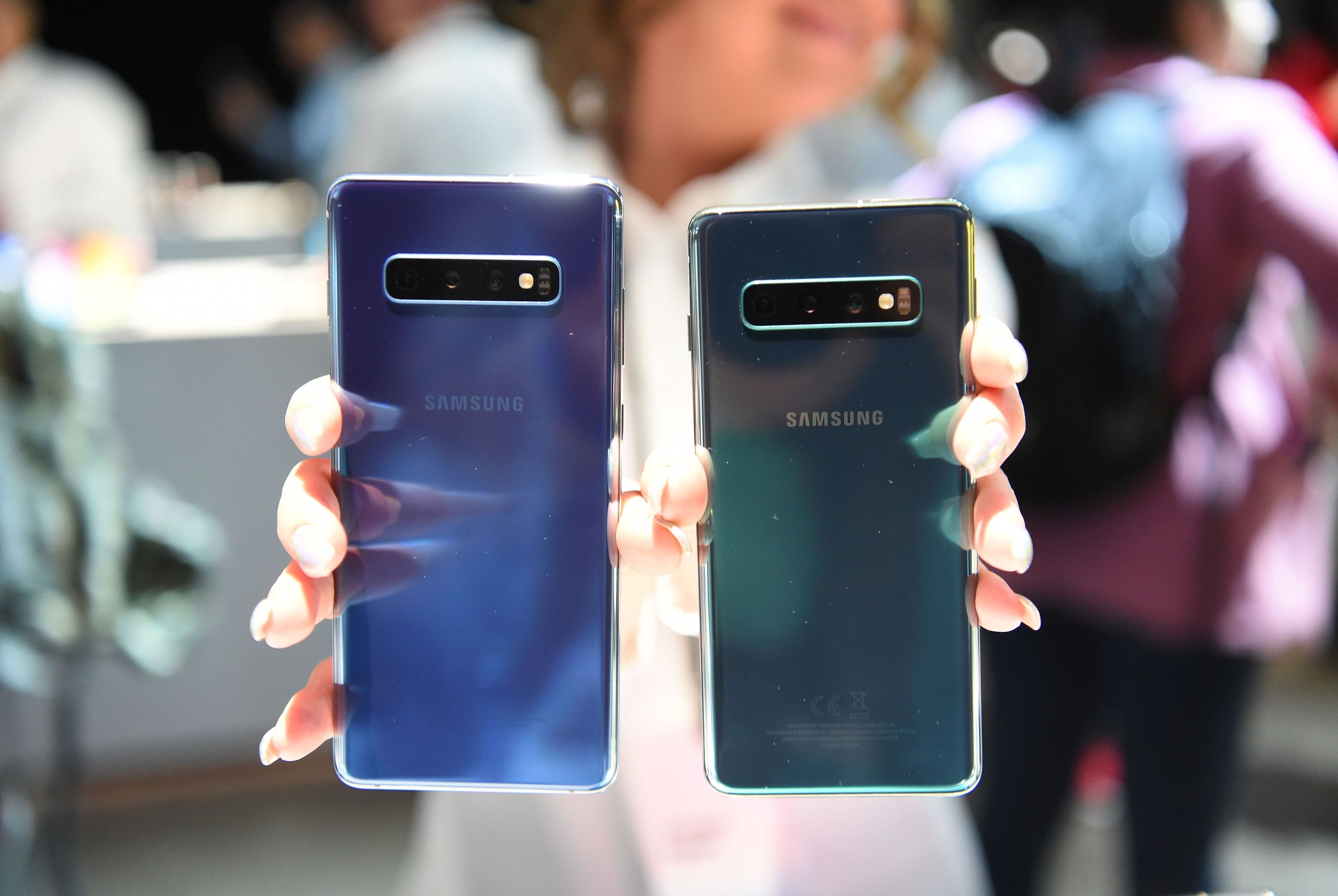
The Samsung Galaxy S10 lineup, released initially in early 2019, marked a decade of the South Korean manufacturer's Galaxy S brand. During this era, premium smartphones were transitioning toward punch-hole displays, multi-lens camera arrays, and ultrasonic in-display fingerprint sensors. Samsung positioned the Galaxy S10 as the quintessential modern smartphone for the mainstream enthusiast, featuring a curved Dynamic AMOLED display and a versatile triple-lens rear camera system.
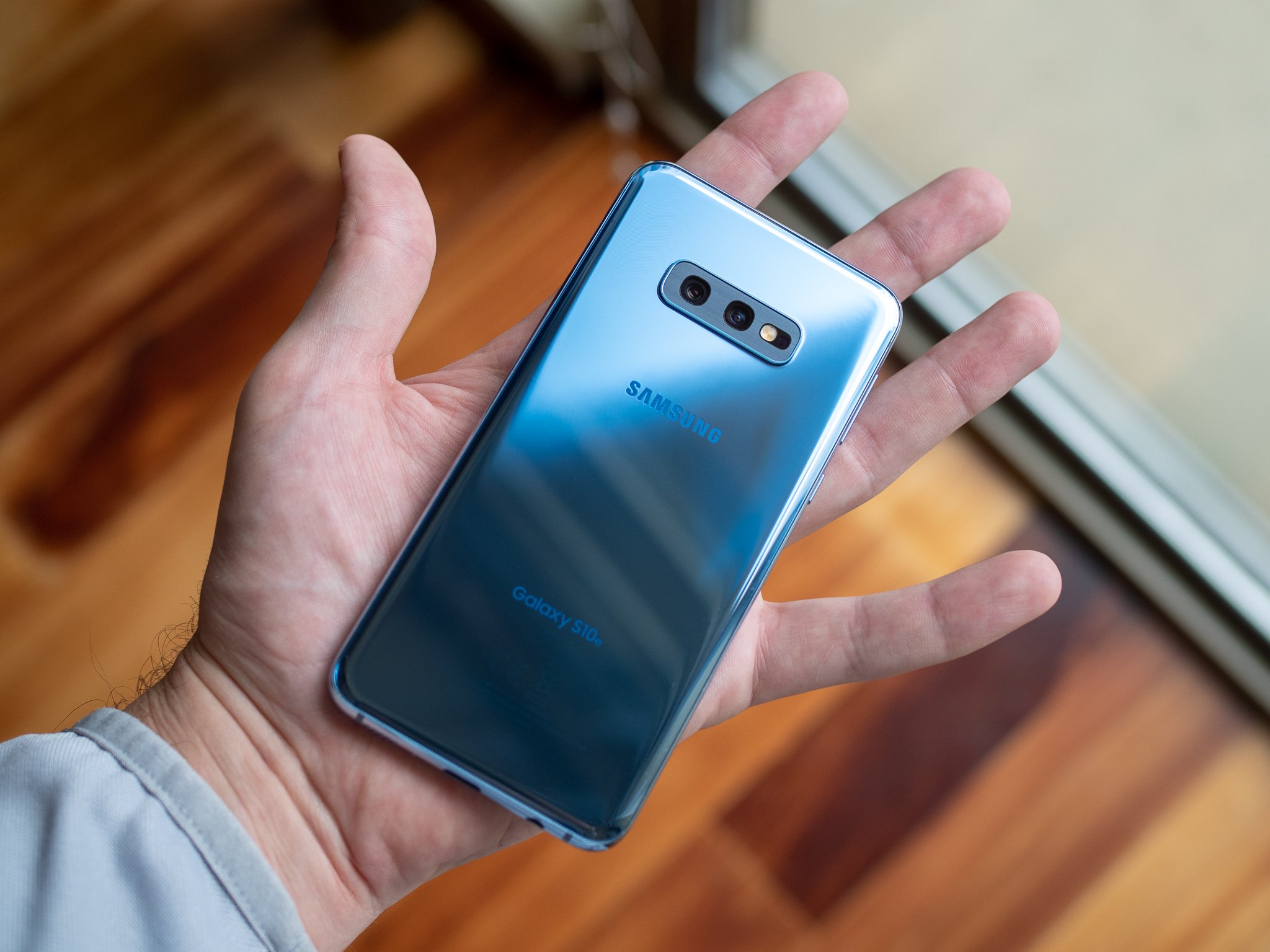
Conversely, the Galaxy S10e—where the "e" colloquially stood for "essential"—was designed to counter the growing market trend of oversized phones. By adopting a flat display, a more streamlined dual-lens camera setup, and a side-mounted capacitive fingerprint scanner embedded in the power button, Samsung delivered a pocket-friendly device. Despite these adjustments, the S10e shared the exact same primary system-on-chip (SoC), RAM configurations, and core software experience as its larger sibling, making it a unique proposition for buyers who prioritized ergonomics and value over maximal specifications.
Design, Build Quality, and Ergonomics
Physical form factor is arguably the most decisive differentiator when comparing the Samsung Galaxy S10e to the standard Galaxy S10. Both devices utilize a premium sandwich construction consisting of an aluminum frame bonded to Corning Gorilla Glass on both the front and the back. However, their structural geometries and tactile hand-feels diverge significantly.
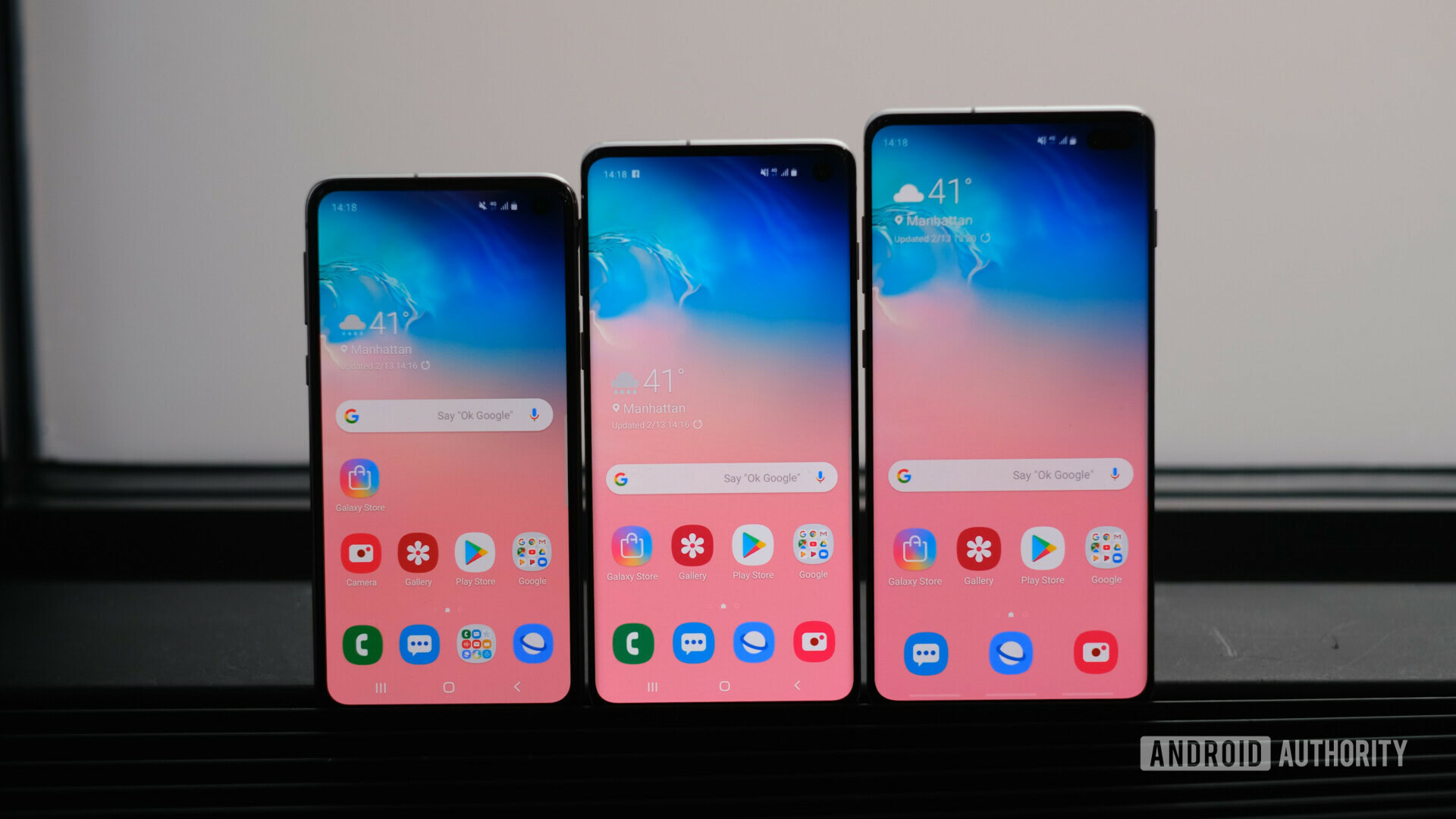
The standard Galaxy S10 features a curved glass display and a tapered rear glass panel, which allows the device to feel deceptively thin in the hand despite housing a larger battery. The curves wrap smoothly into the polished metal frame, offering a seamless aesthetic that minimizes side bezels. However, this curved design can occasionally lead to accidental palm touches along the edges, prompting some users to rely on thicker protective cases.
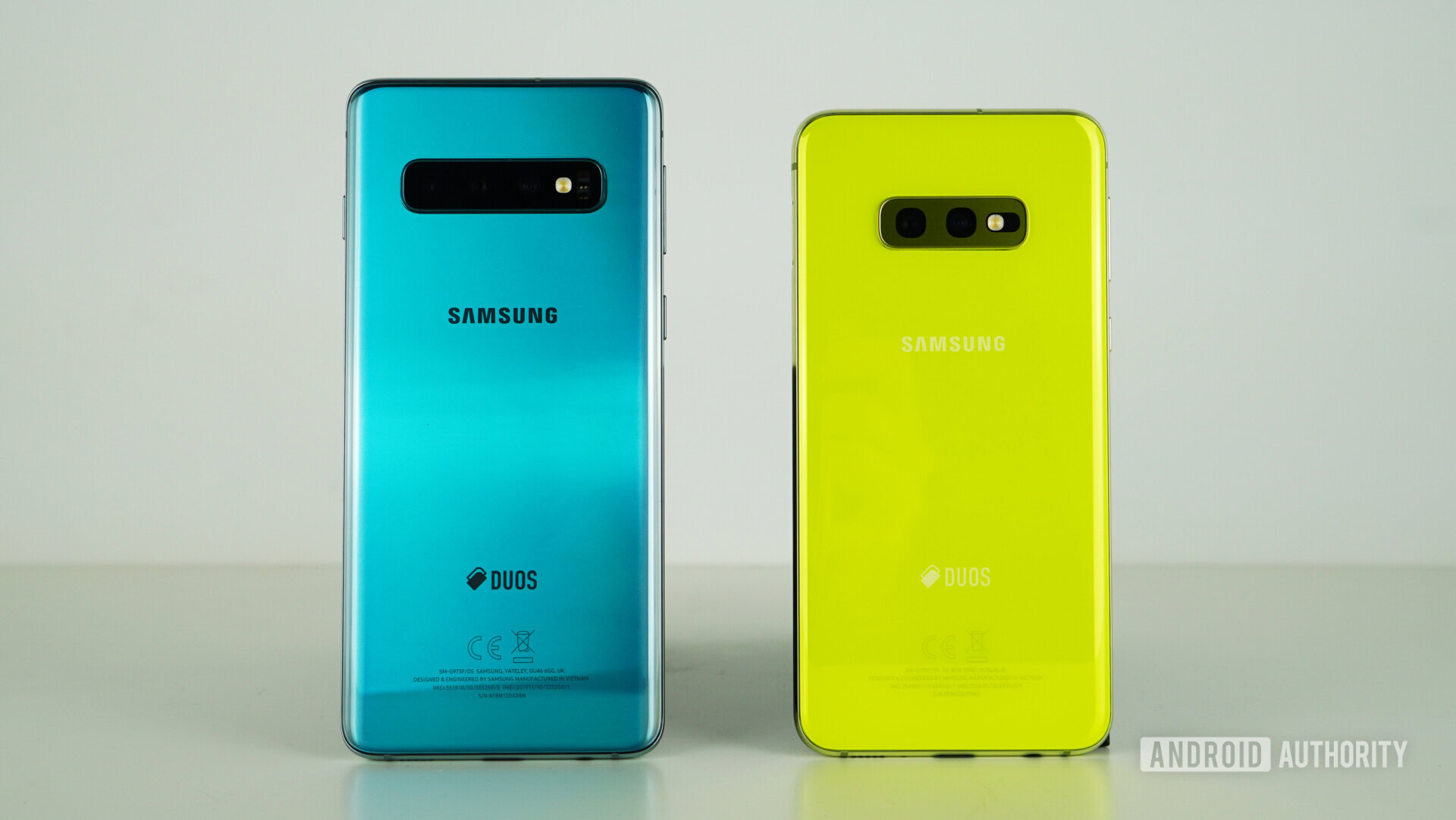
On the other hand, the Galaxy S10e embraces a completely flat display surrounded by slightly more uniform, though still minimal, bezels. The flat panel eliminates accidental edge inputs and makes applying traditional tempered glass screen protectors significantly easier. Measuring noticeably shorter and narrower than the standard S10, the S10e is exceptionally pocketable and easily operated with a single hand. For users fatigued by the industry-wide march toward phablet-sized dimensions, the S10e provides a refreshing return to compact ergonomics.
Display Technology: Curved Dynamic AMOLED Versus Flat Panel
Both smartphones feature Samsung’s industry-leading Dynamic AMOLED display technology, supporting HDR10+ content reproduction, vivid color calibration, and exceptional peak brightness levels capable of outdoor legibility. However, the physical dimensions, resolutions, and glass curvatures differ between the two models.
The Samsung Galaxy S10 is equipped with a 6.1-inch curved display sporting a Quad HD+ resolution of 3040 x 1440 pixels, yielding a dense pixel count of approximately 550 pixels per inch (ppi). This high resolution delivers razor-sharp text reproduction and pristine media consumption, though users could manually adjust the system display settings down to Full HD+ to conserve battery power.
The Galaxy S10e features a smaller 5.8-inch flat display with a Full HD+ resolution of 2280 x 1080 pixels, resulting in roughly 438 ppi. While mathematically lower in resolution than the standard S10, a pixel density exceeding 400 ppi remains well above the threshold where individual pixels can be distinguished by the human eye under normal viewing conditions. Both panels feature the signature Infinity-O punch-hole cutout in the upper-right corner to house the front-facing camera, avoiding the traditional display notch entirely.
Performance and Hardware Specifications
Underneath the exterior glass, the Galaxy S10e and the Galaxy S10 share identical internal computing architectures, ensuring that performance parity remains consistent regardless of which model a buyer selects.
Depending on the regional market distribution, these devices are powered by either the Qualcomm Snapdragon 855 processor (utilized in North America and China) or Samsung’s proprietary Exynos 9820 chipset (distributed in Europe, the Middle East, and parts of Asia). Both chipsets are built on an efficient manufacturing process and feature high-performance processing cores paired with a dedicated Neural Processing Unit (NPU) for machine learning tasks and artificial intelligence enhancements.
Memory and storage configurations represent another point of comparison:
- Samsung Galaxy S10e: Typically configured with 6GB of RAM and 128GB of internal storage, though certain markets received an 8GB RAM and 256GB storage variant.
- Samsung Galaxy S10: Standardized primarily with 8GB of RAM and options for either 128GB or 512GB of internal storage.
Both devices support expandable storage via a hybrid microSD card slot, allowing users to insert a card up to 512GB in capacity at the expense of the second SIM card slot in dual-SIM models. For day-to-bar operations, multitasking, and demanding 3D mobile gaming, both smartphones deliver snappy, responsive performance.
| Feature / Specification | Samsung Galaxy S10e | Samsung Galaxy S10 |
|---|---|---|
| Display Size & Type | 5.8-inch Flat Dynamic AMOLED | 6.1-inch Curved Dynamic AMOLED |
| Display Resolution | Full HD+ (2280 x 1080, ~438 ppi) | Quad HD+ (3040 x 1440, ~550 ppi) |
| Processor | Snapdragon 855 / Exynos 9820 | Snapdragon 855 / Exynos 9820 |
| RAM Options | 6GB or 8GB | 8GB |
| Internal Storage | 128GB or 256GB | 128GB or 512GB |
| Rear Camera Setup | Dual: 12MP Main + 16MP Ultra-Wide | Triple: 12MP Main + 12MP Telephoto + 16MP Ultra-Wide |
| Front Camera | 10MP Single | 10MP Single |
| Biometric Security | Side-mounted capacitive fingerprint scanner | Ultrasonic in-display fingerprint scanner |
| Battery Capacity | 3,100 mAh | 3,400 mAh |
| Headphone Jack | Yes (3.5mm) | Yes (3.5mm) |
Camera Capabilities and Optical Systems
Photography options represent one of the most substantial functional divergences between the two devices. While both phones capture excellent images utilizing Samsung’s color science and high-speed dual-pixel autofocus mechanisms, the hardware configurations differ.
The standard Galaxy S10 features a versatile triple-lens rear camera array:
- Main Wide Sensor: 12-megapixel sensor with a dual-aperture mechanism (f/1.5 and f/2.4) and Optical Image Stabilization (OIS).
- Ultra-Wide Sensor: 16-megapixel fixed-focus sensor with a 123-degree field of view.
- Telephoto Sensor: 12-megapixel sensor featuring OIS and 2x optical zoom capabilities.
The Galaxy S10e drops the third telephoto lens, retaining a dual-lens rear camera system consisting of the identical 12-megapixel main wide sensor and the 16-megapixel ultra-wide sensor. Consequently, users of the S10e must rely on digital zoom for distant subjects, whereas S10 owners can leverage optical telephoto magnification for portraits and close-up framing without degradation in optical detail.
Both devices feature a single 10-megapixel front-facing camera capable of dual-pixel autofocus and 4K video recording. Low-light performance, portrait blur simulation via software, and super steady video stabilization modes perform identically across both models.
Battery Life and Charging Technologies
Physical dimensions dictate internal component volume, which directly influences battery capacities across the lineup.
The Galaxy S10 houses a 3,400 mAh battery, while the smaller chassis of the Galaxy S10e accommodates a 3,100 mAh power cell. Although the S10e features a smaller battery capacity, its lower-resolution Full HD+ display draws marginally less power during media consumption compared to the higher-resolution panel on the standard S10. In practical day-to-day use, both devices offer comparable screen-on times, comfortably lasting through a standard workday of mixed messaging, web browsing, and social media engagement.
Both smartphones support fast wired charging via USB-C, fast wireless charging, and Samsung's Wireless PowerShare feature. Wireless PowerShare allows the back of the phone to act as an inductive charging pad, enabling users to wirelessly charge Qi-compatible accessories such as wireless earbuds or even another smartphone by placing them against the rear glass panel.
Biometric Security Mechanisms
Authentication hardware differs fundamentally between the two models, representing an engineering compromise to achieve different price points and form factors.
The standard Galaxy S10 introduces an ultrasonic in-display fingerprint scanner. This sensor utilizes high-frequency sound waves to map the unique 3D ridges of a user's fingerprint directly through the glass display panel. While futuristic and sleek, early software iterations of this ultrasonic reader occasionally required precise finger placement and received mixed user feedback regarding speed compared to traditional capacitive sensors.
The Galaxy S10e adopts a traditional capacitive fingerprint scanner integrated directly into the physical power button located on the right edge of the frame. Because the S10e is compact, a user's thumb rests naturally over this button when picking up the device, resulting in fast, reliable authentication that rarely suffers from misreads. Both models also support 2D facial recognition using the front-facing camera, though this method lacks the hardware-level security of dedicated depth-sensing sensors.
Audio, Connectivity, and Legacy Ports
A notable engineering triumph shared by both the Galaxy S10e and the Galaxy S10 is the retention of legacy hardware features that many competitors began omitting during this era. Both devices include a physical 3.5mm headphone jack, allowing users to plug in standard wired headphones or auxiliary audio cables without requiring external dongles.
Furthermore, both models feature stereo speakers tuned by AKG, supporting Dolby Atmos surround sound virtualization for enhanced media playback. Connectivity suites are identical, encompassing Wi-Fi 6 (802.11ax) support, Bluetooth 5.0, NFC for mobile payments, and ANT+ compatibility for fitness accessories. IP68 dust and water resistance ratings are also present on both phones, ensuring survival against accidental submersion in fresh water up to 1.5 meters for 30 minutes.
Software Ecosystem and Long-Term Support
Both smartphones launched running Samsung’s One UI interface built on top of Android, offering a heavily customized yet feature-rich user experience designed to facilitate comfortable one-handed navigation on tall screens. Features include system-wide dark mode, advanced notification management, secure folder encryption, and Samsung DeX support (on the standard S10, with S10e gaining DeX support via standard USB-C cable connection in later software updates).
From a software lifecycle perspective, both devices have completed their official manufacturer-supported major operating system upgrade windows. However, they remain fully functional on legacy firmware versions, supporting the vast majority of applications available on the Google Play Store as of 2026. Security updates have tapered off for these legacy models, making third-party security hygiene an important consideration for users who continue utilizing them daily.
Suitability and Buying Considerations
Choosing between the Samsung Galaxy S10e and the standard Galaxy S10 depends heavily on ergonomic preferences and photographic priorities.
The Samsung Galaxy S10e suits users who value a compact physical footprint, prefer a flat display that eliminates accidental edge touches, appreciate the reliability of a side-mounted physical fingerprint reader, and want flagship-grade processing power at a reduced acquisition cost. Its primary compromises—a slightly smaller battery, absence of a dedicated telephoto camera lens, and lower display resolution—are easily justified for minimalists and budget-conscious buyers.
The standard Galaxy S10 remains the preferred choice for media enthusiasts, mobile photographers who require optical zoom versatility, and users who prefer a larger, immersive curved display with higher pixel density and an in-display biometric sensor.
Frequently Asked Questions
Do the Samsung Galaxy S10e and Galaxy S10 use the same processor?
Yes, both devices utilize the exact same primary processor depending on the regional market variant. North American and Chinese models feature the Qualcomm Snapdragon 855 chipset, while global models feature the Samsung Exynos 9820 chipset. Performance speeds, gaming capabilities, and AI processing remain identical across both phones.
Does the Galaxy S10e have a headphone jack?
Yes, both the Galaxy S10e and the standard Galaxy S10 retain the physical 3.5mm headphone jack, allowing users to connect traditional wired headphones without requiring USB-C adapters or dongles.
Which phone has better battery life?
Battery longevity is closely matched between the two devices. While the standard Galaxy S10 features a larger 3,400 mAh battery compared to the 3,100 mAh cell in the S10e, the S10e powers a lower-resolution Full HD+ display, which consumes less energy. In practical day-to-day scenarios, both phones offer comparable screen-on times.
Can both phones be charged wirelessly?
Yes, both models support Qi wireless charging and include Samsung's Wireless PowerShare feature. This functionality enables either phone to act as a wireless charging mat to power up accessories like wireless earbuds or compatible smartphones.
Are cases and screen protectors interchangeable between the S10e and S10?
No, accessories are not interchangeable due to differences in physical dimensions, screen curvature, and camera module layouts. The Galaxy S10e features a smaller flat display and a dual-lens camera, whereas the standard S10 features a larger curved display and a triple-lens camera array.
Image Gallery