The Invention of the First Motion Picture Camera: Louis Le Prince in 1888
The first successful capture of moving images occurred in 1888, credited to French inventor Louis Le Prince. Using a single-lens camera he developed in Leeds, England, Le Prince filmed the "Roundhay Garden Scene," which remains the old...
The first successful capture of moving images occurred in 1888, credited to French inventor Louis Le Prince. Using a single-lens camera he developed in Leeds, England, Le Prince filmed the "Roundhay Garden Scene," which remains the oldest surviving motion picture, predating the more famous inventions of Thomas Edison and the Lumière brothers.
Contents
The Dawn of Moving Images: Understanding the 1888 Breakthrough
In the history of visual technology, 1888 stands as the definitive starting point for the moving image. While the term "video camera" is technically a 20th-century descriptor for electronic signal capture, the mechanical motion picture camera invented by Louis Le Prince provided the foundational logic for everything that followed. Before this breakthrough, "motion" was merely a series of static images viewed through devices like the zoetrope or phenakistoscope, which relied on the persistence of vision but could not record reality in real-time.
Louis Le Prince, an inventor and chemist, realized that to truly capture life, a device needed to record a sequence of photographs on a single continuous medium at a speed high enough to trick the human eye into perceiving fluid motion. In 1888, he achieved this using a single-lens camera and sensitized paper film. This was a radical departure from his earlier experiments with a 16-lens camera, which had proved cumbersome and produced disjointed perspectives.
The significance of the 1888 invention cannot be overstated. It transitioned humanity from the era of the "still" to the era of the "flow." By 2026, as we utilize high-bandwidth 8K streams and AI-generated cinematography, the underlying principle—capturing a temporal sequence of light data—remains exactly what Le Prince pioneered in a small garden in Yorkshire over 137 years ago.
The Technology Behind the Le Prince Single-Lens Camera
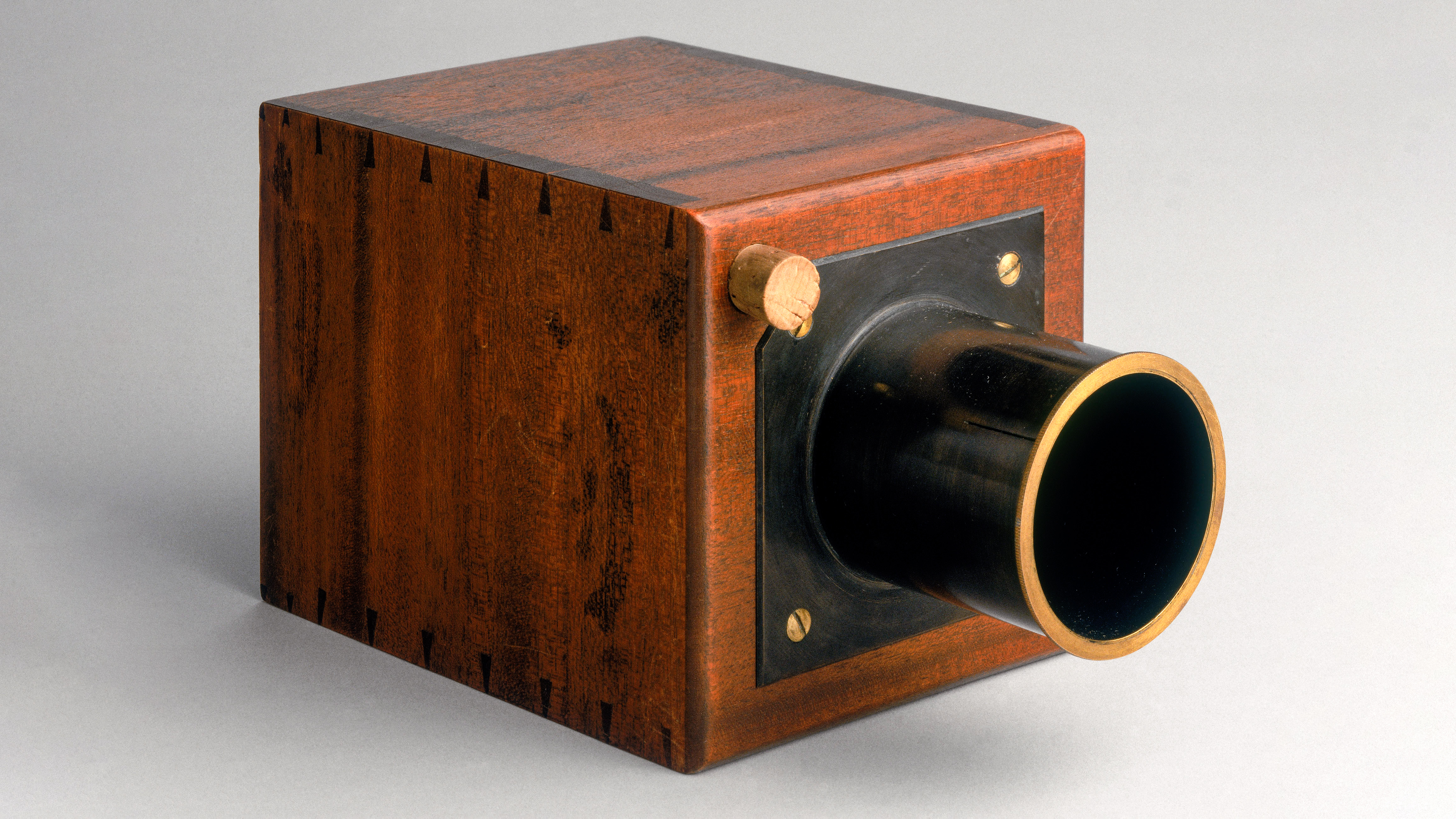
The 1888 Le Prince camera was a marvel of Victorian engineering. Unlike modern digital sensors that convert light into binary code, Le Prince’s camera was entirely mechanical and photochemical. The device utilized a hand-cranked mechanism to move a strip of paper film (later transitioning to celluloid) behind a lens.
Mechanical Synchronization
The primary challenge in 1888 was synchronization. For a film to look natural, the film strip must stop momentarily for the shutter to open and expose the frame, then move forward quickly while the shutter is closed. Le Prince developed a rudimentary intermittent motion mechanism to achieve this. This "stop-and-start" movement is what allowed the "Roundhay Garden Scene" to be recorded at approximately 12 to 20 frames per second.
The Recording Medium
In 1888, George Eastman had not yet perfected the mass-market celluloid roll film that would later empower Thomas Edison’s Kinetoscope. Consequently, Le Prince's earliest successful films were shot on paper strips coated with a light-sensitive photographic emulsion. This medium was fragile and lacked the transparency of later film stocks, which is why the surviving footage looks grainy and high-contrast. However, the proof of concept was undeniable: the camera could record live action as it happened.
Historical Context: Why Le Prince Predates Edison and the Lumières
Public consciousness often attributes the invention of the "video" or movie camera to Thomas Edison (1891) or Auguste and Louis Lumière (1895). However, historical records and surviving artifacts confirm that Le Prince was years ahead of his contemporaries.
The timeline of early cinematography is often clouded by patent wars and nationalistic pride, but the following table clarifies the developmental milestones of the late 19th century.
| Inventor | Device Name | Key Date | Recording Medium | Primary Achievement |
|---|---|---|---|---|
| Louis Le Prince | Single-Lens Cine Camera | 1888 | Sensitized Paper/Celluloid | First successful sequence of moving images |
| William Friese-Greene | Chronophotographic Camera | 1889 | Paper / Celluloid | Early UK patent for motion capture |
| Thomas Edison / W. Dickson | Kinetograph | 1891 | 35mm Celluloid | First commercially viable film system |
| Lumière Brothers | Cinématographe | 1895 | 35mm Celluloid | First projected film for a public audience |
Le Prince’s work remained largely obscured due to a historical tragedy. In September 1890, just as he was preparing to travel to the United States to publicly demonstrate his invention, he vanished from a train traveling between Dijon and Paris. His body and luggage—including his latest camera prototypes—were never found. This allowed Edison and the Lumières to dominate the narrative of film history for decades, despite Le Prince's documented 1888 success.
The Roundhay Garden Scene: The Oldest Surviving Film
The "Roundhay Garden Scene" is the primary evidence of the 1888 invention. Filmed in the garden of Joseph and Sarah Whitley (Le Prince's in-laws) in Roundhay, Leeds, the film lasts only a few seconds. It features four people walking in a circle and laughing.
Despite its brevity, the film provides critical data for historians:
- Frame Rate: Analysis suggests it was shot at roughly 12 frames per second.
- Lens Quality: The sharpness of the original frames indicates that Le Prince’s optics were sophisticated for the time.
- Subject Matter: Unlike earlier photographic studies (such as Eadweard Muybridge’s "The Horse in Motion," which used multiple cameras triggered by tripwires), Le Prince’s film captured spontaneous, continuous movement from a single vantage point.
This film was followed shortly by "Leeds Bridge," where Le Prince positioned his camera in an upstairs window to record the flow of horse-drawn carriages and pedestrians. This second film demonstrated the camera's ability to handle complex, high-speed movement, proving the invention was not a fluke but a functional technological system.
From Celluloid to Digital: The Evolution of the Concept
While the 1888 invention used chemical film, it established the framework for the eventual transition to electronic video. The journey from Le Prince's paper strips to the digital sensors of 2026 involves several key technical shifts:
- 1920s: Electronic Scanning: The invention of the Iconoscope and Image Dissector moved away from physical film toward electronic "scanning" of images, leading to television.
- 1950s: Magnetic Tape: The first Video Tape Recorders (VTR) allowed for the storage of electronic signals, moving "video" away from the need for chemical processing.
- 1970s: The CCD Sensor: Charge-Coupled Devices replaced vacuum tubes, allowing cameras to become portable and high-resolution.
- 2000s-2020s: CMOS and AI Integration: Modern cameras use CMOS sensors and artificial intelligence to process light data in real-time, yet they still rely on the "frame" concept established in 1888.
By 2026, the line between "film" and "video" has blurred entirely. We now use computational photography to fill in gaps between frames, but we are still fundamentally doing what Le Prince did: capturing a slice of time to be replayed later.
Challenges and Limitations of the 1888 Invention
To appreciate the achievement, one must understand the immense hurdles Le Prince faced. The 1888 camera was not a "point-and-shoot" device.
- Stability of the Medium: Paper film was prone to tearing and stretching. If the film stretched even a fraction of a millimeter, the images would appear to "jump" during playback.
- Processing Consistency: Developing a long strip of film in 1888 required massive vats of chemicals and precise timing to ensure the exposure was consistent from the first frame to the last.
- The Playback Problem: Le Prince struggled with projection. While he could record the images, creating a projector that could handle the heat of a lamp without burning the paper film was an ongoing challenge that he had not fully solved at the time of his disappearance.
Frequently Asked Questions
Did Louis Le Prince actually invent the video camera?
Technically, he invented the motion picture camera. The term "video" refers to the electronic representation of moving images, which wasn't developed until the 1920s. However, in common modern parlance, Le Prince is recognized as the first person to invent a device that could record "video" (moving life) on a continuous medium.
Why is Thomas Edison often called the inventor instead of Le Prince?
Edison was a master of patents and commercialization. His Kinetoscope was the first system to be marketed globally, and his legal team aggressively protected his claims. Because Le Prince disappeared before he could patent his work in the U.S. and demonstrate it publicly, his contribution was sidelined for nearly a century.
How was the 1888 footage recovered?
The original paper frames were preserved by the Le Prince family. In the 1930s, the Science Museum in London produced glass plate copies of the surviving frames. Modern digital restoration has since allowed these frames to be animated, giving us the fluid version of the "Roundhay Garden Scene" we see today.
What happened to the 1888 camera?
The original single-lens camera used to film the Roundhay Garden Scene is currently housed in the National Science and Media Museum in Bradford, UK. It remains one of the most significant artifacts in the history of communication technology.
Was the 1888 camera portable?
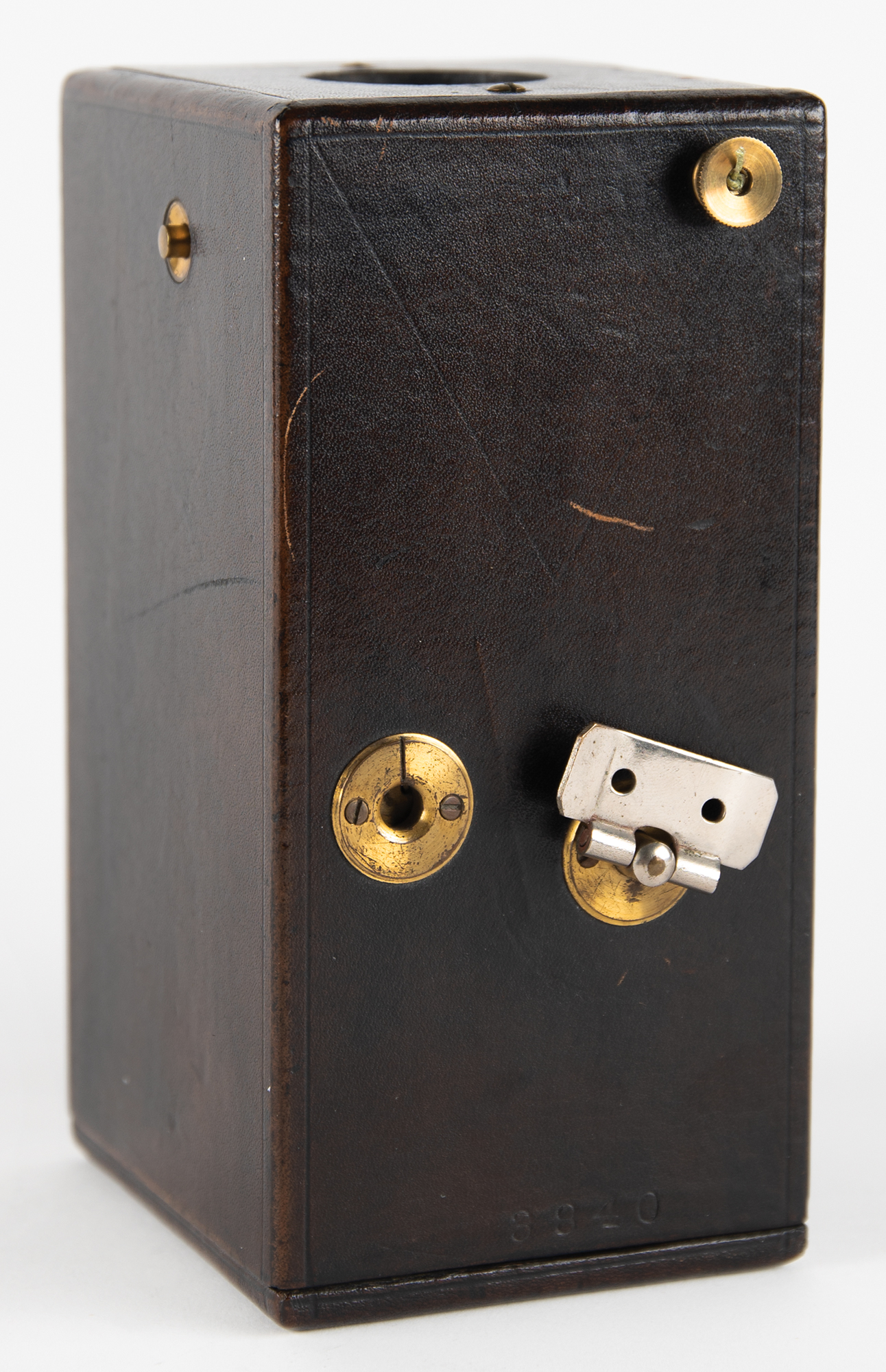
By the standards of the time, yes. It was a wooden box about the size of a large suitcase. While it required a sturdy tripod and a hand-crank to operate, it could be transported to various locations, as evidenced by Le Prince filming both in a private garden and on a busy city bridge.
Practical Recommendation for Historical Research
If you are researching the origins of cinematography or the history of visual media, it is essential to distinguish between the capture of motion (1888) and the projection of motion (1895). While the Lumière brothers revolutionized the "theatrical experience," the technical ability to record life began with Le Prince. For those interested in seeing the technology firsthand, a visit to the National Science and Media Museum provides the best technical insight into the mechanical intricacies of the 1888 prototypes.
Image Gallery