Understanding Philam Life Group Accident Insurance: Coverage, Benefits, and Practical Considerations
Philam Life group accident insurance provides financial protection and coverage against unforeseen injuries, disabilities, or death resulting from accidents for members of an organization, association, or company. Designed primarily as...
Philam Life group accident insurance provides financial protection and coverage against unforeseen injuries, disabilities, or death resulting from accidents for members of an organization, association, or company. Designed primarily as an employer-sponsored or group-affiliated benefit, this policy helps mitigate the sudden economic burdens associated with accidental mishaps, ensuring that policyholders and their designated beneficiaries receive timely monetary support during crises.
Contents
Navigating Group Accident Insurance Underwritten by Philam Life
Accident insurance policies structured for groups operate differently from individual retail insurance plans. When an organization partners with AIA Philam Life (officially operating as AIA Philippines, following its corporate rebranding from Philippine American Life and General Insurance Company), it negotiates a master contract tailored to the collective demographic profile, risk exposure, and budget of its workforce or association members.
Understanding how these group contracts function requires examining the underlying mechanics of master policies, premium structures, and enrollment parameters. Unlike individual policies where an applicant undergoes specific underwriting based on personal medical history, group accident insurance typically features simplified underwriting. This streamlined process relies heavily on the overall size of the group, the nature of the industry hazards involved, and a minimum participation percentage to remain active.
Furthermore, these plans serve as a valuable corporate retention tool. Employers utilize group accident coverage to complement mandatory government-mandated benefits such as the Social Security System (SSS) or Employees' Compensation Commission (ECC) in the Philippines, providing an extra layer of financial security that can differentiate an employer in a competitive labor market.
Core Features and Standard Coverage Options
Philam Life group accident insurance plans generally center around a core set of protections, though the exact limits and inclusions vary based on the specific master policy agreement executed between AIA Philippines and the corporate policyholder.
Accidental Death and Dismemberment (AD&D)
The foundational element of most group accident plans is the Accidental Death and Dismemberment benefit. If an insured individual suffers a fatal accident, the designated beneficiaries receive a predetermined lump-sum payout. In cases of non-fatal accidents resulting in the loss of limbs, sight, speech, or hearing, the policy pays out a scheduled percentage of the principal sum based on the severity of the permanent disablement.
Total and Partial Disability Benefits
Accidents often lead to temporary or permanent inability to work. Group accident policies frequently incorporate provisions for:
- Total Permanent Disability (TPD): A comprehensive payout if the insured is rendered entirely and permanently unable to engage in any occupation for profit.
- Temporary Total Disability (TTD): Weekly or monthly income replacement benefits if a covered accident temporarily prevents the employee from performing their regular occupational duties.
Medical Reimbursement and Accident Hospitalization
Beyond catastrophic losses, minor and moderate accidents generate immediate out-of-pocket medical expenses. Group policies often feature reimbursement riders for actual medical, surgical, hospital, and nursing expenses incurred as a direct result of a covered accidental injury, up to a specified maximum limit per accident.
| Coverage Type | Primary Purpose | Payout Structure |
|---|---|---|
| Accidental Death | Financial support for beneficiaries upon fatal injury | 100% of the Principal Sum (lump sum) |
| Dismemberment / TPD | Compensation for loss of limbs, sight, or total disability | Scheduled percentage or 100% of Principal Sum |
| Medical Reimbursement | Offset for out-of-pocket treatment costs | Actual expenses up to a contractual maximum limit |
| Weekly Indemnity | Income replacement during temporary total disability | Periodic payments based on basic salary or flat rate |
Eligibility, Enrollment, and Policy Administration
Securing and maintaining coverage under a Philam Life group accident policy involves strict adherence to administrative guidelines established by the insurer and the sponsoring organization.
Eligibility Criteria
To qualify for enrollment under a group master policy, individuals generally must:
- Be an active, full-time employee, officer, or recognized member of the policyholder organization.
- Fall within specific age brackets defined in the contract—typically ranging from 18 to 65 years old, with provisions for renewal up to age 70 or 75 subject to underwriting approval.
- Actively report to work or perform organizational duties on the effective date of coverage (the "actively-at-work" rule).
Enrollment and Premium Remittance
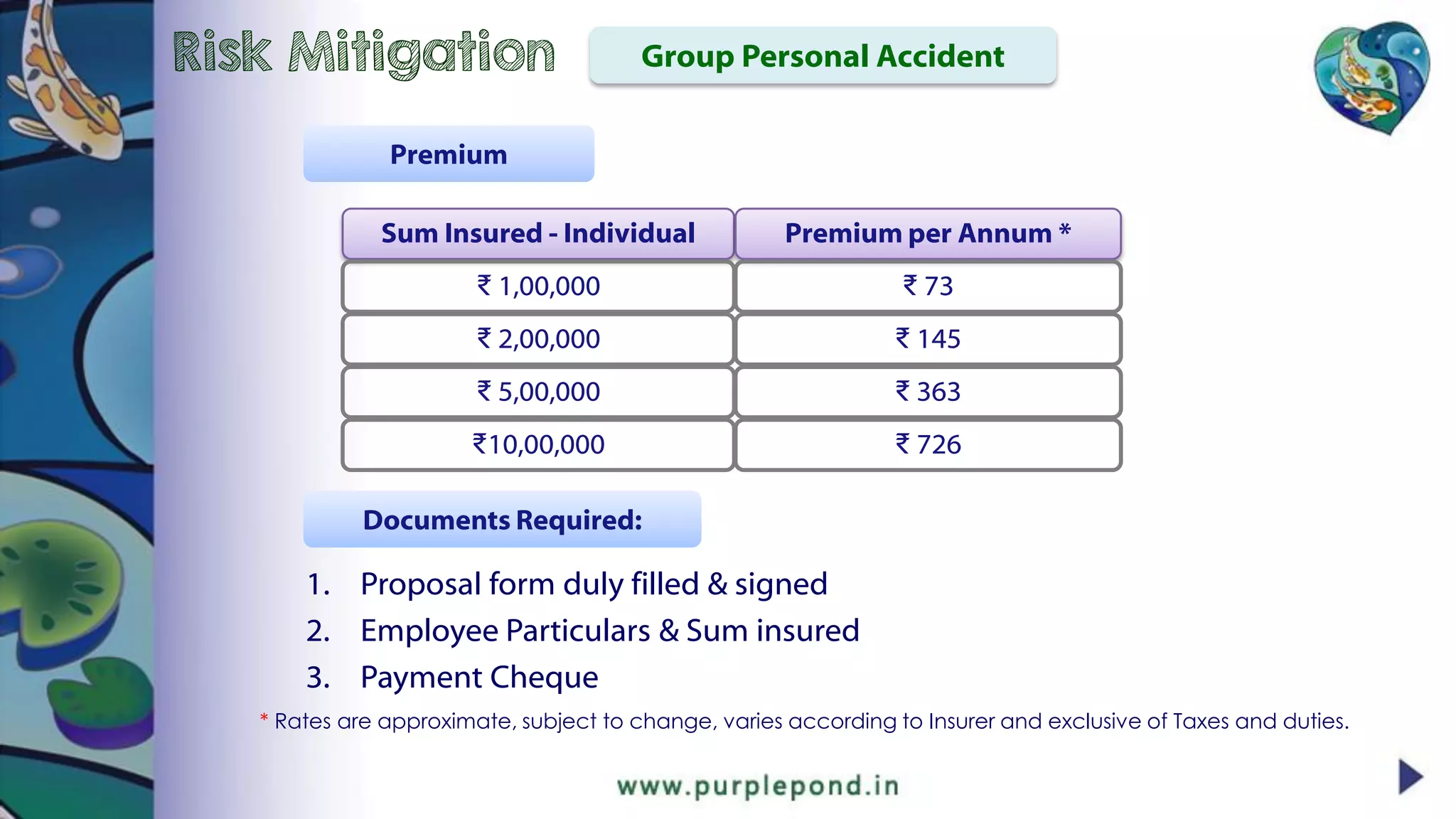
Enrollment is often automatic upon meeting the eligibility waiting period (e.g., passing a 30-day probationary period of employment). Premiums are calculated on a per capita basis or as a percentage of the total payroll, and they are typically paid directly by the employer (non-contributory plan) or shared with the employee via payroll deductions (contributory plan). Because administrative efficiency is paramount, human resources departments must promptly report additions, terminations, and status changes to AIA Philippines to ensure uninterrupted protection.
Filing Claims and Operational Requirements
When an accident occurs, navigating the claims process efficiently minimizes financial stress for the insured or their beneficiaries. Prompt notification and adherence to documentary requirements are critical for swift settlement.
Step-by-Step Claims Procedure
- Immediate Notification: Report the incident to the employer’s HR department or the group policy administrator as soon as possible. Most policies specify a strict timeline (often within 30 days of the accident) for formal written notice of claim.
- Document Gathering: Collect all requisite documents. Standard requirements for accident claims typically include:
- A completed AIA Philippines group claim form endorsed by the authorized corporate signatory.
- An official police report, incident report, or traffic accident investigation report (if applicable, such as for vehicular accidents or workplace mishaps).
- Original or certified true copies of medical certificates, physician statements, hospital bills, and itemized official receipts.
- Death certificate (in the case of fatal claims), along with proof of beneficiary identity and relationship.
- Submission and Verification: Submit the documentation package through the employer's HR benefits portal or directly to designated AIA Philippines corporate servicing channels. The claims underwriting team reviews the file to verify that the injury meets the policy definition of an "accident" (defined as a sudden, unforeseen, and involuntary event caused by external and visible means).
- Payout Disbursal: Upon approval, the insurance provider issues the benefit proceeds via electronic funds transfer or check, channeled through the corporate policyholder or paid directly to the verified beneficiary.
Limitations, Exclusions, and Risk Management
While group accident insurance provides robust protection, policyholders and insured members must remain aware of standard exclusions. Insurance contracts are legal agreements with defined boundaries; understanding what is not covered prevents misunderstandings during critical moments.
Common Exclusions
Standard group accident policies underwritten by major insurers like AIA Philippines typically exclude claims arising from:
- Intentional self-inflicted injury, suicide, or attempted suicide, regardless of mental state.
- Participation in hazardous sports or activities unless specifically endorsed and paid for via an underwriting rider (e.g., professional racing, scuba diving beyond recreational depths, mountaineering, or combat sports).
- Committing or attempting to commit a criminal offense.
- Service in the military, naval, or air forces of any country during a state of war or armed conflict.
- Being under the influence of alcohol (exceeding legal blood-alcohol limits) or unprescribed prohibited drugs.
- Natural death, illness, or bodily infirmity not directly traceable to an accidental bodily injury.
Frequently Asked Questions
What is the main difference between group accident insurance and individual life insurance?
Group accident insurance covers injuries, disabilities, or death specifically resulting from accidents during the active term of a master policy sponsored by an organization. Individual life insurance is purchased independently, covers both natural and accidental death, and typically includes savings or cash-value accumulation components.
Can employees customize or upgrade their group accident coverage?
Some corporate benefit programs offer voluntary contributory riders where employees can pay an additional payroll-deducted premium to increase their principal sum or add coverage for spouses and dependents. Availability depends entirely on the master agreement negotiated by the employer with AIA Philippines.
Does Philam Life group accident insurance cover accidents happening outside of work?
Yes. Unless explicitly restricted to occupational hazards only (24-hour versus occupational-only coverage), standard group accident policies provide round-the-clock, worldwide protection, covering insured individuals during non-working hours, weekends, and personal travel.
What happens to the insurance coverage when an employee leaves the company?
Group coverage terminates automatically upon separation from employment or the sponsoring organization, as the policy is tied to the master contract. Many group contracts, however, include conversion privileges that allow the departing individual to shift to an individual retail policy without undergoing new medical underwriting, subject to specific time limits and premium adjustments.
How are benefit payouts calculated for partial dismemberment?
Payouts for partial permanent disabilities are determined by a fixed percentage table stipulated in the master policy contract. For example, the loss of one index finger may pay out a smaller fraction (e.g., 10%) of the total principal sum, while the loss of an entire hand or foot typically commands a higher percentage (e.g., 50%).
Practical Next Steps for Organizations and Members
For employers looking to establish or review their employee benefits suite, consulting with corporate account executives at AIA Philippines provides clarity on group sizing thresholds, premium rate tables, and tailored rider options. For covered employees and members, reviewing the organizational certificate of insurance (COI), verifying designated beneficiaries, and maintaining digital copies of human resources contact protocols ensures readiness should an unexpected accident occur.
Disclaimer: Insurance policies, underwriting guidelines, and contractual terms are subject to specific master contract provisions, regulatory frameworks, and statutory updates in the Philippines. Organizations and individuals should review their exact policy documents or consult directly with official representatives of AIA Philippines for precise benefit confirmations.
Image Gallery