The Final Destination Train Crash Explained: Death’s Climax and Ending Breakdown
The train crash at the end of Final Destination 3 represents Death completing its grand design by eliminating the remaining survivors of the Devil’s Flight rollercoaster disaster. Taking place on McKinley Subway Train 081 five months l...
The train crash at the end of Final Destination 3 represents Death completing its grand design by eliminating the remaining survivors of the Devil’s Flight rollercoaster disaster. Taking place on McKinley Subway Train 081 five months later, the derailment is triggered by mechanical failure and track sabotage, resulting in the unavoidable deaths of Julie, Kevin, and Wendy.
Contents
Understanding the Climax of Final Destination 3
The climactic subway train crash in Final Destination 3 (2006), directed by James Wong, serves as the definitive resolution to the movie's central narrative. Throughout the Final Destination franchise, the core premise relies on a simple yet relentless supernatural rule: when a visionary protagonist receives a premonition of a catastrophic mass-casualty event and saves a group of people, Death systematically hunts down those survivors in the precise order they were original scheduled to die.
In Final Destination 3, high school senior Wendy Christensen (played by Mary Elizabeth Winstead) experiences a horrific vision of a derailment on the "Devil's Flight" rollercoaster at an amusement park. Her panic leads to a physical altercation, resulting in several teenagers getting kicked off or leaving the ride before it undergoes a structural failure that kills everyone on board. Over the course of the film, Wendy and fellow survivor Kevin Fischer (Ryan Merriman) work through a photo-based clue system to predict and attempt to intervene in the deaths of their classmates.
By the third act, Wendy, Kevin, and Wendy's younger sister, Julie (Amanda Crew), believe they have successfully broken Death’s pattern. Having intervened during a chaotic town festival to save Julie and Kevin, Wendy assumes that Death's list has been reset or bypassed. The film then jumps forward five months in time. Wendy is now attending college in New York, attempting to move forward with her life. However, boarding an underground metro train brings her face-to-face with the reality that Death's design was never defeated—it was merely delayed.
How the Subway Train Crash Happens: A Step-by-Step Breakdown
The subway sequence is constructed with meticulous suspense, building from subtle, unsettling atmospheric details into a chaotic, violent disaster. Understanding how the crash unfolds requires examining both the physical chain reaction that causes the train to derail and the eerie foreshadowing that precedes it.
The Setting and Environmental Clues
Five months after the rollercoaster accident, Wendy boards Subway Train 081. Unbeknownst to her at first, both her sister Julie and her friend Kevin are also on the same train line. Before any mechanical failure occurs, the scene establishes heavy environmental foreshadowing:
The Busker and the Song: A street performer on the station platform plays "Turn Around, Look at Me" by The Lettermen on an acoustic guitar. This specific song had previously played on car radios during earlier fatal incidents in the movie, acting as an auditory warning sign that Death is active.
Station Advertisements: As Wendy sits on the train, the camera focuses on posters and subway ads lining the interior and tunnel walls. These ads display subtle references to previous victims, including tanning salon imagery (referencing Ashley and Ashlyn) and motor oil promotions (referencing Frankie Cheeks).
The Train Number Anagram: The designation of the subway car, 081, appears reflected in a glass window adjacent to a metal bar. In the reflection, the numbers mirror and invert to read 666, the traditional apocalyptic symbol representing absolute doom.
SUBWAY TRAIN 081 DISASTER
- [Cause 1: Discarded Debris / Switch Jam]
- [Cause 2: Mechanical Axle / Fastener Breakdown]
- High-Speed Derailment at Track Switchboard
- Fatal Impact 1: Julie Christensen (Pinball Debris)
- Fatal Impact 2: Kevin Fischer (Tunnel Wall Impact)
- Fatal Impact 3: Wendy Christensen (Oncoming Train)
- High-Speed Derailment at Track Switchboard
The Chain Reaction of Premonition Mechanics
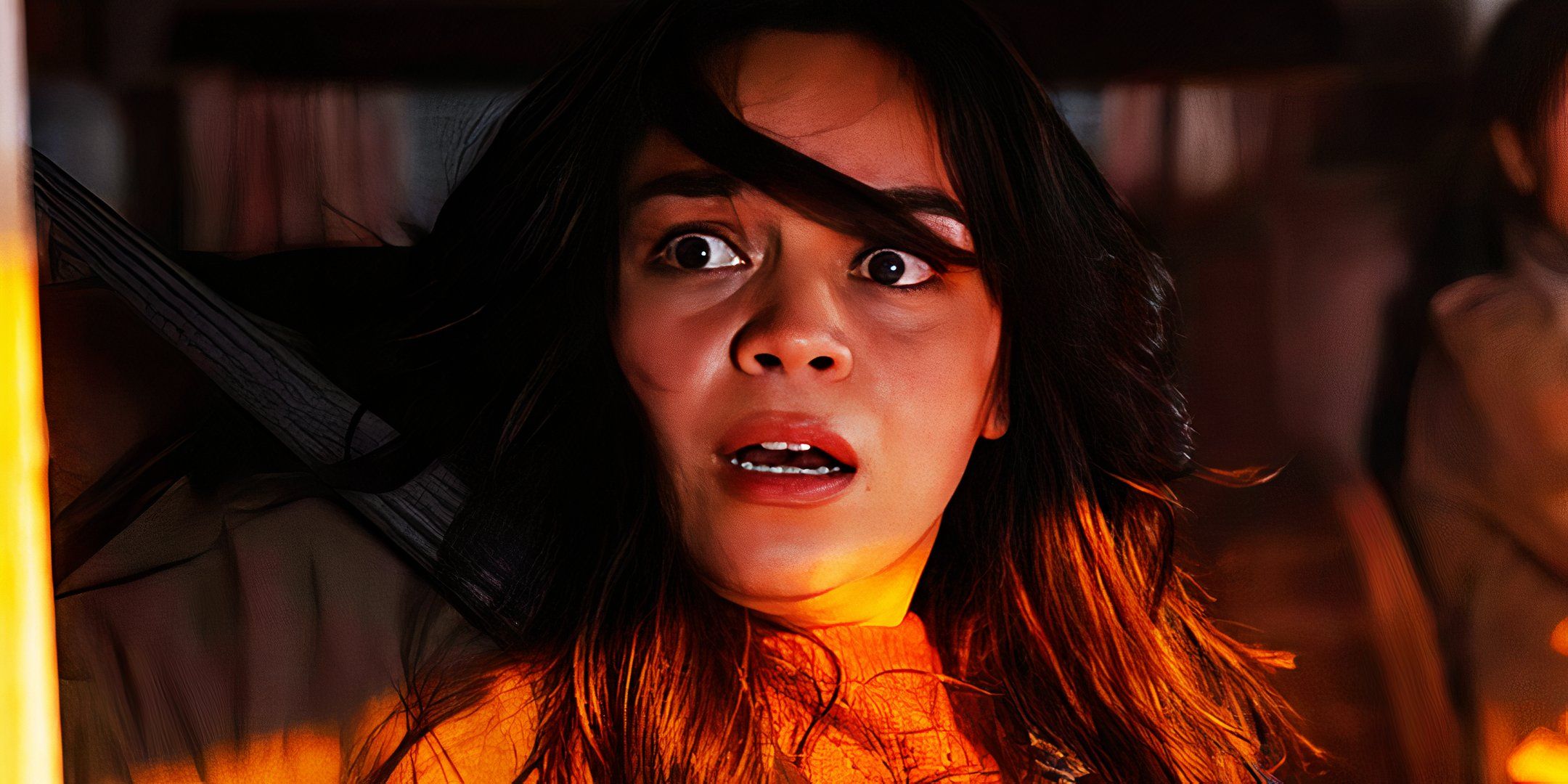
As the train picks up speed in the dark tunnel, Wendy experiences her second major premonition of the film. In this vision, the physical mechanics of the train crash are laid out in graphic detail:
- Track Interference: A discarded food container or wrapper, combined with loose debris near a junction box, interferes with a manual track switch mechanism.
- Mechanical Rupture: Concurrently, an undercarriage bolt on Train 081 shears off due to excessive friction and stress. This causes a wheel assembly to detach or lock up while the train travels at full operational speed.
- Derailment: When the train hits the compromised track switchboard, the locked wheel assembly digs into the concrete ties. The train violently leaves the rails, slamming against the narrow concrete walls of the subway tunnel at high velocity.
The Fatalities in Wendy’s Vision
Inside the vision, Death dispatches the three remaining survivors in rapid succession, adhering strictly to the remaining order of the list:
- Julie Christensen: As the train cars crumple and slide sideways, heavy metal equipment and handrails break loose. A sharp, flying mechanical component pinballs through the interior, impaling and bisecting Julie almost instantaneously.
- Kevin Fischer: The lateral impact of the train against the tunnel wall shatters the reinforced glass windows. Kevin is thrown forcibly against the side of the car, pulled through the broken window, and pulverized between the moving train body and the solid concrete tunnel wall.
- Wendy Christensen: The train car breaks completely apart, throwing Wendy onto the active parallel tracks. Injured and unable to move, she looks up to see an oncoming metro train traveling in the opposite direction, which runs her down.
Premonition vs. Reality: Did They Actually Die?
One of the most frequently discussed aspects of Final Destination 3 is its ambiguous cut-to-black ending. Viewers often ask whether the train crash actually happened in reality, or if Wendy was able to prevent it after snapping out of her premonition.
When Wendy emerges from her vision back into reality, she is in a state of sheer panic. She realizes that Kevin and Julie are on the same train car with her, confirming that Death has gathered all remaining survivors in a single enclosed space. Recognizing the danger, Wendy frantically attempts to stop the train:
- Wendy rushes to the emergency brake lever located near the end door of the train car and pulls it.
- Kevin attempts to assist her, but the emergency mechanical override fails to stop the train in time due to its high speed and proximity to the faulty track switch.
- Wendy looks at Kevin and Julie, realizing that there is no exit, no time to jump, and no way to alter the physical momentum of the vehicle.
Instead of showing the physical impact again in real-time, the camera shifts perspective just as the screeching of tearing steel reaches its peak. The screen cuts abruptly to total black. In the darkness, the sound effects continue: high-pitched metal tearing, grinding brakes, crushing concrete, and the distinct sound of bones snapping, followed by absolute silence.
Director Intent and Narrative Lore
Director James Wong and co-writer Glen Morgan intentionally structured the ending to cut to black to avoid repeating the gory visuals that were just demonstrated in the premonition sequence. The audio design provides explicit, undeniable evidence: the train derails, crashes, and kills Wendy, Kevin, and Julie.
Unlike the opening rollercoaster disaster—where Wendy had several minutes on the platform to cause a scene and physically leave the ride—the subway train is a closed, high-speed system deep underground. Once the doors closed and the train entered the tunnel, the physical conditions for the disaster were already set in motion. There was no physical escape route, establishing that Death’s design had reached its inevitable conclusion.
Death’s Rules and the Mechanism of the "List"
To fully comprehend why the train crash was unavoidable, one must examine the supernatural logic established across the Final Destination universe.
- [Disaster Premonition Occurs]
- [Intervention Saves Victims]
- [Death Pursues Victims in Order]
- [Skipped / Postponed]
- [Direct Fatality]
- [Group Climax: No Escape Possible]
The Rule of Intervention and Postponement
When a protagonist saves someone from an impending death in the franchise, Death does not forgive the debt. Instead, the entity skips that person temporarily and moves to the next individual in line.
In Final Destination 3, Wendy and Kevin intervened multiple times to save people earlier on Death's list. However, skipping a survivor merely moves them to the back of the queue; it does not erase them from the list entirely. Once Death completed the initial pass on the other carnival-goers (such as Frankie, Lewis, Ashley, Ashlyn, Perry, and Ian), the list cycled back to the remaining three: Julie, Kevin, and finally Wendy.
The Five-Month Time Gap
A common question regarding the subway crash is why Death waited five months to strike. Within the lore of the series, Death operates on meticulous logistical timing. After Ian McKinley was crushed by the falling cherry-picker sign at the festival, Death needed to create a scenario where all three remaining survivors would be located in the exact same unescapable environment.
The five-month gap allowed:
- Julie to recover emotionally and travel.
- Wendy to move away to college.
- Kevin to cross paths with them on a public transit route without raising suspicion.
Death used this time to align their schedules, ensuring that when the final trap was sprung, no external intervention could pull them off the tracks.
Disasters Across the Final Destination Franchise: A Comparison
The subway train derailment in Final Destination 3 is part of a broader cinematic pattern of transportation disasters throughout the film series. Each entry features a signature multi-vehicle or high-occupancy transport catastrophe that serves as either the opening incident or the final trap.
| Film Title | Primary Opening Disaster | Climax / Ending Location | Key Cause of Disaster | Final Outcome for Main Survivors |
|---|---|---|---|---|
| Final Destination (2000) | Volatilization of Volney Air Flight 180 | Paris / Street Corner (Off-screen / Sequel context) | Electrical short circuit and fuel line rupture | Alex, Clear, and Carter survive initially; Carter killed in climax; Alex and Clear killed off later |
| Final Destination 2 (2003) | Route 23 Highway Log Truck Pileup | Lake House / Hospital Fire | Unsecured log load on flatbed truck | Kimberly Corman and Thomas Burke cheat Death via clinical rebirth/resuscitation |
| Final Destination 3 (2006) | Devil's Flight Rollercoaster Derailment | McKinley Subway Train 081 | Structural fatigue, hydraulic line snap, sensor failure | All remaining survivors (Julie, Kevin, Wendy) die in subway derailment |
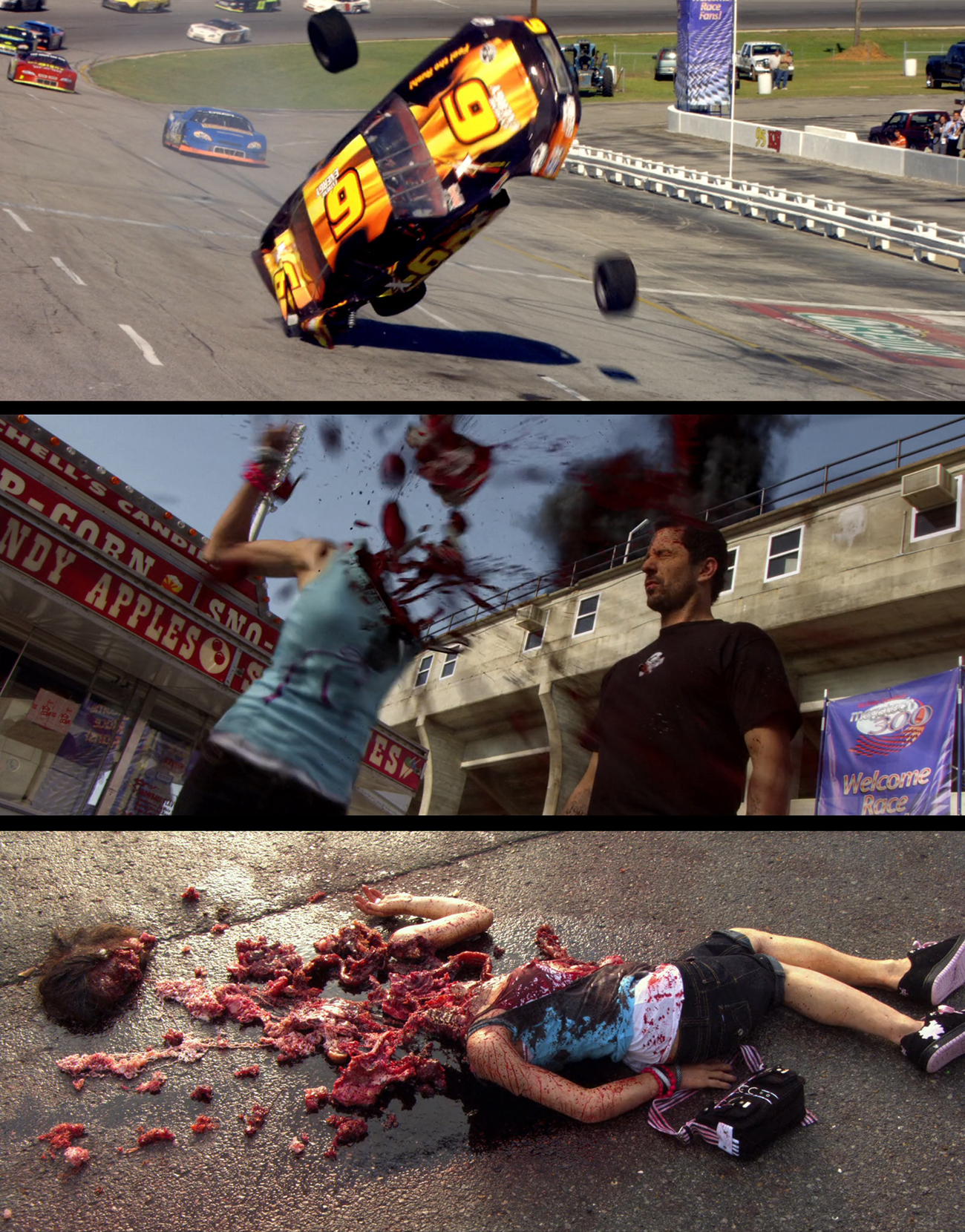
| The Final Destination (2009) | McKinley Speedway Grandstand Collapse | Cinema / Cafe Semi-Truck Crash | Loose maintenance tools, fuel line explosion | All remaining survivors killed when runaway semi-truck crashes through cafe |
| Final Destination 5 (2011) | North Bay Suspension Bridge Collapse | Volney Air Flight 180 (Prequel Twist) | High winds, construction defects, cable snapping | Sam and Molly die on Flight 180; Nathan killed by landing gear debris |
Symbolism and Easter Eggs in the Subway Scene
The subway sequence is filled with visual symbolism, thematic callbacks, and hidden Easter eggs that enrich the viewing experience for film analysis.
The Photo Clues and Visual Foreshadowing
Throughout Final Destination 3, digital photographs taken by Wendy at the carnival act as omen cards, revealing how each person will die. During the subway ride, Wendy flips through these photos on her digital camera or reflects on them:
- Julie's Photo: Julie was photographed in front of a carousel horse; she was almost impaled by a runaway horse trailer at the town fair, and in the subway, she is killed by flying mechanical debris resembling a runaway vehicle part.
- Kevin's Photo: Kevin was photographed close to a blinding camera flash that turned his face white; in his death, his face is crushed directly against the glass window illuminated by tunnel lights.
- Wendy's Photo: Wendy's own photo featured a sign pointing to the "High Dive" and "No Exit." The subway tunnel represents a literal subterranean chute with no physical exit.
Sound Design and Audio Motifs
The choice of "Turn Around, Look at Me" as the recurring musical motif reinforces the concept of an invisible, omnipresent stalker. The lyrics directly address an unseen entity watching someone's every move. When heard on the acoustic guitar on the metro platform, it signals to both Wendy and the audience that Death has caught up to them.
Furthermore, the audio design during the final cut to black features distinct metal screeching notes that match the sound of the Devil's Flight rollercoaster tracks shearing apart in the opening scene, bringing the narrative full circle.
Frequently Asked Questions
Did anyone survive the train crash at the end of Final Destination 3?
No. Although the movie cuts to black before showing the graphic physical impacts in real-time, the screeching metal, bone-crushing sound effects, and director commentary confirm that Wendy Christensen, Kevin Fischer, and Julie Christensen all perished in the derailment of Subway Train 081.
What physically caused the subway train to derail?
The derailment was caused by a combination of a broken or jammed track switchboard (partially obstructed by dropped trash and debris) and a mechanical failure in the train's undercarriage, where a mounting bolt sheared off, locking a wheel assembly at high speed.
What is the significance of the train number 081?
The train number 081 is a visual anagram and mirror trick. When viewed in the reflection of the subway car's glass window, the numbers appear flipped and mirrored to read 666, a widely recognized symbolic number representing death and destruction.
Why did Death wait five months to kill the last three survivors?
Death waited five months because it required time to align the schedules, locations, and travel routes of Wendy, Kevin, and Julie. By gathering all three onto a moving subway train deep underground, Death created an environment where manual escape or external intervention was physically impossible.
Was the subway scene in Final Destination 3 real or a vision?
The sequence contains both. First, Wendy experiences a full premonition of the derailment while riding the train. When she wakes up from the premonition, she realizes the events leading to the crash are already happening in reality. She attempts to pull the emergency brake, but it fails, and the train derails in reality off-screen as the audio confirms their deaths.
Cinematic Analysis and Narrative Impact
The train crash at the end of Final Destination 3 remains one of the most celebrated set pieces in horror film history because it subverts the traditional "final girl" survival trope. In typical horror narrative structures, the protagonist earns safety by understanding the rules of the antagonist and defeating them in the final act.
By contrast, the Final Destination series uses the subway sequence to reinforce its core thesis: mortality is absolute, and fate cannot be permanently rewritten. The mechanical detail of the derailment, paired with deliberate visual clues and atmospheric audio design, turns Subway Train 081 into a cold, unavoidable machine of fate. For viewers and screenwriters alike, the scene serves as an exceptional lesson in visual foreshadowing, suspense construction, and narrative closure.
Image Gallery