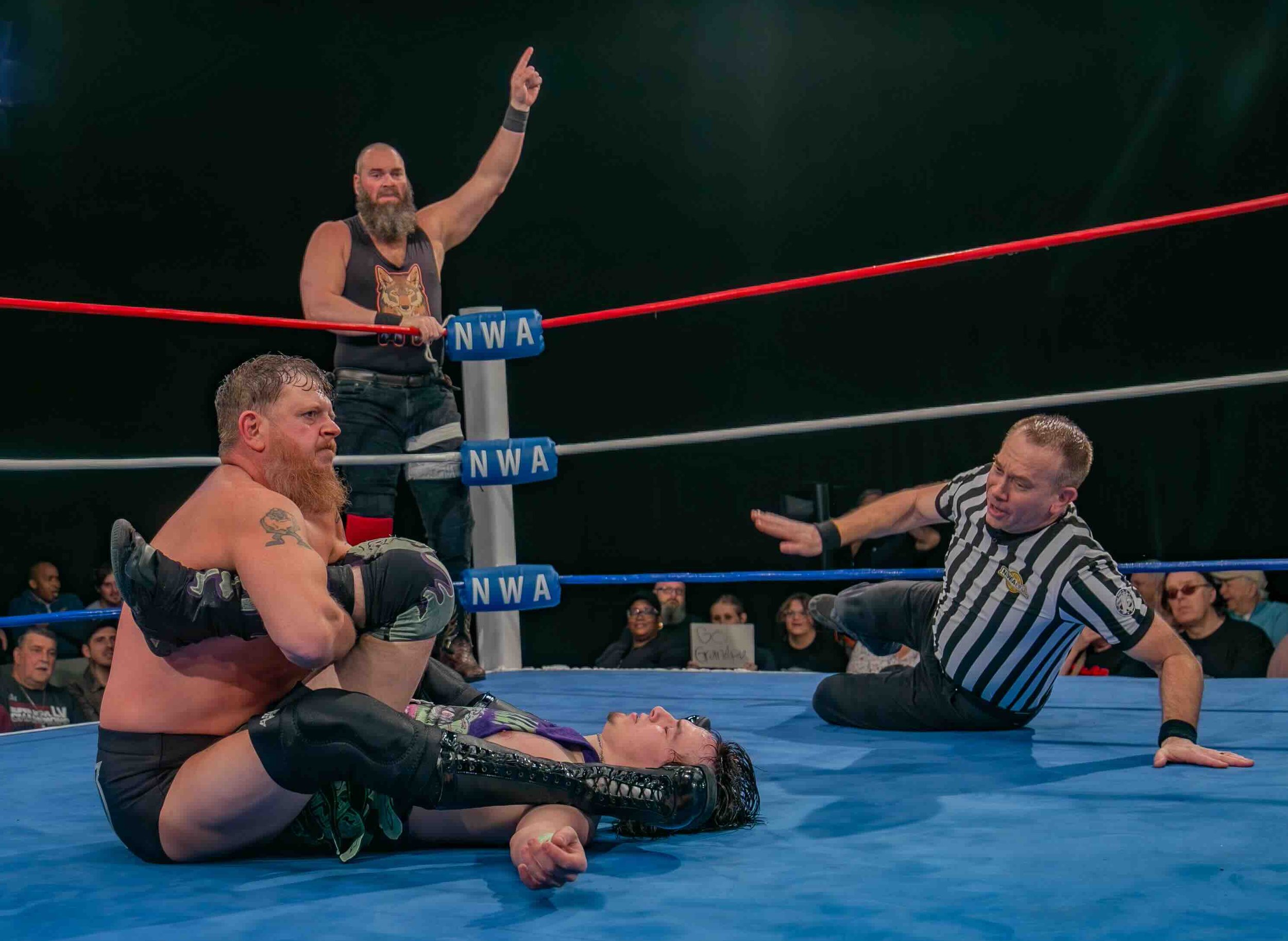
National Wrestling Alliance Wrestlers: Roster Breakdown, Champions, and Historical Legacy (2026)
National Wrestling Alliance wrestlers encompass both elite modern performers and the historical icons of professional wrestling's oldest governing body. Operating under Lightning One ownership in 2026, the NWA features a hybrid roster...
National Wrestling Alliance wrestlers encompass both elite modern performers and the historical icons of professional wrestling's oldest governing body. Operating under Lightning One ownership in 2026, the NWA features a hybrid roster of exclusive contract competitors and premier independent performers who compete across divisions for classic titles like the NWA Worlds Heavyweight Championship.
Contents
The Unique Ecosystem of Modern NWA Wrestlers
The landscape for National Wrestling Alliance (NWA) wrestlers differs fundamentally from major corporate sports entertainment properties. Founded in 1948 as a governing umbrella over regional territories, the NWA transitioned in the late 2010s under the leadership of William Patrick Corgan (Lightning One) into a centralized promotion. In 2026, NWA wrestlers operate within a studio-centric broadcasting model primarily showcased on NWA Powerrr and flagship pay-per-view events.
Unlike wrestlers signed to multi-year, fully exclusive domestic touring contracts, NWA talent operates under a structured hybrid system. The organization maintains a core nucleus of contracted featured talent while routinely integrating rising stars from the global independent scene and regional affiliate partners.
This model allows NWA wrestlers to hone a specific style rooted in traditional professional wrestling psychology, promo-driven storytelling, and physical believability. The presentation deliberately mirrors the classic studio wrestling aesthetic of the 1970s and 1980s—specifically Georgia Championship Wrestling and Mid-Atlantic Championship Wrestling—while utilizing modern digital distribution networks including YouTube and streaming apps.
Key Takeaway: The modern NWA roster acts as a bridge between classic studio-era wrestling psychology and the contemporary independent circuit, offering wrestlers a high-visibility platform without entirely restricting their global booking opportunities.
Division Breakdown and Active Title Picture
The NWA roster is divided into structured championship divisions, each tailored to highlight specific wrestling disciplines. Understanding the championship hierarchy provides direct insight into how talent is positioned on NWA programming.
- NWA Roster Hierarchy
- World Men's Division (NWA Worlds Heavyweight Championship)
- World Women's Division (NWA World Women's Championship / Burke Trophy)
- Tag Team Divisions (NWA World Tag Team & World Women's Tag Team)
- Mid-Card & Specialty Divisions (NWA National, World Junior Heavyweight, TV Titles)
1. The Worlds Heavyweight Division
The pinnacle of the NWA roster centers around the pursuit of the NWA Worlds Heavyweight Championship, famously known as the "Ten Pounds of Gold." Wrestlers in this division represent the heavyweight standard of the promotion, combining power, endurance, and mic work. In 2026, contenders must maintain a rigorous schedule of studio tapings and live signature events such as the annual NWA Anniversary show.
2. The Women's Division (The Burke Era)
The NWA World Women's Championship carries a heritage dating back to Mildred Burke. The modern NWA women's division has developed into one of the most competitive segments on NWA Powerrr. Wrestlers in this division compete for both the primary World Women's Title and the NWA World Women's Tag Team Championship, emphasizing technical wrestling and character depth.
3. The National and Junior Heavyweight Divisions
- NWA National Heavyweight Championship: Serves as the primary secondary singles title, typically contested by elite mid-carders preparing for world title contention or seasoned veterans holding down the upper-card division.
- NWA World Junior Heavyweight Championship: Reserved for competitors under the 220 lb weight limit, emphasizing high-velocity counter-wrestling, agility, and technical precision.
- NWA World Television Championships: Men's and Women's TV titles operate under a strict 6-minute time limit rule during broadcast episodes, forcing wrestlers to execute fast-paced, high-urgency matches.
NWA Contract Models vs. Major Industry Competitors
To understand how wrestlers navigate their careers within the NWA, it is necessary to compare the organization's business and contractual framework against other major professional wrestling promotions operating in 2026.
| Promotion | Primary Contract Model | Distribution Platform | In-Ring Style Focus | Independent Booking Freedom |
|---|---|---|---|---|
| National Wrestling Alliance (NWA) | Hybrid (Exclusive Core + Semi-Exclusive / Tiered) | YouTube, The CW App, Triller TV | Traditional Studio, Character/Promo Heavy, Retro Technical | High (Subject to TV Taping Dates) |
| World Wrestling Entertainment (WWE) | Fully Exclusive Employee-Equivalent | Netflix, USA Network, Peacock | High-Production Sports Entertainment | Strictly Prohibited (Except Approved Affiliates) |
| All Elite Wrestling (AEW) | Exclusive with Approved Third-Party Dates | TBS, TNT, Max | High-Octane Lucha/Indie Hybrid, Workrate Focused | Moderate (Requires Front-Office Clearance) |
| Total Nonstop Action (TNA) | Exclusive & Multi-Year Tiered | AXS TV, TNA+ | Fast-Paced Narrative, Hard-Hitting Hybrid | Restricted (Select Approved Indies Only) |
The flexibility of the NWA contract structure makes it an attractive destination for two primary wrestler demographics: veterans seeking a structured broadcast platform with reduced physical strain compared to 200-day touring schedules, and younger independent talent using NWA's global broadcast reach to establish national television credentials.
Legendary NWA Champions Who Shaped the Lineage
The identity of every modern NWA wrestler is deeply connected to the title's historic lineage. The National Wrestling Alliance created the template for the touring World Champion—a travelling titleholder who would enter regional territories and legitimize local babyfaces by defending the championship in grueling 60-minute broadways.
- Historic NWA World Champions Timeline
- Lou Thesz (1940s-50s)
- Harley Race (1970s-80s)
- Ric Flair (1980s-90s)
- Modern Era (2017-2026)
The Foundation Pioneers
- Lou Thesz: Defined the legitimate wrestling foundation of the NWA, unifying titles and establishing the championship as a prize won through submission wrestling and genuine martial skill.
- Gene Kiniski & Dory Funk Jr.: Transitioned the title into the 1960s, proving that NWA wrestlers could draw massive gates across international borders, specifically in Japan and Canada.
- Harley Race: An eight-time NWA World Champion who established the tough-guy, unyielding standard of the 1970s and early 1980s champ, serving as the benchmark for in-ring toughness.
The Golden Territory Era
- Ric Flair: The definitive NWA World Champion of the 1980s. Flair's 16 world championship reigns (many under the NWA banner) set the gold standard for promo delivery, in-ring endurance, and main-event storytelling.
- Dusty Rhodes: The ultimate emotional counterweight to Flair, Rhodes proved that NWA wrestlers could captivate audiences through unmatched charisma and working-class populist appeal.
- Jack Brisco & Ricky Steamboat: Defined the athletic, pure-wrestling aesthetic of the NWA mid-Atlantic era.
The Modern Lightning One Resurgence
- Nick Aldis: Anchored the modern era of NWA wrestlers by holding the Worlds Heavyweight Championship for over 1,000 cumulative days across two reigns, establishing the contemporary suit-and-tie champion persona.
- Cody Rhodes: Captured the NWA Worlds Heavyweight Title at ALL IN in 2018, honoring his father Dusty Rhodes and driving unprecedented modern interest back to the NWA title lineage.
- EC3 & Trevor Murdoch: Defined the heavy-hitting, narrative-driven main event style of NWA Powerrr in the mid-2020s, combining old-school brawling with modern character psychology.
Scouting Pipeline: How Wrestlers Enter the NWA Roster
The process of becoming an NWA wrestler involves specific entry points managed by Lightning One executives and talent relations officers. Unlike promotions with dedicated multi-million dollar performance centers, the NWA relies on a targeted scouting framework.
1. NWA Tryout Seminars and Camps
The NWA periodically conducts official talent evaluation seminars prior to major pay-per-view events or studio taping cycles. Talent is evaluated on three distinct metrics:
- Unscripted Mic Work: Ability to execute compelling promos in a traditional studio setting without reliance on heavy scripted teleprompters.
- In-Ring Fundamentals: Execution of classic wrestling holds, ring positioning, bumping efficiency, and match psychology.
- Physical Conditioning: Ability to sustain workrate under hot studio lighting and during multi-match taping days.
2. Territory and Partner Affiliations
The NWA maintains working relationships with select independent promotions globally and regional affiliate bodies (such as NWA Exodus Pro). Promising wrestlers who showcase consistent drawing power and professionalism in these affiliated territories are systematically elevated to featured appearances on NWA Powerrr.
3. Free Agent Acquisitions
Seasoned veterans released from major organizations often land on the NWA roster to reinvent their characters. The NWA provides an ideal environment for established talent to maintain creative control over their personas while working a manageable broadcast schedule.
Operational Realities: Training, Travel, and Taping Cycles
Life as an NWA wrestler requires adjusting to a unique production rhythm compared to standard weekly live-touring promotions.
Studio Taping Bundles
Rather than traveling weekly for live broadcasts, NWA wrestlers assemble in centralized locations (such as Nashville, Tennessee, or regional host cities) for multi-day taping blocks. During a single three-day weekend taping, the NWA produces multiple weeks of NWA Powerrr content.
Operational Insight: Wrestlers must be mentally prepared to execute 2 to 4 matches across a short window, requiring exceptional endurance, quick costume changes, and the ability to maintain narrative consistency across non-chronological taping schedules.
Independent Freedom and Health Preservation
Because the NWA schedule relies on episodic taping blocks, wrestlers have ample time to recover physically compared to full-time touring rosters. This reduced physical wear-and-tear extends career longevity. Wrestlers frequently supplement their NWA earnings by taking international bookings in Japan, Europe, and top-tier North American independents.
Frequently Asked Questions
What makes an NWA wrestler's in-ring style different from WWE or AEW?
NWA wrestlers prioritize traditional ring psychology, grounded grappling, and character-driven promos tailored for an intimate studio audience. While AEW emphasizes high-speed indie workrate and WWE focuses on cinematic arena entertainment, NWA talent executes a retro-modern style heavily reliant on classical storytelling and realistic physical brawling.
Can NWA wrestlers perform for other wrestling promotions?
Yes, most NWA wrestlers hold hybrid contracts that permit them to perform on the independent wrestling circuit, international tours, and partnered promotions, provided those appearances do not conflict with scheduled NWA broadcast tapings or pay-per-view events.
How often do NWA wrestlers defend their titles?
NWA championship titles are defended during episodic NWA Powerrr studio tapings, signature live pay-per-view events (such as NWA Crockett Cup, NWA 78th Anniversary, and Hard Times), and occasionally on select partner independent showcases globally to maintain the title's historic traveling legacy.
What is the significance of the "Ten Pounds of Gold" to NWA wrestlers?
"Ten Pounds of Gold" refers to the iconic domed-globe NWA Worlds Heavyweight Championship belt introduced in 1973. Winning this specific belt represents entry into a legendary lineage that includes Lou Thesz, Harley Race, Ric Flair, and Dusty Rhodes, making it one of the most historically respected achievements in professional wrestling.
Where can fans watch current NWA wrestlers compete?
Fans can watch NWA wrestlers weekly on NWA Powerrr, broadcast via the official NWA YouTube Channel and designated streaming platforms such as The CW App. Major marquee events are available via pay-per-view on Triller TV (formerly FITE TV).
Experiencing the NWA Product
For wrestling fans and prospective talent analyzing the industry landscape in 2026, the National Wrestling Alliance offers a distinct alternative to mainstream corporate sports entertainment. By prioritizing studio-era intimacy, character integrity, and classic wrestling rules, NWA wrestlers preserve the foundational art form of professional wrestling while adapting to modern digital broadcasting. Whether following the historical title lineages or watching the next generation of talent emerge on NWA Powerrr, the NWA roster remains a vital, enduring institution in the global wrestling ecosystem.
Image Gallery