What Happened to Christopher Reeve After His Accident? His Life, Advocacy, and Legacy
On May 27, 1995, actor Christopher Reeve suffered a catastrophic equestrian accident that severed his top two cervical vertebrae, resulting in C1-C2 quadriplegia and complete dependence on a mechanical ventilator. Following the injury,...
On May 27, 1995, actor Christopher Reeve suffered a catastrophic equestrian accident that severed his top two cervical vertebrae, resulting in C1-C2 quadriplegia and complete dependence on a mechanical ventilator. Following the injury, Reeve spent his remaining nine years transforming disability awareness, funding cutting-edge paralysis research, and continuing his creative career.
Contents
The Equestrian Accident and Immediate Medical Crisis
The event that altered Christopher Reeve’s life occurred during an equestrian competition in Culpeper, Virginia. Reeve, an accomplished athlete and experienced rider, was competing in a cross-country event aboard his horse, Buck. As the horse approached a routine third jump, it suddenly balked, stopping abruptly.
Reeve was thrown forward over the horse's head. His hands became entangled in the reins, preventing him from extending his arms to break his fall. He landed headfirst on the wooden rail of the jump, taking the full impact of his body weight directly on his upper neck.
Accident Impact Mechanics:
- Forward Motion + Entangled Hands
- Direct Head Impact
- C1-C2 Cervical Shatter
- Complete Spinal Cord Trauma
The impact fractured his first (C1) and second (C2) cervical vertebrae. A C1-C2 trauma—often referred to as a "hangman's fracture" or upper cervical dislocation—is frequently fatal because these vertebrae surround the spinal cord at the base of the brainstem, controlling basic autonomic functions, including involuntary breathing.
Emergency personnel stabilized Reeve at the scene before airliftment to the University of Virginia Medical Center in Charlottesville. Neurosurgeon Dr. John A. Jane performed a complex, high-risk surgical procedure to reattach Reeve's skull to his spinal column using titanium pins, wires, and bone grafts harvested from his hip. While the surgery saved his life, the trauma caused severe neurological damage:
- Quadriplegia (Tetraplegia): Loss of voluntary motor movement and sensation from the neck down.
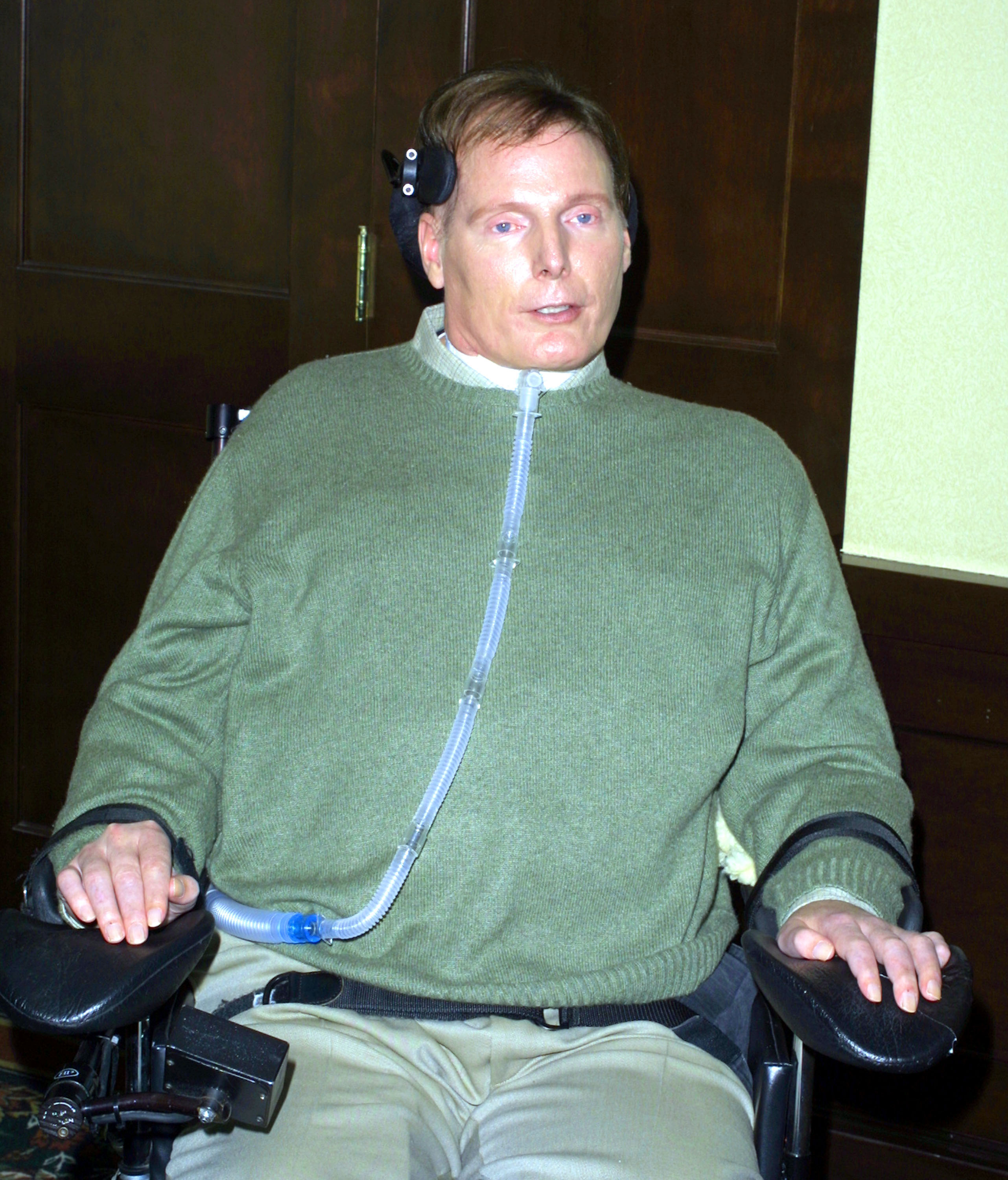
- Respiratory Dependence: Loss of central phrenic nerve control, requiring 24-hour mechanical ventilation through a tracheostomy tube.
- Autonomic Disruption: Inability to regulate internal body temperature, blood pressure, or bowel and bladder function automatically.
Rehabilitation and Neurological Partial Recovery
Following initial stabilization, Reeve spent five months at the Kessler Institute for Rehabilitation in West Orange, New Jersey. There, he worked with physical therapy teams to adapt to life with severe mobility limitations and prevent secondary medical complications like muscle atrophy, joint contractures, and pressure ulcers.
Reeve refused to accept the prevailing neurological medical consensus of the mid-1990s, which held that damaged adult spinal cords could never repair or regenerate. He committed to an intense, non-traditional physical therapy regimen that included:
- Functional Electrical Stimulation (FES): Applying electrical currents to paralyzed muscles to simulate movement on stationary bicycles and exercise equipment.
- Weight-Bearing Therapy: Using body-weight-supported harnesses over treadmills to provide sensory feedback to damaged neural pathways.
- Hydrotherapy and Passive Range of Motion: Daily manual manipulation of limbs to preserve bone density and joint flexibility.
Regimen Focus:
- FES Muscle Stimulation
- Treadmill Harness Training
- Regained Sensation & Motor Signals (2000-2002)
In 2000—five years after the accident—Reeve began regaining localized pain, temperature, and touch sensation across substantial portions of his body. By 2002, under the medical oversight of Dr. John McDonald at Washington University in St. Louis, he demonstrated voluntary movement in his fingers, left arm, and legs while submerged in water or supported by equipment.
In March 2003, Reeve underwent an experimental surgical procedure at University Hospitals of Cleveland to implant a diaphragm pacing system. Electrodes were attached directly to his phrenic nerves, allowing electrical pulses to contract his diaphragm. This allowed him to breathe unassisted for up to 90 consecutive minutes without his mechanical ventilator, significantly expanding his independence and quality of life.
The Christopher & Dana Reeve Foundation and Global Advocacy
Recognizing his platform, Reeve redirected his energy into public advocacy for spinal cord injury (SCI) research and disability rights. In late 1995, he and his wife, Dana Reeve, established the Christopher Reeve Foundation (later renamed the Christopher & Dana Reeve Foundation).
Christopher & Dana Reeve Foundation Core Pillars:
- Research Funding (Neuro-regeneration, Epidural Stimulation, Gene Therapy)
- Quality of Life Grants (Accessibility, Adaptive Sports, Assistive Tech)
- Paralysis Resource Center (Peer Mentoring, Educational Guidance)
The foundation altered the funding landscape for neurotrauma research by connecting scientists across academic disciplines. Key milestones in Reeve's post-accident advocacy include:
- Establishing the Reeve-Irvine Research Center (1999): Located at the University of California, Irvine, this facility became a leading hub for studying spinal trauma, axon regeneration, and neural repair.
- Advocacy for Stem Cell Research: Reeve emerged as one of North America's most vocal proponents of embryonic stem cell research. He testified before the U.S. Congress, arguing that stem cells held the key to unlocking treatments for spinal injuries, Parkinson's disease, and ALS.
- National Institutes of Health (NIH) Funding Increase: His testimony directly influenced federal budget allocations, helping double the NIH budget for spinal cord research between 1995 and 2004.
- Paralysis Resource Center (PRC): Created to offer support, information, and clinical referrals to individuals living with paralysis and their care partners.
Reeve also pushed insurance companies and lawmakers to raise lifetime benefit caps for individuals living with catastrophic injuries, asserting that quality long-term care should not be limited by arbitrary financial caps.
Return to Creative Projects: Directing, Acting, and Writing
Despite severe physical constraints, Reeve returned to the entertainment industry as a director, actor, and author. His post-injury creative work gained critical acclaim:
Film and Television Directing
- In the Gloaming (1997): Reeve made his directorial debut with this HBO drama starring Glenn Close, Bridget Fonda, and Whoopi Goldberg. The film received five Emmy Award nominations.
- The Brooke Ellison Story (2004): Reeve directed this movie detailing the true story of Brooke Ellison, the first quadriplegic student to graduate from Harvard University.
Acting Roles
- Rear Window (1998): Reeve starred in a modernized television remake of the Alfred Hitchcock classic. Playing an architect who uses a wheelchair and suspects a neighbor of murder, Reeve earned a Screen Actors Guild Award for Outstanding Performance by a Male Actor in a Television Movie or Miniseries.
- Smallville (2003–2004): Reeve appeared in a memorable guest role as Dr. Virgil Swann, a scientist who reveals to a young Clark Kent (Tom Welling) his Kryptonian heritage, passing the Superman torch to a new generation.
Reeve's Artistic & Literary Milestones:
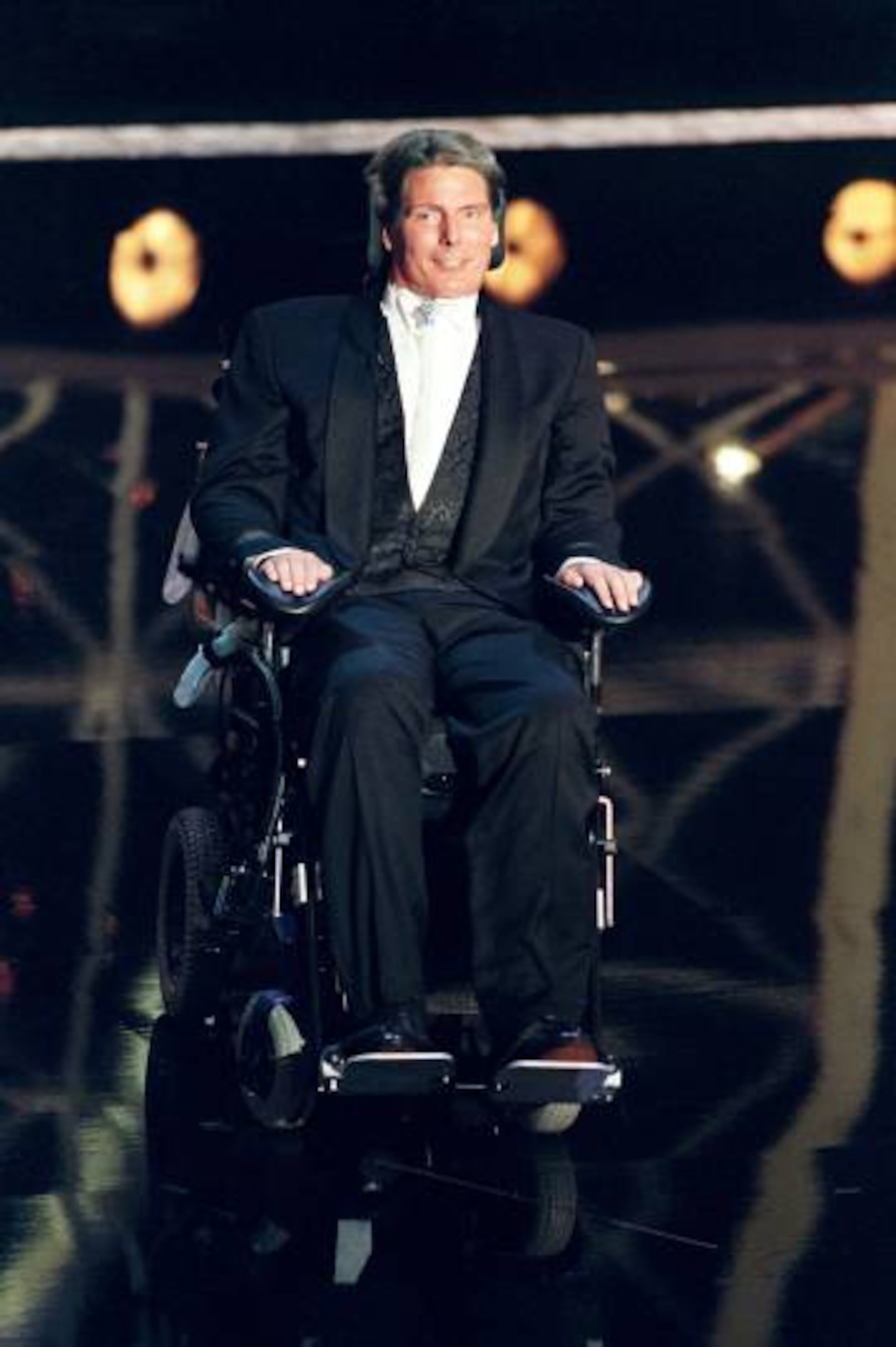
- 1996: Emotional appearance at the 68th Academy Awards
- 1997: Directs "In the Gloaming" (Emmy Nominated)
- 1998: Stars in "Rear Window" (SAG Award Winner); publishes "Still Me"
- 2002: Publishes "Nothing Is Impossible: Reflections on a New Life"
- 2003-2004: Guest stars on "Smallville" & directs "The Brooke Ellison Story"
Authoring Bestselling Books
Reeve authored two autobiographical memoirs detailing his mental, physical, and emotional journey:
- Still Me (1998): An intimate account of his early life, famous acting roles, the accident, and his initial years of rehabilitation. The audiobook version won a Grammy Award for Best Spoken Word Album.
- Nothing Is Impossible: Reflections on a New Life (2002): A book exploring his philosophy on personal hope, inner resilience, and scientific progress.
Post-Accident Milestones: 1995–2004
| Year | Milestone / Achievement | Category | Impact & Significance |
|---|---|---|---|
| 1995 | Equestrian accident in Culpeper, VA | Medical Event | Resulted in severe C1-C2 spinal trauma and quadriplegia. |
| 1996 | 68th Academy Awards Appearance | Public Speaking | Delivered an address advocating for films dealing with social issues. |
| 1996 | Founded the Christopher Reeve Foundation | Advocacy | Created a funding engine for neuro-regeneration research. |
| 1997 | Directed In the Gloaming | Creative Work | Nominated for 5 Primetime Emmy Awards. |
| 1998 | Published Still Me & Starred in Rear Window | Creative / Media | Won SAG Award for Acting; earned Grammy for Audio Book. |
| 1999 | Established Reeve-Irvine Research Center | Science / Research | Created a center for spinal cord repair research at UC Irvine. |
| 2000 | Regained Sensation & Motor Control | Medical Advancement | Demonstrated partial recovery years after complete paralysis. |
| 2002 | Published Nothing Is Impossible | Publishing | Shared insights on mindset, family support, and patient advocacy. |
| 2003 | Diaphragm Pacing Surgery | Medical Advancement | Reduced full reliance on mechanical ventilators. |
| 2004 | Directing The Brooke Ellison Story & Passing | Legacy Event | Final completed directing project; passed away on October 10. |
Final Years, Medical Complications, and Passing
Living with complete C1-C2 quadriplegia introduces severe ongoing health risks. Over time, immobilized patients face elevated dangers from systemic issues, including autonomic dysreflexia, respiratory infections, deep vein thrombosis, and pressure ulcers.
In October 2004, Reeve was being treated for a severe, infected pressure ulcer (bedscore infection), a common but dangerous medical complication for individuals with spinal cord injuries. The localized tissue infection led to systemic sepsis.
On October 9, 2004, while receiving routine antibiotic treatments at his home in Westchester County, New York, Reeve experienced an adverse reaction, suffered cardiac arrest, and fell into a coma. He was transported to Northern Westchester Hospital in Mount Kisco, New York, where he died the following day, October 10, 2004, at the age of 52.
Chain of Medical Events (October 2004):
- Severe Pressure Ulcer
- Widespread Sepsis
- Adverse Treatment Reaction
- Cardiac Arrest
- Passing (Oct 10, 2004)
Tragically, just 17 months after his death, his wife and devoted caregiver, Dana Reeve, died of non-small cell lung cancer on March 6, 2006, at age 44. Despite these profound losses, their children—Matthew, Alexandra, and Will Reeve—took on leadership roles within the foundation's Board of Directors to continue their parents' work.
The Lasting Legacy of Christopher Reeve
Christopher Reeve transformed how the world approaches spinal injury treatment and disability rights. Prior to his work, spinal cord injury research was underfunded and treated with medical skepticism. Today, neuro-technological advancements—including epidural spinal stimulation, functional electrical stimulation, and nerve transfers—regularly build upon the early research pathways Reeve championed.
The Christopher & Dana Reeve Foundation remains an influential organization in paralysis advocacy. It has invested over $140 million into worldwide research initiatives and distributed tens of millions of dollars in quality-of-life grants to community organizations.
The documentary Super/Man: The Christopher Reeve Story further highlighted Reeve’s lasting historical role: not just as an iconic Hollywood actor, but as a real-world symbol of courage, scientific progress, and advocacy for disabled communities globally.
Frequently Asked Questions
Did Christopher Reeve ever walk again after his accident?
No, Christopher Reeve was never able to walk independently again. However, through aggressive physical therapy and electrical stimulation, he achieved partial recovery that shocked the medical community. Five years after his injury, he regained the ability to feel temperature and light touch across parts of his body, and could move his fingers, left arm, and legs while supported in water.
What was Christopher Reeve's official cause of death?
Christopher Reeve died from cardiac arrest caused by severe systemic sepsis. The sepsis originated from an infected pressure ulcer (a common complication of long-term paralysis), which led to a reaction to antibiotic treatments on October 9, 2004. He passed away the next day at Northern Westchester Hospital.
What type of spinal cord injury did Christopher Reeve have?
Reeve sustained a high cervical spinal cord injury, specifically shattering his C1 and C2 vertebrae. This level of injury causes complete sensory and motor quadriplegia (tetraplegia) and disrupts the phrenic nerve, preventing independent respiratory control and requiring mechanical ventilation.
How did Dana Reeve support Christopher Reeve after his injury?
Dana Reeve served as Christopher’s primary advocate, partner, and caregiver following his injury. She co-founded the Christopher & Dana Reeve Foundation, launched quality-of-life initiatives for caregivers and families, and led the foundation as Chair after Christopher's death until her own passing from lung cancer in 2006.
What is the main mission of the Christopher & Dana Reeve Foundation today?
The Foundation focuses on a dual mission: curing spinal cord injury by funding innovative neurological research, and improving the quality of life for individuals and families impacted by paralysis through grants, educational support, and the Paralysis Resource Center.
Practical Resources and Next Steps
For individuals, families, or healthcare professionals seeking support, information, or ways to contribute to spinal cord injury advocacy:
- Access Paralysis Resources: Explore the free educational materials, peer mentoring programs, and clinical trial registries managed by the Christopher & Dana Reeve Foundation Paralysis Resource Center.
- Review Medical Clinical Trials: Search federal clinical registries via ClinicalTrials.gov for current trials on epidural stimulation, spinal recovery protocols, and assistive technological devices.
- Support Disability Advocacy Groups: Consider donating to or volunteering with local adaptive sports leagues, community accessibility initiatives, and rehabilitation research institutions working on neuro-recovery.
Image Gallery