California Non-Owner Car Insurance: A Complete Guide for Drivers Without a Vehicle in 2026
Non-owner car insurance in California provides essential liability coverage for individuals who do not own a vehicle but occasionally drive borrowed or rented cars. This policy covers bodily injury and property damage to third parties,...
Non-owner car insurance in California provides essential liability coverage for individuals who do not own a vehicle but occasionally drive borrowed or rented cars. This policy covers bodily injury and property damage to third parties, fulfills state-mandated SR-22 requirements for license reinstatement, and helps maintain a continuous insurance history to prevent future rate spikes.
Contents
Understanding Non-Owner Auto Insurance in California
In 2026, the California insurance market continues to be one of the most regulated in the United States. For residents who live in urban hubs like San Francisco, Los Angeles, or San Diego and rely on public transit or car-sharing services, "non-owner" coverage is a critical financial safeguard.
Standard auto insurance follows the vehicle. However, when you drive a vehicle you do not own, the owner's primary insurance may not always be sufficient to cover the total damages in a major accident. Non-owner auto insurance acts as a secondary layer of protection. It is a "named operator" policy, meaning the coverage is tied to you as a driver, regardless of which eligible vehicle you are operating.
Because this policy does not include comprehensive or collision coverage—since there is no specific vehicle to repair—it is significantly more affordable than a standard policy. It is designed purely to protect your personal assets from lawsuits arising from injuries or property damage you cause while driving.
Who Should Consider a Non-Owner Policy?
Determining whether you need a non-owner policy involves evaluating your driving frequency and your legal standing with the California Department of Motor Vehicles (DMV).
Frequent Renters and Car-Sharers
If you frequently use services like Zipcar, Turo, or traditional agencies like Hertz and Enterprise, the daily insurance fees can be exorbitant. In 2026, rental companies often charge between $15 and $30 per day for liability waivers. A non-owner policy provides year-round coverage that often costs less than a single week of rental agency insurance, making it a highly cost-effective alternative for "car-free" lifestyle practitioners.
Occasional Borrowers
If you occasionally borrow a friend’s or neighbor’s car, their insurance typically covers you under "permissive use." However, if you are involved in a catastrophic accident where the damages exceed their policy limits (which are often the state minimum), you could be held personally liable for the remaining balance. A non-owner policy steps in to cover that excess, protecting your savings and future earnings.
Drivers Requiring an SR-22 Filing
For California drivers seeking to reinstate a suspended license due to a DUI, reckless driving, or driving without insurance, the DMV requires an SR-22 Certificate of Financial Responsibility. If you do not own a car, you cannot buy a standard policy to satisfy this requirement. A non-owner SR-22 policy is the standard solution, allowing you to prove to the state that you are covered even without a registered vehicle in your name.
Maintaining Continuous Coverage
Insurance carriers in California often penalize drivers who have a "gap" in their insurance history. If you sell your car and wait a year to buy another one without having a non-owner policy in the interim, your future premiums could be 15% to 25% higher. Maintaining a non-owner policy preserves your "continuous coverage" status, signaling to insurers that you are a responsible, low-risk driver.
California Coverage Minimums and Recommendations
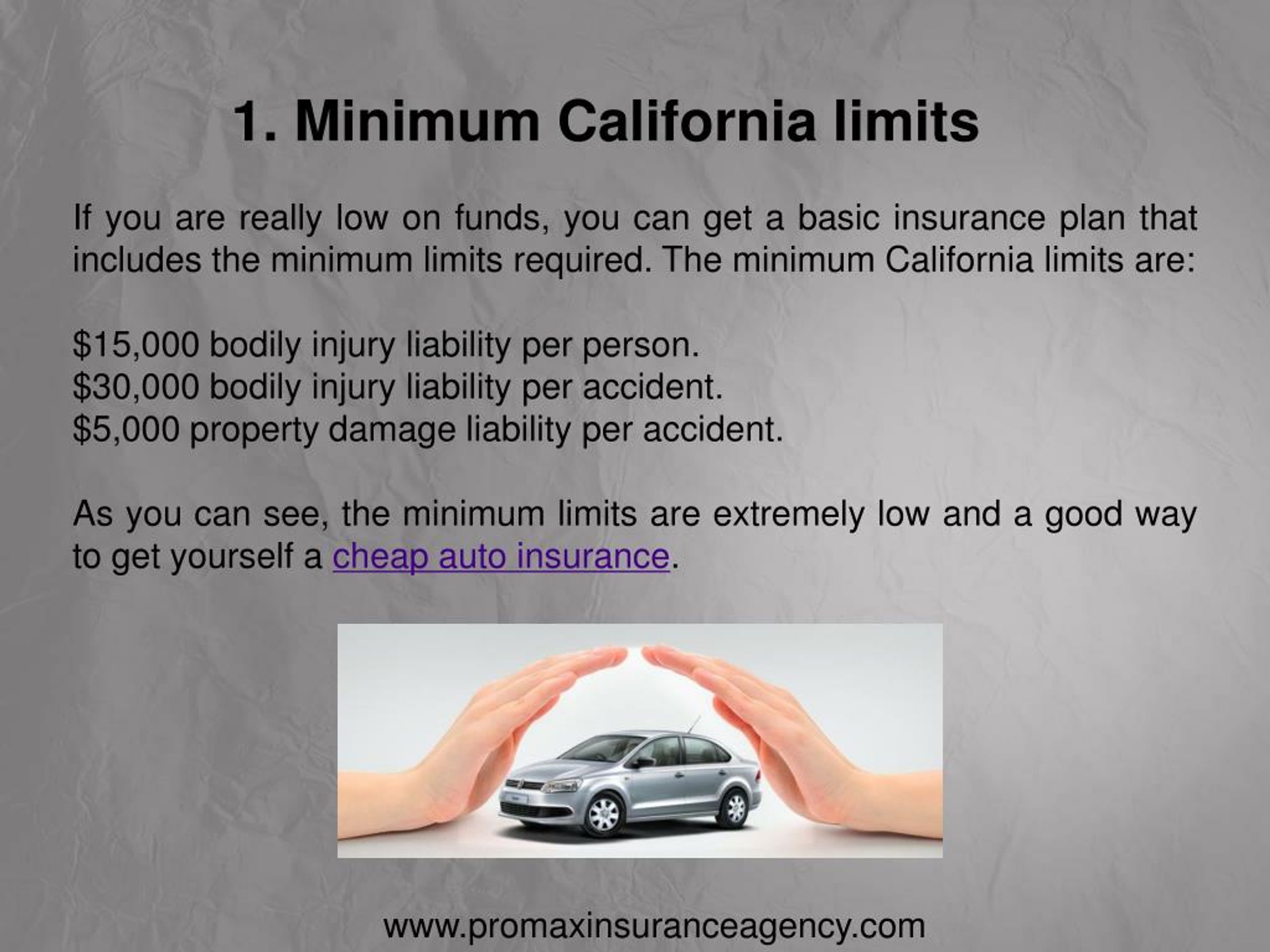
California law mandates specific minimum liability limits. While these are the legal requirements to drive in 2026, they are often insufficient for modern medical and repair costs.
| Coverage Type | California Legal Minimum (2026) | Recommended "Safe" Limit |
|---|---|---|
| Bodily Injury (Per Person) | $15,000 | $100,000 |
| Bodily Injury (Per Accident) | $30,000 | $300,000 |
| Property Damage | $5,000 | $50,000 |
| Uninsured Motorist | Optional (but recommended) | Match BI Limits |
| Medical Payments | Optional | $5,000 - $10,000 |
The Property Damage Gap
The California minimum of $5,000 for property damage is one of the lowest in the nation. Given that the average price of a new car in 2026 often exceeds $50,000, hitting even a mid-range sedan could result in a liability claim far exceeding the state minimum. Non-owner policies allow you to increase these limits affordably, shielding you from out-of-pocket expenses.
How Proposition 103 Affects Your Rates
California’s auto insurance market is governed by Proposition 103, which dictates how insurers can determine premiums. Unlike many other states, California prohibits insurance companies from using credit scores to set rates. Instead, the primary factors must be:
- Your driving safety record.
- The number of miles you drive annually.
- Your years of driving experience.
For non-owner policies, this is beneficial for drivers with clean records but higher debt or lower credit scores. Because you don't have a specific vehicle, the "annual miles" factor is usually estimated based on your intended use of rentals or borrowed cars.
Critical Exclusions: When the Policy Won't Work
It is a common mistake to assume a non-owner policy covers every driving scenario. There are strict technical limitations you must understand before purchasing.
The Household Member Exclusion
Non-owner insurance is specifically designed for vehicles you do not have regular access to. If you live with someone who owns a car (a spouse, roommate, or parent), you are generally excluded from using a non-owner policy to drive their vehicle. Insurers view this as "regular use," and they require you to be listed as a secondary driver on the vehicle owner's primary policy.
Commercial and Business Use
If you are driving a vehicle for work—such as delivering food, ride-sharing (Uber/Lyft), or transporting goods—a standard non-owner policy will not cover you. These activities require commercial endorsements or specific "Transportation Network Company" (TNC) policies.
Vehicle Type Limitations
Most non-owner policies only cover passenger vehicles, SUVs, and light trucks. They typically do not extend to motorcycles, commercial vans, or large moving trucks (like U-Hauls). If you are renting a large box truck for a move, you must still purchase the specialized insurance offered by the rental company.
How to Obtain a Non-Owner Policy in California
Finding a non-owner policy can be more difficult than a standard policy because many insurers do not offer them through online quote engines. You may need to speak directly with an agent or broker.
- Gather Your Information: You will need your California driver’s license number and a general estimate of how many days per month you expect to drive.
- Contact Major Carriers: Companies like GEICO, Progressive, and State Farm are known for offering non-owner options in California.
- Specify SR-22 Needs: If you are filing for license reinstatement, ensure the carrier can file the SR-22 electronically with the California DMV.
- Compare Liability Limits: Don't just settle for the state minimum. Ask for quotes at 50/100/50 and 100/300/100 levels; the price difference is often negligible.
- Review the Policy for "Secondary" Status: Ensure the policy clearly states it is a non-owner/named operator policy to avoid confusion during a claim.
Frequently Asked Questions
Does non-owner insurance cover the car I am driving?
No. Non-owner insurance is liability-only. It covers the other person’s medical bills and car repairs if you are at fault. It does not pay for the repairs to the car you are driving. If you borrow a car, the owner's collision coverage must handle those repairs. If you rent a car, you may still want to use a credit card with rental insurance benefits to cover "Collision Damage" (CDW).
Can I get non-owner insurance with a suspended license?
Yes, this is one of the primary uses for the policy. In California, you can purchase a non-owner policy and have the insurer file an SR-22 certificate with the DMV. Once the DMV processes this proof of financial responsibility, you can typically proceed with the license reinstatement process.
Is non-owner insurance cheaper than regular insurance?
Generally, yes. Because the insurer is not covering the replacement cost of a vehicle and assumes you will drive less frequently than a car owner, premiums are significantly lower. In 2026, a typical California non-owner policy might cost between $25 and $60 per month, depending on your driving history.
What happens if I buy a car later?
Once you purchase a vehicle, you must notify your insurance company immediately. The non-owner policy must be converted into a standard owner's policy that includes the specific VIN, make, and model of your car. Continuing to rely on a non-owner policy while owning a vehicle is a violation of the policy terms and will result in a denied claim.
Does it cover me if I am hit by an uninsured driver?
Only if you add Uninsured/Underinsured Motorist (UM/UIM) coverage to your non-owner policy. This is highly recommended in California, where a significant percentage of drivers remain uninsured despite legal requirements. UM/UIM on a non-owner policy covers your personal medical expenses if you are struck by an uninsured driver while you are driving a borrowed car or walking as a pedestrian.
Final Recommendation for California Drivers
For residents of the Golden State who find themselves without a personal vehicle in 2026, a non-owner auto insurance policy is more than just a legal formality—it is a strategic financial tool. It provides a bridge for those navigating license reinstatement through the SR-22 process, a cost-saving measure for frequent travelers using car-sharing apps, and a shield against the high costs of liability in a litigious environment.
If you drive even once a month, the peace of mind provided by a $300-per-year policy far outweighs the risk of a multi-thousand-dollar judgment. Contact a licensed California insurance broker today to compare quotes and ensure your limits are high enough to protect your assets in the event of an unforeseen accident.
Image Gallery