Denver Productions in the Film Industry: Incentives, Infrastructure, and Production Guide
Denver serves as a central media production hub in the Mountain West, offering film and television crews access to a 20% performance-based state rebate, a deep pool of IATSE Local 7 and non-union crew members, and direct proximity to d...
Denver serves as a central media production hub in the Mountain West, offering film and television crews access to a 20% performance-based state rebate, a deep pool of IATSE Local 7 and non-union crew members, and direct proximity to diverse urban and alpine locations. Successfully executing Denver productions in the film industry requires a clear understanding of Colorado state incentive qualifications, municipal permitting workflows, high-altitude production logistics, and regional equipment infrastructure.
Contents
The State of Film Production in Denver
Denver's position in the entertainment ecosystem is defined by its hybrid capability. While major studio feature films frequently choose the region for its natural scenery and urban landscapes, Denver maintains a constant baseline of high-end commercial spots, episodic television, documentary projects, and corporate media.
The administrative anchor for film production in the region is the Colorado Office of Film, Television and Media (COFTM), situated within the Colorado Office of Economic Development and International Trade (OEDIT). At the municipal level, filming within the City and County of Denver is coordinated through local agency permitting bodies that manage street closures, park access, and public safety.
The Denver market provides producers with several operational distinctives:
- Location Diversity: The metropolitan area spans modern high-rise architecture, historic 19th-century brick districts like Lower Downtown (LoDo) and River North (RiNo), suburban landscapes, and quick highway access to red rock formations and 14,000-foot mountain peaks.
- Turnkey Crew Infrastructure: Because of a steady commercial production industry, local crew members maintain high technical standards across camera, lighting, grip, sound design, and art departments.
- Regional Logistics Hub: Denver International Airport (DEN) provides direct flights to major production centers worldwide, simplifies gear air-freight logistics, and serves as an entry point for out-of-state talent and key crew.
Colorado State Film Incentives and Eligibility
The primary financial driver for bringing film productions to Denver is the Colorado Performance-Based Film Incentive. This program offers a refundable tax credit or performance rebate for eligible productions that meet specific spending and hiring benchmarks within the state.
| Colorado Film Incentive Structure | Details |
|---|---|
| Baseline Rebate / Credit Rate | 20% of Qualified Local Spend |
| In-State Production Min. Spend | $100,000 (Colorado-based entity) |
| Out-of-State Min. Spend | $1,000,000 (Non-resident entity) |
| Resident Workforce Requirement | 50% minimum Colorado crew/cast |
Qualified Local Expenditures (QLE)
To claim the 20% performance rebate, production expenditures must occur within Colorado and directly relate to the production. Qualified expenses include:
- Wages paid to Colorado residents (cast and crew).
- Equipment rentals sourced from Colorado-registered vendors.
- Location fees paid to Colorado property owners.
- Lodging, catering, transportation, and per diems spent locally.
- Post-production services executed within the state.
Minimum Spend and Hiring Requirements
The threshold to qualify for the incentive depends on the legal domicile of the production company:
- Colorado-Based Production Companies: Must reach a minimum qualified spend of $100,000.
- Out-of-State Production Companies: Must reach a minimum qualified spend of $1,000,000.
- Television Series and Commercials: Must meet the minimum spend relative to their entity status across an annual production cycle or single season.
Additionally, at least 50% of the total cast and crew hired for the project must be documented Colorado residents. Meeting or exceeding this threshold is mandatory to unlock the full incentive rate.
Application and Approval Timeline
Incentive funds are finite and allocated on a first-come, first-served basis per fiscal cycle. Producers must submit their application to COFTM before principal photography begins. Retroactive applications are not accepted. Once the project wraps, a certified public accountant (CPA) licensed in Colorado must complete an independent audit of the expenditures before the rebate is disbursed.
Municipal Permitting and Local Regulations in Denver
Filming within the City and County of Denver requires coordination across municipal departments depending on public space usage, traffic impact, and structural setups.
Primary Permitting Channels
Unlike cities with a single centralized film permit office, Denver routes permits through specific city departments based on location and scope:
- Department of Transportation & Infrastructure (DOTI): Controls public right-of-way usage, street closures, curb lane parking reservations, and sidewalk obstructions. Street closure applications typically require 10 to 15 business days advance notice.
- Denver Parks and Recreation: Issues permits for filming in city-owned parks, urban plazas, and mountain parks managed by the city (such as Red Rocks Amphitheatre and Genesee Park). Parks permits require clear environmental protection plans and liability insurance verification.
- Denver Police Department (DPD): Required for off-duty traffic control, rolling roadblocks, vehicle mounting, and scenes involving prop weapons or simulated law enforcement activity.
Insurance Requirements
To obtain a permit for public property in Denver, productions must provide a Certificate of Insurance (COI) naming the "City and County of Denver" as an additional insured. Minimum general liability coverage standardly begins at $1,000,000 per occurrence and $2,000,000 aggregate, with higher limits required for high-risk stunts, pyrotechnics, or large-scale street closures.
Drone (UAS) Regulations
Operating Unmanned Aircraft Systems (drones) for commercial filming in Denver requires:
- An FAA Part 107 certified remote pilot.
- Authorization via the FAA Low Altitude Authorization and Notification Capability (LAANC) for controlled airspace surrounding Denver International Airport, Centennial Airport, or Buckley Space Force Base.
- Explicit approval from Denver Parks and Recreation if launching or landing on city park land.
- Proof of aviation-specific liability insurance.
Production Infrastructure: Stages, Rental Houses, and Post-Production
Denver offers a complete ecosystem of equipment vendors and stage facilities capable of supporting indie films, commercial shoots, and high-end episodic series.
Soundstages and Production Facilities
While Denver does not house sprawling multi-lot studio backlots like Los Angeles or Atlanta, the metro area features mid-size, fully equipped soundstages and green-screen facilities.
- Commercial Soundstages: Ranging from 3,000 to 15,000 square feet, local stages feature drive-in access, high ceiling grids, sound isolation, drive-in cycs (cycloramas), and dedicated production office space.
- Regional Hubs: Production hubs are concentrated across central Denver, Englewood, Centennial, and Golden, providing strategic access to both city centers and mountain highways.
Camera, Lighting, and Grip Suppliers
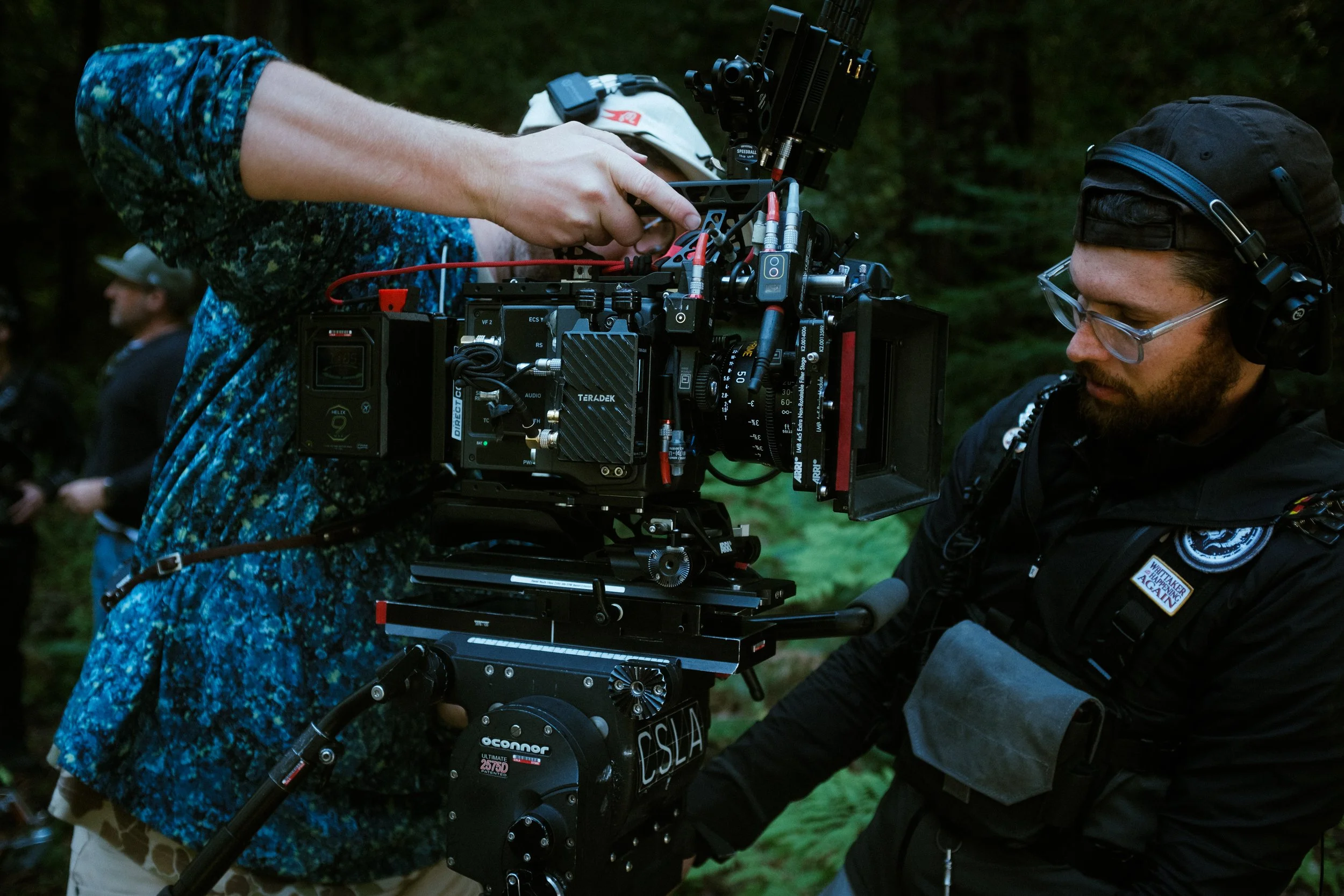
Denver hosts several national and regional rental operations. Camera houses stock modern cinema systems, including ARRI, RED, Sony Venice, and specialized anamorphic and spherical optics.
Lighting and grip rental facilities supply truck packages ranging from 1-ton sprinter vans to 10-ton grip trucks fully outfitted with LED arrays, HMIs, mobile power generators, and heavy-duty rigging gear.
Post-Production Services
Denver's post-production sector includes boutique editorial suites, color grading bays, visual effects (VFX) houses, and audio post-production facilities. Local audio facilities offer sound design, ADR (Automated Dialogue Replacement), mixing in Dolby Atmos, and remote monitoring capabilities.
Denver Production Logistics Matrix
The following table compares typical operational requirements across three primary production tiers operating in the Denver market:
| Production Tier | Typical Min. Spend Threshold | Permitting Lead Time | Primary City/State Approvals | Crew Allocation Strategy |
|---|---|---|---|---|
| Independent Feature Film | $100k (Local) / $1M (Out-of-State) | 15–30 Days | COFTM Pre-approval, Denver DOTI, DPD Traffic Control | 50%+ Local Hire for Incentive Qualification; IATSE Local 7 Tiered Agreements |
| National Commercial / Brand Spot | $50,000 – $250,000 | 5–10 Days | Denver DOTI (Curb Parking/ROW), Denver Parks & Rec | 80%+ Local Commercial Crew Base; Local Talent Agencies (SAG-AFTRA or Non-Union) |
| Documentary / Non-Fiction Unit | Under $50,000 | 3–5 Days | Minimal ROW / General Park Filming Permits | Ultra-Lean Local Crew; B-Roll & High-Altitude Field Operators |
Crew Base, Guilds, and Labor Unions
Denver maintains a seasoned labor pool capable of staffing multiple major productions simultaneously.
Union Representation
- IATSE Local 7: Holds jurisdiction over stagehands, motion picture technicians, craftspeople, and projectionists in Colorado. Local 7 supplies grips, gaffers, camera operators, art directors, hair/makeup artists, and wardrobe personnel for film and television projects.
- SAG-AFTRA (Colorado Local): Represents professional screen actors, stunt performers, and voiceover artists in the region. The local office assists producers with Taft-Hartley paperwork, regional commercial contracts, and low-budget theatrical agreements.
- Teamsters Local 17: Covers driver transport for heavy equipment, studio mechanics, motorhomes, and specialized vehicle operations within the state.
Specialized Local Talent
Due to Denver's geographical context, the local crew base excels in specialized production environments, including:
- High-altitude camera operation and mountain rigging.
- Drone operation in complex terrain and mountain winds.
- Stunt driving for winter driving conditions and unpaved mountain roads.
- Wildlife and outdoor adventure camera crews.
Geography, Microclimates, and High-Altitude Shooting Logistics
Filming in Denver introduces environmental factors that line producers and unit production managers (UPMs) must account for during pre-production.
| High-Altitude & Weather Considerations | Details |
|---|---|
| Elevation | 5,280 feet (1,609 meters) above sea level |
| Air Pressure | ~17% lower air density than sea level |
| Battery Performance | Reduced operational lifespan in cold weather |
| Solar Radiation | Higher UV index; strong contrast & shadows |
| Rapid Weather Shifts | Afternoon thunderstorms (Summer) / Cold Fronts |
High-Altitude Operational Impacts
At 5,280 feet above sea level, lower air pressure and lower oxygen levels can affect both crew performance and equipment:
- Crew Physiology: Out-of-state crew members are susceptible to altitude sickness, dehydration, and rapid sunburn. Productions should schedule acclimatization days for heavy physical setups and provide enhanced hydration stations.
- Camera and Battery Performance: Cold winter temperatures at high elevations accelerate lithium-ion battery drain. Camera departments should keep backup batteries insulated and heated.
- Lighting and Exposure: High elevation results in intense UV light and high solar contrast. Gaffer and grip departments often require larger diffusion frames and negative fill setups to manage sharp overhead sun during midday exteriors.
Seasonal Microclimates
Denver experiences four distinct seasons, but rapid temperature drops and sudden weather transitions are common:
- Spring (March–May): Highly variable. Heavy snowfall can alternate with 65°F sunny days within 24 hours.
- Summer (June–August): Warm and dry, with frequent afternoon thunderstorms along the Front Range that cause short lighting/production holds due to lightning risks.
- Autumn (September–November): Stable weather, clear skies, and fall foliage; generally considered the ideal window for outdoor location shoots.
- Winter (December–February): Low humidity and high sun frequency, but cold spells require heated basecamps, generator winterization, and specialized vehicle tires for unit moves.
Step-by-Step Guide: Bringing a Production to Denver
To execute a film project efficiently within Denver's administrative and legal framework, follow this structured operational sequence:
- Step 1: Incentives & Initial Contact (COFTM)
- Step 2: Script Scouting & Location Approvals
- Step 3: Municipal Permitting & Permitting Audits (DOTI / Parks)
- Step 4: Union & Non-Union Crew Contracting
- Step 5: Principal Photography & Altitude Protocol Management
- Step 6: Post-Production & CPA Audit Submission
Step 1: File for COFTM Incentives Pre-Approval
Submit your incentive application to the Colorado Office of Film, Television and Media at least 30 days prior to spending money or starting principal photography in Colorado. Secure your conditional approval letter to reserve rebate allocations.
Step 2: Conduct Location Scouting and Secure Site Agreements
Identify urban, suburban, and mountain locations. For private locations, secure signed location agreements outlining restoration protocols, trash removal, parking rights, and hold-harmless clauses.
Step 3: Apply for Municipal Permits and Inter-Agency Clearances
Submit detailed site plans, parking diagrams, and street closure maps to Denver DOTI. If filming in city parks, secure Denver Parks and Recreation permits. Provide the necessary Certificate of Insurance (COI) naming the city as an additional insured.
Step 4: Crew Up via Local Agencies and Union Locals
Engage IATSE Local 7 for union technical heads or hire local non-union crews to ensure your project meets the 50% Colorado resident hiring requirement. Register out-of-state hires with local payroll providers equipped for Colorado tax withholding rules.
Step 5: Implement High-Altitude Production Protocols
Equip location managers and set medics with hydration packs, high-SPF sun protection, and cold-weather gear. Establish emergency medical evacuation plans when shooting on remote terrain along the Front Range.
Step 6: Complete Wrap Audits and Claim State Rebates
Gather all itemized receipts, proof of vendor residency, crew W-2/1099 filings, and bank statements. Engage an independent Colorado CPA to complete the mandatory audit report and submit it to COFTM for rebate release.
Frequently Asked Questions
What is the minimum spend required to get a film rebate in Denver?
Colorado offers a 20% performance rebate. Colorado-based production companies must spend a minimum of $100,000 in qualified local expenditures (QLE), while out-of-state production companies must spend a minimum of $1,000,000.
How far in advance do I need to apply for a film permit in Denver?
For general B-roll or simple location filming without street closures, permitting can take 3 to 5 business days. Complex shoots requiring street closures, parking meters, or police rolling roadblocks managed by DOTI require at least 10 to 15 business days.
Are there specific residency requirements for crew members under the incentive?
Yes. To qualify for the 20% rebate, at least 50% of the total cast and crew hired across the production must be verified residents of Colorado. Residency is established via a valid Colorado driver's license or state tax return documentation.
Does Denver have union rules for independent films?
Yes. Union projects operating in Denver fall under national IATSE and SAG-AFTRA agreements, including Low Budget, Ultra Low Budget, and Modified Low Budget theatrical agreements. Non-union productions can operate freely but must adhere to Colorado state labor laws regarding overtime, meal breaks, and minor labor rules.
How does filming in Denver's high elevation affect gear?
At 5,280 feet, battery performance degrades faster in cold weather, camera sensors heat up differently during extended shoots, and high UV levels increase contrast on camera. Production departments must bring adequate diffusion, extra battery power, and appropriate thermal insulation for sensitive equipment.
Practical Next Actions for Producers
To move a film production project forward in Denver:
- Contact COFTM: Review the current fiscal year budget allocation on the Colorado Office of Film, Television and Media official portal and submit a pre-qualification worksheet.
- Engage a Local Location Manager: Hire a Denver-based location manager early in pre-production to navigate inter-agency DOTI permitting, street parking reservations, and property owner negotiations.
- Establish a Qualified Local Payroll Process: Partner with a specialized film payroll company familiar with Colorado residency verification laws to safeguard your incentive eligibility.
Image Gallery