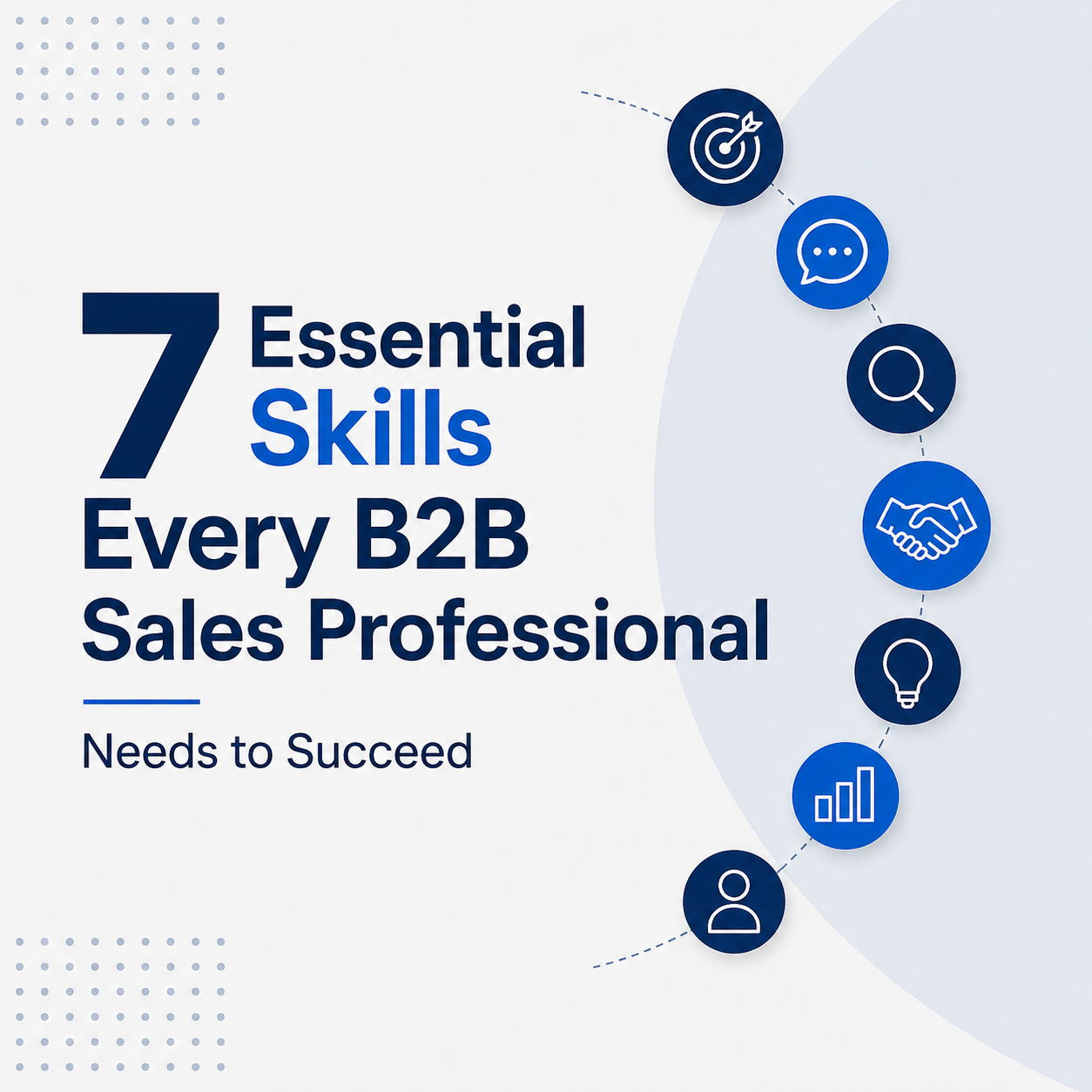
7 Essential People Skills Examples Every Professional Should Master in 2026
People skills, often referred to as interpersonal or "soft" skills, are the attributes and behaviors used to communicate and interact with others effectively. In 2026, as artificial intelligence handles a larger share of technical and...
People skills, often referred to as interpersonal or "soft" skills, are the attributes and behaviors used to communicate and interact with others effectively. In 2026, as artificial intelligence handles a larger share of technical and analytical tasks, these human-centric abilities have become the primary differentiator for career advancement. Mastering active listening, empathy, conflict resolution, persuasion, adaptability, feedback, and collaboration is essential for building professional trust and driving organizational success.
Contents
Interpersonal excellence is no longer an optional "extra" for management; it is a foundational requirement for every role across every industry. Whether you are navigating a hybrid work environment or leading a cross-functional team, your ability to manage human dynamics determines your professional ceiling. Below, we examine seven critical people skills with practical examples and implementation strategies.
1. Active Listening: Beyond Simple Hearing
Active listening is the conscious effort to hear not only the words another person is saying but, more importantly, the complete message being communicated. In a professional setting, this involves giving the speaker your undivided attention, acknowledging the message, and providing feedback to ensure mutual understanding.
The difference between hearing and active listening lies in the intent. Hearing is physiological, while active listening is psychological. It requires the listener to suspend judgment and resist the urge to formulate a rebuttal while the other person is still speaking. In the 2026 workplace, where digital distractions are constant, the ability to focus entirely on a colleague or client is a rare and highly valued commodity.
How to Practice Active Listening
To implement active listening, professionals should utilize verbal and non-verbal cues. Non-verbal cues include maintaining appropriate eye contact, nodding, and mirroring the speaker's body language to show alignment. Verbal cues involve "minimal encouragers" like "I see" or "Tell me more," as well as paraphrasing. For example, saying, "What I’m hearing is that the project timeline is your primary concern because of the upcoming audit—is that correct?" ensures that both parties are on the same page before moving forward.
2. Empathy: The Foundation of Workplace Culture
Empathy in a professional context is the ability to understand and share the feelings of another. It is often categorized into two types: cognitive empathy (understanding someone’s perspective) and affective empathy (feeling what they feel). For professionals, cognitive empathy is particularly vital as it allows for better negotiation, team management, and client relations.
By 2026, the globalized workforce has made cross-cultural empathy a necessity. Understanding that a colleague’s reaction may be influenced by their cultural background, personal stressors, or unique working style helps prevent misunderstandings. Empathy creates a "psychological safety" net—a term popularized by Harvard Professor Amy Edmondson—where employees feel safe to take risks and admit mistakes without fear of retribution.
The Impact of Empathy on Leadership
Empathetic leaders are better at retaining talent. When an employee feels understood, their engagement levels rise. For instance, if a team member is underperforming, an empathetic approach involves investigating the root cause—such as burnout or a lack of resources—rather than moving straight to disciplinary action. This builds long-term loyalty and a more resilient organizational culture.
3. Conflict Resolution: Navigating Disagreements Productively
Conflict is an inevitable byproduct of diverse perspectives. However, the skill of conflict resolution lies in addressing these differences in a way that preserves relationships and reaches a functional outcome. This requires a transition from a "win-lose" mentality to a "win-win" or "interest-based" approach.
Professional conflict resolution involves identifying the underlying interests of all parties rather than focusing on their stated positions. A position is what someone says they want; an interest is why they want it. By uncovering the "why," professionals can find creative solutions that satisfy the core needs of everyone involved.
Strategies for De-escalation
One effective framework is the Thomas-Kilmann Conflict Mode Instrument (TKI), which suggests five styles of handling conflict: competing, collaborating, compromising, avoiding, and accommodating. High-level professionals know when to use each. In 2026, collaboration—where parties work together to find a solution that fully satisfies both—is considered the gold standard for complex professional disputes.
4. Persuasion and Influence: Leading Without Authority
Persuasion is the ability to convince others to adopt a specific idea, attitude, or action. Unlike coercion, which relies on power or threats, persuasion relies on logic, emotional appeal, and credibility. In modern flat organizational structures, where you often need to get things done through people who do not report to you, influence is the currency of success.
Robert Cialdini’s principles of persuasion—such as reciprocity, social proof, and authority—remain highly relevant. However, in 2026, the most effective persuasion is rooted in "consultative selling" of ideas. This means framing your proposal in a way that solves the other person's problems while advancing your own goals.
Example of Effective Persuasion
If you want to implement a new software tool, don't just list its features. Instead, demonstrate how it will save the IT department five hours of maintenance a week (addressing their interest) and how it will reduce data errors for the finance team (addressing theirs). By aligning your goal with their benefits, you reduce resistance and build consensus naturally.
5. Adaptability and Learning Agility
Adaptability is the capacity to adjust to new conditions quickly and effectively. As the pace of technological change continues to accelerate, the ability to "unlearn" old habits and "relearn" new systems is a vital people skill. Adaptability also applies to interpersonal interactions—changing your communication style to suit the person you are talking to.
Professionals with high adaptability possess a "growth mindset," a concept developed by psychologist Carol Dweck. They view challenges as opportunities to grow rather than threats to their competence. This skill is particularly useful during organizational restructuring, shifts in market strategy, or when working with a new leadership team.
Cultivating Adaptability
To stay adaptable, professionals should actively seek out diverse viewpoints and be willing to be proven wrong. For example, if a long-standing workflow is replaced by an AI-driven process, an adaptable professional doesn't complain about the change; they become the first to master the new system and then help others transition.
6. Constructive Feedback: The SBI Model
Giving and receiving feedback is perhaps the most difficult people skill to master, yet it is essential for professional growth. Constructive feedback focuses on behaviors and outcomes rather than personality traits. It should be specific, actionable, and delivered with the intent to help the recipient improve.
A widely respected method for delivering feedback is the SBI Model (Situation, Behavior, Impact):
- Situation: Define the "where" and "when."
- Behavior: Describe the specific observable behavior (without judgment).
- Impact: Explain how that behavior affected the team or the project.
Receiving Feedback Gracefully
Being on the receiving end of feedback is equally important. Instead of becoming defensive, an expert professional asks clarifying questions and thanks the provider for their perspective. For example: "Thank you for pointing out that my presentation was too technical for the client. Could you suggest which sections I should simplify for the next meeting?" This response turns a potential conflict into a collaborative coaching moment.
7. Collaboration and Teamwork in Hybrid Environments
Collaboration is the act of working with others to produce or create something. While teamwork has always been important, the hybrid and remote work models of 2026 have changed the mechanics of collaboration. It now requires intentionality—using digital tools effectively while maintaining the human connection that fuels creative synergy.
Effective collaboration relies on Cognitive Diversity, which is the inclusion of people who have different ways of thinking and processing information. A team that collaborates well doesn't just "get along"; they challenge each other’s ideas respectfully to arrive at the best possible solution.
Building Synergy
To improve collaboration, professionals must define clear roles and responsibilities. Ambiguity is the enemy of teamwork. When everyone knows their specific contribution and how it fits into the larger goal, the friction of overlapping tasks is eliminated.
| Skill | Primary Benefit | Key Application Example |
|---|---|---|
| Active Listening | Builds trust and prevents errors | Clarifying client requirements in a kickoff meeting. |
| Empathy | Improves retention and morale | Supporting a colleague during a personal crisis. |
| Conflict Resolution | Resolves friction efficiently | Mediating a dispute between two department heads. |
| Persuasion | Gains buy-in for new ideas | Convincing stakeholders to increase a project's budget. |
| Adaptability | Ensures long-term relevance | Quickly learning a new AI-integrated project management tool. |
| Feedback | Accelerates performance growth | Using the SBI model to correct a peer's communication style. |
| Collaboration | Drives innovation | Leading a cross-functional team to launch a new product. |
Frequently Asked Questions
Are people skills the same as soft skills?
Yes, the terms are often used interchangeably. However, "people skills" specifically focuses on interpersonal interactions and social intelligence, whereas "soft skills" can include broader categories like time management, work ethic, and organization. In the modern professional lexicon, people skills are a subset of soft skills that prioritize the "human element" of business.
Can introverts be good at people skills?
Absolutely. In fact, introverts often excel at certain people skills, such as active listening and deep empathy. While extroverts may find it easier to initiate conversations in large groups, introverts are frequently better at one-on-one interactions and reading the room. People skills are learned behaviors, not inherent personality traits, meaning anyone can develop them with practice.
How do I measure my progress in interpersonal skills?
Since people skills are qualitative, they are measured through feedback and outcomes. Look at your "360-degree" reviews, the success rate of your collaborations, and how often colleagues seek your advice or mediation. If you find that your professional relationships are becoming more harmonious and your ideas are being adopted more frequently, your people skills are likely improving.
How have people skills changed with the rise of AI in 2026?
AI has made people skills more valuable because it cannot replicate human emotional intelligence, ethical judgment, or complex negotiation. While AI can draft an email or analyze data, it cannot navigate the nuances of a high-stakes board meeting or comfort a distressed employee. Professionals who combine technical AI literacy with high-level people skills are currently the most sought-after individuals in the job market.
Which of these seven skills is the most important for leadership?
While all seven are integrated, Empathy is often cited as the most critical for modern leadership. A leader who lacks empathy cannot build the trust necessary to utilize the other six skills effectively. Without empathy, persuasion feels like manipulation, and feedback feels like an attack.
Next Steps for Professional Growth
To master these skills, start by choosing one to focus on each month. For the first 30 days, practice Active Listening in every meeting—take fewer notes and focus more on the speaker's tone and intent. Seek out a mentor or a professional coach to provide honest feedback on your interpersonal style. By consistently applying these seven examples, you will not only improve your daily work life but also significantly increase your long-term value in the 2026 professional landscape.
Image Gallery