The Best Mass Texting Service for Every Home Project: A Buyer’s and Operator’s Guide
Selecting the best mass texting service for home projects depends on campaign scale, team workflows, and whether you are messaging homeowners, subcontractors, or field crews. SimpleTexting provides the best overall balance of bulk SMS...
Selecting the best mass texting service for home projects depends on campaign scale, team workflows, and whether you are messaging homeowners, subcontractors, or field crews. SimpleTexting provides the best overall balance of bulk SMS broadcasts and two-way messaging for contractors, while Podium excels at localized customer communication. For smaller home improvement businesses needing flexible pricing, TextMagic offers a reliable pay-as-you-go model.
Contents
Why Home Projects Require Dedicated Mass Texting Solutions
Managing residential construction, renovation, or home improvement projects involves coordinating dozens of moving parts. Traditional communication channels—such as phone calls, emails, and paper flyers—frequently fail due to low open rates and delayed responses. Email open rates in the construction and home services sector hover around 20%, whereas text messages consistently yield open rates above 90%, with most read within three minutes of receipt.
Home projects present unique operational challenges:
- Schedule Fluctuations: Weather delays, inspection reschedules, and material shortages require real-time broadcasts to sub-trades and material suppliers.
- Client Expectation Management: Homeowners undergoing renovations want timely visual and text updates regarding job site progress, dump trucks arriving, or utility shutoffs.
- Field Crew Coordination: Communicating shift changes or safety protocols across decentralized job sites requires immediate delivery verification.
General-purpose consumer chat apps (like standard SMS group chats or unmanaged messaging platforms) quickly collapse under business conditions. They lack automated opt-out compliance, carrier registration capabilities, administrative permission controls, and audit trails. Dedicated enterprise and small-business mass texting software addresses these bottlenecks through centralized message queues, multi-user inbox routing, and carrier-verified delivery infrastructure.
Key Technical Features to Look For in Project Texting Software
Not all SMS tools perform equally when deployed on a active job site. Evaluating mass texting services for residential projects requires reviewing specific technical capabilities that directly impact field efficiency and legal compliance.
Key Technical Pillars for Home Project Mass Texting:
- 10DLC & A2P Compliance
- High-Capacity MMS Support
- CRM / Field Service Sync
10DLC and Carrier Compliance
In North America, business-to-consumer text messaging over standard ten-digit phone numbers must adhere to 10DLC (Ten-Digit Long Code) guidelines. Unregistered commercial SMS volume is aggressively filtered or blocked by major carriers (including AT&T, T-Mobile, and Verizon). The ideal software platform should streamline brand registration and campaign vetting with The Campaign Registry (TCR) to prevent delivery drops during critical project notifications.
High-Capacity MMS (Multimedia Messaging Service)
Home projects rely heavily on visual evidence. Whether sending blue-print updates to a framing team or sharing countertop finishing options with a homeowner, high-resolution photo transmission is non-negotiable. Ensure the selected vendor supports native MMS (up to 5MB file sizes depending on carrier limits) rather than compressing images into low-quality compressed thumbnails or external web links.
Two-Way Multi-User Shared Inboxes
While mass broadcasts broadcast information outward (such as alerting 50 subcontractors of a site closure), team members must also handle incoming replies. Shared inbox features allow project managers, office admin staff, and superintendents to view, assign, and respond to incoming inquiries from a single centralized dashboard.
Field Service and CRM Integrations
To eliminate manual data entry, the messaging platform must integrate seamlessly with field service management (FSM) software and customer relationship management (CRM) systems like Jobber, Housecall Pro, Buildertrend, or Salesforce. API access and webhooks allow automatic trigger updates—such as dispatching an SMS confirmation when a milestone status changes to "Inspection Passed."
Best Mass Texting Platforms for Home Projects Compared
Different project operational models require tailored feature sets. Below is a detailed breakdown of the leading platforms serving residential project management, field trades, and home improvement companies.
1. SimpleTexting: Best Overall for Bulk & Two-Way Project Communication
SimpleTexting offers an intuitive web and mobile application designed for team collaboration. It allows project managers to segment contact lists by trade (e.g., plumbers, electricians, framers) or by active job sites.
- Strengths: Unlimited contact lists on all plans, robust autoresponders, landline text-enabling, and native mobile apps for iOS and Android.
- Limitations: Advanced Zapier or web-hook automation requires intermediate configuration; MMS credits consume higher usage rates (typically 3 credits per MMS).
- Ideal Use Case: Mid-sized general contractors and remodeling firms managing multiple simultaneous home projects.
2. TextMagic: Best Pay-As-You-Go Platform for Variable Workloads
For independent contractors or seasonal home service operators, paying fixed monthly subscription fees during slow periods creates unnecessary overhead. TextMagic operates on a pure pay-as-you-go pricing structure, charging only for outgoing and incoming text credits without lock-in monthly contracts.
- Strengths: Zero recurring monthly subscription fees, simple user interface, built-in virtual numbers, and global SMS reach.
- Limitations: Costs can scale upward quickly if sending tens of thousands of high-volume messages monthly compared to tiered plans.
- Ideal Use Case: Specialty sub-contractors (roofers, painters, HVAC technicians) who send low-to-medium message volumes per project phase.
3. Podium: Best for Client Experience and Reputation Management
Podium specializes in localized customer engagement for home service businesses and residential contractors. Beyond mass messaging, Podium unifies SMS, web chat, online payment requests, and Google review generation into a single workspace.
- Strengths: Exceptionally high conversion on review collection and payment collections via text; strong local business phone integration.
- Limitations: Premium pricing model compared to pure mass-messaging tools; less optimized for internal worker/subcontractor dispatching.
- Ideal Use Case: Established residential service providers and high-end custom remodelers focused on client-facing communication.
4. SlickText: Best for Automated Drip Campaigns and Workflow Triggers
SlickText provides an advanced workflow builder that enables project managers to design automated message sequences based on contact actions or timeline triggers. For example, once a homeowner signs a contract, SlickText can automatically send weekly progress updates, material selection reminders, and post-project care guidelines.
- Strengths: Visual workflow editor, flexible opt-in tools, detailed link-tracking analytics, and responsive customer support.
- Limitations: Rollover credits are subject to plan tier rules; multi-user permission controls are restricted to higher-tier subscriptions.
- Ideal Use Case: Residential project managers running complex, multi-week client onboarding and education sequences.
Comparison Matrix: Platform Features and Capabilities
| Platform | Pricing Structure | Primary Target Audience | MMS Support | 10DLC Vetting Included | Shared Multi-User Inbox |
|---|---|---|---|---|---|
| SimpleTexting | Monthly Tiered (Volume-based) | General Contractors & Remodelers | Yes (3 credits/msg) | Yes (Guided Setup) | Yes (Included) |
| TextMagic | Pay-As-You-Go (Credit-based) | Subcontractors & Small Crews | Yes | Yes (Self-service registration) | Yes |
| Podium | Monthly Subscription (Custom quote) | Client-Facing Home Services | Yes | Yes (Managed) | Yes (Advanced routing) |
| SlickText | Monthly Tiered (Volume-based) | Project Coordinators & Marketers | Yes | Yes (Guided Setup) | Yes (Higher tiers) |
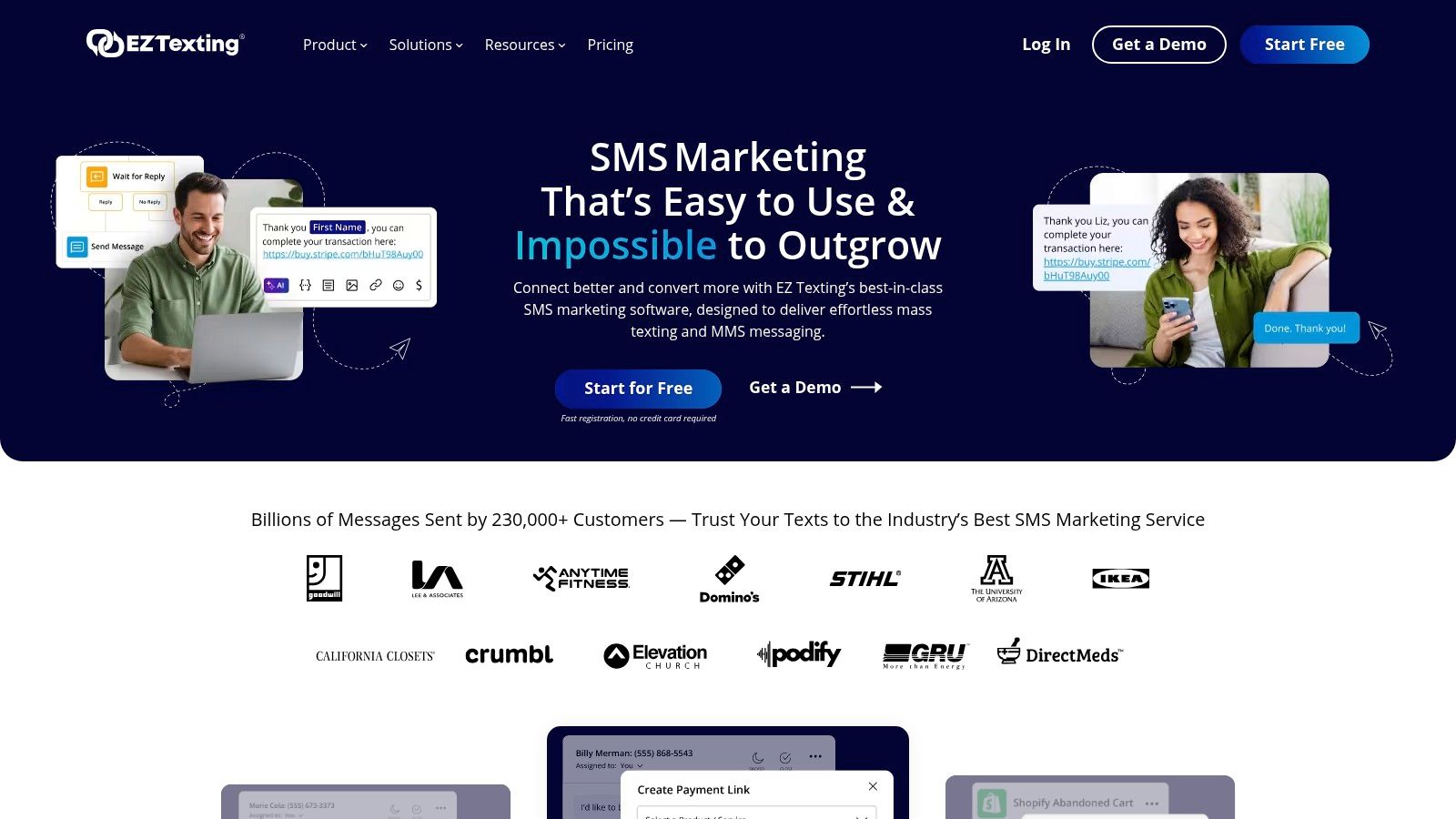
| EZ Texting | Monthly Tiered | Regional Builders & Developers | Yes | Yes (Guided Setup) | Yes |
Step-by-Step Guide: Implementing Mass SMS on Job Sites
Deploying a mass texting system across active residential construction sites requires structured execution to maintain carrier compliance, prevent spam reports, and ensure operational adoption.
- Step 1: Collect Opt-In Consent
- Step 2: Register 10DLC Brand/TCR
- Step 3: Segment Sub/Client Lists
- Step 4: Schedule & Automate Messaging
Step 1: Establish Express Opt-In Consent
Under federal TCPA guidelines, businesses cannot text individuals without prior express consent.
- For Clients: Include a mandatory opt-in checkbox on service agreements, job intake web forms, and client portal sign-ups (e.g., "By providing your mobile number, you agree to receive project updates via automated SMS from [Company Name]. Reply STOP to opt out.").
- For Subcontractors and Field Staff: Include mobile communication consent forms during vendor onboarding and subcontractor master agreements.
Step 2: Complete Brand and Campaign 10DLC Registration
Before launching mass messages, complete the legal entity registration within your chosen SMS platform dashboard. Submit your Tax Identification Number (EIN/TIN), legal business name, and sample text templates. Registration approval generally takes between 3 to 10 business days. Failure to complete this step will result in immediate message delivery rejection by mobile operators.
Step 3: Segment Contact Lists by Project and Role
Never broadcast every update to your entire contact database. Create targeted lists categorized by:
- Specific Job Site Address: (e.g.,
Job-104-OakStreet) for localized emergency alerts (water main shutoffs, road blockages). - Trade Specialty: (e.g.,
Subs-Framing,Subs-Plumbing) for trade-specific site readiness callouts. - Project Status: (e.g.,
Clients-Active-Builds) for structural, weekly progress digests.
Step 4: Establish Message Protocols and Opt-Out Rules
Train project managers on text etiquette. Broadcasts should strictly occur within normal operational hours (typically 7:00 AM to 6:00 PM local site time). Ensure system settings automatically process standard keyword opt-outs (STOP, UNSUBSCRIBE, CANCEL) immediately without administrative intervention.
Regulatory Compliance and Legal Considerations (TCPA & Guidelines)
Mass texting for home projects is subject to strict regulatory enforcement in the United States and international jurisdictions. Non-compliance can trigger civil litigation under the Telephone Consumer Protection Act (TCPA), resulting in statutory damages ranging from $500 to $1,500 per unauthorized text message.
Core Legal Compliance Checklist
- Prior Express Written Consent: Transactional notifications (e.g., schedule alerts) require express consent; promotional texts require express written consent.
- Clear Identification: Every outbound mass text must state the business name within the body of the message (e.g., "[Apex Builders Update] Frame inspection is scheduled for tomorrow at 8 AM.").
- Automated Opt-Out Mechanisms: Every initial message broadcast must contain opt-out instructions (e.g., "Reply STOP to unsubscribe").
- Quiet Hours Enforcement: Federal regulations restrict commercial broadcasts outside local hours of 8:00 AM to 9:00 PM, though industry best practice for home construction dictates avoiding texts before 7:00 AM or after 7:00 PM out of courtesy to clients and crews.
Disclaimer: Legal rules around SMS messaging vary by jurisdiction and business structure. Consult qualified legal counsel to review your specific project opt-in language and consent procedures.
Troubleshooting Mass Texting Failures on the Job Site
Even established platforms experience technical bottlenecks. Below are standard diagnostic steps for resolving common field issues.
Carrier Message Filtering (Undelivered Status)
- Symptom: Outbound texts show as "Failed" or "Undelivered" in the platform dashboard.
- Cause: Mobile carriers flagged content due to restricted keywords (e.g., cash offers, financing claims), unverified bit.ly short links, or unregistered 10DLC campaigns.
- Resolution: Use custom branded domain link shorteners instead of free public shorteners. Verify that your 10DLC campaign status shows "Active/Verified" in your platform console.
Delayed Delivery to Subcontractors
- Symptom: Workers receive weather or schedule alerts hours after dispatch.
- Cause: Gateway throughput throttling on shared long codes during high-traffic carrier network congestion.
- Resolution: Upgrade to a dedicated short code or high-throughput toll-free number (TFN) if broadcasting to lists larger than 5,000 recipients simultaneously.
High Image File Compression/Failure on MMS
- Symptom: Clients report receiving distorted site photos or blueprint uploads.
- Cause: Image files exceed carrier MMS size thresholds (often 1MB to 3MB depending on receiver networks).
- Resolution: Compress project photos to standard JPEG formats under 1.5MB before broadcasting, or embed direct security-restricted cloud storage links (e.g., Google Drive, Box) in standard SMS messages.
Frequently Asked Questions
Can I use my existing business landline to send mass text messages?
Yes. Most dedicated mass texting platforms support landline text-enabling. This process allows your business to send and receive text messages using your existing office phone number without disrupting your standard voice service.
What is the difference between SMS and MMS for home project updates?
SMS (Short Message Service) is restricted to plain text up to 160 characters per message segment. MMS (Multimedia Messaging Service) supports up to 1,600 characters of text and permits embedded media attachments such as JPEGs, PNGs, short video clips, or PDF documents.
How do I handle emergency site alerts using mass texting?
Create pre-approved keyword groups and pre-formatted emergency templates (e.g., severe weather shutdown, gas line strikes) within your texting dashboard. Assign broadcast permissions to site superintendents through mobile apps so alerts can be sent within seconds directly from the field.
Are pay-as-you-go texting plans cheaper than monthly subscriptions for contractors?
Pay-as-you-go plans (like TextMagic) are more cost-effective if you send fewer than 500 to 1,000 messages per month or experience long seasonal shutdowns. However, if you regularly broadcast project updates to multiple clients and trade teams, tiered monthly plans (like SimpleTexting) offer a lower per-message cost.
Can home project management software replace dedicated mass texting apps?
Integrated project management platforms (like Buildertrend or CoConstruct) often include built-in client messaging features. However, dedicated mass texting services provide superior delivery rates, complex contact segmentation, automated keyword replies, and robust 10DLC carrier compliance options that specialized project tools may lack.
Actionable Recommendations: Choosing Your Path Forward
To implement an effective mass texting solution for your home projects, proceed with the following actions:
- Assess Message Volume and Audience: Determine whether your main intent is updating homeowners (prioritize Podium or SlickText) or coordinating subcontractors and field personnel (prioritize SimpleTexting or TextMagic).
- Audit Opt-In Mechanisms: Ensure all digital intake forms, trade subcontracts, and client agreements contain legal consent disclaimers before importing existing phone rosters.
- Register Brand 10DLC: Complete entity verification through your chosen platform immediately upon account creation to avoid carrier filtering delays.
- Run a Field Pilot: Test two-way MMS progress photos and SMS alerts on a single job site before deploying nationwide or company-wide across all active projects.
Image Gallery