The Animal Pyramid Kingdom Explained
The "animal pyramid kingdom" refers to two foundational biological concepts: the taxonomic hierarchy of the Kingdom Animalia and the ecological trophic pyramid. These systems define how species are scientifically categorized based on e...
The "animal pyramid kingdom" refers to two foundational biological concepts: the taxonomic hierarchy of the Kingdom Animalia and the ecological trophic pyramid. These systems define how species are scientifically categorized based on evolutionary relationships and how energy flows through ecosystems from primary producers to apex predators.
Contents
Understanding these structures is essential for grasping how life on Earth is organized and sustained. Whether you are looking at the hierarchical "pyramid" of classification (from Domain down to Species) or the "pyramid of energy" (where numbers decrease as you move up the food chain), these models provide the blueprint for biological study and environmental conservation in 2026.
The Taxonomic Pyramid: Organizing Kingdom Animalia
The biological classification of animals is often visualized as an inverted pyramid, narrowing from broad categories to specific individual species. This system, known as Linnaean taxonomy, allows scientists to group organisms based on shared physical characteristics and genetic heritage. At the top of this specific hierarchy is the Kingdom Animalia, a massive group that encompasses all multicellular, eukaryotic organisms that consume organic material for energy.
The Ranks of Classification
To understand the "animal pyramid" in a taxonomic sense, one must follow the descending levels of the biological hierarchy. Each step down the pyramid represents an increase in specificity and a decrease in the number of included organisms.
- Domain: The most inclusive level (Eukarya for all animals).
- Kingdom: Specifically Kingdom Animalia, excluding plants, fungi, and protists.
- Phylum: Groups animals based on general body plans (e.g., Chordata for animals with backbones).
- Class: Further refinement based on biological traits (e.g., Mammalia).
- Order: Grouping by more specific characteristics (e.g., Carnivora).
- Family: Closer evolutionary relationships (e.g., Felidae for cats).
- Genus: A group of closely related species (e.g., Panthera).
- Species: The most specific level, defining individuals that can interbreed (e.g., Panthera leo, the lion).
Defining Characteristics of the Animal Kingdom
As of 2026, the criteria for being placed within the Animalia branch of the pyramid remain strictly defined by cellular biology and metabolic function. All members of the animal kingdom are heterotrophs, meaning they cannot produce their own food through photosynthesis and must ingest other organisms. Furthermore, animals lack cell walls—a feature that distinguishes them from plants and fungi—and possess specialized tissues such as nerves and muscles, allowing for complex movement and sensory response.
The Ecological Pyramid: Energy and Biomass
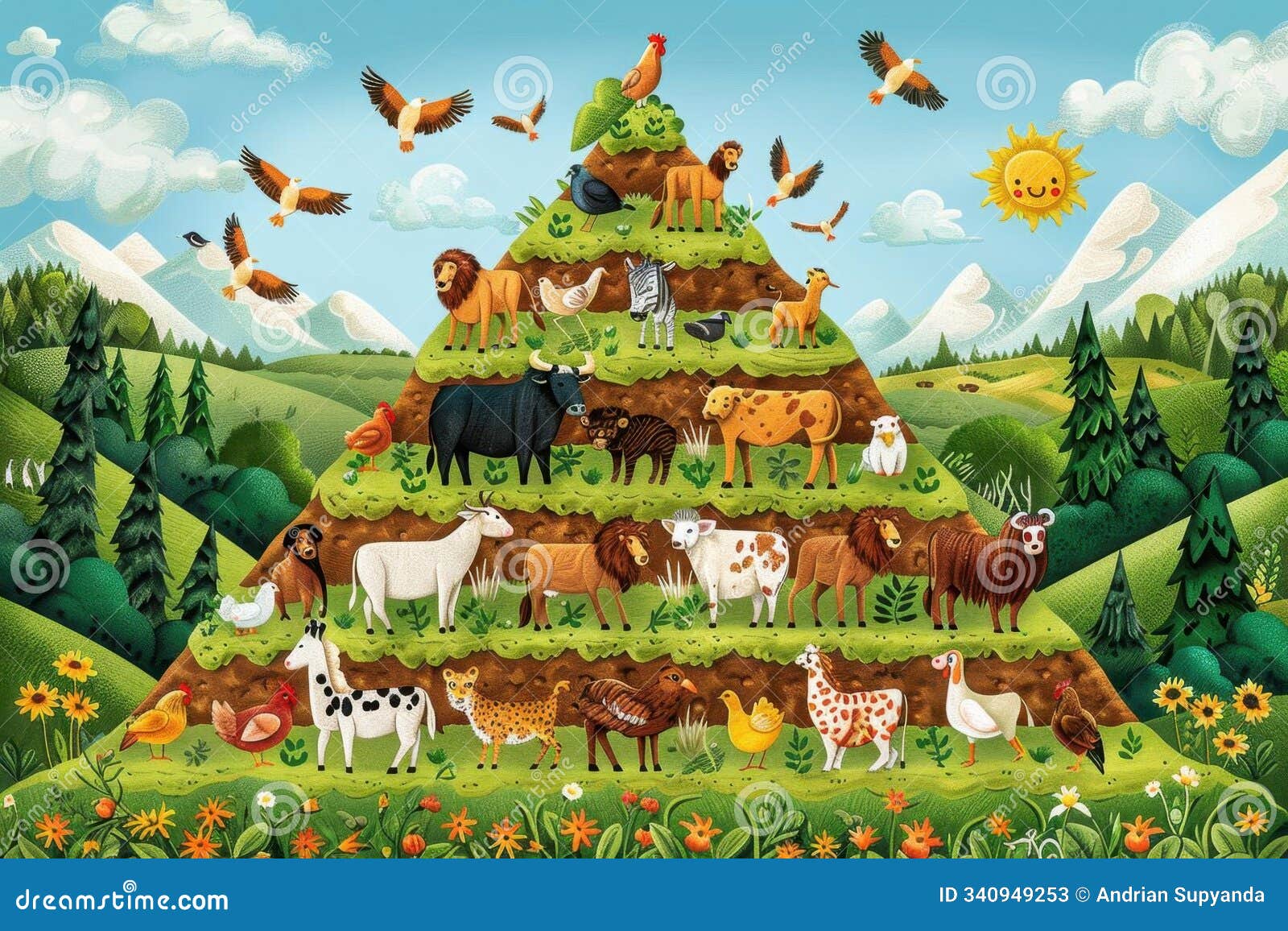
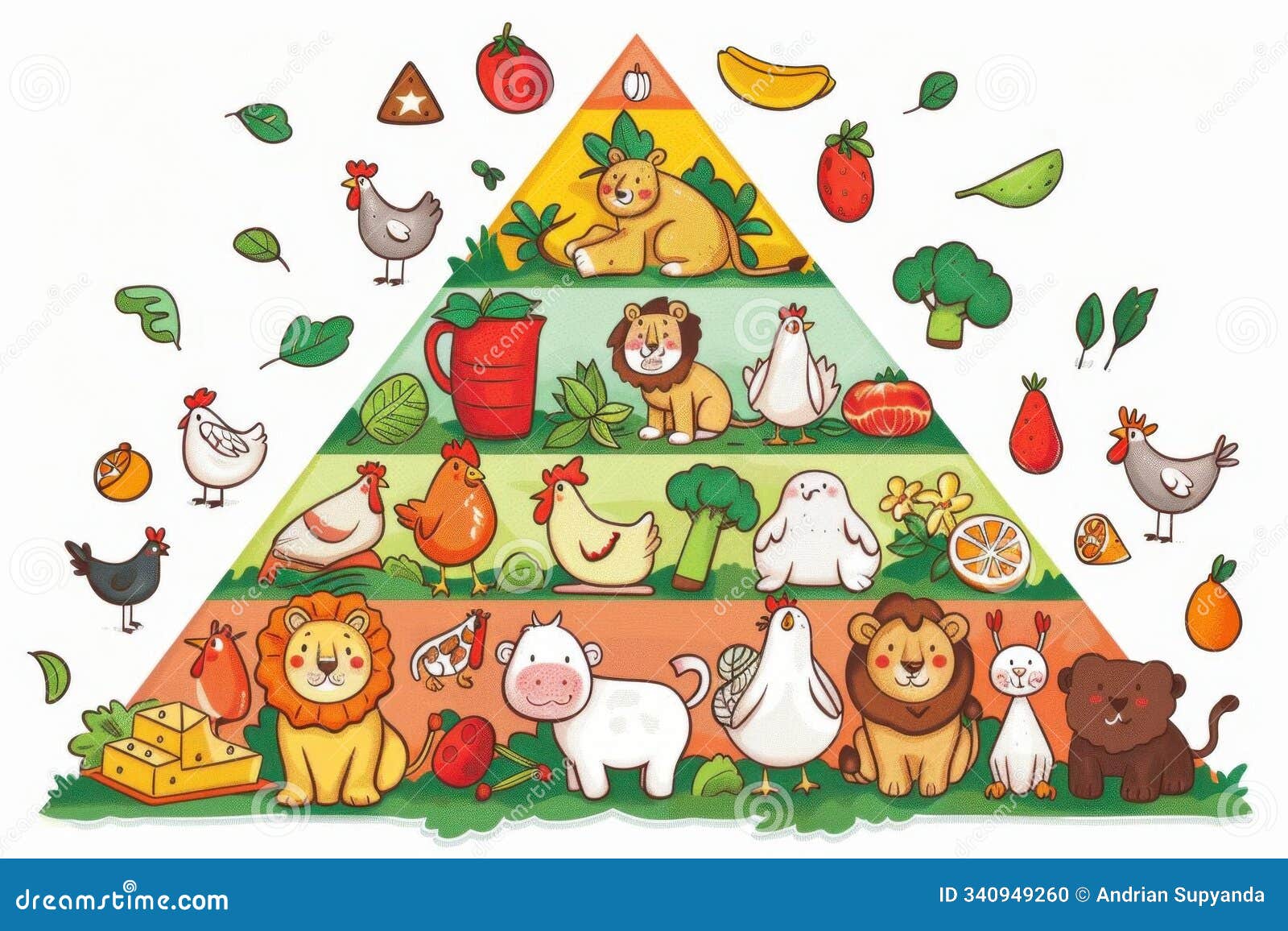
While taxonomy organizes animals by "what they are," the ecological pyramid explains "what they do" and how they interact with their environment. Also known as a trophic pyramid, this model illustrates the distribution of energy, biomass, or population numbers across different levels of an ecosystem.
Trophic Levels Explained
The pyramid shape is not accidental; it represents the inevitable loss of energy as it moves from one level to the next.
- The Base (Primary Producers): While not animals themselves, autotrophs like plants and algae form the foundation. They convert solar energy into chemical energy. Without this base, the animal pyramid would collapse.
- Primary Consumers (Herbivores): This is the first animal level. It includes species that eat only plants, such as deer, elephants, and many insects. They are the most numerous animals in the pyramid.
- Secondary Consumers (Carnivores/Omnivores): These animals eat the primary consumers. Examples include frogs that eat insects or small birds that eat seeds and larvae.
- Tertiary Consumers: These are larger carnivores that prey on secondary consumers, such as snakes or small raptors.
- Quaternary Consumers (Apex Predators): At the very peak of the pyramid are animals with no natural predators, such as orcas, lions, and polar bears.
The 10% Rule of Energy Transfer
A critical concept in the animal pyramid is the 10% Rule. On average, only about 10% of the energy stored in one trophic level is transferred to the next. The remaining 90% is lost to the environment through metabolic processes, heat, and waste. This is why apex predators are relatively rare compared to herbivores; it takes a massive amount of plant life and a large population of herbivores to support a single top-level predator.
Comparative Overview of Trophic Levels
| Pyramid Level | Role | Type of Animal | Energy Retention | Population Density |
|---|---|---|---|---|
| Level 1 | Primary Producers | None (Plants/Algae) | 100% (Base) | Highest |
| Level 2 | Primary Consumers | Herbivores | ~10% | Very High |
| Level 3 | Secondary Consumers | Small Carnivores | ~1% | Moderate |
| Level 4 | Tertiary Consumers | Large Carnivores | ~0.1% | Low |
| Level 5 | Apex Predators | Top Predators | ~0.01% | Lowest |
Key Phyla within the Animal Kingdom
To truly explain the animal pyramid, we must look at the major phyla that dominate the biological landscape. Over 30 phyla exist, but a handful contain the vast majority of the world's animal species.
Phylum Arthropoda
Arthropods represent the largest portion of the animal pyramid by sheer numbers and diversity. This group includes insects, spiders, and crustaceans. Their success is attributed to their exoskeletons, segmented bodies, and jointed appendages. In terms of biomass and ecological impact, arthropods are the unsung controllers of the lower animal tiers.
Phylum Chordata
This phylum includes all vertebrates—fish, amphibians, reptiles, birds, and mammals. While they make up a smaller percentage of species compared to arthropods, chordates often occupy the higher tiers of the ecological pyramid. The presence of a notochord or spinal column allows for larger body sizes and more complex nervous systems.
Phylum Mollusca
Mollusks (snails, clams, octopuses) are essential components of both terrestrial and aquatic pyramids. They serve as vital secondary consumers and are a primary food source for many higher-level chordates. Their diversity ranges from the simple garden snail to the highly intelligent giant squid.
The Dynamics of Energy Flow and Trophic Cascades
The animal pyramid is not a static structure; it is a dynamic system of checks and balances. When one level of the pyramid is significantly altered, it can trigger what ecologists call a trophic cascade.
Top-Down vs. Bottom-Up Regulation
- Bottom-Up Regulation: Occurs when the population of primary producers (the base) changes. For example, a severe drought that kills off grass will lead to a decline in herbivores, which in turn causes a collapse of the predator populations above them.
- Top-Down Regulation: Occurs when the number of apex predators changes. If wolves are removed from an ecosystem, the population of deer (primary consumers) may explode, leading to overgrazing. This overgrazing can destroy the habitat for other animals, effectively flattening the pyramid from the top down.
In 2026, conservationists focus heavily on these cascades. Protecting "keystone species"—animals that have a disproportionately large effect on their environment—is the primary strategy for maintaining the integrity of the animal pyramid.
Biodiversity and the "Sixth Mass Extinction" in 2026
As we navigate through 2026, the animal pyramid faces unprecedented pressure. Habitat loss, climate change, and pollution are thinning the layers of the pyramid. Scientific reports indicate that species at the top of the pyramid (apex predators) are often the most vulnerable because they require large territories and stable populations of prey.
However, modern technology is aiding our understanding. Environmental DNA (eDNA) sampling and satellite-tracked migration patterns allow researchers to map these pyramids with more accuracy than ever before. This data helps in creating "wildlife corridors" that ensure energy flow remains uninterrupted across fragmented landscapes.
Frequently Asked Questions
What is the difference between a food web and an ecological pyramid?
A food web is a complex network of interconnected food chains showing "who eats whom" in an ecosystem. An ecological pyramid is a more structured visualization that specifically emphasizes the quantity of energy, biomass, or individuals at each functional level. While a food web shows the pathways, the pyramid shows the scale and efficiency of the system.
Can an animal occupy more than one level in the pyramid?
Yes. Many animals are omnivores, meaning they eat both plants and other animals. For example, a bear eating berries acts as a primary consumer (Level 2), but when it eats a salmon, it acts as a secondary or tertiary consumer (Level 3 or 4). This flexibility makes real-world ecological pyramids much more complex than the simplified models often taught in introductory biology.
Why are there fewer apex predators than herbivores?
This is due to the inefficiency of energy transfer (the 10% Rule). Because energy is lost at every level as heat and metabolic waste, there is simply not enough energy available at the top of the pyramid to support large numbers of apex predators. A single lion requires a vast territory filled with hundreds of zebras and wildebeests to survive.
What happens if the base of the pyramid is destroyed?
If the primary producers (plants/algae) are destroyed, the entire pyramid collapses. This is known as a bottom-up collapse. Without the initial conversion of sunlight into chemical energy, no other level has a source of fuel. This is why phenomena like "ocean deserts" or massive deforestation are so catastrophic for global animal populations.
Is the taxonomic pyramid different from the ecological pyramid?
Yes. The taxonomic pyramid is a classification system based on evolutionary relationships and biological traits (Domain, Kingdom, Phylum, etc.). The ecological pyramid is a functional system based on energy flow and feeding relationships (Producers, Consumers, Predators). One describes what an animal is, while the other describes its role in the environment.
Actionable Steps for Understanding and Preserving Local Ecosystems
To see the animal pyramid in action, you do not need to visit a remote wilderness. You can observe these dynamics in your local park or even your backyard.
- Identify Local Producers: Note the types of plants and trees in your area. These are the foundation of your local pyramid.
- Observe Primary Consumers: Look for insects, birds, and small rodents that feed on those plants.
- Trace the Predator Line: Identify the local predators, such as hawks, foxes, or even domestic cats, and see if you can determine which "level" they occupy.
- Support Biodiversity: Planting native species in your garden provides a stronger base for the local animal pyramid, supporting higher numbers of pollinators and the predators that rely on them.
By understanding the delicate balance of the animal pyramid kingdom, we can better appreciate the intricate connections that sustain life on our planet in 2026 and beyond.
Image Gallery