Shawn Mullins and the Rise of Impact Investing: Institutionalizing Purpose in 2026
Shawn Mullins, as a prominent leader in the alternative investment space, has been instrumental in transitioning impact investing from a niche philanthropic endeavor into a core institutional asset class. By 2026, his work—particularly...
Shawn Mullins, as a prominent leader in the alternative investment space, has been instrumental in transitioning impact investing from a niche philanthropic endeavor into a core institutional asset class. By 2026, his work—particularly within LGT Capital Partners—has helped define the frameworks that allow large-scale capital to pursue measurable social and environmental outcomes alongside market-rate financial returns.
Contents
The Evolution of Impact Leadership
In the early 2020s, a clear distinction began to emerge between environmental, social, and governance (ESG) integration and impact investing. While ESG focuses primarily on mitigating risks within a portfolio, impact investing requires the intentional creation of positive, measurable change. Shawn Mullins, serving as a Managing Director at LGT Capital Partners, became a vocal advocate for the "institutionalization" of this sector.
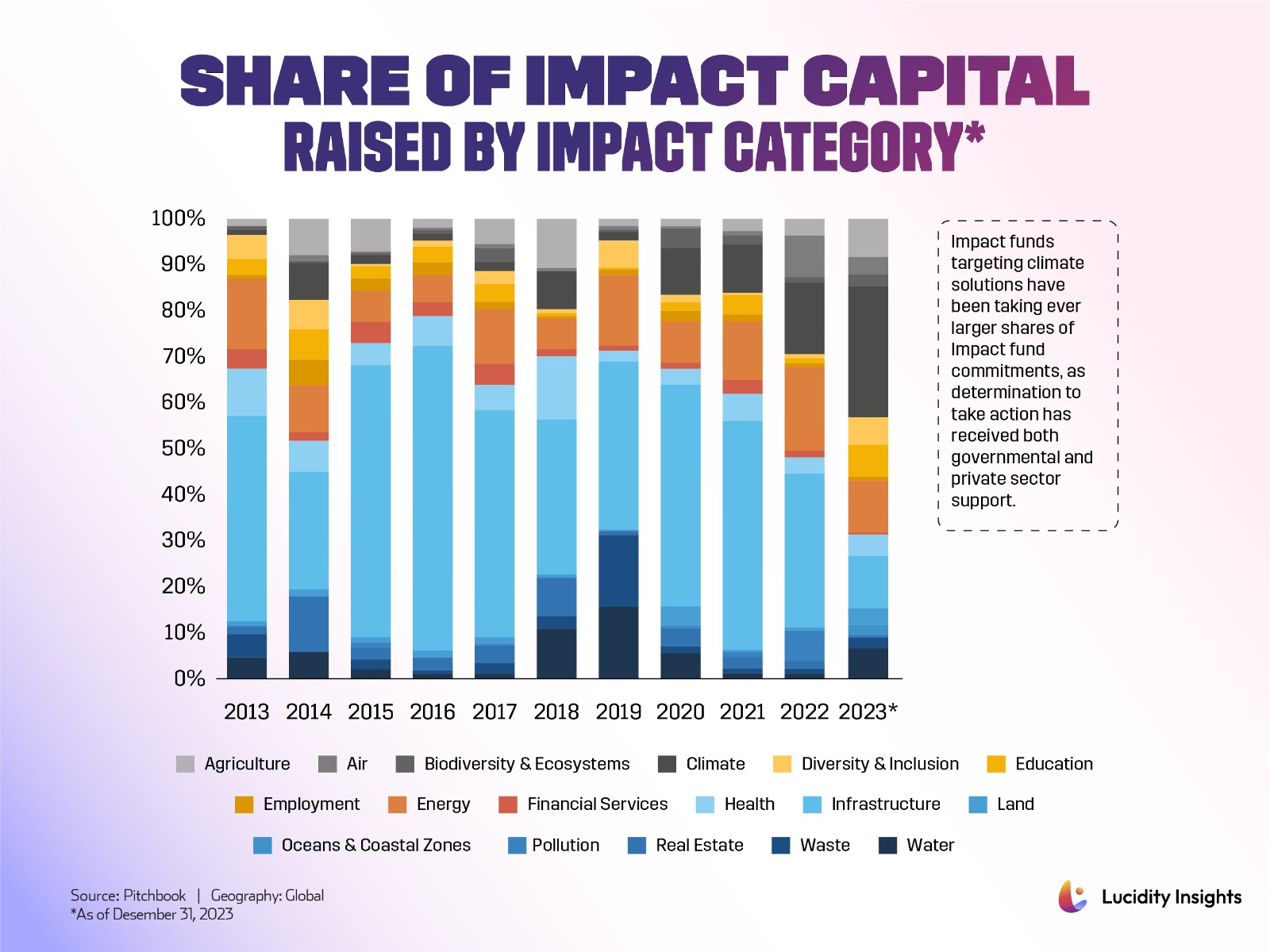
By 2026, the global impact investing market has surpassed $3 trillion in assets under management (AUM), driven by a shift in how institutional investors perceive value. Mullins and his peers have argued that the most significant global challenges—climate change, resource scarcity, and social inequality—are not just risks to be hedged, but massive investment opportunities. Under this leadership, the conversation has moved away from "doing less harm" toward "actively solving problems" through private equity, private credit, and infrastructure.
Defining the "Rise" of the Sector in 2026
The "rise" of impact investing is not merely a story of capital growth; it is a story of methodological rigor. In the previous decade, the sector was often criticized for "impact washing," where firms would relabel traditional investments to appear more socially conscious. By 2026, the industry has matured through three primary pillars:
- Standardization of Metrics: The widespread adoption of the Global Impact Investing Network (GIIN) IRIS+ system and the Harmonized Indicators for Private Sector Operations (HIPSO) has provided a common language for LPs (Limited Partners) and GPs (General Partners).
- Regulatory Clarity: In Europe, the Sustainable Finance Disclosure Regulation (SFDR) Article 9 requirements have become the gold standard, while the U.S. SEC has finalized robust climate and human capital disclosure rules.
- Performance Evidence: A decade of data now proves that impact-aligned companies often exhibit higher resilience and better long-term growth prospects, particularly in sectors like renewable energy and healthcare technology.
Shawn Mullins and the Institutional Playbook
Shawn Mullins has consistently emphasized that for impact investing to reach its full potential, it must appeal to the world’s largest pools of capital: pension funds, sovereign wealth funds, and insurance companies. These entities have fiduciary duties that prevent them from sacrificing returns for the sake of charity.
The strategy championed by Mullins involves a dual-track approach. First, the investment must pass a rigorous commercial due diligence phase. Second, it must meet a strict "additionality" test—the idea that the positive impact would not have occurred without the specific intervention of the investor's capital. This "returns-first, impact-always" mindset has dismantled the myth that social good and financial profit are mutually exclusive.
The Role of Private Markets
Private equity remains the most effective vehicle for impact because it allows for active ownership. Investors like Mullins utilize board seats to influence corporate strategy, ensuring that a company’s mission is baked into its operational DNA. In 2026, we see this most clearly in the "Circular Economy" funds, where private equity firms buy traditional manufacturing businesses and transition them to zero-waste models, significantly increasing their valuation upon exit.
Comparison of Investment Approaches in 2026
To understand where the work of Shawn Mullins fits into the broader financial landscape, it is helpful to compare the different tiers of "responsible" investing currently practiced in 2026.
| Feature | Traditional ESG | Impact Investing | Philanthropy |
|---|---|---|---|
| Primary Goal | Risk Mitigation | Positive Outcomes | Social/Environmental Benefit |
| Return Expectation | Market Rate | Market Rate (or near-market) | No Return of Capital |
| Intentionality | Passive (Filtering) | Active (Goal-setting) | Total (Mission-driven) |
| Measurement | ESG Scores/Ratings | KPI-based Impact Reports | Qualitative Assessment |
| Role of Capital | Influence via Divestment | Additionality/Direct Funding | Grant-making |
Technical Frameworks: Beyond the Buzzwords
For institutional leaders like Mullins, the technical execution of impact investing relies on two critical components: Theory of Change and Impact Measurement and Management (IMM).
The Theory of Change
Every impact investment must start with a "Theory of Change." This is a logic chain that explains how a specific input (capital) leads to an output (a product or service), which in turn creates an outcome (behavioral or systemic change) and ultimately a long-term impact. Mullins has advocated for GPs to provide these theories in their offering memorandums, allowing LPs to see the logical bridge between their dollars and the eventual social benefit.
Impact Measurement and Management (IMM)
In 2026, IMM is no longer an end-of-year marketing exercise. It is a continuous data loop. High-performing impact funds now use real-time dashboards to track metrics such as:
- Carbon Avoided: Measured in metric tons of CO2e.
- Lives Impacted: Specifically looking at underserved populations.
- Job Quality: Utilizing the International Labour Organization (ILO) standards for decent work.
- Resource Efficiency: Tracking water or raw material savings per unit of production.
Challenges and The "Greenlash" of the Mid-2020s
The rise of impact investing has not been without friction. Between 2023 and 2025, a significant "greenlash" or anti-ESG movement occurred in various jurisdictions, particularly in parts of the United States. Critics argued that focusing on social outcomes distracted from the primary goal of shareholder wealth.
Shawn Mullins and other institutional leaders navigated this by doubling down on "Financial Materiality." They argued that ignoring the energy transition or failing to manage a diverse workforce was, in itself, a breach of fiduciary duty because it left companies vulnerable to regulatory fines, stranded assets, and talent shortages. By 2026, the industry has largely moved past the political theater, focusing instead on "economic reality"—the fact that the global economy is fundamentally restructuring toward sustainability.
The Future of Impact: 2026 and Beyond
As we look toward the second half of the decade, the influence of leaders like Shawn Mullins is evident in the "convergence" of finance. We are seeing the emergence of "Impact-Linked Carried Interest," where fund managers only receive their full performance fees if they meet both their financial hurdles and their pre-defined impact targets. This aligns the incentives of the fund manager, the investor, and the planet.
Furthermore, the rise of Blended Finance—where public or philanthropic capital is used to "de-risk" private investment in emerging markets—has expanded the reach of impact investing. This has allowed institutional capital to flow into regions that were previously considered too risky, such as infrastructure projects in Sub-Saharan Africa or Southeast Asia, directly supporting the UN Sustainable Development Goals (SDGs).
Frequently Asked Questions
Who is Shawn Mullins in the context of impact investing? Shawn Mullins is a Managing Director at LGT Capital Partners and a key figure in the institutionalization of impact investing. He focuses on integrating rigorous impact measurement with private market strategies to ensure that social and environmental goals are achieved alongside market-rate financial returns.
How does impact investing differ from ESG? ESG (Environmental, Social, and Governance) is a framework for identifying risks that could affect a company's financial performance. Impact investing goes a step further by actively seeking to solve specific problems. While ESG is about how a company operates, impact investing is about what the company actually achieves for society or the environment.
What are Article 9 funds? Under the European Union’s Sustainable Finance Disclosure Regulation (SFDR), Article 9 funds (also known as "dark green" funds) are those that have a specific sustainable investment objective as their core purpose. These are the most stringent categories for impact-focused funds.
Can impact investing provide market-rate returns? Yes. Extensive research from organizations like the GIIN has shown that the majority of impact investors seek—and achieve—returns that are in line with traditional market benchmarks. In many cases, impact-aligned sectors like renewable energy have outperformed traditional sectors over the last five years.
What is "additionality" in impact investing? Additionality refers to the positive impact that would not have happened if the investment had not been made. It is a key requirement for high-integrity impact funds to prove that their capital is truly making a difference rather than just riding a pre-existing trend.
Practical Next Actions for Investors
For institutional and accredited investors looking to follow the lead of Shawn Mullins and the current 2026 market trends, the following steps are recommended:
- Conduct an Impact Audit: Review current portfolios to distinguish between ESG-integrated holdings and true impact investments.
- Define Priority SDGs: Identify which of the 17 UN Sustainable Development Goals align most closely with your organization’s mission or long-term liabilities.
- Evaluate IMM Capabilities: Ensure that any fund manager you partner with has a robust Impact Measurement and Management system that uses standardized, third-party verified data.
- Explore Private Markets: Given the active nature of impact investing, consider allocations toward private equity or private credit, where additionality is easiest to track and influence.
Image Gallery