What Does a Business Finance Major Do? Roles, Skills, and Career Paths
A business finance major focuses on the strategic management of money, assets, and liabilities within a corporate or institutional framework. These individuals learn to analyze financial data, forecast economic trends, and make high-st...
A business finance major focuses on the strategic management of money, assets, and liabilities within a corporate or institutional framework. These individuals learn to analyze financial data, forecast economic trends, and make high-stakes decisions regarding capital allocation to maximize shareholder value and ensure long-term organizational stability.
Contents
The field of business finance is often misunderstood as a simple extension of accounting or a branch of general business. However, as of 2026, the distinction has become even more pronounced. While accounting focuses on the historical recording of financial transactions, business finance is inherently forward-looking. A business finance major is trained to look at the "why" and "what next" of money. They determine how a company should raise capital—whether through debt, equity, or internal earnings—and where that capital should be deployed to generate the highest possible return on investment (ROI).
In the current economic landscape of 2026, the role of a business finance major has evolved to integrate advanced quantitative modeling with strategic human judgment. With the maturation of artificial intelligence and automated ledger systems, the modern finance professional spends less time on manual data entry and significantly more time on predictive analytics, risk mitigation, and navigating the complexities of globalized financial markets.
The Academic Foundation: What Business Finance Majors Study
The journey of a business finance major begins with a rigorous multi-disciplinary curriculum designed to build both quantitative proficiency and a deep understanding of market mechanics. In 2026, most accredited programs have shifted toward a "Finance+Tech" hybrid model, recognizing that financial literacy now requires a baseline of technical competency.
Core Quantitative Skills
Students spend their first two years mastering the "language of money." This includes intermediate and advanced accounting, which provides the ability to read and interpret balance sheets, income statements, and cash flow reports. Beyond accounting, the focus shifts to statistics and calculus-based financial modeling. These tools are essential for calculating the Time Value of Money (TVM), a foundational concept that dictates how much a future sum of money is worth in today's terms.
Corporate Finance and Capital Markets
A significant portion of the major is dedicated to understanding how corporations interact with the broader economy. Students explore capital budgeting, where they learn to evaluate the feasibility of multi-million dollar projects using metrics like Net Present Value (NPV) and Internal Rate of Return (IRR). They also study capital markets, learning how stocks, bonds, and derivatives are priced and traded on global exchanges.
Integration of Modern Tools
By 2026, the standard finance curriculum includes mandatory modules on financial programming (typically Python or R) and the use of AI-driven analytical software. Students no longer just build static spreadsheets; they build dynamic models that can run thousands of simulations (Monte Carlo simulations) to predict potential outcomes under various market stressors. This technical depth allows majors to transition seamlessly into roles that require handling "Big Data" in a financial context.
Primary Career Roles for Business Finance Majors
Graduating with a degree in business finance opens doors to several distinct career "buckets." Depending on their interests, a major might find themselves in the high-pressure environment of Wall Street or the strategic planning department of a Fortune 500 company.
1. Corporate Financial Analyst
This is perhaps the most common entry-point for business finance majors. Working within a company's Finance department, these professionals are responsible for the Internal Rate of Return (IRR) on internal projects. They assist in the Financial Planning and Analysis (FP&A) cycle, helping the company set annual budgets and monthly forecasts. In 2026, these analysts are also heavily involved in ESG (Environmental, Social, and Governance) reporting, ensuring that the company’s investments align with sustainability mandates and regulatory requirements.
2. Investment Banking Analyst
For those seeking high-growth (and high-stress) environments, investment banking is a traditional path. Here, business finance majors assist in major transactions such as Mergers and Acquisitions (M&A) or Initial Public Offerings (IPOs). They perform rigorous valuation analyses, determining what a company is worth based on comparable company analysis, precedent transactions, and discounted cash flow (DCF) models.
3. Wealth and Portfolio Management
In this role, finance majors apply their knowledge to help individuals or institutional clients (like pension funds) grow their wealth. They analyze different asset classes—equities, fixed income, real estate, and alternatives like cryptocurrency—to build diversified portfolios. By 2026, portfolio managers are increasingly focused on "personalized indexing" and using algorithmic tools to rebalance assets in real-time.
4. Risk Management
Finance majors in risk management identify potential threats to a firm’s financial health. These threats can include market volatility, credit defaults by borrowers, or operational failures. They use complex mathematical models to calculate Value at Risk (VaR), helping the organization decide how much "buffer" capital it needs to hold to survive a market crash.
Daily Responsibilities and Workflow
Regardless of the specific job title, the daily life of a business finance professional revolves around data interpretation and communication. A typical day in 2026 involves the following core activities:
- Financial Reporting and Synthesis: Reviewing automated reports generated by the company's ERP (Enterprise Resource Planning) system and synthesizing that data into actionable insights for senior management.
- Scenario Modeling: Running "what-if" scenarios. For example, "What happens to our profit margins if the cost of raw materials increases by 12% due to geopolitical instability?"
- Capital Allocation Meetings: Presenting findings to stakeholders to justify why the company should invest in a new product line or, conversely, why it should buy back its own shares.
- Market Monitoring: Keeping a constant pulse on interest rate changes by the Federal Reserve, currency fluctuations, and shifts in bond yields that could impact the company’s cost of debt.
Comparison of Finance-Related Majors
To help students choose the right path, it is important to compare business finance with its closest academic relatives. While there is overlap, the primary objectives of each major differ significantly.
| Feature | Business Finance | Accounting | Economics |
|---|---|---|---|
| Primary Focus | Future-oriented capital allocation and valuation. | Historical recording and reporting of transactions. | Broad study of resource distribution and human behavior. |
| Core Question | "What should we do with our money tomorrow?" | "Where did our money go yesterday?" | "How do markets and policy impact society?" |
| Common Tools | DCF Models, NPV, Python, Bloomberg Terminal. | General Ledger, Tax Law, Auditing Standards (GAAP/IFRS). | Regression analysis, Econometrics, Game Theory. |
| Key Output | Investment strategies and risk assessments. | Financial statements and tax filings. | Policy papers and market trend reports. |
| Typical Career | Investment Banker, FP&A Manager, CFO. | CPA, Auditor, Tax Controller. | Policy Analyst, Economist, Consultant. |
Essential Skills for Success in 2026
To thrive as a business finance major in the current 2026 market, a combination of "hard" technical skills and "soft" interpersonal skills is mandatory.
Quantitative Proficiency
A finance major must be comfortable with numbers. This goes beyond basic arithmetic; it involves an intuitive understanding of probability and statistics. You must be able to look at a dataset and identify the underlying trends without getting lost in the noise.
Strategic Communication
Perhaps the most undervalued skill for finance majors is the ability to explain complex financial concepts to non-financial stakeholders. A Chief Financial Officer (CFO) must be able to explain to a Marketing Director why a specific campaign budget is being cut based on ROI projections. If you cannot translate "Greek" (financial jargon) into "Plain English," your impact within an organization will be limited.
Ethical Judgment
Finance is a field where decisions involve massive sums of money and significant responsibility. In 2026, with the rise of automated trading and complex financial instruments, ethical clarity is more important than ever. Finance majors study business ethics to ensure they can navigate conflicts of interest and comply with strict regulations from bodies like the Securities and Exchange Commission (SEC) or the Financial Industry Regulatory Authority (FINRA).
The Job Outlook and Salary Expectations (2026)
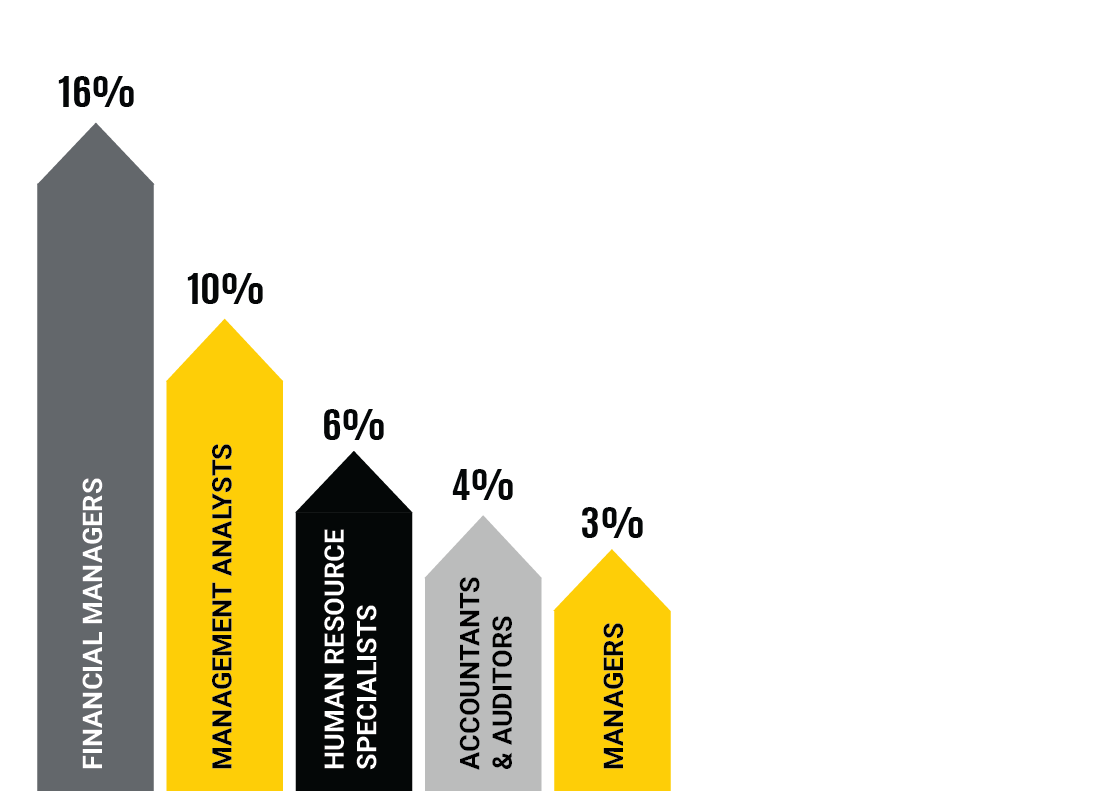
According to data maintained by the U.S. Bureau of Labor Statistics (BLS), employment for financial analysts and related roles continues to grow faster than the average for all occupations. As businesses become more data-driven, the demand for specialists who can interpret that data through a financial lens remains high.
In 2026, the starting salary for a business finance major typically ranges from $70,000 to $95,000, depending on the sub-sector and location. Those entering investment banking in major hubs like New York or London often see higher base salaries coupled with significant performance bonuses. Mid-career professionals with a Chartered Financial Analyst (CFA) or Certified Financial Planner (CFP) designation can easily command six-figure salaries as they move into senior management or specialized advisory roles.
Frequently Asked Questions
Is a business finance major harder than accounting?
"Hard" is subjective, but finance is generally considered more conceptual and mathematically rigorous, while accounting is more rule-based and detail-oriented. Finance requires a high comfort level with ambiguity and predictive modeling, whereas accounting requires precision and adherence to strict regulatory frameworks.
Do I need to be a math genius to major in finance?
No, but you must be proficient in algebra and comfortable with statistics. Most of the complex "heavy lifting" in math is now done by software, but you must understand the logic behind the formulas to ensure the software's output is accurate and meaningful.
What is the difference between Finance and Business Administration?
Business Administration is a broad degree that covers marketing, management, HR, and basic finance. A Business Finance major is a specialized deep-dive into the financial mechanics of an organization. Finance majors are usually more competitive for technical roles in banking and corporate treasury.
Are there specific certifications I should get?
While not always required for entry-level roles, earning a certification can significantly boost your earning potential. The CFA (Chartered Financial Analyst) is the gold standard for investment professionals, while the CMA (Certified Management Accountant) or FPAC (Financial Planning & Analysis Certified) are excellent for those pursuing corporate paths.
How has AI changed what a finance major does in 2026?
AI has automated the "data gathering" phase of finance. In 2026, finance majors focus less on building the actual spreadsheets and more on "prompting" AI models to run simulations and then spending their time interpreting the results to make strategic recommendations.
Practical Recommendation for Prospective Majors
If you are considering a major in business finance, your first step should be to develop an advanced proficiency in Microsoft Excel, as it remains the "workhorse" of the industry even in 2026. Simultaneously, begin following global market news through reputable outlets like the Wall Street Journal or Financial Times to understand how real-world events impact asset prices.
Lastly, seek out internships early. In the finance world, practical experience is often valued as highly as your GPA. Whether it is a local internship at a credit union or a summer analyst role at a major bank, seeing how capital flows through a real organization will provide context that a classroom cannot replicate.
Image Gallery