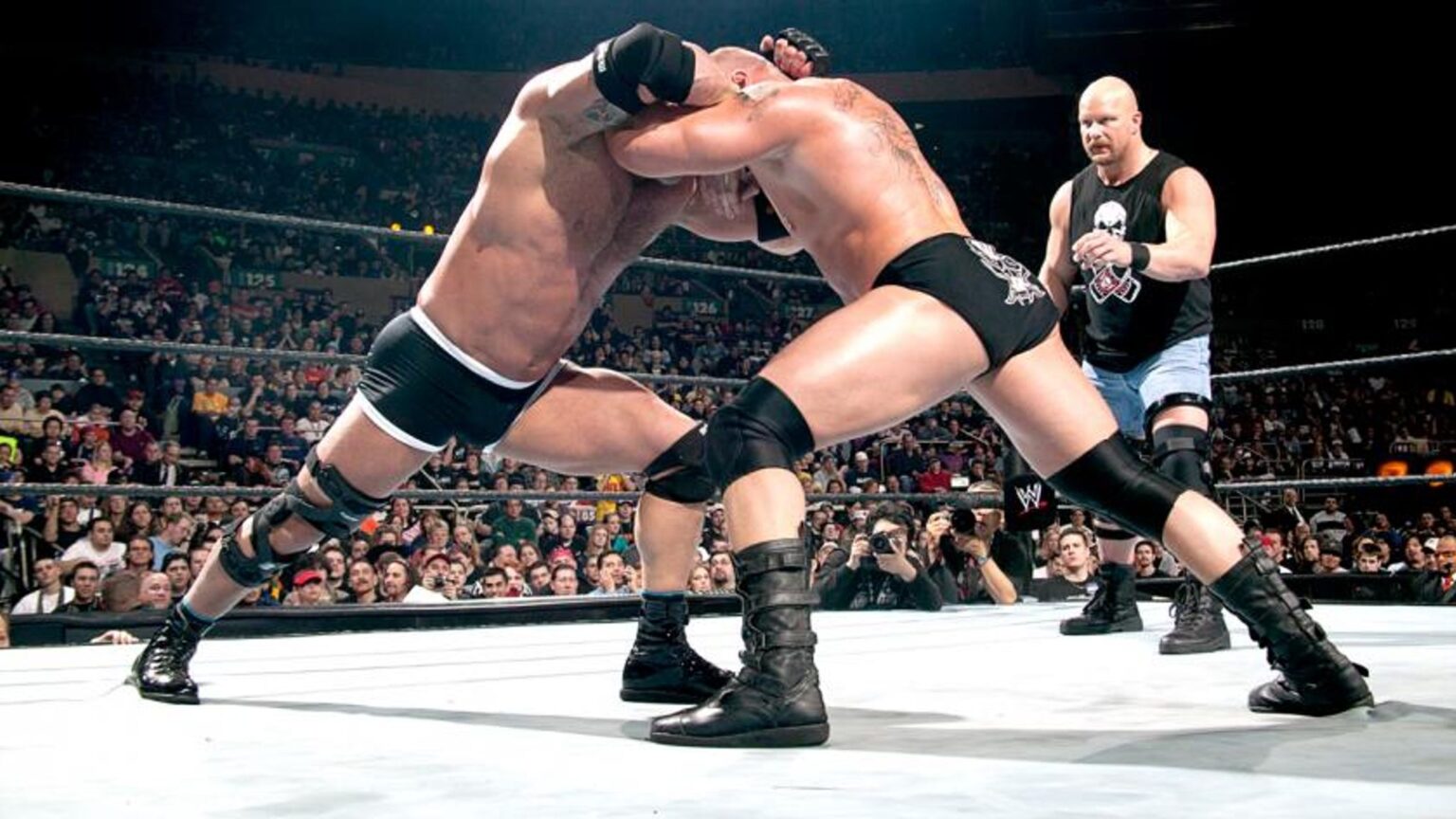
Bill Goldberg Height in the Ring: Physical Presence and Athletic Reality
Bill Goldberg’s billed height of 6'4" (193 cm) during his illustrious professional wrestling career has long served as a standard reference point for fans and analysts. While professional wrestling often utilizes "billing" for characte...
Bill Goldberg’s billed height of 6'4" (193 cm) during his illustrious professional wrestling career has long served as a standard reference point for fans and analysts. While professional wrestling often utilizes "billing" for character enhancement, Goldberg’s physical dimensions remain consistent with verified records from his collegiate football tenure at the University of Georgia and his subsequent professional stint in the NFL.
Contents
The Dynamics of Billed Versus Actual Height
In the world of professional wrestling, the concept of "billed height" is a long-standing tradition. Promoters often adjust the statistics of performers to heighten their aura of invincibility, improve the visual contrast in matchups, or satisfy the psychological expectations of the audience. For a powerhouse performer like Bill Goldberg, whose entire gimmick was built around raw, explosive dominance and the "invincible" streak, maintaining a stature that commanded the room was vital.
The figure of 6'4" is widely accepted within the industry and supported by archival sports data. Unlike some performers who see their billed heights inflated by several inches to compensate for shorter opponents, Goldberg’s physical frame was inherently massive. During his peak athletic years as a defensive tackle, his height was consistently measured at approximately 6'4". This measurement has held steady throughout his transition from the gridiron to the squared circle of World Championship Wrestling (WCW) and later World Wrestling Entertainment (WWE).
Impact on In-Ring Performance and Style
Goldberg’s height, coupled with his legitimate weight of approximately 285 pounds during his prime, was not merely a visual asset; it was a functional requirement for his signature offense. His move set, characterized by the devastating "Spear" and the iconic "Jackhammer," relied heavily on his ability to generate significant horizontal and vertical torque.
The Spear is a move that requires a low center of gravity combined with immense linear power. A performer who is too tall might struggle to maintain the balance necessary to drive an opponent through the mat. Goldberg’s 6'4" frame provided the ideal leverage to crash into opponents while maintaining the structural integrity required to avoid injury. Similarly, the Jackhammer—a vertical suplex powerslam—demanded that he hoist opponents of varying sizes comfortably above his shoulders. His height allowed him to establish a high fulcrum point, making the transition from a suplex position into a slam both fluid and visually intimidating.
Comparative Stature in the Heavyweight Division
To understand how Goldberg’s height translated into a competitive advantage, it is helpful to compare his physical presence to his most frequent historical rivals. Wrestling is a visual medium where the "size hierarchy" often dictates the narrative flow of a match.
| Performer | Billed Height | Physical Archetype |
|---|---|---|
| Bill Goldberg | 6'4" | Powerhouse / Explosive |
| Hulk Hogan | 6'7" | Giant / Icon |
| Kevin Nash | 6'10" | Super-Heavyweight |
| Bret Hart | 6'0" | Technical / Athletic |
| Brock Lesnar | 6'3" | Amateur Base / Grappler |
In this context, Goldberg occupied a "middle-giant" position. He was tall enough to appear threatening against technical wrestlers, yet compact enough to maintain the speed that separated him from the slower "super-heavyweights" of the 1990s and 2000s. His stature allowed for a diverse range of opponents; he could work a "David vs. Goliath" dynamic against smaller, more technical wrestlers like Bret Hart or Chris Jericho, while also holding his own in "clash of the titans" scenarios against larger figures like Kevin Nash or The Giant (Paul Wight).
Verification and Documentation
When assessing the accuracy of these measurements, historical records from the National Football League (NFL) provide the most reliable evidence. Because athletic commissions and professional sports leagues maintain rigorous physical evaluations for scouting purposes, these records are generally free from the theatrical embellishments found in entertainment-based sports.
According to the official archives of his NFL tenure, Goldberg was consistently listed between 6'3" and 6'4". Variations of half an inch are common in professional sports, often resulting from differences in measurement protocols—such as measuring with or without shoes, or accounting for spinal compression. For the purpose of his public persona, 6'4" became the definitive identifier. The consistency of this figure across both his football career and his wrestling career reinforces the claim that his height was never a product of "gimmickry" but a reflection of his genuine physical attributes.
Evolution of Physicality Over Time
As of 2026, spectators often notice that veteran performers seem to lose "height" as they age. This is a common physiological reality. As athletes grow older, spinal discs can compress and posture may shift, leading to a slight reduction in standing height. While fans might notice a difference between his 1998 WCW run and his later appearances in the mid-2020s, this is rarely indicative of a false initial claim; rather, it represents the standard impact of aging on professional athletes who have subjected their bodies to high-impact maneuvers for decades.
Practical Considerations for Wrestling Historians
For those researching professional wrestling statistics, it is crucial to approach billed heights with a degree of skepticism unless supported by non-promotional data. If you are investigating the physical reality of a wrestler, follow this investigative sequence:
- Source Cross-Referencing: Search for collegiate, amateur, or professional sports records prior to their wrestling career.
- Visual Assessment: Compare the performer against known, fixed objects or opponents with verified heights (such as athletic commissioners or referees).
- Contextual Analysis: Recognize that professional wrestling "billing" is a marketing tool. If a height seems impossible, it likely serves the character’s "larger-than-life" status rather than the physical reality.
Frequently Asked Questions
Is Bill Goldberg actually 6'4"? Yes, official records from his time in the NFL substantiate that he stands approximately 6'4". While minor fluctuations occur due to posture or measurement standards, this figure is accurate for his adult athletic prime.
Why does Goldberg look taller in some matches than others? This is often a result of camera angles, ring boots, and the stature of his opponents. High-angle shots or wearing boots with significant lifts can alter perceived height, as can standing next to a significantly shorter performer.
Does wrestling billing change over time? Yes, promotions often adjust heights to fit specific story arcs. If a wrestler is marketed as an "underdog," their height might be downplayed; if they are a "monster heel," it might be slightly inflated to make them seem more imposing.
How does Goldberg’s height compare to modern wrestlers? By 2026 standards, a height of 6'4" is still considered substantial. While there are many taller individuals in the current professional landscape, the combination of his height, mass, and explosive style remains a benchmark for the "powerhouse" archetype.
Can I rely on official WWE or WCW height listings for all performers? No. These listings are promotional. While they are usually within an inch or two of reality for athletes like Goldberg, they should not be considered scientifically precise measurements.
Next Steps for Fans and Researchers
If you are evaluating the physical history of wrestling icons, rely on documented secondary sources such as collegiate sports rosters or NFL draft profiles. These sources are inherently neutral and focus on performance metrics rather than character presentation. For enthusiasts of Bill Goldberg’s career, analyzing his movement patterns in archival footage—specifically how he maneuvers through the ropes and interacts with the physical space of the ring—will reveal more about his functional stature than promotional posters ever could. His career serves as a masterclass in using genuine physical advantages to enhance a character, bridging the gap between legitimate collegiate athletics and the theater of professional wrestling.
Image Gallery