Navigating Your Tax Bracket in Retirement: Strategies for Smart Income Planning
Your tax bracket in retirement depends on the total taxable income you pull from various sources each year, such as traditional IRAs, 401(k)s, Social Security, and pensions, which are subject to progressive federal income tax rates ran...
Your tax bracket in retirement depends on the total taxable income you pull from various sources each year, such as traditional IRAs, 401(k)s, Social Security, and pensions, which are subject to progressive federal income tax rates ranging from 10% to 37%. Understanding these thresholds allows retirees to strategically manage withdrawals, minimize lifetime tax burdens, and protect their hard-earned savings from excessive taxation.
Contents
Transitioning from the accumulation phase of your working years to the distribution phase of retirement introduces a fundamental shift in how you interact with the tax code. Many future retirees operate under the assumption that their tax rates will automatically plummet once they stop working. While earned income from salaries disappears, the reality of managing multiple income streams—often distributed across tax-deferred accounts, taxable brokerages, and tax-free vehicles—requires a calculated approach.
Navigating your tax bracket in retirement is not merely about surviving April tax season; it is a year-round exercise in cash flow management, asset location, and strategic distribution planning. This guide examines how the tax system treats different retirement assets, how marginal tax brackets operate, and which structural strategies you can implement to keep more money in your pocket throughout your post-work years.
Understanding the Mechanics of Federal Income Tax Brackets
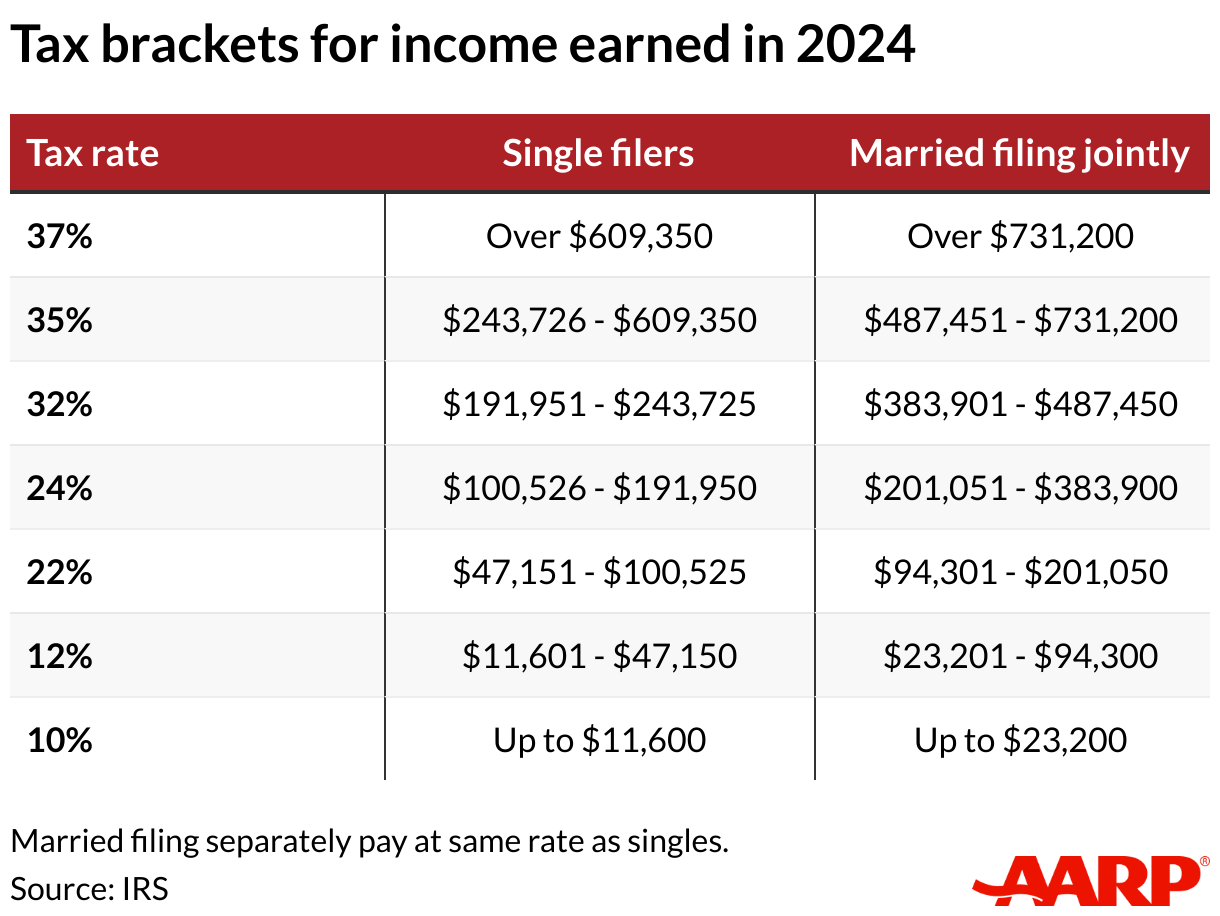
Federal income taxes in the United States operate under a progressive tax system. This means that your entire income is not taxed at a single flat rate. Instead, your income is divided into slices, or brackets, and each slice is taxed at its corresponding rate.
For example, a single filer in 2026 does not pay 22% on all of their earnings simply because their total income pushes them into the 22% marginal tax bracket. They pay 10% on the first tier of income, 12% on the income falling into the next tier, and only 22% on the dollars that actually cross into that specific upper threshold.
| Marginal Tax Rate (Single Filer) | Taxable Income Bracket (2026) |
|---|---|
| 10% | Up to $11,925 |
| 12% | $11,926 to $48,475 |
| 22% | $48,476 to $103,350 |
| 24% | $103,351 to $197,300 |
| 32% | $197,301 to $250,525 |
| 35% | $250,526 to $626,350 |
| 37% | Over $626,350 |
Note: Tax brackets are indexed annually for inflation by the Internal Revenue Service. The figures above serve as baseline brackets for structuring withdrawal strategies.
Knowing your marginal bracket is vital, but you must also keep your effective tax rate in mind. Your effective tax rate is the actual percentage of your total income that goes toward taxes after factoring in deductions and the progressive nature of the brackets. In retirement, managing your marginal bracket prevents sudden spikes in your taxable income that could trigger steep surcharges, higher Medicare premiums, or the taxation of your Social Security benefits.
Categorizing Retirement Income Sources by Tax Treatment
To accurately project your tax bracket in retirement, you must categorize your anticipated income streams based on how the IRS taxes them. Financial planners divide retirement assets into three distinct tax buckets: tax-deferred, taxable, and tax-free.
Tax-Deferred Accounts
Traditional 401(k)s, traditional IRAs, 403(b)s, and similar employer-sponsored plans comprise the tax-deferred bucket. You fund these accounts with pre-tax dollars, allowing your investments to compound over decades without immediate taxation. However, every dollar you withdraw in retirement from these accounts is treated as ordinary income and taxed at your current marginal rate.
Taxable Brokerage Accounts
Non-retirement brokerage accounts, savings accounts, and certificates of deposit sit in the taxable bucket. While contributions are made with after-tax dollars, the interest, dividends, and realized capital gains generated within these accounts face annual taxation. Fortunately, qualified dividends and long-term capital gains benefit from preferential tax rates (0%, 15%, or 20%), which are typically lower than ordinary income tax rates.
Tax-Free Accounts
Roth IRAs and Roth 401(k)s represent the tax-free bucket. You contribute after-tax dollars, but qualified withdrawals in retirement—including all accumulated earnings—are entirely tax-free. Because Roth distributions do not count toward your adjusted gross income (AGI), they provide immense flexibility in controlling your taxable bracket year by year.
The Impact of Required Minimum Distributions (RMDs)
One of the most common pitfalls retirees face is the sudden inflation of their tax bracket later in life due to Required Minimum Distributions (RMDs). Under federal rules, the IRS mandates that owners of traditional IRAs, 401(k)s, and other tax-deferred accounts begin withdrawing a specific percentage of their balance each year once they reach the applicable RMD age.
Failing to plan for RMDs can lead to a forced march into higher tax brackets. If your tax-deferred accounts grow significantly over your retirement years, the mandatory withdrawal percentages applied to those large balances can push your ordinary income far higher than it was during your working career. This sudden surge in taxable income can have cascading financial effects:
- Higher Tax Brackets: Pushing ordinary income into the 24%, 32%, or higher marginal brackets.
- Taxation of Social Security: Up to 85% of your Social Security benefits can become taxable when your combined income crosses specific provisional thresholds.
- Medicare IRMAA Surcharges: Higher modified adjusted gross incomes trigger Income-Related Monthly Adjustment Amounts, substantially increasing your Medicare Part B and Part D premiums.
Proactive retirees often combat future RMD shocks by executing strategic Roth conversions during the early years of retirement—the window between stopping work and the onset of RMDs—when their taxable income is artificially low.
Strategies for Managing and Lowering Your Retirement Tax Bracket
Controlling your tax bracket requires deliberate action rather than passive acceptance of whatever tax bill arrives. By synchronizing your withdrawals with your tax bracket limits, you can significantly reduce your lifetime tax liability.
Strategic Asset Withdrawal Sequencing
The order in which you draw down your accounts matters immensely. Traditional financial advice once suggested draining taxable accounts first, followed by tax-deferred accounts, and saving Roth accounts for last. Modern tax planning often favors a proportional or dynamic withdrawal strategy. By pulling small, calculated amounts from tax-deferred accounts each year to fill up lower tax brackets (such as the 10% and 12% tiers), you prevent massive tax-deferred balances from accumulating and triggering steep RMDs later.
Roth Conversions in Low-Income Windows
If you retire in your early sixties but delay claiming Social Security and taking pensions, your taxable income may drop dramatically. This window offers a prime opportunity to execute partial Roth conversions. You voluntarily move funds from a traditional IRA to a Roth IRA, pay the ordinary income tax on the conversion amount today, and lock in lower rates while permanently removing those funds—and their future growth—from future RMD requirements.
Leveraging Qualified Charitable Distributions (QCDs)
Once you reach age 70½, the tax code allows you to make direct transfers of up to $100,000 per year from your traditional IRA directly to a qualified charity. A Qualified Charitable Distribution satisfies your RMD requirement for the year without counting toward your adjusted gross income. This mechanism is especially useful for retirees who take the standard deduction and would otherwise receive no tax benefit from charitable gifts.
Common Mistakes Retirees Make With Tax Brackets
Navigating retirement taxation involves subtle traps that can catch even financially savvy individuals off guard. Avoiding these common errors ensures your income plan remains resilient.
- Ignoring the Taxability of Social Security: Many retirees assume Social Security benefits are entirely tax-free. In reality, if your "combined income"—defined as your adjusted gross income plus any tax-exempt interest plus half of your Social Security benefits—exceeds base thresholds ($25,000 for single filers, $32,000 for married filing jointly), a portion of your benefits becomes subject to ordinary income taxes.
- Assuming Expenses Will Drop Significantly: While certain expenses like commuting and mortgage payments may disappear, healthcare costs and lifestyle aspirations often rise in early retirement. Planning for a vastly lower tax bracket based solely on reduced spending can result in unpleasant tax surprises.
- Failing to Coordinate State Taxes: Federal tax brackets are only half the equation. State income tax laws vary wildly. Some states fully exempt retirement income, while others tax pensions, traditional IRA distributions, and Social Security benefits at ordinary state income rates. Relocating in retirement requires careful geographic tax arbitrage.
Frequently Asked Questions
What income counts toward my retirement tax bracket?
Your retirement tax bracket is determined by your total taxable income, which includes traditional IRA and 401(k) withdrawals, pension payments, taxable interest, capital gains, traditional dividends, rental income, and the taxable portion of your Social Security benefits. Tax-free Roth distributions and qualified withdrawals do not count toward your taxable income total.
Will my tax bracket automatically drop when I stop working?
Not necessarily. While your earned wage income drops to zero, your taxable income may remain high if you draw large sums from traditional retirement accounts, receive substantial pensions, or manage significant investment portfolios. Without intentional tax planning, your retirement tax bracket can equal or even exceed your working bracket.
How does Social Security get taxed in retirement?
The IRS taxes Social Security based on your provisional income (AGI plus tax-exempt interest plus half of your annual Social Security benefit). For single filers with provisional income between $25,000 and $34,000, up to 50% of benefits can be taxed; income above $34,000 can result in up to 85% of benefits being taxed. For married couples filing jointly, these thresholds are $32,000 and $44,000.
What is the best age to start Roth conversions?
The ideal window for Roth conversions typically occurs between the day you retire and the day your RMDs or Social Security benefits begin. During these gap years, your taxable income is often at its lowest point, allowing you to convert chunks of your traditional IRA into a Roth IRA while filling lower tax brackets like the 10%, 12%, or 22% tiers.
How do capital gains affect my retirement tax bracket?
Long-term capital gains and qualified dividends are taxed at separate, preferential rates (0%, 15%, or 20%) rather than ordinary income rates. However, these gains still count toward your modified adjusted gross income, which means they can push you into higher Medicare IRMAA tiers or increase the taxable percentage of your Social Security benefits.
Next Steps for Optimizing Your Retirement Tax Plan
Optimizing your tax bracket in retirement requires a multi-year perspective rather than a reactive annual fix. Begin by projecting your baseline income needs for the next decade, accounting for all anticipated pensions, Social Security collection ages, and mandatory RMD timelines. Next, review the current tax breakdown of your investment accounts to identify imbalances between tax-deferred and tax-free holdings. Because tax laws, personal circumstances, and market returns shift constantly, consider partnering with a certified financial planner or a certified public accountant who specializes in retirement income distribution to design a personalized tax-efficient withdrawal strategy tailored to your specific financial profile.
Image Gallery