Why Thanos Never Appears in the Avengers: Resolving Narrative Misconceptions in the Marvel Cinematic Universe
The premise that Thanos never appears in The Avengers is technically incorrect, as the character makes a famous mid-credits appearance in the 2012 film. However, persistent confusion surrounds his role—often mistaken for total absence...
The premise that Thanos never appears in The Avengers is technically incorrect, as the character makes a famous mid-credits appearance in the 2012 film. However, persistent confusion surrounds his role—often mistaken for total absence due to his lack of active combat against Earth's heroes in that specific installment—stemming from how Marvel Studios structured its overarching multi-phase cinematic narrative.
Contents
Deconstructing the 2012 Film: The Reality of Thanos's Screen Time
When audiences rewatch The Avengers (2012), directed by Joss Whedon, it is easy to see why some viewers misremember the Mad Titan's involvement. The primary antagonists driving the plot are Loki Laufeyson and his proxy army, the Chitauri. Loki serves as the face of the invasion, wielding the Scepter containing the Mind Stone while negotiating with an unseen benefactor.
Thanos himself appears in only a single, pivotal scene immediately following the defeat of Loki and the Chitauri army in New York City. During this mid-credits sequence, the shadowy figure turns his chair to face the camera after receiving a report from one of his followers, who notes that challenging humanity is "to court death." Thanos smiles, establishing the overarching threat for future sequels.
Understanding why he did not feature more prominently requires examining the foundational blueprint of the Marvel Cinematic Universe (MCU) Phase One. Marvel Studios deliberately chose to keep Thanos in the background to build long-term tension rather than rushing him into a primary antagonist role before the universe was fully established.
| Film / Release Year | Primary Antagonist | Thanos's Level of Involvement |
|---|---|---|
| The Avengers (2012) | Loki and the Chitauri | Cameo appearance in mid-credits scene |
| Guardians of the Galaxy | Ronan the Accuser | Supporting antagonist, orchestrator |
| Avengers: Age of Ultron | Ultron | Mid-credits cameo (acquiring Gauntlet) |
| Avengers: Infinity War | Thanos | Primary protagonist/antagonist focus |
The Strategic Blueprint of Phase One: Building a Universe
To appreciate why Thanos was held back from The Avengers, one must look at how Marvel Studios approached franchise-building in the late 2000s and early 2010s. The Avengers was the culmination of an unprecedented cinematic experiment that united four separate intellectual properties: Iron Man, The Incredible Hulk, Thor, and Captain America: The First Avenger.
Introducing a cosmic-level threat like Thanos as the primary adversary in a movie already burdened with introducing team dynamics, resolving individual character arcs, and managing a dual-villain structure (Loki and the Chitauri) would have overwhelmed the narrative. Screenwriters and producers faced several practical constraints:
- Narrative Economy: The film needed to spend significant runtime establishing how disparate heroes with conflicting personalities could learn to function as a unified team.
- Power Scaling: In 2012, the heroes had barely faced terrestrial and localized cosmic threats. Pitting them directly against Thanos without the Infinity Gauntlet would have either required nerfing the character significantly or alienating casual viewers unfamiliar with deep cosmic lore.
- The Slow Burn Strategy: Marvel adopted a serialized storytelling model borrowed from comic books, preferring to plant seeds years in advance rather than resolving every plot thread in a single standalone feature.
The Evolution of the Mad Titan Across the Infinity Saga
The decision to limit Thanos to a cameo in 2012 was part of a meticulously planned multi-phase rollout that spanned over a decade. Rather than forcing him into films where he did not fit, Marvel utilized secondary villains to test the waters and distribute the Infinity Stones across different corners of the galaxy.
Expanding the Cosmic Lore
Following his brief introduction, Thanos reappeared in Guardians of the Galaxy (2014). This film utilized him more actively, showing his interactions with Ronan the Accuser and his adopted daughters, Gamora and Nebula. This appearance grounded him as a ruthless galactic warlord who viewed subordinates as disposable tools. By placing him in a cosmic-centric film, Marvel avoided cluttering Earth-based narratives while continuing to remind audiences of his ultimate objective.
The Mid-Credits Tease in Age of Ultron
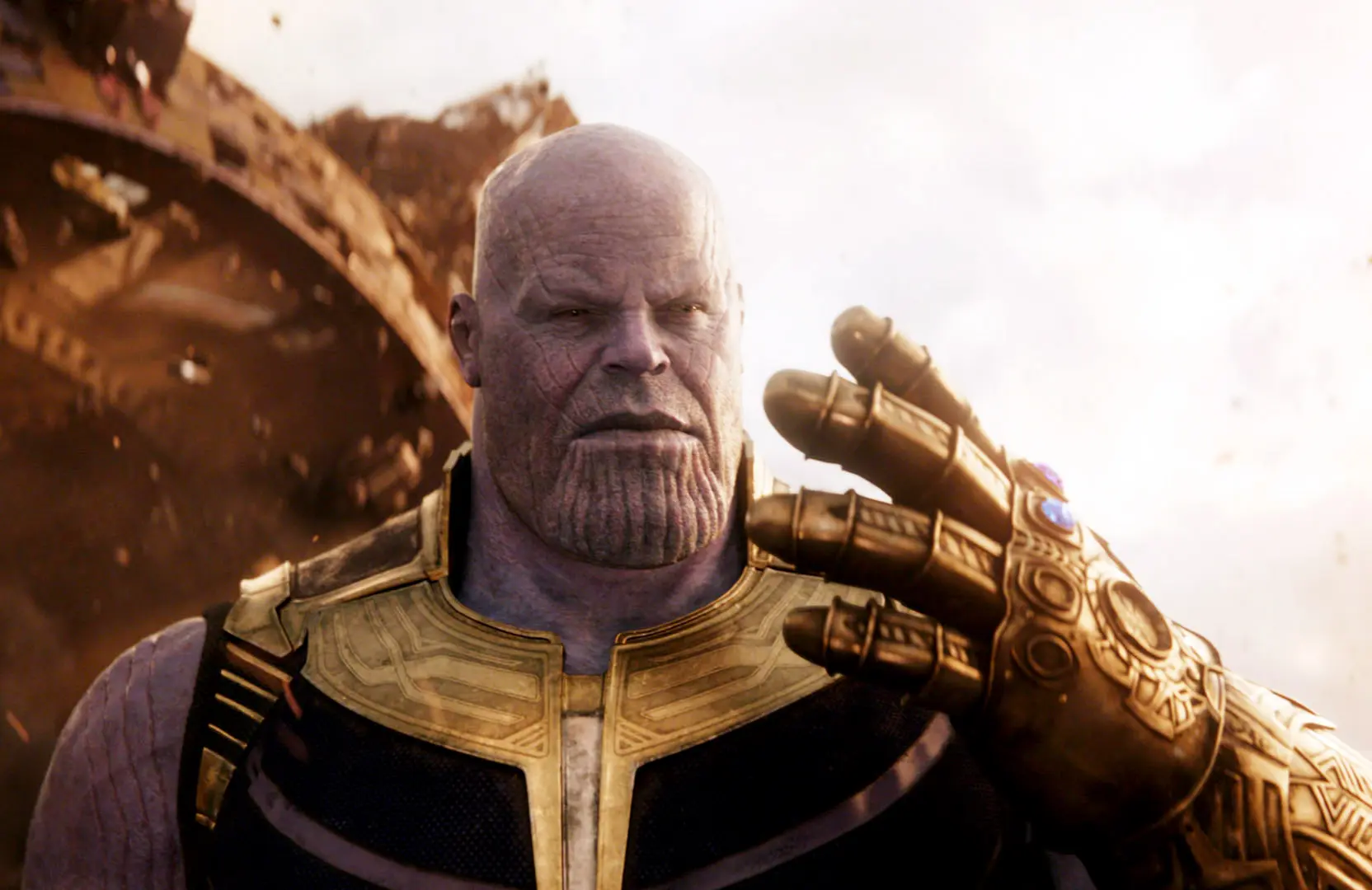
In Avengers: Age of Ultron (2015), Thanos made another brief appearance during the mid-credits scene. Frustrated by the repeated failures of his proxies—first Loki, then Ronan—he retrieves the empty Infinity Gauntlet and declares, "Fine, I'll do it myself." This line marked a definitive turning point, signaling the transition from background orchestrator to active, hands-on antagonist for the two-part culmination of the Infinity Saga.
Common Misconceptions and Narrative Confusion
The belief that Thanos never appears in The Avengers often stems from a few common misunderstandings regarding how cinematic universes operate and how memories blend across multiple viewings of sprawling franchises.
- Confusing Antagonists: Because Loki dominates the screen time, dialogue, and physical conflict throughout the entirety of The Avengers, viewers often mentally conflate him as the sole mastermind, forgetting his subservience to Thanos via the Other.
- Post-Credits Overlook: Casual viewers or streaming audiences who skip past credits frequently miss the mid-credits scene entirely, effectively erasing his canonical presence from that specific film.
- Expectation vs. Reality: Audiences accustomed to self-contained blockbusters sometimes misinterpret the deliberate withholding of a major villain as an oversight rather than an intentional narrative pacing choice.
Frequently Asked Questions
Why didn't Thanos fight the Avengers in 2012?
Thanos delegated the invasion of Earth to Loki in exchange for the Tesseract (the Space Stone). From a storytelling perspective, the filmmakers needed to establish the Avengers as a team against a more manageable threat before introducing a cosmic-tier adversary capable of wielding multiple Infinity Stones.
Who played Thanos in The Avengers (2012)?
Thanos was portrayed via motion capture and voice acting by actor Damion Poitier in his brief mid-credits cameo. Josh Brolin later assumed the role starting with Guardians of the Galaxy (2014) and carried the character through Avengers: Infinity War (2018) and Avengers: Endgame (2019).
Did Joss Whedon always plan to include Thanos in the 2012 film?
Thanos was not part of the initial script drafts. As production progressed, Marvel Studios executives and Whedon realized they needed a larger force driving Loki's actions to raise the stakes, leading to the late addition of the character and the iconic mid-credits sequence.
Where can viewers see Thanos's first full-length appearance?
While he appears in supporting capacities in Guardians of the Galaxy (2014) and makes a cameo in Avengers: Age of Ultron (2015), Thanos does not become the central protagonist and primary focus until Avengers: Infinity War (2018).
Conclusion and Next Viewing Steps
While Thanos does make a canonical appearance in the mid-credits scene of The Avengers (2012), his absence from the primary action is a result of deliberate pacing by Marvel Studios. To fully appreciate his journey from a shadowy orchestrator to the central figure of the Infinity Saga, viewers should watch the films in publication order, paying close attention to how the lore surrounding the Infinity Stones develops from Phase One through Phase Three.
Image Gallery