Navigating Hartsfield-Jackson Atlanta International Airport: Terminal B Map and Facilities
Terminal B at Hartsfield-Jackson Atlanta International Airport (ATL) serves as a critical hub for domestic flight operations, primarily utilized by Delta Air Lines. Understanding the layout of Terminal B is essential for passengers aim...
Terminal B at Hartsfield-Jackson Atlanta International Airport (ATL) serves as a critical hub for domestic flight operations, primarily utilized by Delta Air Lines. Understanding the layout of Terminal B is essential for passengers aiming to navigate the concourse efficiently, locate specific gates, find dining and retail options, or utilize premium lounge facilities. The concourse is structured as a linear pier connected to the central atrium via the Plane Train, and it functions as an integral segment of the world’s busiest airport.
Contents
Understanding the Concourse B Layout
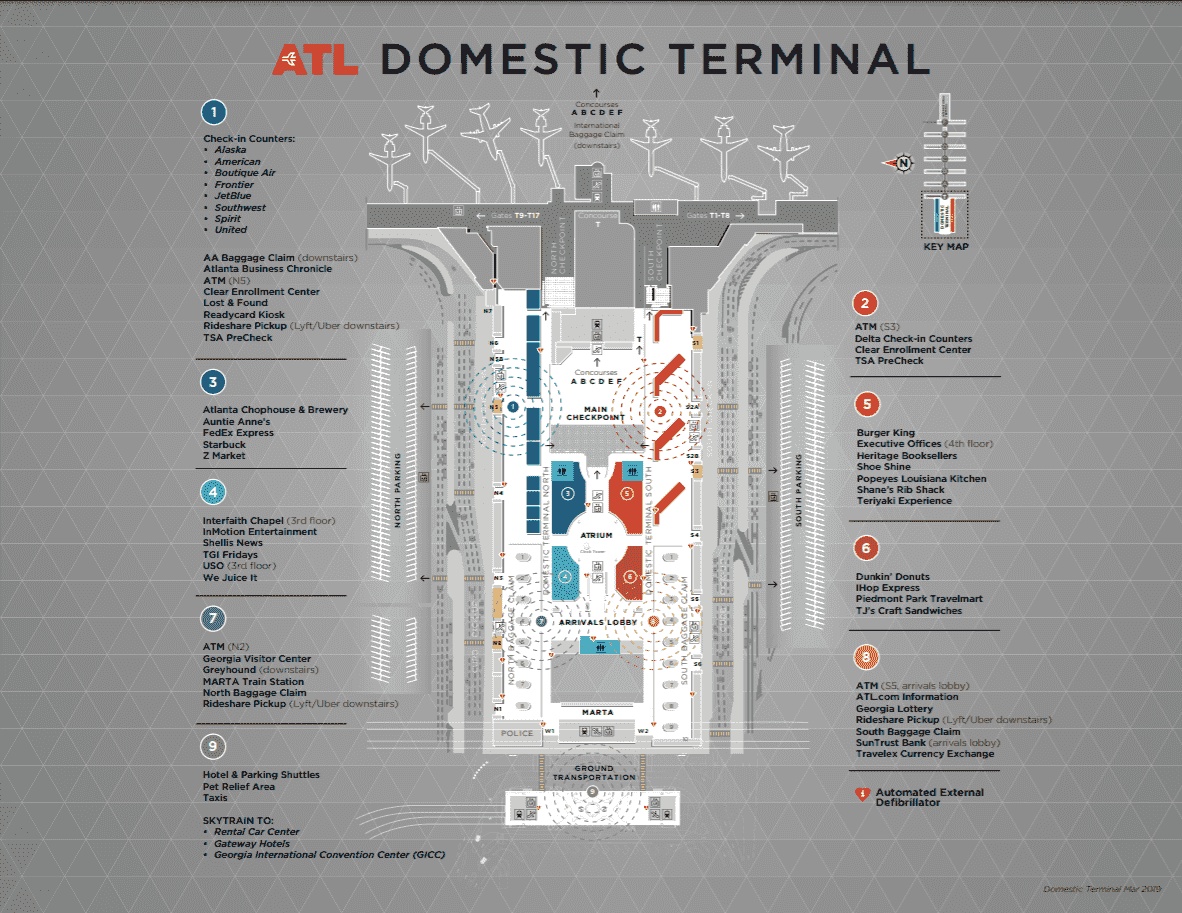
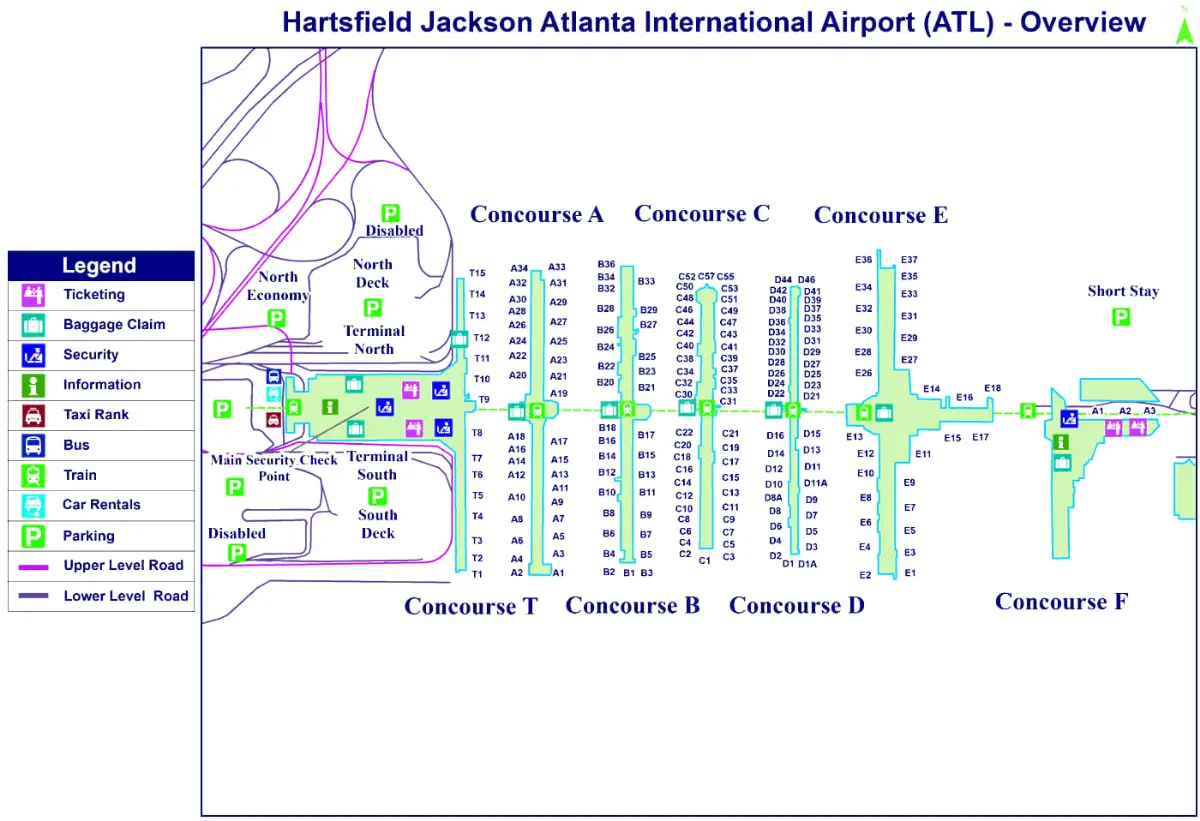
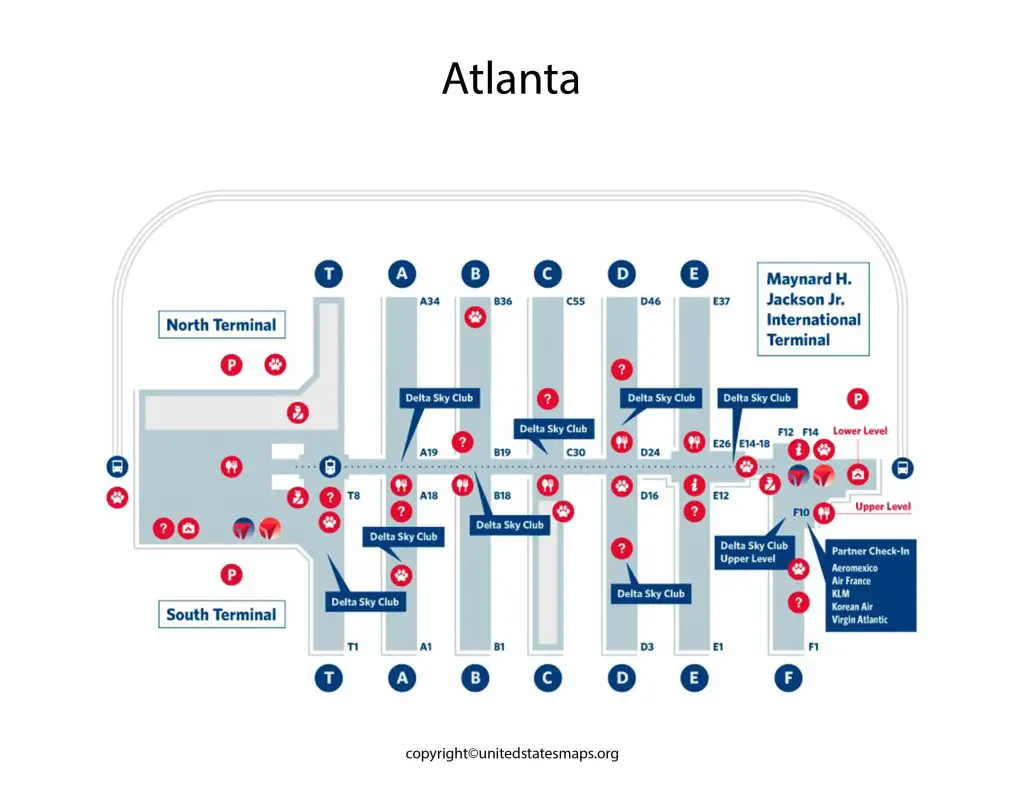
Terminal B in Atlanta is situated between Concourse A and Concourse C. Like all concourses at ATL, it is physically separated from the main terminal building where ticketing, baggage claim, and ground transportation are located. Passengers arriving at Terminal B must use the Plane Train—an automated people mover system—to reach the domestic terminal or transit to other concourses.
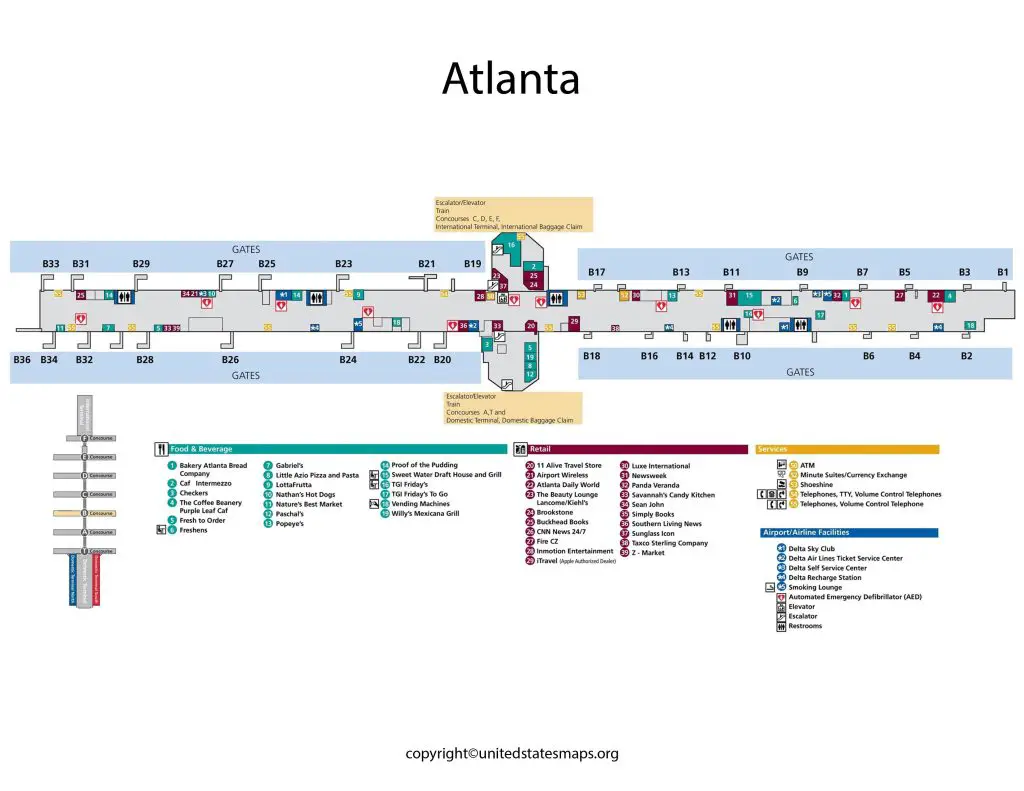
The concourse is divided into two primary sides: the odd-numbered gates (B1 through B37) are generally located on one side of the central corridor, while even-numbered gates are on the other. Because the terminal is quite long, travelers should check their boarding pass for their specific gate number upon arrival at the airport. Walking from one end of Concourse B to the other can take ten to fifteen minutes, so passengers with tight connections should account for this distance.
The Role of the Plane Train
The Plane Train is the lifeline of ATL. For those heading to Terminal B, the station is located at the center of the concourse, underground. Once you disembark the train and take the escalator up to the concourse level, you will find yourself in the central node of Concourse B. From this midpoint, you can walk toward the lower-numbered gates (B1–B15) or the higher-numbered gates (B20–B37). Signage throughout the concourse provides real-time information regarding walking times to specific gates, which is particularly useful during peak travel periods.
Essential Passenger Services in Concourse B
Terminal B offers a wide range of services designed to accommodate the high volume of travelers passing through each day. Beyond the standard departure gates, the concourse features several specialized areas.
Dining and Retail
The central portion of Concourse B houses the majority of the food and beverage outlets. This area serves as a transit hub for passengers looking to grab a meal before a flight. Options range from quick-service cafes to sit-down restaurants. It is important to note that because ATL is a high-traffic environment, seating at popular dining spots can be limited during peak departure hours. Retail options in Concourse B include newsstands, electronic stores, and duty-paid gift shops, conveniently located near the primary gate clusters.
Lounge Access
For passengers seeking a quieter environment, Terminal B hosts major airline lounges. These facilities provide amenities such as complimentary refreshments, high-speed Wi-Fi, and comfortable seating areas away from the noise of the general boarding gates. Access requirements for these lounges vary depending on the passenger’s ticket class, airline membership status, or credit card benefits. It is recommended to check the specific entry requirements for your lounge of choice before proceeding to the entrance to ensure you have the necessary documentation or eligibility.
Navigating Connections and Transfers
One of the most common reasons travelers interact with the Concourse B map is to plan a connection. If your flight arrives in a different concourse (such as C, D, E, or F) and your connecting flight departs from B, you must utilize the Plane Train.
- Deplane and Exit: Follow the "Plane Train" signs in your arrival concourse.
- Board the Train: The train runs in a continuous loop. Ensure you are heading in the direction of Concourse B.
- Disembark at Concourse B: Once the train arrives at the station marked "Concourse B," take the escalator up to the main level.
- Locate Your Gate: Check the digital display monitors immediately upon entering the concourse to confirm your gate number, as gate assignments at ATL can change due to operational adjustments.
Accessibility Considerations
Hartsfield-Jackson is designed to be accessible to all passengers. All levels of Concourse B are reachable via elevators and escalators. For travelers requiring wheelchair assistance or other mobility support, it is highly recommended to arrange these services with your airline at least 48 hours before your flight. Airline ground staff can assist with transportation from the arrival gate to the departure gate, including navigating the Plane Train system.
Comparison of Concourse Amenities at ATL
While each concourse has unique features, the following table provides a general comparison to help you understand the standard of service you can expect when navigating the different areas of the airport.
| Service Feature | Concourse B | General Availability |
|---|---|---|
| Primary Carrier | Delta Air Lines | Varies by concourse |
| Plane Train Stop | Yes | Central to all concourses |
| Lounge Presence | High | Available in all concourses |
| Retail Density | High | Concentrated at mid-points |
| Walking Distance | Moderate | Varies by gate number |
Frequently Asked Questions
How long does it take to get from the Main Terminal to Concourse B?
The Plane Train ride from the Domestic Terminal to Concourse B typically takes less than five minutes. However, travelers should budget an additional 10 to 15 minutes for walking through the terminal, navigating security, and walking to the train station.
Can I walk between Concourses if I don't want to use the Plane Train?
While there are underground walkways between some concourses, the Plane Train is the intended and most efficient method for traveling between Concourse B and other parts of the airport. Walking between concourses is generally not recommended due to the significant distances involved.
What should I do if my flight gate changes?
Gate changes are common at ATL due to the high frequency of flights. If your gate changes, look for the nearest digital information monitor or use your airline’s mobile application, which provides the most accurate and real-time updates regarding your departure status.
Are there nursing rooms or family amenities in Terminal B?
Yes, Concourse B includes nursing pods and family-friendly restrooms. These are typically located near the central core of the concourse. Look for the "Family Restroom" signage or inquire at an airport information desk for the nearest facility.
Is there a place to charge my electronic devices at the gate?
Most gate areas in Concourse B are equipped with power outlets and USB ports integrated into the seating units. During high-traffic periods, these can be occupied, so carrying a portable power bank is a prudent travel strategy.
Where can I find lost items in Concourse B?
If you lose an item at a gate or in the concourse, first check with the airline staff at your departure gate. For items lost in the common areas of the airport, contact the Hartsfield-Jackson Lost and Found office, which maintains a centralized database of recovered property.
Final Recommendations for Travelers
When navigating Concourse B, preparation is your greatest asset. Arrive at the airport with sufficient time to account for potential security wait times and the time required to travel via the Plane Train. Always verify your gate assignment on the day of departure through official airline channels or the airport’s flight information displays. If you have a tight connection, familiarize yourself with the gate map beforehand to determine the most direct path once you arrive at the Concourse B level. By staying informed and allowing for minor delays, you can ensure a smooth transition through one of the busiest aviation hubs in the world.
Image Gallery