Recommended Escape Room SF 2026: The Ultimate San Francisco Immersive Experience Guide
San Francisco’s immersive entertainment landscape features highly rated interactive experiences, cinematic set designs, and intricate narrative puzzles. For enthusiasts and newcomers seeking the top recommended escape rooms in San Fran...
San Francisco’s immersive entertainment landscape features highly rated interactive experiences, cinematic set designs, and intricate narrative puzzles. For enthusiasts and newcomers seeking the top recommended escape rooms in San Francisco for 2026, this guide examines the premier venues, technical mechanics, booking strategies, and logistical details required to plan an optimal group outing.
Contents
Understanding San Francisco's Immersive Entertainment Ecosystem
The San Francisco Bay Area hosts a mature escape room market characterized by high production values, custom electronics, automation, and live actors. Unlike early-generation puzzle rooms that relied primarily on padlocks and standard combination locks, modern venues in San Francisco incorporate spatial audio, RFID-triggered props, pneumatic mechanisms, and non-linear puzzle design paths.
Players are typically placed in a themed environment for a 60-minute duration. Success requires collaborative problem-solving, lateral thinking, environmental observation, and effective team communication. Venues in the city span several distinct neighborhoods, including downtown hubs near public transit and industrial warehouse districts accommodating large-scale sets.
Top Recommended Escape Rooms in San Francisco
Evaluating the top experiences requires examining parameters such as narrative cohesion, set fabrication quality, technological reliability, and puzzle variety. The following venues represent the benchmark for immersive entertainment in San Francisco.
Palace Games (The Palace of Fine Arts)
Located within the historic Palace of Fine Arts, Palace Games is widely recognized for historical themes and large-scale, intricate puzzles. Their rooms often run longer than the industry standard 60 minutes, with game lengths spanning 75 to 90 minutes. The craftsmanship reflects museum-grade artifact replication and complex mechanical linkages.
- Notable Experiences: The Houdini Room, Roosevelt's Ordeal, The Attraction.
- Technical Complexity: High utilization of custom microcontrollers, hidden switches, and physical logic puzzles.
- Group Dynamic: Best suited for intermediate to advanced enthusiasts who appreciate deep historical narratives and multi-room exploration.
Real Escape Game by SCRAP (Japantown)
As a pioneer of the live escape room phenomenon originating from Japan, SCRAP brings a distinct philosophy centered on narrative purity, brain teasers, and cerebral challenges. Their Japantown location offers both traditional room escapes and game-show style interactive experiences.
- Notable Experiences: Escape from the Wizard's Library, various seasonal pop-up games.
- Technical Complexity: Moderate reliance on electronics; high emphasis on clever wordplay, logic grids, and paper-and-pen deductions.
- Group Dynamic: Ideal for teams that excel at reading comprehension, decoding, and analytical division of labor.
The Escape Game San Francisco (Downtown/Financial District)
Situated centrally in the Financial District, this national operator provides cinematic sets, high-throughput operations, and polished game flow. The rooms feature professional lighting, cinematic soundscapes, and automated hint delivery systems that adjust to player progress.
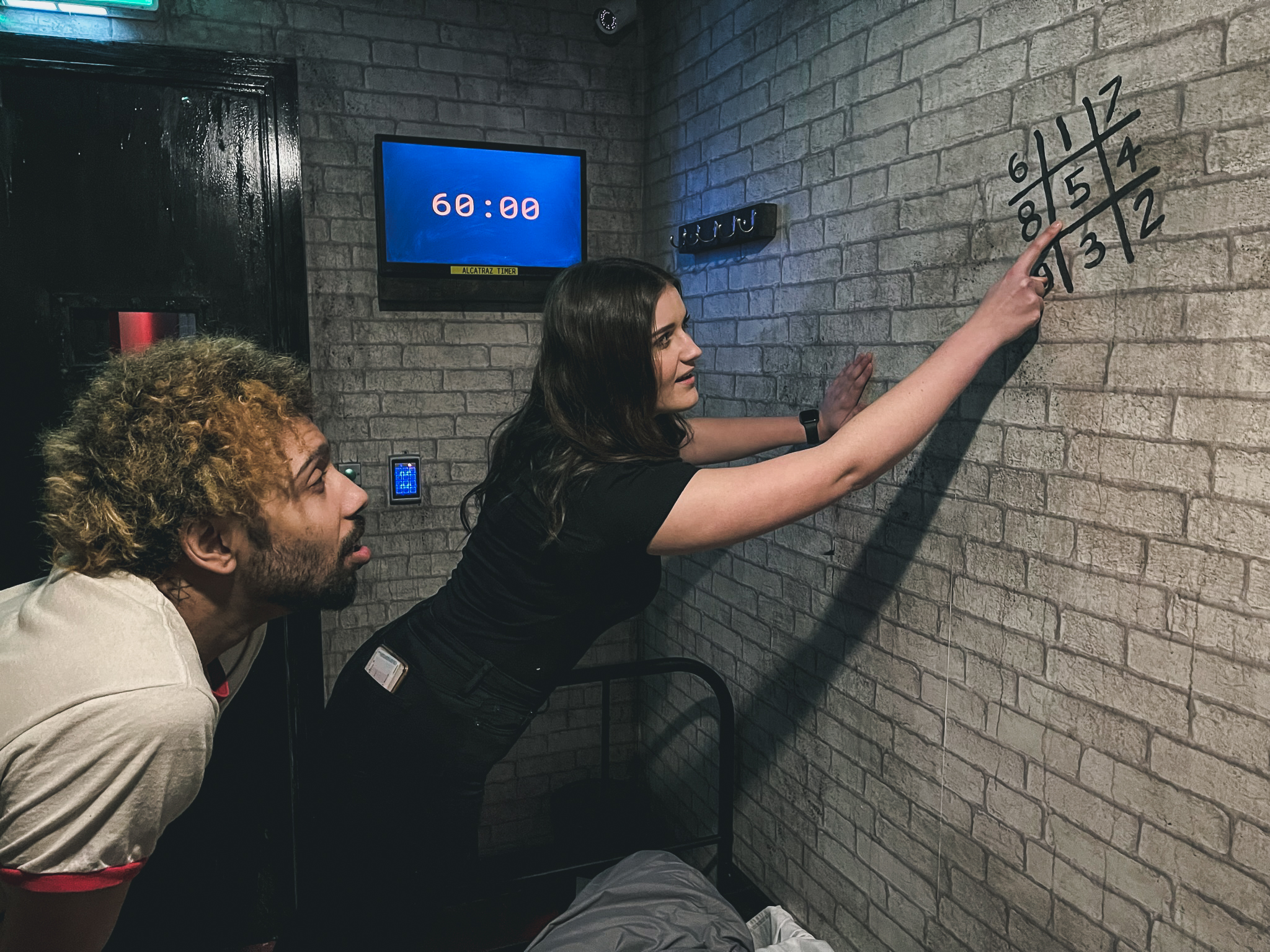
- Notable Experiences: Prison Break, Special Ops: Mysterious Market, Gold Rush.
- Technical Complexity: Advanced automation, magnetic locking systems, and responsive electronic feedback triggers.
- Group Dynamic: Excellent for corporate team building, beginners, and mixed-experience families seeking high production quality.
Comparative Breakdown of San Francisco Escape Rooms
| Venue Name | Primary Location | Average Game Duration | Difficulty Level | Ideal Group Size | Best For |
|---|---|---|---|---|---|
| Palace Games | Palace of Fine Arts | 75 - 90 Minutes | Advanced | 4 - 8 Players | Enthusiasts seeking complex, multi-room lore |
| Real Escape Game (SCRAP) | Japantown | 60 Minutes | Intermediate to Hard | 2 - 6 Players | Logic puzzle purists and cerebral thinkers |
| The Escape Game SF | Financial District | 60 Minutes | Beginner to Intermediate | 3 - 8 Players | Corporate groups, families, and cinematic fans |
Essential Prerequisites and Booking Protocols
Securing a reservation for a top-tier escape room in San Francisco requires advance planning. High-demand venues often book out weekends weeks or months ahead.
Booking Guidelines: Advance Scheduling: Reserve weekend slots at least 3 to 4 weeks prior to your target date, especially for venues with limited capacity like Palace Games. Private Bookings: If your group size falls short of the room maximum, purchase all available slots to ensure random players are not added to your private team dynamic. Arrival Times: Arrive 15 minutes before your scheduled start time for safety briefings, waiver signings, and lockbox storage of personal belongings.
Technical Specifications and Puzzle Mechanics
Modern escape rooms utilize diverse technological and physical mechanisms to engage players. Understanding these systems can improve communication efficiency during a live session.
- RFID and NFC Triggers: Placing specific physical items (like an authentic book or relic) onto a designated pedestal activates a hidden switch via radio frequency identification, opening a secret compartment.
- Optic Sensors and Laser Grids: Interruption of invisible light beams registers a state change in the room's central logic board, initiating sound cues or door releases.
- Pneumatic and Hydraulic Lifts: Heavy set pieces or false walls are moved using compressed air cylinders, providing dramatic reveals without manual lifting.
- Blacklight and UV Reactions: Invisible inks printed on wallpaper or props require ultraviolet torches to reveal numerical or directional codes.
Step-by-Step Strategy Guide for Success
Maximizing your team's performance inside a 60-minute or 90-minute experience requires disciplined tactical execution.
- Step 1: Conduct a Thorough Initial Sweep Upon entering the room, immediately fan out and inspect every accessible surface. Look under furniture, check behind wall hangings, and test loose objects. Do not dismantle permanent architectural fixtures or light switch covers.
- Step 2: Establish a Central Collection Hub Designate a stable surface (such as a central table) where unassigned keys, loose puzzle pieces, and deciphered clues are placed. Preventing item misplacement eliminates redundant searching.
- Step 3: Communicate Out Loud Announce every discovery to the team. If you find a key, state aloud what color or shape it is. If you open a lock, tell the group which box or drawer it unlocked so others can adapt their strategies.
- Step 4: Practice Parallel Processing Divide complex tasks. While two players tackle a logic puzzle, another team member should search an un-opened section of the room. Avoid having all participants crowd around a single locked prop.
- Step 5: Utilize Hints Strategically There is no penalty for taking hints at most commercial venues. If your team is stalled on a single puzzle for more than 7 to 10 minutes, request a nudge from the game master to maintain momentum.
Frequently Asked Questions
Are escape rooms physically demanding?
Most escape rooms require no heavy lifting, strenuous exercise, or extreme agility. Players primarily stand, walk, crouch, or reach, though certain narrative scenarios may involve low-light environments or crawling through small passageways with well-lit alternative walking paths available upon request.
What happens if we do not escape within the time limit?
If the timer expires before your team solves the final puzzle, the game master enters the room, stops the clock, explains the remaining steps required to finish, and offers a photo opportunity with your group.
Can pregnant individuals or players with claustrophobia participate?
Yes, most escape rooms are spacious, well-ventilated, and compliant with safety codes. Furthermore, commercial escape rooms in San Francisco feature emergency exit buttons or unlocked doors allowing participants to step out of the room at any moment if they feel uncomfortable.
How are private bookings handled for small groups?
If your party size is smaller than the maximum capacity of a specific game, venues typically offer the option to purchase the remaining unoccupied slots to secure a private experience exclusively for your friends, family, or colleagues.
Are mobile phones permitted inside the game area?
To preserve narrative immersion and prevent the unauthorized photography or recording of proprietary puzzle designs, venues strictly prohibit mobile phones, cameras, and recording devices inside the game rooms. Secure lockers are provided free of charge prior to entry.
Conclusion and Call to Action
Planning your next immersive adventure in San Francisco requires aligning your group's experience level, preferred narrative style, and logistical constraints with the appropriate venue. Review the availability calendars for Palace Games, SCRAP, or The Escape Game SF, assemble your team of collaborative thinkers, and book your session early to secure your preferred date and time.
Image Gallery