Understanding Taxable Gain on Life Insurance Surrender: Calculating the Excess Cash Received
When a policyholder decides to terminate a permanent life insurance policy for its cash value, the taxable gain on the life insurance surrender is the excess cash received over the policy's cost basis. This calculation ensures that onl...
When a policyholder decides to terminate a permanent life insurance policy for its cash value, the taxable gain on the life insurance surrender is the excess cash received over the policy's cost basis. This calculation ensures that only the growth or interest earned within the policy is subject to federal income tax, while the original capital contributed via premium payments is returned tax-free as a return of principal.
Contents
The Fundamentals of Policy Surrender and Taxation
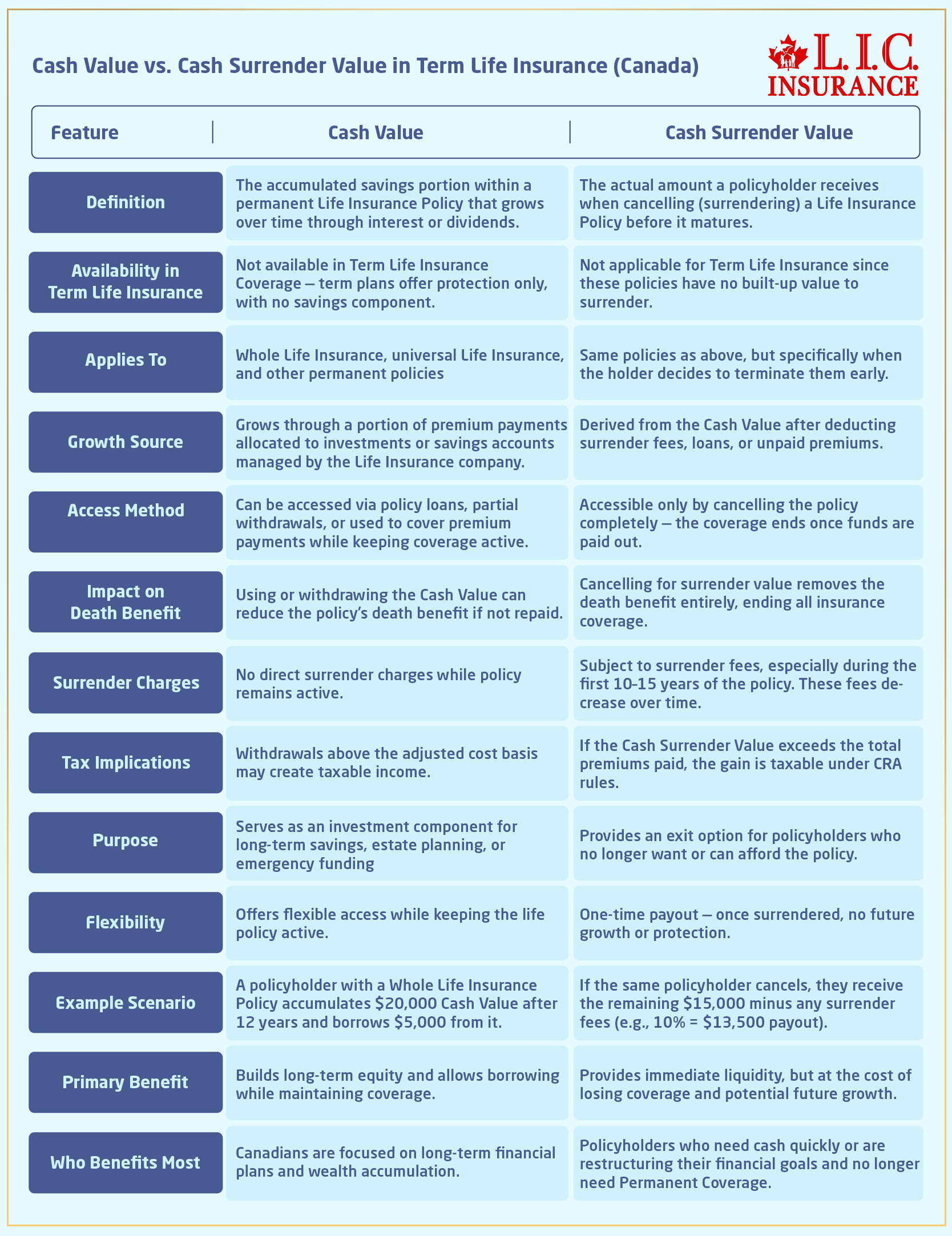
Surrendering a life insurance policy is the formal process of cancelling the contract with the insurance carrier in exchange for its accumulated Cash Surrender Value (CSV). While term life insurance policies typically do not accumulate value, permanent policies—such as Whole Life, Universal Life, and Variable Universal Life—build equity over time. This equity is comprised of a portion of the premiums paid, plus interest or investment gains, minus the cost of insurance (COI) and administrative fees.
In 2026, the Internal Revenue Service (IRS) continues to treat life insurance as a tax-advantaged vehicle. However, these advantages primarily apply to the death benefit and the tax-deferred growth of the cash value. Once the policy is surrendered and the contract is dissolved, the tax-deferral ends. The IRS applies the "cost recovery" rule, which dictates that you are only taxed on the "gain"—the portion of the payout that represents earnings rather than your own previous payments.
Why the "Excess Cash" Matters
The "excess cash" represents the profit the policyholder has realized from the insurer’s investments or interest-crediting strategies. Because this growth was never taxed while it was inside the policy, the government requires it to be reported as ordinary income upon surrender. It is important to note that life insurance gains are generally not treated as capital gains, regardless of how long the policy was held. Instead, they are taxed at the individual's marginal income tax rate.
Calculating the Taxable Gain: The Step-by-Step Formula
To determine the exact amount of taxable gain, policyholders must perform a specific calculation known as determining the Investment in the Contract. The formula for taxable gain is:
Taxable Gain = (Gross Cash Proceeds + Outstanding Loans) - Investment in the Contract (Cost Basis)
1. Determining Gross Cash Proceeds
The gross proceeds include the total amount of cash the insurance company pays out to you upon surrender. This includes the base cash value and any additional values from paid-up additions or side funds associated with the policy.
2. Calculating the Investment in the Contract (Cost Basis)
The "cost basis" is the foundation of the tax calculation. It is not simply the sum of all checks sent to the insurance company. To find the true cost basis, you must:
- Add: All premiums paid into the policy out of pocket.
- Subtract: Any dividends received in cash or used to reduce premiums.
- Subtract: Any prior withdrawals that were received tax-free (withdrawals up to the basis).
- Subtract: The cost of any riders that are not considered part of the life insurance protection (though this is often handled internally by the carrier).
3. Accounting for Outstanding Policy Loans
A common mistake in calculating taxable gain is ignoring outstanding policy loans. If you surrender a policy that has an active loan, the insurance company uses the cash value to pay off that loan before sending you the remaining balance. For tax purposes, the IRS treats the forgiven loan amount as cash received. If your cash value is $100,000, your loan is $40,000, and your basis is $50,000, your taxable gain is $50,000 ($60,000 check + $40,000 loan payoff - $50,000 basis), even though you only received a check for $60,000.
Tax Treatment of Life Insurance Surrender vs. Other Events
The tax implications of surrendering a policy differ significantly from other ways of accessing policy funds or receiving benefits.
| Action | Tax Treatment of Proceeds | Tax Rate |
|---|---|---|
| Full Surrender | Gains above cost basis are taxable. | Ordinary Income |
| Partial Withdrawal | Tax-free up to cost basis (FIFO), then taxable. | Ordinary Income |
| Policy Loan | Generally tax-free while policy is active. | N/A (unless policy lapses) |
| Death Benefit | Generally tax-free to beneficiaries. | Exempt |
| Modified Endowment Contract (MEC) Surrender | Gains taxed first (LIFO); 10% penalty if under 59.5. | Ordinary Income + Penalty |
The Impact of Modified Endowment Contracts (MECs)
The "excess cash received" rule behaves differently if the policy is classified as a Modified Endowment Contract (MEC). A policy becomes a MEC if the premiums paid during the first seven years exceed the limits set by the Technical and Miscellaneous Revenue Act of 1988 (the "7-pay test").
For a MEC, the IRS utilizes LIFO (Last-In, First-Out) accounting rather than FIFO (First-In, First-Out). This means that any money taken out—whether through surrender, withdrawal, or even a loan—is considered to come from the "gain" first. These gains are fully taxable until all growth has been exhausted. Additionally, if the policyholder is under the age of 59½, a 10% federal tax penalty may apply to the taxable portion of the surrender.
Reporting the Gain to the IRS
When a policy is surrendered for a gain, the life insurance company is required to issue IRS Form 1099-R. This form will outline the gross distribution and the taxable amount.
It is vital to review the 1099-R for accuracy. Carriers occasionally have different methods for calculating basis if the policy was acquired through a merger or if there were complex rider structures. In 2026, automated reporting systems are highly accurate, but manual verification against your own records of premium payments and dividends is still recommended.
Ordinary Income vs. Capital Gains
As established in Internal Revenue Code Section 72, the gain on a life insurance surrender is categorized as ordinary income. This is a critical distinction for high-income earners. While capital gains might be taxed at 0%, 15%, or 20%, ordinary income can be taxed at rates as high as 37% or more, depending on current 2026 tax brackets. This makes the timing of a surrender a significant tactical decision for financial planning.
Alternatives to Surrender to Avoid Immediate Taxation
If the goal is to access cash without triggering a large tax bill on the "excess cash," several alternatives exist:
1. Policy Loans
Instead of surrendering the policy, you can take a loan against the cash value. Under IRS guidelines, policy loans are generally not considered taxable distributions as long as the policy remains in force. The loan accrues interest, but you avoid the immediate "taxable gain" realization.
2. Partial Withdrawals
In non-MEC policies, you can withdraw cash up to your cost basis tax-free. This allows you to access your principal while leaving the "gain" inside the policy to continue growing or to be paid out as a tax-free death benefit later.
3. Section 1031 (1035) Exchanges
Under Section 1035 of the Internal Revenue Code, you can exchange one life insurance policy for another (or for an annuity) without recognizing a gain for tax purposes. This "1035 Exchange" allows you to move your cash value and your cost basis to a new contract, deferring the tax on the "excess cash" indefinitely.
4. Life Settlements
For older policyholders or those with changes in health, a life settlement—selling the policy to a third party—might yield more than the cash surrender value. However, the taxation of life settlements is more complex, involving a mix of ordinary income and capital gains treatments.
Common Pitfalls and Mistakes
- Forgetting Dividends: Many Whole Life policyholders receive dividends. If these dividends were used to pay premiums, they reduced your out-of-pocket cost and thus reduced your basis. If you don't account for this, you will under-calculate your taxable gain.
- Surrendering Near the End of the Year: If a surrender creates a large taxable gain, it could push you into a higher tax bracket for that year. Planning the surrender for a year where your other income is lower can result in significant tax savings.
- Lapsing a Policy with Loans: If a policy lapses because the loan balance exceeds the cash value, the IRS treats this as a "deemed surrender." You will owe taxes on the gain even though you received no "new" cash at the time of the lapse.
FAQ
Is the entire cash value taxable when I surrender my policy?
No, only the portion that exceeds your cost basis (total premiums paid minus dividends/withdrawals) is taxable. The return of your principal is always tax-free.
Can I claim a tax loss if my cash surrender value is less than the premiums I paid?
Generally, no. The IRS views the difference between premiums paid and a lower cash value as the "cost of insurance" protection you received over the years. This "loss" is considered a personal expense and is not deductible on your tax return.
Are dividends considered taxable when I surrender the policy?
Dividends themselves are usually considered a return of premium and are not taxable when paid. However, they reduce your cost basis. Therefore, when you surrender the policy, those dividends effectively increase the taxable gain because your basis is lower.
What happens if I surrender a policy I inherited?
If you inherited a policy, you likely received the death benefit, which is tax-free. However, if you were transferred ownership of a permanent policy while the insured was still alive and you later surrender it, your basis is generally the same as the original owner's basis (carryover basis).
Does the 2026 tax year have specific rules for life insurance?
While the fundamental tax code (Section 72) remains consistent, tax brackets and standard deductions for 2026 will dictate the actual "cost" of the ordinary income generated by the surrender. Always consult the current year's IRS tax tables to estimate the liability.
Practical Recommendation
Before surrendering a policy, request a "Cost Basis Report" and a "Surrender Value Illustration" from your insurance carrier. These documents will explicitly state your investment in the contract and the projected taxable gain. If the taxable gain is substantial, consult with a tax advisor to determine if a 1035 exchange or a series of partial withdrawals might better serve your financial goals while minimizing your 2026 tax liability.
Image Gallery