Willful Misconduct in Workers’ Compensation: Legal Standards and Hearing Processes
In a workers' compensation willful misconduct hearing, the legal standard shifts from the standard no-fault insurance model to an evidentiary review of the claimant's intentional actions. To deny benefits, an employer must prove the in...
In a workers' compensation willful misconduct hearing, the legal standard shifts from the standard no-fault insurance model to an evidentiary review of the claimant's intentional actions. To deny benefits, an employer must prove the injured worker deliberately violated a known safety rule, acted with reckless disregard for their own safety, or was intoxicated, directly causing the injury.
Contents
Workers' compensation is traditionally designed as a "no-fault" system. This means that in the vast majority of cases, an employee is entitled to medical benefits and wage replacement regardless of whether their own negligence contributed to the accident. However, "willful misconduct" represents one of the most significant and strictly scrutinized exceptions to this rule. When an employer or insurance carrier alleges willful misconduct, the case typically moves to a formal hearing before an Administrative Law Judge (ALJ) or a workers' compensation board.
As we navigate the legal landscape of 2026, the integration of workplace technology—such as wearable sensors, advanced telematics, and high-definition surveillance—has made the evidentiary requirements for these hearings more precise. Understanding the nuances of what constitutes willful behavior versus mere carelessness is critical for both employers seeking to protect their premiums and workers seeking to secure their rightful benefits.
The Legal Definition of Willful Misconduct
To succeed in a defense based on willful misconduct, the employer must meet a much higher threshold than simply proving the employee was "clumsy" or "careless." In legal terms, willful misconduct involves a premeditated or intentional act. It requires a showing that the worker had a conscious realization of the danger and a deliberate decision to disregard it.
Beyond Negligence and Gross Negligence
Most workplace accidents involve some level of negligence—perhaps a worker forgot to put on gloves or tripped over a cord. These are covered by insurance. Even "gross negligence," which involves an extreme lack of care, often does not rise to the level of willful misconduct in many jurisdictions.
Willful misconduct requires intent. The legal standard generally necessitates proving:
- The employee intended to perform the act that led to the injury.
- The employee knew the act was likely to result in serious injury or was a direct violation of a safety mandate.
- The act was not a result of a split-second decision or an instinctive reaction.
The Affirmative Defense
In workers' compensation litigation, willful misconduct is an affirmative defense. This means the burden of proof rests entirely on the employer or the insurance carrier. If the employer fails to provide a preponderance of evidence that the conduct was willful, the worker's claim will be sustained under the no-fault principle.
Primary Categories of Willful Misconduct
While statutes vary across different states and jurisdictions, the 2026 legal standards generally recognize four primary categories that can lead to a denial of benefits.
1. Intoxication or Substance Use
If an injury occurs because a worker was under the influence of alcohol, illegal drugs, or even improperly used prescription medication, it is often classified as willful misconduct. In 2026, many jurisdictions have refined their "rebuttable presumption" laws. If a post-accident drug screen is positive, the law may automatically presume the intoxication caused the accident unless the worker can prove otherwise.
2. Willful Failure to Use Safety Appliances
Most industries have strict requirements for Personal Protective Equipment (PPE). If an employer provides a safety device (like a harness, goggles, or a machine guard) and the worker deliberately chooses not to use it, the resulting injury may be non-compensable. However, the employer must prove the worker was trained on the device and that the failure to use it was a conscious choice rather than an oversight.
3. Intentional Self-Inflicted Injury
Workers' compensation never covers injuries where the employee intended to hurt themselves. This includes staged accidents or self-harm. These cases are often supported by psychological evaluations and forensic analysis of the accident scene.
4. Violation of a Known and Enforced Safety Rule
This is the most common and most litigated category of willful misconduct. For a rule violation to disqualify a worker from benefits, the employer must usually satisfy a four-part test:
- The Rule Existed: There must be a clear, written, or communicated rule.
- The Worker Knew the Rule: The employer must prove the worker was aware of the rule (often through signed training logs).
- The Rule was Reasonable: The rule must be logically related to safety and the job at hand.
- The Rule was Uniformly Enforced: If an employer has a "paper rule" but allows everyone to break it daily without reprimand, they cannot suddenly enforce it to deny a claim after an accident occurs.
The Anatomy of a Willful Misconduct Hearing
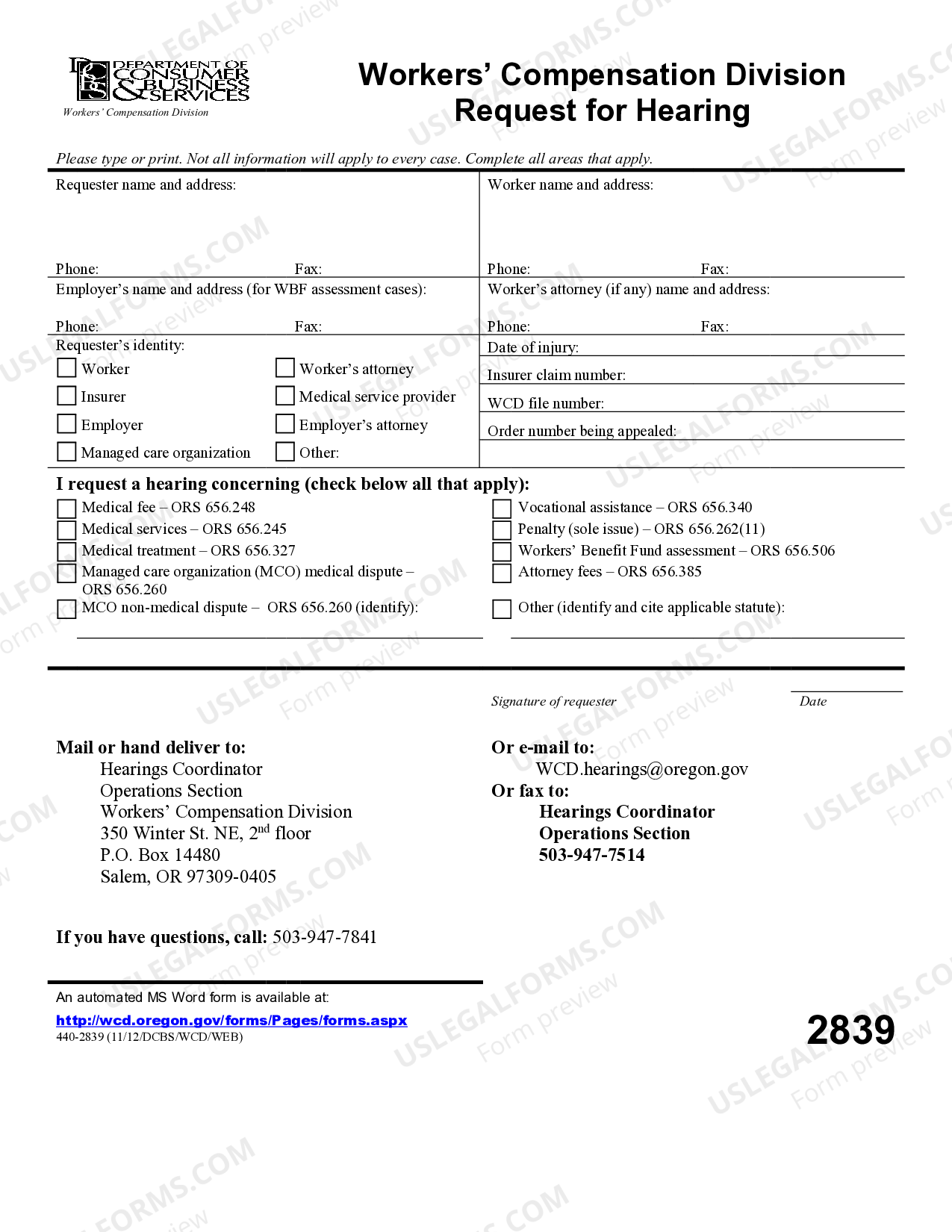
When a claim is denied based on misconduct, the claimant typically files a request for a hearing. This is a formal legal proceeding that resembles a bench trial.
Discovery and Evidence Gathering
Before the hearing, both sides engage in discovery. In 2026, this frequently involves digital forensics. Employers may pull data from a worker's smartphone (if used for work), telematics from company vehicles, or logs from IoT-enabled machinery that shows whether safety interlocks were bypassed.
Witness Testimony
Both the injured worker and management representatives will testify. Coworkers are often subpoenaed to testify about whether safety rules were generally followed or if the supervisor encouraged "shortcuts" to meet production quotas. The credibility of these witnesses is often the deciding factor for the ALJ.
The Role of the Administrative Law Judge (ALJ)
The ALJ acts as both judge and jury. They listen to the evidence, rule on objections, and eventually issue a written "Findings of Fact and Conclusions of Law." The ALJ’s role is to determine if the employer met the burden of proof required to trigger the "willful" exception.
Comparing Degrees of Fault in Workers' Compensation
To better understand where willful misconduct sits on the spectrum of liability, the following table illustrates the differences between various levels of employee fault.
| Level of Fault | Definition | Compensable? | Example |
|---|---|---|---|
| Simple Negligence | A failure to exercise reasonable care or an honest mistake. | Yes | A worker slips because they weren't looking where they walked. |
| Gross Negligence | A conscious and voluntary disregard of the need to use reasonable care. | Usually Yes | A worker drives a forklift faster than recommended in an empty warehouse. |
| Willful Misconduct | Intentional violation of a known rule or reckless disregard for safety. | No | A worker removes a bolted machine guard to speed up production despite warnings. |
| Intentional Tort | An act done with the specific intent to cause harm to oneself or others. | No | A worker deliberately puts their hand in a press to collect disability. |
Legal Standards for Safety Rule Violations
Because the "violation of a safety rule" defense is so common, 2026 legal standards emphasize the "Bona Fide Enforcement" doctrine. Courts have become increasingly skeptical of employers who only enforce safety rules after an injury occurs.
To successfully defend a claim, the employer must present a "disciplinary log" showing that other employees have been written up or terminated for the same violation in the past. If the employer has a culture of "productivity over safety," the ALJ will likely find that the rule was not effectively in place, thereby negating the willful misconduct defense.
Furthermore, the violation must be the proximate cause of the injury. If a worker violates a rule about wearing earplugs but then gets their foot crushed by a falling pallet, the "misconduct" (not wearing earplugs) is irrelevant to the "injury" (crushed foot), and the claim should remain compensable.
Impact of a Willful Misconduct Finding
The consequences of a willful misconduct finding are severe. If the judge rules in favor of the employer, the worker may face the following:
- Total Denial of Indemnity: The worker receives no wage replacement (TTD - Temporary Total Disability) for the time they are out of work.
- Denial of Medical Coverage: The worker or their private health insurance becomes responsible for all hospital and rehabilitation bills related to the accident.
- Loss of Permanent Disability Settlements: If the injury results in a long-term impairment, the worker is ineligible for a permanent partial disability (PPD) award.
- Potential Employment Termination: In many jurisdictions, being found guilty of willful misconduct is "just cause" for termination, which may also disqualify the worker from receiving unemployment benefits.
Frequently Asked Questions
Can I be denied benefits if I was just "playing around" (horseplay)?
Horseplay is a subset of willful misconduct. If the worker was the "instigator" of a dangerous activity that had nothing to do with their job duties, the claim may be denied. However, if the employer knowingly tolerated horseplay in the past, the "enforcement" standard mentioned above may allow the claim to proceed.
Does a positive drug test automatically mean I lose my case?
Not necessarily. In 2026, many states distinguish between "presence" and "impairment." For example, because some substances stay in the system for weeks, a positive test might not prove the worker was impaired at the moment of the accident. The employer must usually prove that intoxication was the primary cause of the injury.
What if my supervisor told me to break the safety rule?
If a supervisor or manager directs a worker to bypass a safety protocol to meet a deadline, the worker's actions are generally not considered "willful." In these cases, the "willfulness" is shifted to the employer, and in some states, this can even lead to an increase in the worker's compensation award due to the employer's serious and willful misconduct.
Can I appeal the judge's decision?
Yes. Decisions from an ALJ can typically be appealed to a Workers' Compensation Review Board or a state appellate court. Appeals usually focus on whether the judge applied the law correctly or if the evidence supported the judge's findings.
Does "willful misconduct" apply if I was trying to help a coworker?
Generally, no. Acts performed in an emergency or in a good-faith attempt to assist a colleague or save company property are rarely classified as willful misconduct, even if they involve a technical violation of a safety rule. The law tends to favor the "rescue doctrine."
Practical Recommendations and Next Actions
If you are involved in a workers' compensation claim where willful misconduct has been alleged, the stakes are exceptionally high. For employers, it is vital to maintain meticulous training records, signed safety handbooks, and a documented history of disciplinary actions for safety violations.
For injured workers, a denial based on misconduct requires immediate legal intervention. You should gather any evidence that shows the rule you supposedly violated was commonly ignored or that your actions were a result of inadequate training rather than a deliberate choice.
Whether you are preparing for a hearing in 2026 or managing a current claim, the key is the documentation of intent and enforcement. Because the no-fault system is the baseline, the party seeking to deviate from that baseline—the employer—must have a mountain of evidence to prove that the injury was not an accident, but a choice.
Image Gallery