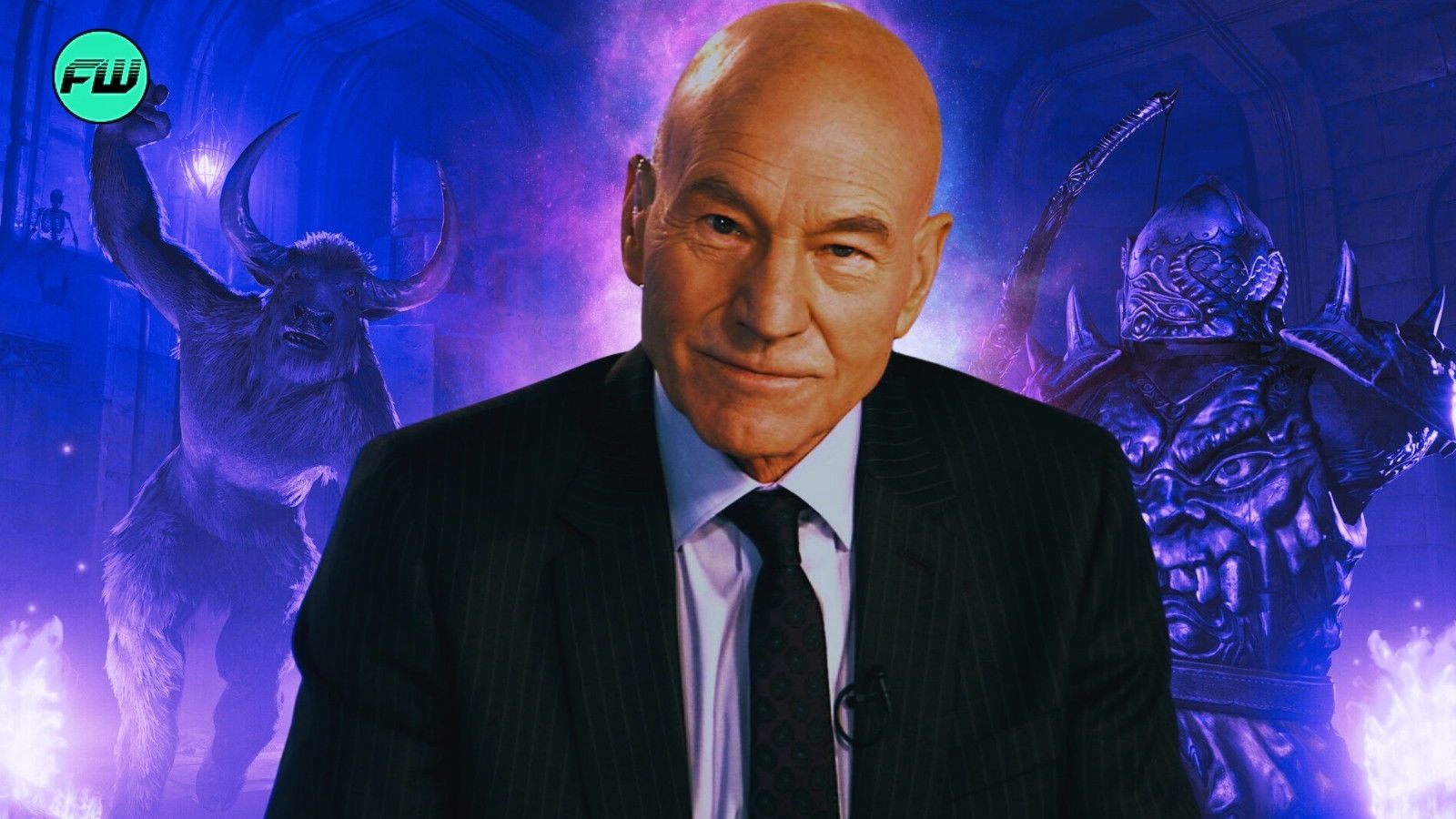
Patrick Stewart in Oblivion: Clarifying the Film Role and Legacy
While Sir Patrick Stewart is frequently associated with the title Oblivion, he does not appear in the 2013 science fiction film starring Tom Cruise. Instead, Stewart delivered one of the most celebrated performances in the history of i...
While Sir Patrick Stewart is frequently associated with the title Oblivion, he does not appear in the 2013 science fiction film starring Tom Cruise. Instead, Stewart delivered one of the most celebrated performances in the history of interactive media as Emperor Uriel Septim VII in the 2006 epic The Elder Scrolls IV: Oblivion. The confusion often stems from the game's cinematic production quality, its legendary opening monologue, and Stewart’s status as a staple of the science fiction and fantasy film genres.
Contents
To understand Patrick Stewart's contribution to the Oblivion franchise, one must look at the intersection of high-fantasy storytelling and professional voice acting. As of 2026, his portrayal of the doomed Emperor remains a benchmark for how A-list talent can elevate a digital narrative, providing a "film-like" gravitas to a role that lasts only a fraction of the total experience but defines the entire story arc.
Dissecting the Confusion: The 2013 Film vs. The 2006 Epic
The primary reason for the search "Patrick Stewart in Oblivion film role" is a common conflation of two distinct pieces of media. In the 2013 film Oblivion, directed by Joseph Kosinski, the primary authoritative male figure is played by Morgan Freeman. Freeman portrays Malcolm Beech, the leader of a resistance movement on a post-apocalyptic Earth. Because both Stewart and Freeman are legendary actors known for their commanding voices and authoritative presence in speculative fiction, audiences often misremember which actor appeared in the movie.
The 2013 film features a streamlined cast:
- Tom Cruise as Jack Harper
- Morgan Freeman as Malcolm Beech
- Andrea Riseborough as Victoria Olsen
- Olga Kurylenko as Julia Rusakova
- Nikolaj Coster-Waldau as Sykes
Patrick Stewart’s "film role" in Oblivion is actually contained within the cinematic prologue and the opening act of the video game The Elder Scrolls IV: Oblivion. During the mid-2000s, Bethesda Softworks sought to bridge the gap between gaming and cinema by hiring world-class actors. Stewart was the centerpiece of this strategy. His performance is so synonymous with the "Oblivion" name that, two decades later, it is still frequently discussed alongside his major film credits like Star Trek: Generations or the X-Men series.
The Role of Emperor Uriel Septim VII
In The Elder Scrolls IV: Oblivion, Patrick Stewart plays Emperor Uriel Septim VII, the ruler of the Third Empire. The character is elderly, weary, and gifted—or cursed—with the power of prophetic dreams. Stewart’s role is functionally the "inciting incident" of the entire narrative.
The Opening Monologue
The game begins not with action, but with Stewart’s voice over a black screen, transitioning into a sweeping cinematic view of the Imperial City. This monologue is often what fans remember as a "film-like" experience. Stewart delivers the lines with a Shakespearean weight, establishing the stakes of the world:
"For sixty-five years I have ruled this Empire. But for all these years I have never been the ruler of my own dreams. I have seen the Gates of Oblivion, beyond which no waking eye may see."
This sequence serves as a masterclass in establishing tone. Stewart’s delivery suggests a man who has accepted his mortality and the inevitable collapse of his dynasty, providing an emotional anchor for the player before they even create their character.
Narrative Significance and Character Arc
Unlike a traditional film role that might span two hours, Stewart’s character appears physically for only the first thirty minutes of the project. However, his presence looms over the entire story. As Uriel Septim, he is being hunted by an assassin cult known as the Mythic Dawn. The player encounters him in the bowels of the Imperial Prison.
Rather than reacting with fear, Stewart portrays the Emperor with a transcendent calm. He recognizes the player character from his dreams, tasking them with delivering the "Amulet of Kings" to his illegitimate son, Martin (voiced by Sean Bean). His eventual assassination is the catalyst that allows the barriers between the mortal world and the demonic realm of Oblivion to dissolve.
Technical Depth: Voice Acting and Production in 2006
When Patrick Stewart was cast in 2005 for the 2006 release, the industry was undergoing a massive shift. High-fidelity voice acting was becoming a requirement for "Triple-A" titles. Stewart was not merely "phoning in" a performance; he approached the role of Uriel Septim with the same rigor he applied to his roles at the Royal Shakespeare Company.
The Recording Process
Bethesda records revealed that Stewart was particularly interested in the lore of the Elder Scrolls universe. He reportedly sought to understand the "Septim bloodline" and the history of the Empire to ensure his portrayal of a dying monarch felt authentic. The recording sessions focused on nuanced inflections—balancing the authority of an Emperor with the fragility of an eighty-year-old man who knows his death is minutes away.
Impact on Game Industry Standards
Stewart’s involvement helped legitimize gaming as a medium for serious actors. Before Oblivion, many celebrity cameos in games felt like marketing gimmicks. Stewart’s performance was different because it was integral to the atmosphere. Following his lead, other actors like Sean Bean and Terence Stamp joined the cast, creating a trifecta of talent that made the game’s "main quest" feel like a high-budget fantasy film.
Comparing the "Oblivion" Entities
To further resolve any ambiguity, the following table compares the two major "Oblivion" projects often associated with Patrick Stewart.
| Feature | The Elder Scrolls IV: Oblivion | Oblivion (Film) |
|---|---|---|
| Release Year | 2006 | 2013 |
| Primary Genre | High Fantasy / Action RPG | Post-Apocalyptic Sci-Fi |
| Patrick Stewart's Role | Emperor Uriel Septim VII | None (Not in Cast) |
| Main Protagonist | The Player Character (The Hero of Kvatch) | Jack Harper (Tom Cruise) |
| Major Co-Stars | Sean Bean, Terence Stamp | Morgan Freeman, Andrea Riseborough |
| Key Narrative Device | A prophetic dream and a lost heir | Cloned technicians and alien AI |
| Patrick Stewart's Status | Central voice role / Prologue actor | N/A |
The Legacy of the Role in 2026
As of 2026, Patrick Stewart’s work in Oblivion has seen a resurgence in relevance for several reasons. First, the ongoing "Skyblivion" project—a massive fan-led effort to recreate the 2006 game in a modern engine—has brought Stewart's original voice lines back into the spotlight, remastered for modern audio hardware. Hearing his 2006 performance through 2026's spatial audio technology highlights the incredible range and vocal control he possessed.
Furthermore, Stewart’s career has seen a late-stage flourish with Star Trek: Picard and various appearances in the Marvel Cinematic Universe. This has led younger audiences to revisit his earlier "non-film" work. The "Oblivion" role is often cited by critics as the moment the "distinction between film acting and game acting began to erode."
The role also serves as a precursor to the modern trend of "Cinematic Gaming." When players search for his "film role," they are reacting to the fact that the game was written, directed, and acted with the sensibilities of a feature film. Uriel Septim VII remains one of the most respected characters in the Elder Scrolls mythos, largely because Stewart gave a face and a soul to what could have been a generic "Quest Giver" NPC (Non-Player Character).
Common Misconceptions About Stewart’s Sci-Fi Filmography
Beyond the Oblivion confusion, Stewart's extensive filmography often leads to other minor mix-ups. Because he has played so many "mentor" or "leader" figures, his roles sometimes bleed together in the public consciousness.
- The "Mentor" Archetype: People often mistake his role in Oblivion for his role as Gurney Halleck in David Lynch’s Dune (1984). While both are high-concept genre pieces, they represent very different stages of his career.
- Voice Over Confusion: Stewart has narrated several documentaries and voiced characters in films like Chicken Little and The Emoji Movie. This prolific output means that if an audience hears a sophisticated British accent in a sci-fi setting, they often default to assuming it is Sir Patrick.
- The Freeman Factor: As mentioned, Morgan Freeman’s presence in the 2013 Oblivion is the biggest contributor to the error. Both actors share a "Voice of God" reputation in Hollywood, leading to frequent misattribution of their respective filmographies.
Frequently Asked Questions
Was Patrick Stewart ever considered for the 2013 Oblivion film?
There are no public casting records or statements from director Joseph Kosinski suggesting Patrick Stewart was considered for a role in the 2013 film. The role of Beech was specifically written for a person of Morgan Freeman’s physical and vocal stature. While Stewart’s name is often linked to the film in internet search queries, it is purely a result of name-title association from the 2006 game.
How much screen time does Patrick Stewart have in The Elder Scrolls IV: Oblivion?
Patrick Stewart’s physical character model is on screen for approximately 15 to 25 minutes, depending on how quickly the player moves through the tutorial dungeon. However, his voice-over work spans the entire introductory cinematic and various scripted dialogue sequences within the prison and secret passages. Despite the short duration, his performance won the Spike Video Game Award for Best Performance by a Human Male.
Did Patrick Stewart win any awards for his role in Oblivion?
Yes. Patrick Stewart received significant critical acclaim for his role as Uriel Septim VII. He won the "Best Performance by a Human Male" at the 2006 Spike Video Game Awards (now known as The Game Awards). This was a major milestone, as it marked one of the first times a classically trained actor of his caliber was recognized by the gaming industry for a performance that was perceived as being as high-quality as a film role.
Why is the opening of the Oblivion game often called a "movie"?
The opening sequence of The Elder Scrolls IV: Oblivion uses "cinematics," which are non-interactive scenes that use film techniques like sweeping camera moves, dramatic lighting, and a musical score by Jeremy Soule. Because Patrick Stewart provides a narrated monologue over these visuals, it functions exactly like the opening of an epic fantasy film, leading many to remember it as a "movie" rather than a gameplay segment.
Does Patrick Stewart return in any Elder Scrolls sequels?
Uriel Septim VII dies early in Oblivion, and the subsequent game, The Elder Scrolls V: Skyrim, takes place 200 years later. As such, Stewart does not reprise the role. However, his character is mentioned in historical texts within the later games, and his impact on the lore of "Dragonborn" emperors remains a central pillar of the series' history.
Final Recommendation
If you are searching for Patrick Stewart’s performance in Oblivion, you should look toward The Elder Scrolls IV: Oblivion (2006). While he is not in the Tom Cruise film of the same name, his work as Emperor Uriel Septim is essential viewing—and listening—for any fan of his career. To experience the role as it was intended, it is recommended to watch the high-definition "Intro Cinematic" or play the opening thirty minutes of the game, which remains a high point of mid-2000s narrative world-building.
Image Gallery