Free PCI Compliance Scan Explained: Trials, Requirements, and Realistic Expectations
A free PCI compliance scan usually refers to a limited-time trial or a one-off vulnerability assessment offered by an Approved Scanning Vendor (ASV). While these tools help identify security gaps, official compliance for most merchants...
A free PCI compliance scan usually refers to a limited-time trial or a one-off vulnerability assessment offered by an Approved Scanning Vendor (ASV). While these tools help identify security gaps, official compliance for most merchants requires recurring, paid ASV scans to satisfy PCI DSS Requirement 11.3.2 and generate the mandatory reports for acquiring banks.
Contents
To navigate the complexities of data security in 2026, businesses must distinguish between a generic vulnerability scan and a certified PCI ASV scan. While the former can be obtained for free through various open-source or trial-based platforms, the latter is a regulatory requirement that carries specific legal and financial weight. Understanding the difference is the first step toward securing your payment environment and avoiding non-compliance fines.
The Role of Approved Scanning Vendors (ASV)
The Payment Card Industry Data Security Standard (PCI DSS) is not a suggestion; it is a rigorous set of security requirements designed to protect cardholder data. Within this framework, the ASV plays a critical role. An ASV is an organization that has been tested and approved by the PCI Security Standards Council (PCI SSC) to perform external vulnerability scans.
By 2026, under the fully implemented PCI DSS v4.0.1 standards, the requirements for these scans have become more granular. A "free" scan offered by a non-certified vendor may use the same underlying technology—such as the OpenVAS engine or a modified version of Nessus—but it lacks the certification necessary to produce an "Attestation of Compliance" (AoC).
For a scan to be valid for PCI compliance, it must:
- Be performed by a vendor currently listed on the PCI SSC’s list of Approved Scanning Vendors.
- Check for specific vulnerabilities listed in the ASV Program Guide.
- Result in a report that classifies vulnerabilities using the Common Vulnerability Scoring System (CVSS).
- Be performed at least quarterly (every 90 days).
What Does a "Free" PCI Scan Actually Provide?
When a service provider offers a "free PCI compliance scan," they are typically offering one of three things: a limited-time trial, a marketing "teaser" scan, or a bundled service within a larger payment processing agreement.
1. The Limited-Time Trial
Major cybersecurity firms often provide 7-day or 14-day trials of their ASV platforms. These are excellent for businesses that want to "test the waters" or perform a "dry run" before their official quarterly audit. These trials allow you to see exactly how many vulnerabilities are present on your external-facing IPs without committing to an annual contract.
2. The Marketing "Teaser" Scan
Some security companies offer a one-time external scan for free. The goal is to provide a "Risk Score" that highlights vulnerabilities like outdated SSL/TLS versions or unpatched web servers. While helpful for awareness, these rarely include the full reporting package required by your acquiring bank.
3. Bundled Merchant Services
Many modern Payment Service Providers (PSPs) and merchant banks bundle PCI compliance tools into their monthly processing fees. While this may feel "free" because there is no separate line item, you are essentially paying for it through your transaction margins. These bundled services often include a simplified portal for completing your Self-Assessment Questionnaire (SAQ) and performing the required ASV scans.
Who Specifically Needs an ASV Scan in 2026?
Not every business that accepts credit cards needs to perform an external vulnerability scan. The requirement depends on your Merchant Level and the Self-Assessment Questionnaire (SAQ) that applies to your processing environment.
Under PCI DSS v4.0.1, the following entities generally require quarterly ASV scans:
- E-commerce Merchants (SAQ A-EP): If you use a third-party payment processor but maintain a website that could impact the security of the payment transaction, you are in scope.
- Merchants with Internet-facing Systems (SAQ C): This applies to businesses that have payment systems connected to the internet, such as some Point-of-Sale (POS) systems.
- Large Merchants (SAQ D): This is the "catch-all" category for any merchant not fitting other descriptions, typically requiring the most rigorous testing.
- Service Providers: Any business that processes, stores, or transmits cardholder data on behalf of another entity.
If your business uses a completely "SaaS" payment model (like a simple redirect to a hosted payment page where no data touches your servers, covered under SAQ A), you might not be required to perform ASV scans. However, performing a free or low-cost scan is still a recommended best practice to ensure your website is not hosting malware that could redirect customers to a fraudulent site.
Technical Scope: What is Being Scanned?
A PCI compliance scan is an external vulnerability assessment. This means the ASV's servers will attempt to communicate with your public-facing IP addresses and URLs. The scan looks for "holes" in your perimeter.
Common Targets of the Scan
- Web Servers: Checking for misconfigured headers, outdated software versions (e.g., old versions of Apache or Nginx), and known exploits like SQL injection or Cross-Site Scripting (XSS).
- Firewalls and Routers: Ensuring that only necessary ports are open to the internet.
- Remote Access Points: Checking the security of VPNs or remote desktop protocols (RDP) that might be exposed.
- Encryption Protocols: Identifying the use of obsolete encryption like SSL 2.0/3.0 or TLS 1.0/1.1, which are strictly prohibited in 2026.
The scan does not "look inside" your network in the same way an internal vulnerability scan does. It views your business from the perspective of an attacker on the public internet.
Comparing Free vs. Paid Compliance Options
| Feature | Free Trial / One-Time Scan | Bundled Merchant Scan | Full ASV Subscription |
|---|---|---|---|
| Official Compliance Status | Usually No | Yes (if ASV certified) | Yes |
| Quarterly Automation | No | Yes | Yes |
| Remediation Support | Minimal | Basic | Comprehensive |
| Attestation of Compliance (AoC) | No | Yes | Yes |
| Cost | $0 (Temporary) | Included in processing fees | $200 - $2,000+ per year |
| Best For | Initial testing/awareness | Small e-commerce shops | Mid-to-large enterprises |
The 90-Day Cycle and Remediation
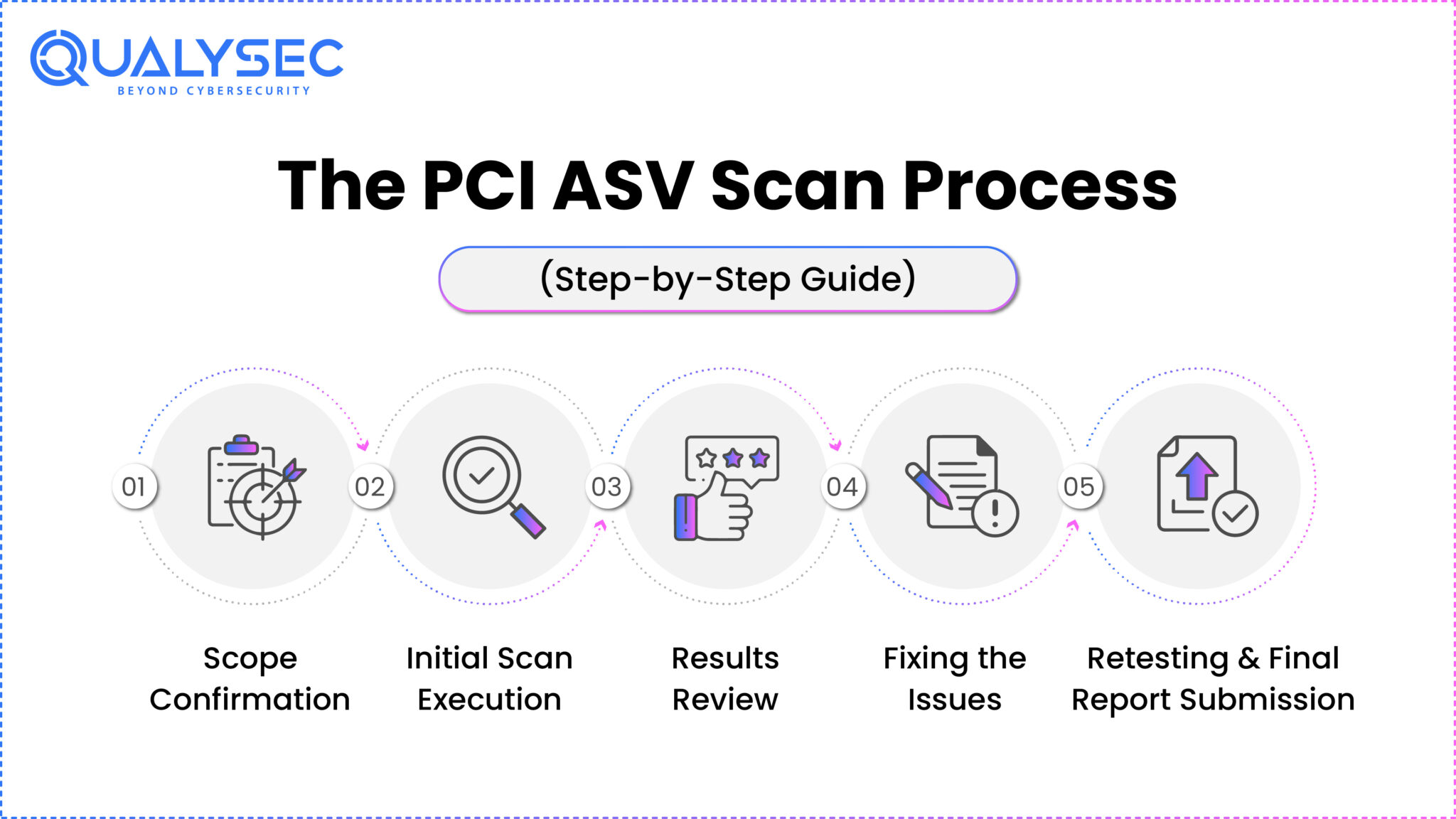
PCI compliance is not a "one-and-done" event. It is a continuous cycle. To remain compliant, you must have a "passing" scan every 90 days. If you use a free trial to get a passing scan in January, but do not have a solution in place for April, you will fall out of compliance.
What Happens if the Scan Fails?
It is very common to fail a PCI scan on the first attempt. The ASV report will provide a list of vulnerabilities, usually ranked by their CVSS score. Any vulnerability with a score of 4.0 or higher must be remediated to achieve a "Pass."
- Review the Report: Identify which IP addresses failed and why.
- Patch and Reconfigure: Update software, close unnecessary ports, or fix web vulnerabilities.
- Request a Rescan: Most ASV vendors (even those offering free trials) allow for unlimited rescans within a specific window to verify that fixes were effective.
- Dispute False Positives: Sometimes a scan incorrectly identifies a vulnerability. You can submit a dispute to the ASV with evidence showing that the risk is mitigated or the finding is an error.
Common Pitfalls with "Free" Solutions
Relying solely on "free" tools can lead to a false sense of security and potential regulatory issues.
- Failure to Scan All Scoped IPs: A free tool might limit you to scanning a single IP or domain. If your payment environment spans multiple subnets or cloud providers, a partial scan is invalid for compliance.
- Outdated Databases: Some free, open-source scanners do not update their vulnerability signatures as frequently as paid ASV services. This means you might pass a free scan but fail an official one.
- Lack of Reporting Infrastructure: Compliance requires specific report formats (the ASV Scan Report Summary and the ASV Scan Report Detailed). Free tools rarely generate the exact PDF or XML formats required for submission to the PCI SSC or your bank.
- No Technical Support: When a scan fails, understanding how to fix a "TCP Timestamp Response" vulnerability or a "Diffie-Hellman Ephemeral Key" issue can be difficult without the expert support that usually comes with a paid subscription.
Frequently Asked Questions
Can I use a free open-source tool like Nmap for PCI compliance?
While Nmap is a powerful tool for discovering open ports and services, it is not an ASV. You can use Nmap for your own internal security testing, but it cannot produce a valid PCI DSS compliance report for external vulnerability scanning requirements.
How much does an official ASV scan cost if I don't use a free version?
For small businesses with 1-5 IP addresses, an ASV subscription typically costs between $250 and $600 per year. Larger organizations with complex cloud environments can pay several thousand dollars annually.
Does a free scan protect me from data breaches?
A scan only identifies known vulnerabilities at a specific point in time. It is a diagnostic tool, not a preventative one. While it helps you find the "holes" in your fence, it does not stop an attacker from using a "Zero-Day" exploit or utilizing a phishing attack to steal credentials.
What is the deadline for PCI DSS v4.0.1 scans?
PCI DSS v4.0.1 is the active standard as of 2026. Merchants should already be transitioned to this version. The 90-day scanning cycle remains the same, but the technical requirements for what constitutes a "passing" scan have been updated to reflect modern threats.
Is a "Vulnerability Assessment" the same as a "Penetration Test"?
No. A vulnerability scan (the ASV scan) is an automated tool that identifies potential weaknesses. A penetration test is a manual, deep-dive exercise performed by a security professional who actually tries to exploit those weaknesses. PCI DSS requires both for certain merchant levels, but they are distinct requirements.
Final Recommendation
If you are looking for a free PCI compliance scan, start by checking with your Payment Processor. Most modern processors provide the tools you need as part of your existing service agreement. If they do not, use a free trial from a certified ASV (such as Qualys, Tenable, or ASV-certified niche providers) to perform a baseline assessment.
However, for ongoing compliance and to avoid the significant fines associated with a data breach or non-compliance (which can exceed $5,000 per month for small merchants), invest in a dedicated ASV subscription. This ensures you have the necessary documentation, quarterly automation, and technical support to maintain a secure and compliant payment environment throughout 2026 and beyond.
Image Gallery