Terminal Cash Flow Calculation Explained: A Complete Guide for Capital Budgeting
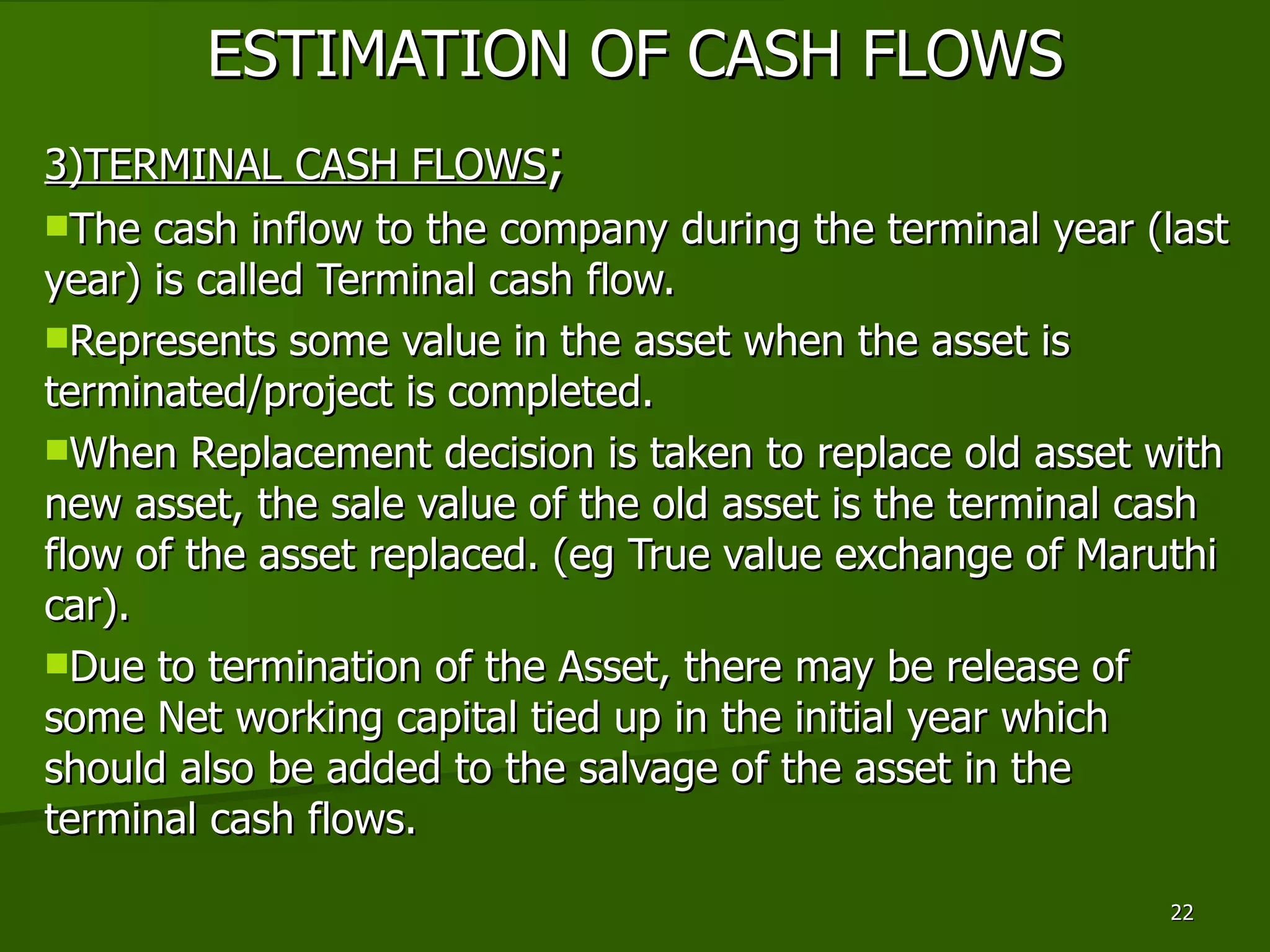
Terminal cash flow represents the net cash flow occurring at the very end of a project’s life cycle or an investment's duration. It encompasses the after-tax proceeds from disposing of assets, the recovery of net working capital, and a...
Terminal cash flow represents the net cash flow occurring at the very end of a project’s life cycle or an investment's duration. It encompasses the after-tax proceeds from disposing of assets, the recovery of net working capital, and any final shutdown costs. Calculating this accurately is vital for determining a project’s Net Present Value (NPV) and Internal Rate of Return (IRR).
Contents
In the realm of corporate finance and capital budgeting, the terminal cash flow (TCF) is the final piece of the puzzle. While initial outlays and annual operating cash flows receive significant attention, the terminal phase often holds substantial value that can shift a project from a "reject" to an "accept" status. As of 2026, the complexity of calculating TCF has increased due to stricter environmental remediation requirements and evolving tax treatments regarding asset disposal. Understanding the interplay between salvage value, book value, and working capital is essential for any financial analyst or business owner looking to make data-driven investment decisions.
The Strategic Importance of Terminal Cash Flow
Terminal cash flow is more than just a mathematical closing point; it represents the "exit strategy" of a capital project. When a company invests in new machinery, a factory, or a specific product line, it assumes that at some point, the project will reach its natural conclusion. The TCF captures the liquidity generated when those resources are finally released.
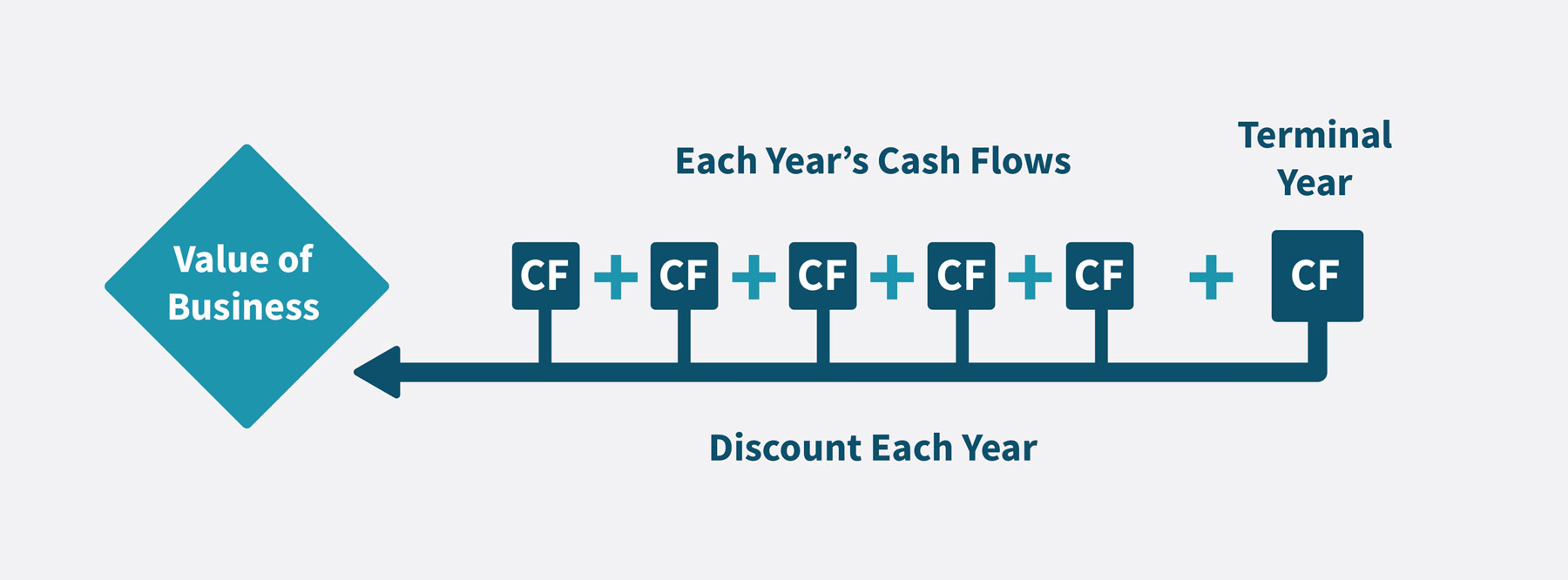
The precision of this calculation directly impacts the Net Present Value (NPV). Because TCF occurs at the furthest point in the future, it is subject to the heaviest discounting. However, because it often includes the recovery of large amounts of working capital and the sale of valuable equipment, the nominal amount can be significant enough to outweigh the discount factor. Failing to account for TCF—or miscalculating the tax implications of asset sales—leads to skewed performance metrics and potentially poor capital allocation.
Distinguishing Terminal Cash Flow from Terminal Value
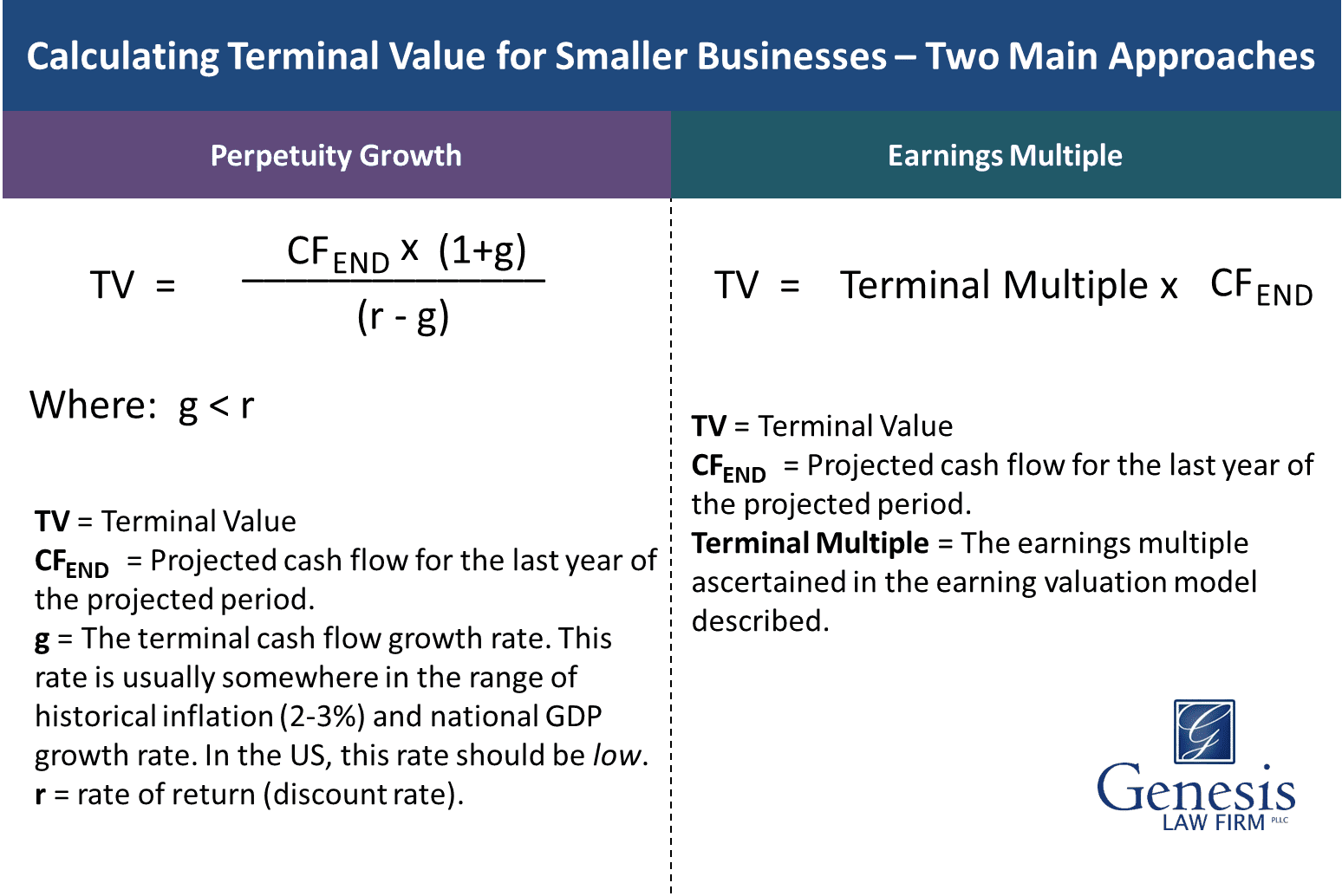
A common point of confusion in financial modeling is the difference between Terminal Cash Flow (TCF) and Terminal Value (TV). While they sound similar, they serve different purposes depending on the nature of the investment:
- Terminal Cash Flow (TCF): Used primarily in capital budgeting for projects with a finite lifespan (e.g., a mining project that lasts 10 years or a specific contract-based manufacturing run). It focuses on the actual cash realized from shutting down and liquidating project-specific assets.
- Terminal Value (TV): Used primarily in Discounted Cash Flow (DCF) valuations for entire businesses or "going concerns." It assumes the business will operate indefinitely, using the Gordon Growth Model or an Exit Multiple to estimate value beyond a 5-year or 10-year forecast period.
This guide focuses on the former: the finite terminal cash flow associated with specific capital investments.
The Three Core Components of Terminal Cash Flow
To calculate terminal cash flow effectively, one must aggregate three distinct financial movements. Each component requires a different set of data points and carries different tax implications.
1. After-Tax Salvage Value (Proceeds from Sale)
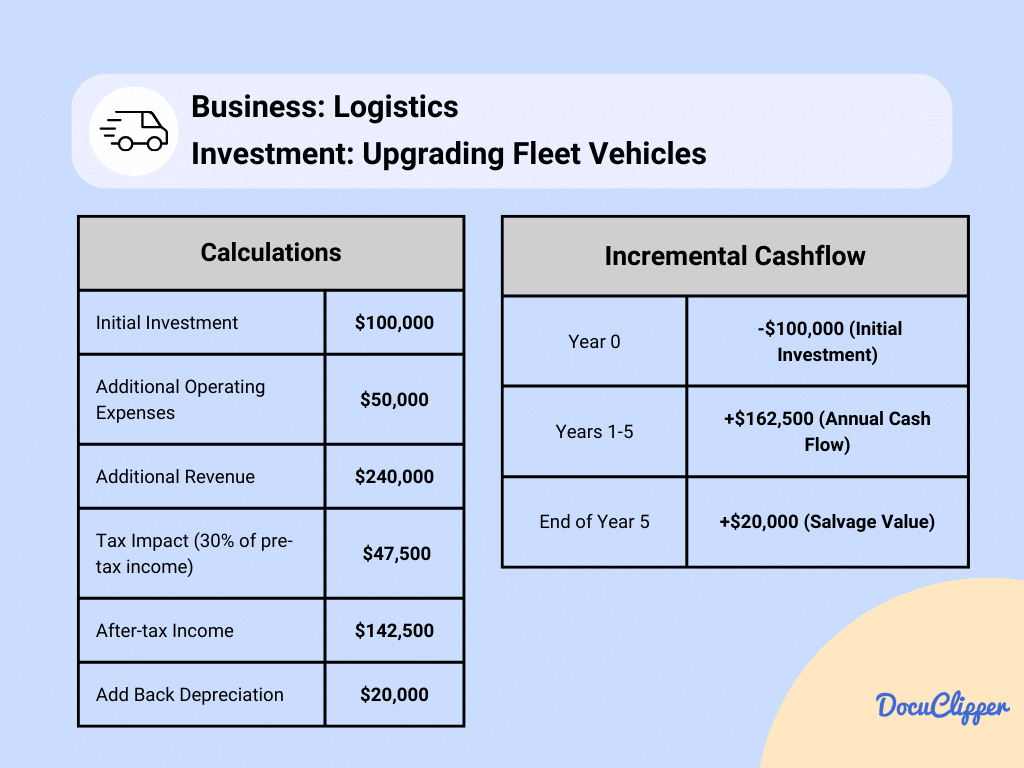
The most visible part of TCF is the cash received from selling the project’s physical assets, such as equipment, vehicles, or real estate. This is known as the Salvage Value. However, the cash a company keeps is rarely the same as the sales price. The government generally taxes the difference between the sale price and the asset's remaining Book Value (the original cost minus accumulated depreciation).
- If Sale Price > Book Value: The company has a taxable gain. It must pay taxes on this gain, which reduces the net cash inflow.
- If Sale Price < Book Value: The company has a tax loss. This loss can be used to offset other taxable income, resulting in a "tax shield" or tax savings, which acts as a cash inflow.
- If Sale Price = Book Value: There are no tax consequences, and the salvage value equals the cash inflow.
2. Recovery of Net Working Capital (NWC)
When a project begins, companies often have to increase their investment in Net Working Capital—stocking up on inventory, maintaining higher accounts receivable, and keeping cash on hand. In the final year of the project, these requirements typically vanish.
As the project winds down, the inventory is sold off and not replaced, and outstanding invoices from customers are collected. This "release" of working capital is treated as a cash inflow. It is important to remember that NWC recovery is usually assumed to be 100% of the initial NWC investment (and any subsequent increases), unless there is specific evidence of inventory obsolescence or uncollectible debts.
3. Decommissioning and Cleanup Costs
In 2026, environmental and regulatory standards are more stringent than ever. Many projects, especially in energy, manufacturing, and chemicals, require significant expenditure at the end of their life for site restoration or hazardous waste disposal. These are cash outflows that must be subtracted from the salvage value and NWC recovery.
The Terminal Cash Flow Formula
The mathematical representation of TCF integrates these components into a single line item for the final year of a project's cash flow forecast:
TCF = [Salvage Value – (T × (Salvage Value – Book Value))] + Recovery of NWC – Cleanup Costs
Where:
- Salvage Value: The estimated market price of assets at the end of the project.
- T: The applicable marginal corporate tax rate.
- Book Value: Original Cost - Accumulated Depreciation.
- Recovery of NWC: The total amount of working capital tied up in the project that is now being liquidated.
Step-by-Step Calculation Guide
To ensure accuracy, follow these steps when building your financial model.
Step 1: Determine the Asset’s Book Value
Refer to the depreciation schedule used for the project. Under standard accounting practices (like MACRS in the US or similar declining balance methods elsewhere), an asset might be fully depreciated to a book value of zero before the project actually ends. If the book value is zero, the entire salvage value is treated as a taxable gain.
Step 2: Estimate the Market Salvage Value
This requires a realistic assessment of what the equipment or property will be worth in the future. Analysts often use historical resale data for similar equipment or professional appraisals.
Step 3: Calculate the Tax Effect
Subtract the Book Value from the Salvage Value to find the gain or loss. Multiply this by the tax rate. Remember:
- Tax on Gain = (Salvage - Book) × Tax Rate [This is an Outflow]
- Tax Savings on Loss = (Book - Salvage) × Tax Rate [This is an Inflow]
Step 4: Aggregate the Net Working Capital
Look back at the "Year 0" initial investment and any mid-project adjustments to NWC. Sum these values. Because these were outflows at the start, they return as an inflow at the end.
Step 5: Final Summation
Combine the after-tax salvage value with the NWC recovery and subtract any final period operating costs or shutdown expenses.
Comparative Analysis of Terminal Cash Flow Elements
The following table illustrates how different scenarios affect the final TCF calculation.
| Element | Scenario A: Sale at Profit | Scenario B: Sale at Loss | Scenario C: Fully Depreciated |
|---|---|---|---|
| Asset Original Cost | $100,000 | $100,000 | $100,000 |
| Accumulated Depreciation | $60,000 | $60,000 | $100,000 |
| Book Value | $40,000 | $40,000 | $0 |
| Market Sale Price | $70,000 | $20,000 | $10,000 |
| Taxable Gain/(Loss) | $30,000 | ($20,000) | $10,000 |
| Tax Impact (at 25%) | ($7,500) Tax Due | $5,000 Tax Saving | ($2,500) Tax Due |
| After-Tax Salvage | $62,500 | $25,000 | $7,500 |
| NWC Recovery | $15,000 | $15,000 | $15,000 |
| Total Terminal Cash Flow | $77,500 | $40,000 | $22,500 |
Common Pitfalls in TCF Estimation
Even experienced financial managers can stumble when calculating terminal flows. Awareness of these common errors can prevent significant valuation mistakes.
Neglecting the "Tax on Gain"
Many beginners simply add the salvage value to the final year's operating cash flow without considering the tax man. If an asset has been aggressively depreciated for tax purposes, its book value will be low, making a taxable gain almost certain. Ignoring this can overstate the project's NPV.
Forgetting Working Capital Recovery
Because Net Working Capital is often "spent" in small increments or as a lump sum at the start, it is easily forgotten at the end. However, NWC is not a "consumed" expense like raw materials; it is a revolving investment. Failing to include its recovery is essentially treating a temporary investment as a permanent loss.
Inflation Mismanagement
If you are performing a nominal cash flow analysis, ensure that your estimated salvage value reflects the expected price levels of 2026 and beyond. Using today's prices for a sale occurring ten years from now will likely understate the nominal cash inflow, though the real value remains the same.
Overestimating Salvage Value for Specialized Assets
Highly specialized machinery often has a high initial cost but near-zero resale value because there is no secondary market for it. For such assets, the salvage value should be estimated conservatively, perhaps only at scrap metal value.
The Role of Depreciation Methods
The choice of depreciation method—Straight-Line versus Accelerated (like MACRS)—does not change the total amount of depreciation taken over the life of the asset, but it radically changes the Book Value at any given point in time. Accelerated depreciation results in a lower book value sooner, which generally leads to a higher taxable gain upon the sale of the asset at the end of the project. Consequently, the timing and method of depreciation are inextricably linked to the terminal cash flow calculation.
Practical Example: A 2026 Manufacturing Extension
Suppose a firm is considering a five-year project to produce eco-friendly packaging.
- Equipment Cost: $500,000
- NWC Investment: $50,000
- Depreciation: Straight-line to zero over 5 years.
- Expected Salvage Value in Year 5: $80,000
- Tax Rate: 21%
Calculation:
- Book Value at Year 5: $0 (fully depreciated).
- Tax on Sale: ($80,000 - $0) × 0.21 = $16,800.
- After-Tax Salvage: $80,000 - $16,800 = $63,200.
- Add NWC Recovery: $63,200 + $50,000 = $113,200.
The Terminal Cash Flow for this project is $113,200. This amount would be added to the operating cash flow of Year 5 to determine the total cash inflow for the final period.
FAQs
Is terminal cash flow the same as salvage value?
No. Salvage value is just one component of terminal cash flow. TCF also includes the tax implications of the sale, the recovery of net working capital, and any final shutdown or environmental costs. Salvage value represents the gross proceeds from selling assets, while TCF represents the final net liquidity change for the company.
Can terminal cash flow be negative?
Yes, it is possible for TCF to be negative, though it is uncommon for profitable projects. This typically occurs in industries with massive cleanup or decommissioning liabilities, such as nuclear power or deep-sea drilling, where the cost of safely shutting down the operation exceeds the salvage value of the equipment and the recovered working capital.
Why is Net Working Capital recovered at the end of a project?
Net Working Capital (inventory, receivables, etc.) is considered a "revolving" investment. As a project ends, you stop buying new inventory and you collect the final payments from your customers. The money that was previously "tied up" in the business cycle is now freed up as cash.
How do I estimate salvage value for an asset I haven't bought yet?
Analysts typically look at the secondary market for similar used equipment. Industry benchmarks or manufacturer estimates of "residual value" are also commonly used. In the absence of better data, a conservative estimate of 10-20% of the original cost is sometimes used for general machinery, though this varies by industry.
How does a tax loss on the sale of an asset affect TCF?
A tax loss occurs if the salvage value is lower than the book value. This loss reduces the company’s overall taxable income for the year, resulting in lower taxes paid on other profits. This "tax saving" is treated as a cash inflow, effectively increasing the terminal cash flow.
Final Recommendation
When calculating terminal cash flow, always adopt a conservative stance regarding salvage values and a meticulous approach to tax liabilities. For 2026 projects, ensure you have accounted for any new environmental compliance costs that may trigger outflows at the project's end. To ensure accuracy, double-check your depreciation schedules to confirm the book value at the exact date of the projected disposal. Finally, always verify that the recovery of Net Working Capital matches the total cumulative investment made into NWC throughout the project's life.
Image Gallery