The Meaning of a Visionary Person: Definition, Core Traits, and Impact
A visionary person is an individual who possesses the rare capacity to anticipate future possibilities, conceptualize transformative ideas, and articulate a clear path toward achieving them. Characterized by strategic foresight, cognit...
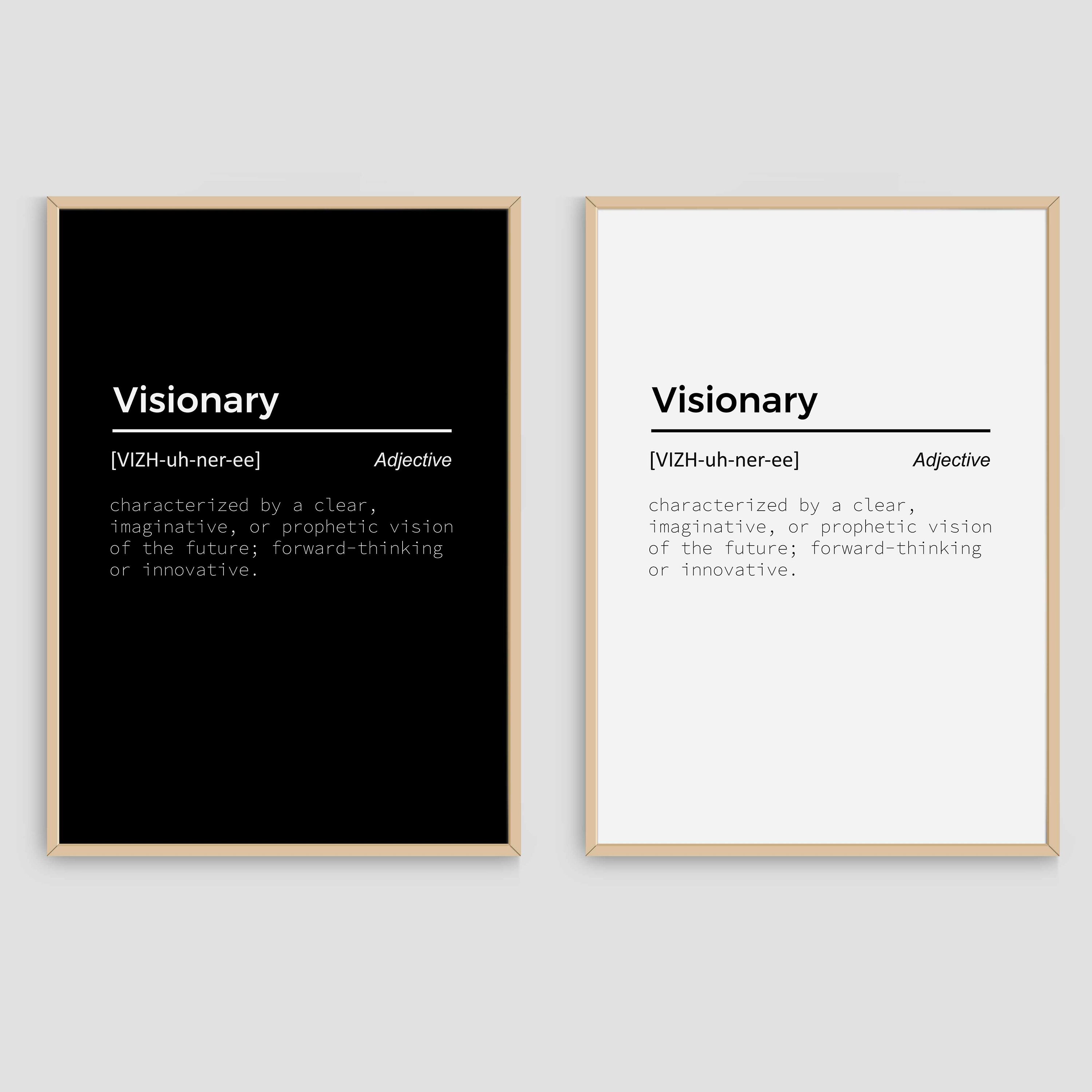
A visionary person is an individual who possesses the rare capacity to anticipate future possibilities, conceptualize transformative ideas, and articulate a clear path toward achieving them. Characterized by strategic foresight, cognitive flexibility, and high emotional intelligence, visionaries look beyond immediate operational realities to inspire long-term innovation, systemic change, and meaningful progress.
Contents
Defining the Visionary Mindset: Beyond Simple Imagination
To understand the meaning of a visionary person, one must distinguish between basic imagination and true visionary thinking. While imagination allows anyone to picture scenarios that do not currently exist, a visionary connects imaginative concepts to purposeful action and long-term outcomes.
Etymologically rooted in the Latin visio (the act of seeing), the term has evolved from describing mystical foresight to defining a crucial archetype in organizational leadership, innovation, and social change. A visionary person does not merely react to emerging trends; they synthesize weak signals across technology, culture, and economics to project where an industry, institution, or society will be years—or even decades—in the future.
Visionary thinking operates across three distinct dimensions:
- Foresight: The cognitive capacity to project current trajectories forward while anticipating unexpected disruptions.
- Insight: The ability to connect seemingly unrelated data points, human behaviors, or market shifts to form a coherent new concept.
- Persuasion: The social and communication capability required to convey a non-obvious future state so convincingly that others willingly commit resources and energy to realize it.
Without execution and communication, a visionary idea remains a mere daydream. Therefore, a visionary person is defined as much by their ability to orient others toward a shared future as by their internal intellectual architecture.
Key Traits and Behavioral Patterns of a Visionary Person
Visionary individuals share a distinct constellation of psychological, cognitive, and interpersonal traits. While individual personalities differ, research in organizational psychology and executive performance highlights several universal characteristics.
- Visionary Person Archetype
- Strategic Foresight
- High Cognitive Flexibility
- Emotional Intelligence
- Tolerance for Ambiguity
1. Strategic Foresight and Environmental Scanning
Visionaries constantly perform subconscious and structured "environmental scanning." They absorb information from disparate disciplines—such as history, software engineering, ecology, and consumer behavior—to identify emerging structural shifts. Rather than focusing exclusively on quarterly metrics, they evaluate multi-year horizons.
2. High Openness to Experience
Within the Big Five personality trait framework established in psychological literature, visionaries score exceptionally high in Openness to Experience. They possess intense curiosity, prefer novelty over routine, and actively seek out ideas that challenge prevailing consensus.
3. Cognitive Flexibility and Pattern Recognition
A visionary person demonstrates an advanced ability to switch between micro-level details and macro-level abstractions. This cognitive agility enables them to spot non-obvious relationships between systems. For instance, a visionary executive might see how advances in renewable energy storage could fundamentally reshape urban real estate development.
4. High Emotional Intelligence and Inspirational Communication
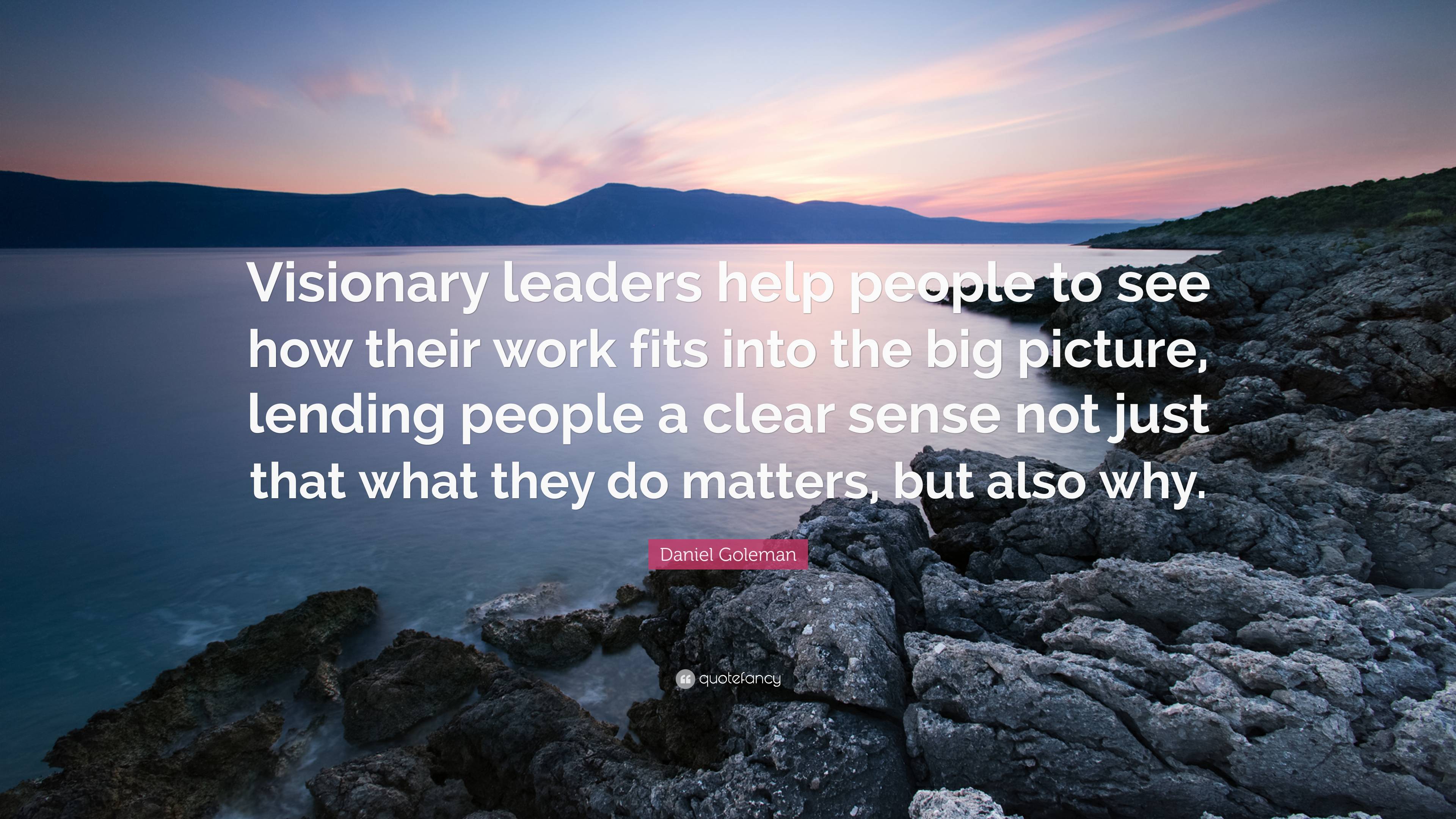
A vision cannot survive in isolation. According to models of emotional intelligence popularized by researchers like Daniel Goleman, visionary leaders excel in empathy and social awareness. They frame complex, abstract goals into emotionally resonant narratives that motivate diverse groups of people.
5. High Tolerance for Ambiguity and Risk
Creating an unprecedented future requires navigating deep uncertainty. Visionary individuals display a remarkable tolerance for ambiguity. Where others see risk and chaos, visionaries see unmapped terrain ripe for innovation. They are comfortable making high-stakes decisions with incomplete data, guided by strong internal conviction.
Visionary vs. Strategic vs. Operational Roles
Organizations often confuse visionary leadership with strategic or operational management. While top performers may blend these capabilities, they represent distinct modes of thinking and problem-solving.
| Characteristic | Visionary Leader | Strategic Leader | Operational Leader |
|---|---|---|---|
| Primary Time Horizon | 5 to 20+ years | 1 to 5 years | Daily to 1 year |
| Core Question | "What could or should exist?" | "How do we win in this landscape?" | "How do we execute efficiently?" |
| Cognitive Style | Divergent, intuitive, conceptual | Convergent, analytical, structured | Process-oriented, systematic, tactical |
| Primary Skill | Narrative formulation & foresight | Resource allocation & roadmap design | Process optimization & execution |
| Risk Profile | High risk acceptance; seeks disruption | Managed risk; optimizes positioning | Risk-averse; minimizes variance |
| Failure Mode | Unrealistic ideas; detachment | Over-analysis; strategic rigidity | Micromanagement; loss of context |
Understanding these distinctions prevents severe organizational misalignments. A visionary person identifies where to go; the strategic leader charts the route; the operational leader drives the vehicle.
Theoretical Frameworks: How Leadership Science Defines Visionaries
The concept of the visionary person is deeply anchored in formal academic research across management science and cognitive psychology.
Transformational Leadership Theory
Formulated by Bernard M. Bass, Transformational Leadership Theory identifies Inspirational Motivation and Idealized Influence as core components of transformational figures. Bass argued that visionary leaders transform followers by appealing to higher ideals and moral values rather than simple transactional rewards. They paint an appealing picture of the future that elevates employee engagement and fosters organizational citizenship.
Goleman’s Visionary (Authoritative) Leadership Style
In his research published through the Harvard Business Review, Daniel Goleman outlined six foundational leadership styles. The Visionary Style (often termed the Authoritative style) is described as most effective when an organization or team requires a new direction.
A visionary leader articulates the ultimate goal while giving individuals the autonomy to innovate their own methods for reaching it. This approach boosts corporate climate metrics by clarifying standards and contextualizing everyday tasks within a broader purpose.
The Psychology of Prospection
In cognitive psychology, "prospection"—the mental representation of possible futures—is considered a fundamental human capability. Researchers like Martin Seligman have highlighted that human action is often driven not merely by past conditions (behaviorism), but by conscious evaluation of future possibilities. Visionary individuals possess highly developed prospection networks in the brain, allowing them to mentally simulate complex future environments with exceptional clarity and emotional detail.
Real-World Examples of Visionary Leadership
Examining notable historical and contemporary figures illustrates how visionary traits translate into tangible historical and industry impacts.
Steve Jobs: Technological Integration and Design
Steve Jobs exemplified the visionary leader in business. His core insight was not invention per se, but the synthesis of advanced technology, elegant typography, and intuitive user interface design. While engineers focused on raw computing capacity, Jobs envisioned personal computers, digital music distribution, and mobile phones as seamless extensions of human creativity. His vision redefined consumer electronics across multiple industries.
Dr. Martin Luther King Jr.: Moral and Social Transformation
In the realm of social movement leadership, Dr. Martin Luther King Jr. demonstrated the power of moral vision. His famous "I Have a Dream" speech was a masterpiece of visionary communication. He did not merely critique current civil rights violations; he articulated an inclusive, morally coherent picture of an integrated American society, inspiring millions to participate in nonviolent social transformation.
Satya Nadella: Cultural and Technological Pivot
When Satya Nadella assumed the role of CEO at Microsoft, the company faced stagnation due to rigid internal silos and over-reliance on legacy software. Nadella articulated a strategic vision centered on cloud computing, artificial intelligence, and a "growth mindset" culture. By reframing the company's identity around empathy and platform enablement, he orchestrated one of the most significant corporate transformations in modern business history.
The Dark Side and Vulnerabilities of Visionary People
While visionary qualities are celebrated, ungrounded visionary thinking presents significant personal and organizational risks. Without proper counterweights, visionary traits can degenerate into counterproductive dynamics.
- The Visionary Risk
- Execution Gap (Ideas without action)
- Detachment from Reality (Ignoring constraints)
- The Execution Gap: A visionary person may become fascinated by high-level concepts while showing indifference toward tactical implementation. This leads to abandoned initiatives, perpetual strategic pivots, and team frustration.
- Reality Distortion and Narcissism: The strong conviction required to champion a visionary idea can turn into dangerous dogmatism. Leaders who reject counter-evidence or constructive criticism risk steering organizations into costly failures.
- Alienation of Pragmatic Teams: Visionaries often move quickly from one conceptual breakthrough to the next. Operational teams, focused on stability and implementation, can experience burnout when forced to adapt to constantly shifting long-term visions.
- Impatience with Incremental Progress: Systems change slowly. Visionary individuals frequently struggle with the slow pace of institutional change, leading to friction with regulatory, legal, or administrative frameworks.
How to Cultivate Visionary Thinking
While genetic factors and early environment influence personality, visionary thinking relies on cognitive habits that professionals can systematically develop over time.
Practice Horizon Scanning and Weak-Signal Detection
Spend structured time reading outside your primary domain. Track emerging academic papers, technological patents, demographic shifts, and cultural movements. Ask: If these three independent developments accelerate simultaneously over five years, what new reality will they create?
Create Strategic Isolation (Think Weeks)
Continuous operational meetings destroy visionary capacity. Allocate regular, uninterrupted time for deep reading, reflection, and unstructured thought. Many top executives schedule quarterly "think days" dedicated exclusively to broad strategic questions rather than inbox management.
Utilize Scenario Planning Frameworks
Engage in formal foresight methodologies, such as Scenario Planning. Instead of predicting a single linear future, construct three distinct future scenarios:
- The Baseline Scenario: Current trends continue linearly.
- The Disruptive Scenario: A major technological, economic, or regulatory shift occurs.
- The Wildcard Scenario: An unexpected black swan event alters baseline assumptions.
Formulating strategic options for each scenario builds cognitive agility and long-term foresight.
Partner with Operational Integrators
If you naturally lean toward visionary thinking, pair yourself with detail-oriented operational leaders (often termed "Integrators" or Chief Operating Officers). This structural partnership ensures that expansive visions are translated into actionable roadmaps, metrics, and accountable execution.
Frequently Asked Questions
Is a visionary person born or made?
Visionary capacity is a combination of innate personality traits (such as high Openness to Experience) and learned cognitive skills. While natural tendencies play a role, strategic foresight, pattern recognition, and scenario planning can be systematically cultivated through practice and deliberate learning.
What is the main difference between a visionary and a dreamer?
A dreamer generates imaginative ideas but lacks the strategic discipline, communication framework, or execution support needed to turn them into reality. A visionary person connects abstract possibilities to strategic roadmaps and actively inspires teams to build the tools required to realize the vision.
Can a person be both a visionary and an operational leader?
While rare, individuals can possess both skill sets. However, exercising both simultaneously is mentally exhausting because they require contrasting cognitive modes (divergent, long-term thinking versus convergent, short-term precision). Most successful organizations separate these roles or use complementary leadership teams.
How do organizations support visionary leaders without risking stability?
Organizations support visionary leaders by pairing them with strong operational managers, establishing clear governance processes, and creating "innovation sandboxes." These sandboxes allow visionary ideas to be prototyped and validated without disrupting core business operations.
What psychological assessment measures visionary potential?
While no single test determines visionary status, standard assessments like the NEO Personality Inventory (measuring the Big Five trait of Openness to Experience), the Myers-Briggs Type Indicator (specifically Intuitive types, such as INTJ or ENTP), and strategic foresight assessments provide clear indicators of visionary cognitive preferences.
Practical Recommendations for Emerging Visionary Leaders
If you seek to leverage visionary thinking within your organization or career, focus on building balanced capability rather than isolated conceptual brilliance:
- Validate Before Scaling: Test high-level visions using small-scale prototypes, minimum viable products (MVPs), or targeted pilot programs before demanding organizational realignment.
- Master Storytelling: Ground your abstract ideas in compelling, human-centric narratives. Use concrete analogies to explain complex future states to stakeholders and investors.
- Build Executive Complementarity: Surround yourself with analytical strategists and rigorous operators who challenge your assumptions and keep projects grounded in real-world feasibility.
- Maintain Ethical Alignment: Ensure your vision accounts for ethical implications, environmental sustainability, and broad social value, rather than pursuing novelty for its own sake.
EDITORIAL CATEGORY METADATA:
Image Gallery