The Comprehensive Guide to Honda Gold Wing Weight: Specs and Comparison
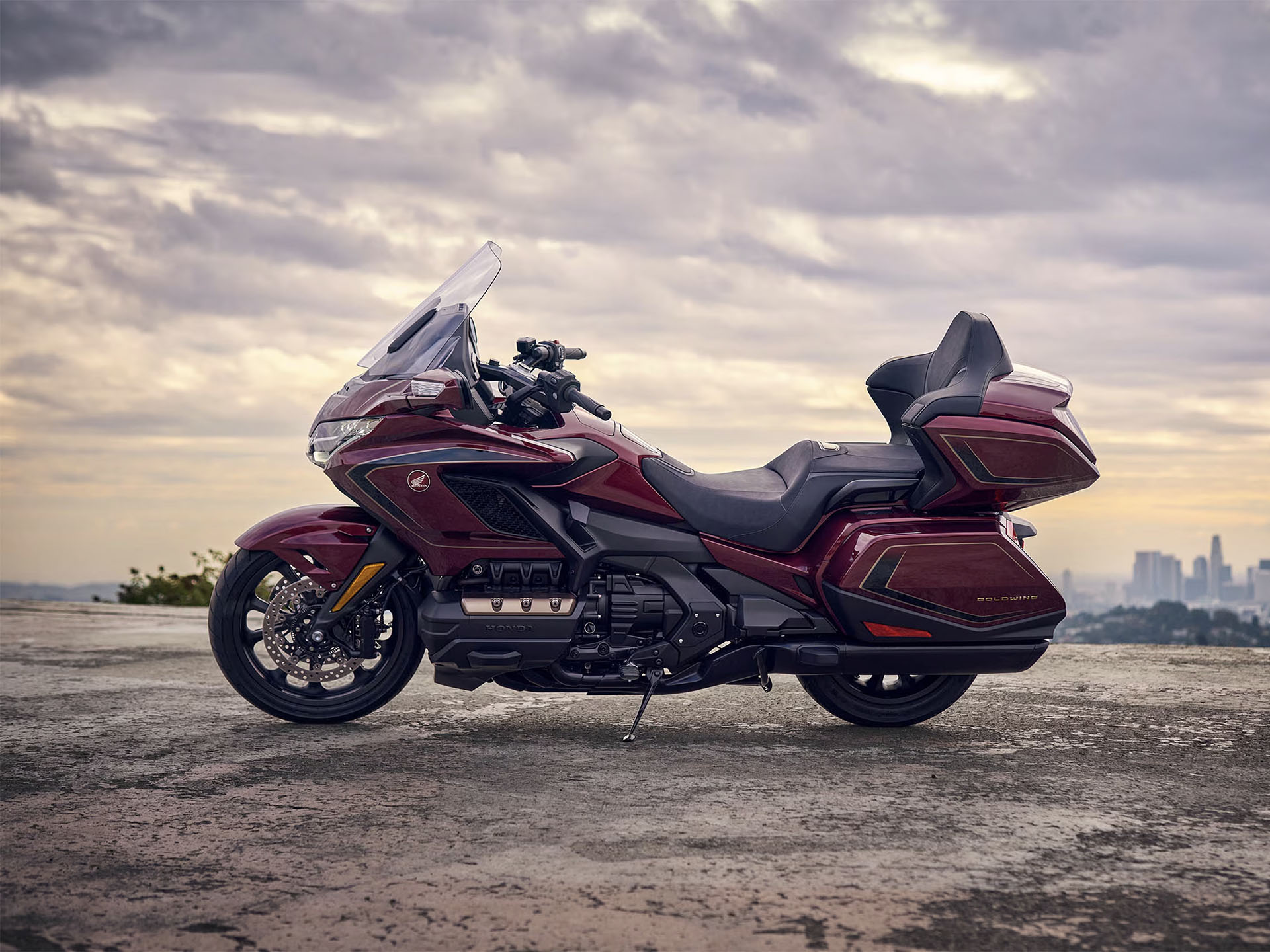
The Honda Gold Wing’s curb weight varies significantly by model year and trim level. Current 2026 models range from approximately 787 lbs (357 kg) for the base Gold Wing to 847 lbs (384 kg) for the Gold Wing Tour with Dual Clutch Trans...
The Honda Gold Wing’s curb weight varies significantly by model year and trim level. Current 2026 models range from approximately 787 lbs (357 kg) for the base Gold Wing to 847 lbs (384 kg) for the Gold Wing Tour with Dual Clutch Transmission (DCT). Older generations, specifically the 2001–2017 models, frequently exceeded 900 lbs.
Contents
Understanding the Weight Profile of the Gold Wing
When discussing the weight of the Honda Gold Wing, it is essential to distinguish between the various generations and configurations. Since its inception in 1975, the Gold Wing has evolved from a naked performance bike into the world’s premier luxury touring motorcycle. This evolution saw a steady increase in mass as Honda added larger engines, fairings, luggage, and sophisticated electronics. However, the most recent major redesign in 2018 bucked this trend by significantly reducing weight to improve agility and fuel efficiency.
For riders in 2026, the weight of the Gold Wing remains a primary consideration. Despite its mass, the bike is renowned for a low center of gravity, thanks to its horizontally opposed "boxer" engine layout. This design places the heaviest components—the engine blocks and the fuel tank (located under the seat)—very low in the frame, making the motorcycle feel much lighter once it is in motion than its static weight would suggest.
Current 2026 Gold Wing Weight Specifications
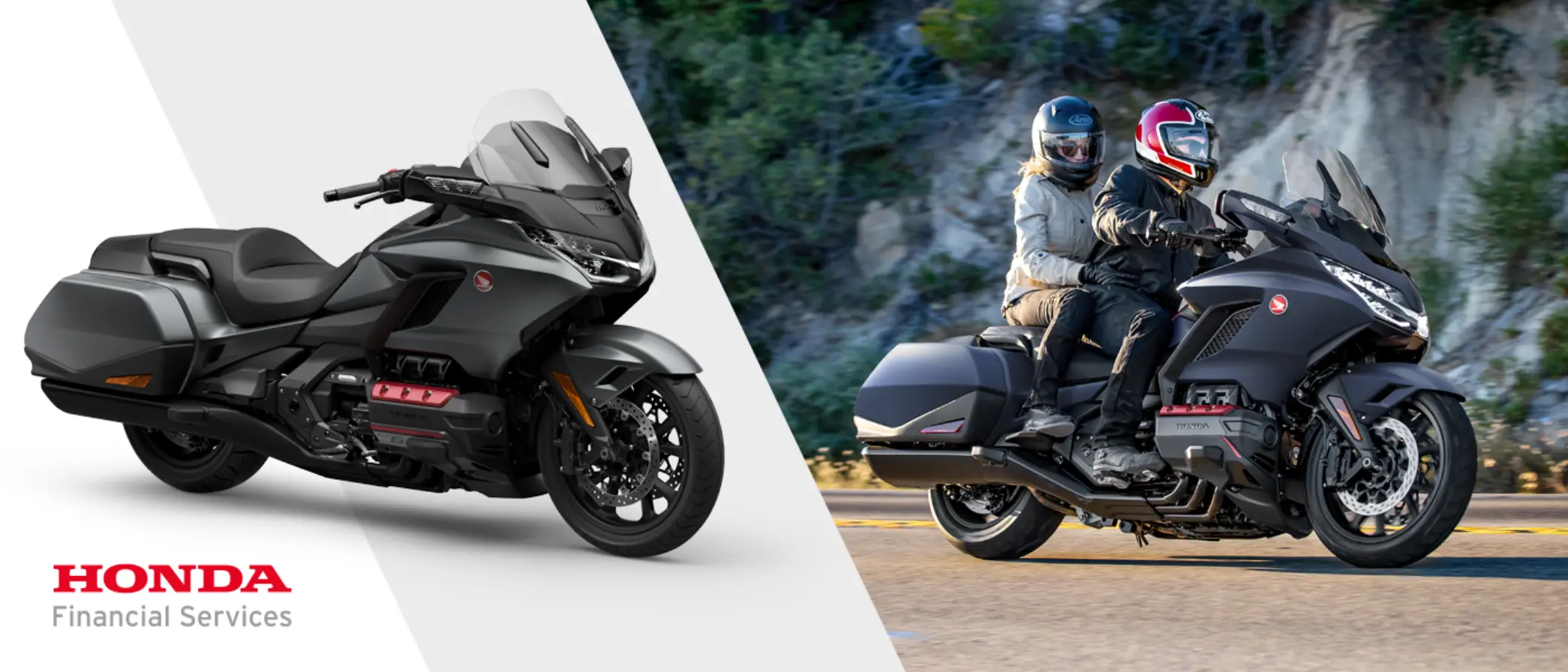
As of 2026, the Gold Wing remains in its sixth generation (the GL1800 platform introduced in 2018). This generation utilized an aluminum twin-spar frame and a smaller, more compact 1,833cc engine to shed nearly 90 pounds compared to the previous version. The weight of a 2026 model depends primarily on whether you choose the "Base" (bagger style) or the "Tour" (full dress) model, and whether you opt for the manual transmission or the 7-speed DCT.
2026 Model Weight Breakdown
| Model Trim | Transmission | Curb Weight (Lbs) | Curb Weight (Kg) |
|---|---|---|---|
| Gold Wing (Base) | Manual 6-Speed | 787 lbs | 357 kg |
| Gold Wing (Base) | 7-Speed DCT | 802 lbs | 364 kg |
| Gold Wing Tour | Manual 6-Speed | 833 lbs | 378 kg |
| Gold Wing Tour | 7-Speed DCT | 844 lbs | 383 kg |
| Gold Wing Tour Airbag | 7-Speed DCT | 847 lbs | 384 kg |
The Curb Weight listed above includes all standard equipment, a full tank of fuel, and all required fluids (oil, coolant, brake fluid). This is the most "real-world" measurement for riders to consider.
Historical Weight Progression (1975–2017)
To understand why the Gold Wing is perceived as a "heavy" bike, one must look at its historical growth. Each generation addressed the needs of long-distance riders by adding features, which inevitably added pounds.
The GL1000 and GL1100 Eras (1975–1983)
The original 1975 GL1000 was a relatively svelte machine by modern standards, weighing approximately 600 lbs wet. It lacked a fairing, saddlebags, and a trunk. By 1980, the GL1100 Interstate introduced the "Full Dresser" concept, pushing the weight closer to 700 lbs.
The GL1200 and the GL1500 (1984–2000)
The GL1200 saw the introduction of more complex electronics and larger fairings, reaching about 730–750 lbs. However, the 1988 GL1500 was the massive leap. Transitioning from a four-cylinder to a six-cylinder engine, and encasing the entire bike in plastic bodywork, the GL1500 pushed the scales to roughly 800–840 lbs. This model established the Gold Wing as a "couch on wheels."
The First Generation GL1800 (2001–2017)
In 2001, Honda moved to an all-aluminum frame to keep weight in check while increasing displacement to 1,832cc. Despite the aluminum frame, the sheer volume of features—including a premium sound system, navigation, and eventually an airbag—meant these bikes were the heaviest in the lineage. A fully loaded 2012–2017 Gold Wing Airbag model tipped the scales at a staggering 933 lbs.
Curb Weight vs. Dry Weight: Why the Distinction Matters
In technical specifications, you may occasionally see "Dry Weight" mentioned, particularly in older brochures or third-party comparisons. It is important to understand that dry weight is a theoretical measurement of the motorcycle without fuel, engine oil, coolant, or battery acid.
Because the Gold Wing holds approximately 5.5 gallons (21 liters) of fuel and nearly 5 quarts of oil, the difference between dry and curb weight is significant—usually around 50 to 60 pounds. In 2026, almost all reputable manufacturers, including Honda Powersports, report curb weight to provide consumers with an accurate representation of the bike's mass during operation.
The Engineering Behind the Weight Management
A common question for prospective owners is: "Can I handle a bike that weighs over 800 pounds?" Honda engineers have implemented several technical solutions to mitigate the physical burden of this mass.
Low Center of Gravity
The flat-six engine configuration is the secret to the Gold Wing's balance. Unlike a V-twin engine found in many American cruisers, which carries its cylinder heads high in the frame, the Gold Wing's cylinders are horizontal. This places the heaviest reciprocating mass just inches above the pavement.
Double-Wishbone Front Suspension
Introduced in 2018, the double-wishbone front suspension replaced traditional telescopic forks. This system separates the steering function from the suspension function. It also changes the path of the front wheel during compression, moving it more vertically. This reduces the "dive" felt under braking, which can be unsettling on a heavy motorcycle, and makes the steering feel significantly lighter at low speeds.
Walking Mode and Reverse
Managing an 847-pound machine in a parking lot or on an incline is daunting. To solve this, models equipped with the Dual Clutch Transmission (DCT) feature a "Walking Mode." This allows the rider to move the bike forward at 1.1 mph or backward at 0.75 mph using buttons on the handlebar. Manual transmission models use an electric reverse system powered by the starter motor. These features effectively negate the weight concerns during the most difficult part of riding: low-speed maneuvering and parking.
Comparing Gold Wing Weight to Competitors
To put the Gold Wing's weight in perspective, it is helpful to compare it to other luxury touring motorcycles available in 2026.
- BMW K 1600 GTL: The BMW is often considered the Gold Wing's closest rival. It weighs approximately 789 lbs (wet). While lighter than the Gold Wing Tour, its inline-six engine sits higher, often making it feel "top-heavy" in comparison.
- Harley-Davidson Road Glide Limited: This classic American tourer has a curb weight of approximately 932 lbs. The Gold Wing is significantly lighter than the traditional steel-framed American luxury tourers.
- Indian Roadmaster: Similar to the Harley, the Indian Roadmaster weighs roughly 912 lbs wet.
This comparison reveals that the modern Gold Wing is actually one of the lighter motorcycles in the "Full Dresser" category, despite its reputation for being a massive machine.
The Impact of Weight on Performance and Safety
The weight of the Gold Wing isn't just a number for the spec sheet; it directly influences how the bike performs in various conditions.
- Braking Distance: Stopping an 800-lb bike plus a rider, passenger, and luggage (potentially a total weight of over 1,200 lbs) requires immense braking force. Honda utilizes a Linked Braking System (LBS) and ABS to distribute force between the massive 320mm front discs and the 316mm rear disc.
- Tire Wear: The sheer mass of the Gold Wing puts significant stress on the tires. Owners must monitor tire pressure rigorously, as even a small drop in PSI can lead to "cupping" or rapid wear due to the heavy load.
- Fuel Economy: While the 2018+ redesign improved aerodynamics and reduced weight to help efficiency, the Gold Wing still consumes more fuel than lighter sport-touring bikes. The 2026 models typically average between 38 and 42 MPG.
Frequently Asked Questions
Does the Gold Wing weight include the trunk?
The weight depends on the trim. The "Gold Wing Tour" includes the trunk and is the heavier of the two primary versions. The "Base" Gold Wing (sometimes referred to as the Gold Wing Automatic or Manual) does not have a trunk and weighs approximately 45–50 pounds less.
Can a shorter or lighter rider handle the Gold Wing's weight?
Yes, primarily because the seat height is quite low (approximately 29.3 inches). This allows most riders to place both feet firmly on the ground. Once the bike is moving faster than 5 mph, the gyroscopic effect of the wheels and the low center of gravity make the weight almost imperceptible.
How much weight can the Gold Wing carry (Payload)?
The load capacity for most modern Gold Wings is approximately 400 to 425 lbs. This includes the weight of the rider, passenger, and all gear in the saddlebags and trunk. Exceeding this limit can affect the suspension performance and ground clearance.
Is the DCT version heavier than the manual version?
Yes. The 7-speed DCT adds approximately 11 to 15 lbs compared to the 6-speed manual transmission, depending on the specific trim level. However, many riders find the added weight is a worthwhile trade-off for the "Walking Mode" functionality.
Is the 2026 Gold Wing heavier than previous years?
No, the 2026 model maintains the weight profile established by the 2018 redesign. It is significantly lighter than the GL1800 models produced between 2001 and 2017.
Practical Recommendation for Prospective Buyers
If you are concerned about the weight of the Gold Wing, the best course of action is to schedule a test ride specifically focusing on low-speed maneuvers. Many riders find that the "Walking Mode" on DCT-equipped models completely removes the anxiety of handling a heavy bike in tight spaces.
For those who prioritize a lighter, sportier feel and do not require the massive storage of a trunk, the Base Gold Wing (bagger style) offers a significant weight saving of nearly 60 pounds over the Tour Airbag model. Always ensure you check the "Curb Weight" on the specific unit's certificate of origin if you are adding aftermarket accessories like chrome guards, custom seats, or trailer hitches, as these can easily add another 30–50 pounds to the machine.
Image Gallery