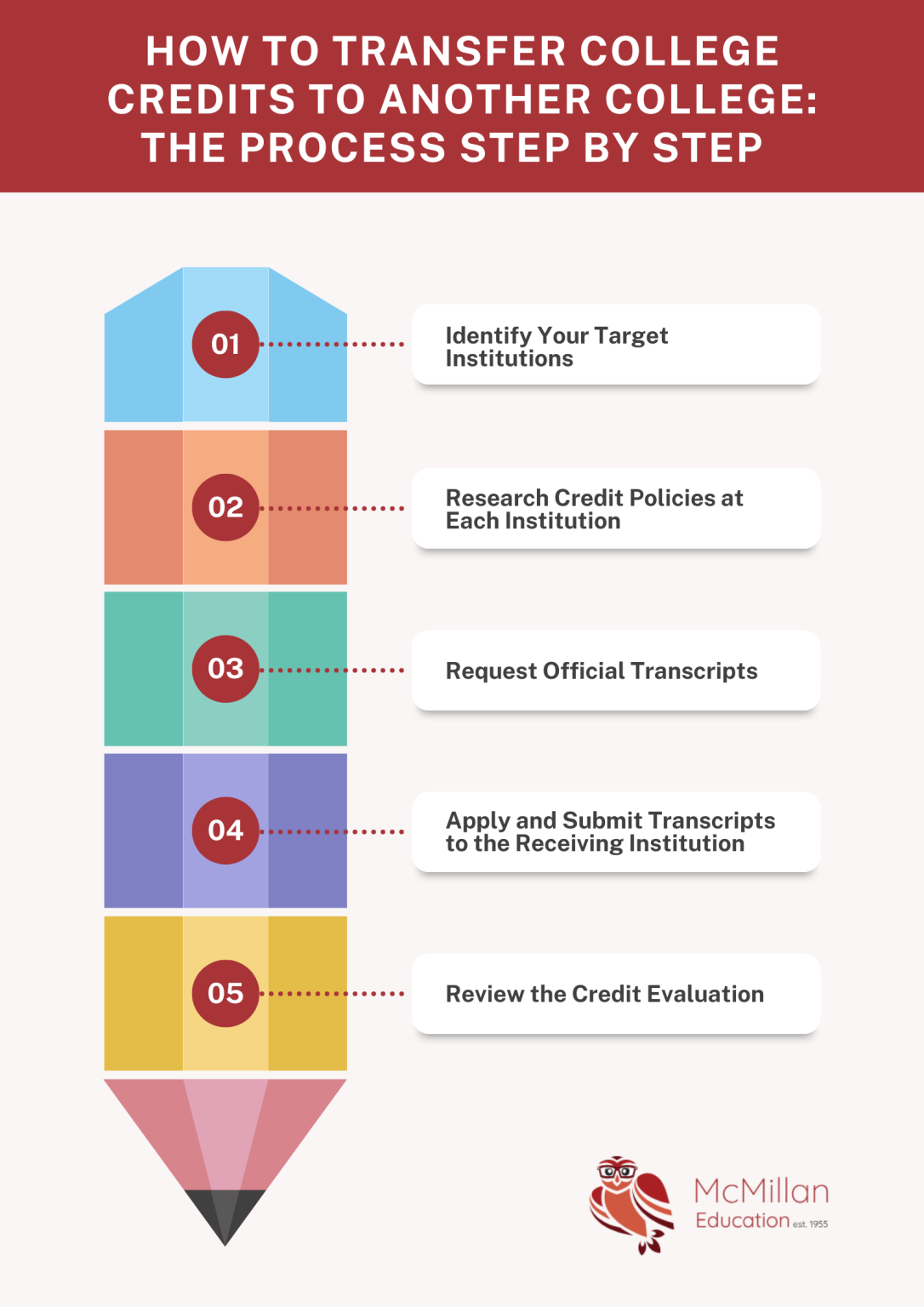
How Transfer Credit at Texas A&M Works: A Complete 2026 Guide
Transfer credit at Texas A&M University (TAMU) is processed through a systematic evaluation of course equivalency, institutional accreditation, and grade performance. Students must use the Transfer Course Equivalency Guide (TCEG) to id...
Transfer credit at Texas A&M University (TAMU) is processed through a systematic evaluation of course equivalency, institutional accreditation, and grade performance. Students must use the Transfer Course Equivalency Guide (TCEG) to identify pre-approved matches. Generally, credits from accredited institutions transfer if the student earned a "C" or better and the content aligns with TAMU’s academic curriculum.
Contents
The process of moving credits from one institution to Texas A&M University is a critical phase for both incoming transfer students and current "Aggies" looking to take summer courses elsewhere. As of 2026, the university has refined its digital evaluation tools to provide more transparency, yet the underlying logic remains rooted in strict academic standards and state-mandated core curriculum requirements. Navigating this system requires an understanding of how the Office of Admissions evaluates transcripts and how individual academic departments apply those credits toward specific degree plans.
The Foundation of Transfer Credit Evaluation
The primary authority for initial credit assessment at Texas A&M is the Office of Admissions. However, it is important to distinguish between "transferable" credit and "applicable" credit. A course may be accepted by the university (transferable), but it might not fulfill a specific requirement for your chosen major (applicable).
Texas A&M operates under the Texas Common Course Numbering System (TCCNS) for in-state institutions. This shared system ensures that a course like "Composition I" at a Texas community college has a direct, one-to-one equivalent at TAMU. For out-of-state or private institutions, the university performs a manual review of the syllabus and course description to determine if the material covered meets the rigor and scope of a Texas A&M course.
The Role of Institutional Accreditation
For a credit to even be considered, it must originate from a regionally accredited institution. In 2026, TAMU continues to prioritize credits from institutions recognized by bodies such as the Southern Association of Colleges and Schools Commission on Colleges (SACSCOC). Credits from vocational, technical, or non-accredited schools rarely transfer unless a specific memorandum of understanding (MOU) exists between the institutions.
The "C" or Better Rule
A fundamental policy at Texas A&M is that transfer credit is only awarded for courses in which a student earned a grade of "C" or higher. While some institutions may accept a "D" for general elective credit, Texas A&M generally does not. Furthermore, while the credit hours transfer, your grade point average (GPA) from your previous institution does not merge with your Texas A&M GPA. You start with a clean slate at TAMU, although your transfer GPA is still factored into the initial admission decision.
Utilizing the Transfer Course Equivalency Guide (TCEG)
The most vital tool for any student is the Transfer Course Equivalency Guide (TCEG). This searchable online database is the official repository of how courses from other institutions have historically transferred to Texas A&M.
When using the TCEG in 2026, students can search by state and then by the specific institution. The results typically display in a two-column format: the external course on the left and the Texas A&M equivalent on the right.
- Direct Equivalency: If a course is listed as "MATH 151," it means the external course is an exact match for Texas A&M’s Calculus I.
- Generic Credit (TRNS): If a course is listed as "MATH 1XX" or "MATH TRNS," it means the university recognizes it as a college-level math course, but it does not have a direct equivalent. This credit may count toward general electives but may not satisfy a specific degree requirement like "Engineering Mathematics."
- No Credit (NONE): If a course is listed as "No Credit," it cannot be used for any purpose at Texas A&M.
If a course is not listed in the TCEG, it does not necessarily mean it won't transfer. It simply means the course has not been evaluated recently. In such cases, students are often required to submit a detailed course syllabus to the Office of Admissions for a formal review.
Credit Limitations and Residency Requirements
While Texas A&M is welcoming to transfer students, there are strict limits on how many credits can be brought into the university. These rules ensure that a Texas A&M degree reflects a significant amount of work completed under the university’s own faculty.
The 66-Hour Rule
For students transferring from two-year institutions (community or junior colleges), Texas A&M limits the number of transferable hours to 66 semester credit hours. This policy is based on the rationale that lower-division coursework should not constitute more than half of a four-year degree. Any hours taken at a community college beyond this limit may satisfy subject requirements (content knowledge), but they will not add to the total credit hour count toward graduation.
The University Residency Requirement
To earn a degree from Texas A&M, a student must complete a minimum of 36 semester hours of upper-level (300 and 400 level) coursework in residence at TAMU. Furthermore, the final year of study must typically be completed at the university. This "residency" has nothing to do with where you live; it refers to where you are earning your credits. This prevents students from transferring in 90% of a degree and only taking a handful of classes at TAMU to receive the diploma.
The 30-Hour Rule and Excess Credit
In 2026, Texas state law remains a factor in how much credit you should transfer. The "Excess Credit Rule" stipulates that the state may stop subsidizing your education if you accumulate more than 30 hours beyond what is required for your degree plan. Transferring unnecessary credits can inadvertently trigger higher tuition rates (out-of-state rates) once you hit this cap. Students are encouraged to transfer only what is necessary for their degree.
Transfer Credit for Specialized Categories
Not all transfer credits come from other traditional universities. Texas A&M has specific pathways for non-traditional credit sources.
| Credit Type | Documentation Required | Common Limitations |
|---|---|---|
| Advanced Placement (AP) | Official College Board Score Report | Scores of 3, 4, or 5 required; varies by department. |
| International Baccalaureate (IB) | Official IB Transcript | Minimum of 24 points on IB diploma can grant up to 24 hours. |
| Military Service | Joint Services Transcript (JST) | Evaluated based on ACE recommendations and TAMU relevance. |
| CLEP Testing | Official College Board Report | Limited acceptance; primarily for lower-level core subjects. |
| International Credit | Certified English Translation & Evaluation | Must be evaluated by an approved credentialing service. |
Credit for Military Experience
Texas A&M, being a Senior Military College, has a robust system for evaluating military training. The university uses the American Council on Education (ACE) guidelines to translate military occupational specialties (MOS) and service schools into academic credit. However, most military credit is applied as general elective or physical education credit rather than core technical credit.
Dual Credit for High School Students
Many incoming freshmen in 2026 arrive with significant "Dual Credit" earned while in high school. These credits are treated exactly like transfer credits from a community college. Students must ensure that an official transcript from the college that granted the credit—not just the high school transcript—is sent to Texas A&M Admissions.
The Departmental Evaluation and Appeals Process
Once the Office of Admissions has completed the initial transcript entry, the data appears in the student’s Howdy Portal under the "Transfer Audit" section. This is where the real work begins for the student and their academic advisor.
Meeting with Academic Advisors
Admissions determines if a credit transfers; the academic department determines where it fits. For example, if you are a Mechanical Engineering major, your advisor will look at your transferred "Physics" credit to see if it includes a lab component that matches the TAMU requirement. If the match is not automatic, you may need to provide a syllabus.
The Syllabus Review Process
If a student believes a transferred course should count for a specific TAMU requirement but it was coded as elective credit (TRNS), they can request a formal re-evaluation.
- Obtain the Syllabus: You must provide the syllabus from the semester and year you took the course.
- Submit to Department: The syllabus is sent to the TAMU department that teaches that specific subject (e.g., the Biology department for a biology course).
- Faculty Review: A faculty member reviews the learning outcomes, textbook used, and exam structure.
- Final Decision: If approved, the Registrar updates the student’s record to reflect the specific TAMU course equivalency.
Common Mistakes to Avoid
- Waiting Too Late: Transcripts should be sent as soon as grades are posted. Evaluation can take 2-4 weeks during peak admission cycles.
- Assuming 1-for-1 Matches: Just because a course is called "Business Law" at another school doesn't mean it covers the same legal frameworks required by the Mays Business School at TAMU.
- Ignoring the "Last 30 Hours" Rule: Students sometimes try to take a difficult course at a community college during their final semester. This often violates the residency requirement and can delay graduation.
- Sending High School Transcripts for College Credit: Texas A&M cannot award college credit based on a high school transcript's mention of a dual credit course. The official college transcript is mandatory.
Frequently Asked Questions
Does Texas A&M accept "D" grades for transfer?
Generally, no. Texas A&M requires a grade of "C" or better for a course to be eligible for transfer credit. If a student earns a "D" in a course that is a prerequisite for a subsequent class at TAMU, they will likely be required to retake the course at Texas A&M to ensure they have the foundational knowledge necessary for upper-level success.
How do I know if my out-of-state credits will count?
Students should first check the Transfer Course Equivalency Guide (TCEG). If the school is not listed, the student should compare the course description of their previous school with the Texas A&M Undergraduate Catalog. Final determination is only made after a formal transcript evaluation by the Admissions Office, often requiring a syllabus for confirmation.
Is there a limit to how many AP credits I can use?
While there isn't a strict "cap" on the number of AP credits that can be accepted, students should be strategic. Accepting too much credit can push a student toward the "Excess Credit" limit mentioned earlier. Furthermore, some professional schools (like Medical or Law school) prefer to see graded prerequisites taken at a university rather than AP credit.
Can I transfer credit from a university outside the United States?
Yes, but the process is more complex. International transcripts must be translated into English and evaluated by a recognized credential evaluation service (such as WES or ECE) to determine U.S. equivalency. The university also requires specific documentation regarding the institution’s accreditation in its home country.
What is "Reverse Transfer" at Texas A&M?
Reverse transfer is a process where credits earned at Texas A&M are sent back to a student’s previous community college to fulfill the requirements for an Associate Degree. This allows students to earn a credential even if they haven't yet finished their Bachelor’s degree at TAMU. It is a safety net that recognizes the work a student has completed.
Strategic Recommendation for Transfer Students
For those planning to transfer to Texas A&M in 2026, the most effective strategy is to work backward from the degree plan. Do not simply take "general" courses at another institution. Obtain the specific degree track for your intended TAMU major and use the TCEG to find the exact matches for the first two years of that plan. Prioritize the "Common Core" (History, Political Science, and Creative Arts) as these are the most likely to transfer seamlessly across all Texas public institutions. Always maintain a folder containing the syllabi of all completed courses, as this is your primary evidence if you need to appeal a credit evaluation decision.
Image Gallery