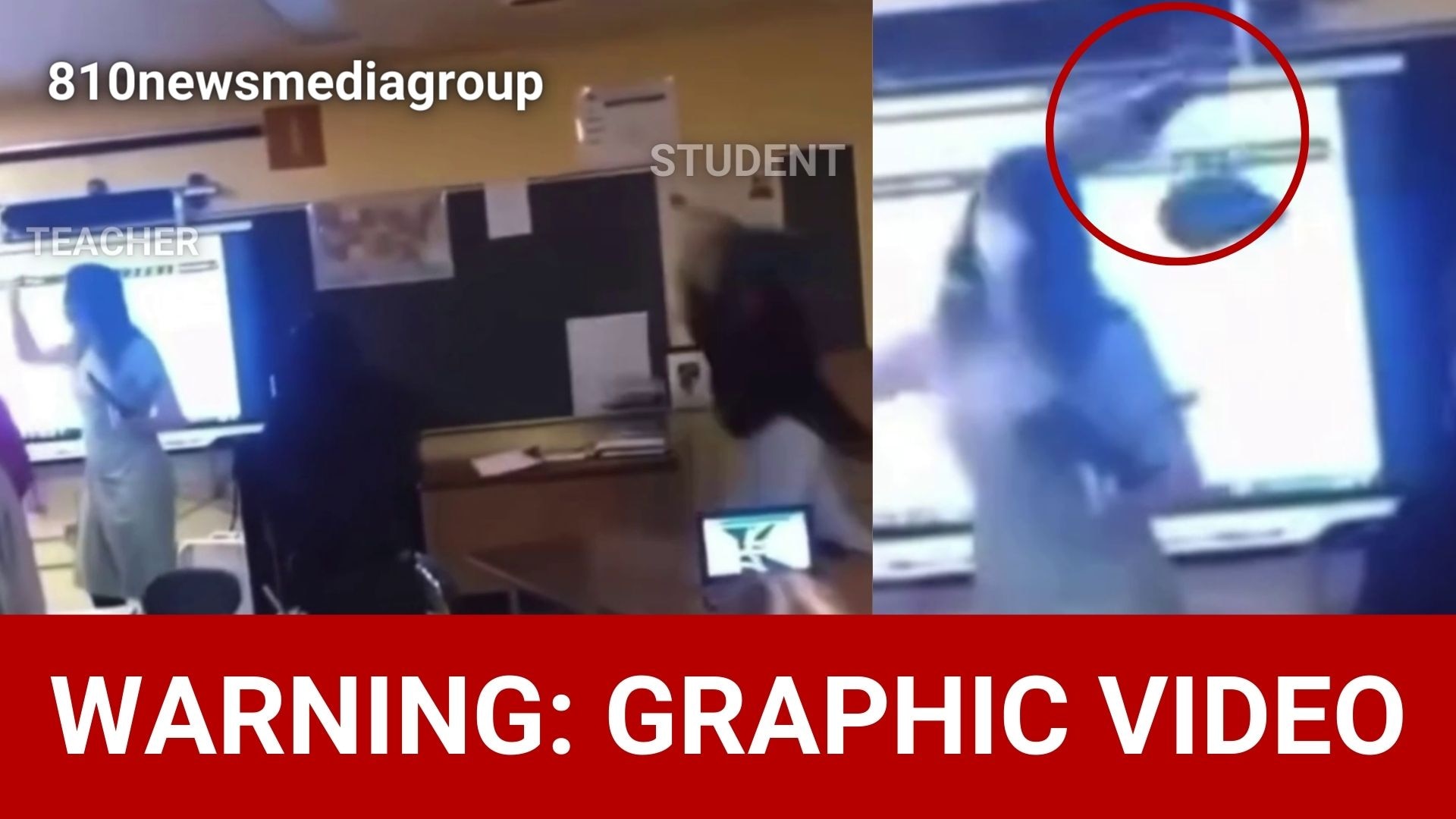
The Student Hit by Teacher Case Explained: Legal Rights, Liability, and Recourse
When a student is hit by a teacher, the incident triggers complex criminal, civil, and administrative legal frameworks. Such acts often violate school district policies, state child abuse laws, and constitutional protections against ex...
When a student is hit by a teacher, the incident triggers complex criminal, civil, and administrative legal frameworks. Such acts often violate school district policies, state child abuse laws, and constitutional protections against excessive force. Victims and families can pursue criminal assault charges, civil personal injury lawsuits against the educator and school district, and administrative license revocations.
Contents
Disclaimer: This article provides general legal information and educational context regarding school misconduct and tort law. It does not constitute formal legal advice. Individuals involved in school injury incidents should consult a licensed attorney in their jurisdiction.
Understanding Legal Classifications: Assault, Battery, and Child Abuse
When physical force is used against a student in an educational environment, courts and law enforcement evaluate the conduct across three primary legal categories: criminal battery, civil torts, and child abuse or neglect. The distinction between lawful disciplinary intervention and illegal physical violence depends heavily on state statutory definitions, school board policies, and the specific circumstances of the incident.
- PHYSICAL INCIDENT IN SCHOOL
- CRIMINAL CHARGES: Assault, Battery, Child Abuse
- CIVIL TORTS: Battery, IIED, District Negligence
- ADMINISTRATIVE: License Revocation, Termination
Civil Battery vs. Criminal Battery in Schools
In legal terms, battery is the intentional, unpermitted physical contact with another person that is harmful or offensive. In civil court, a student (through a parent or guardian) can sue an educator for civil battery to recover monetary damages for medical expenses, psychological counseling, and pain and suffering.
In contrast, criminal battery or assault involves state-prosecuted criminal charges. For a prosecutor to secure a criminal conviction, they must prove beyond a reasonable doubt that the teacher intentionally exerted unlawful physical force against the student without legal justification.
Corporal Punishment Laws vs. Unlawful Force
Historically, common law allowed teachers to stand in loco parentis (in the place of a parent), granting them limited authority to administer reasonable physical discipline. However, modern legislation has drastically altered this doctrine:
- Banned Jurisdictions: The vast majority of U.S. states and international jurisdictions have completely outlawed corporal punishment in public schools by statute or administrative regulation.
- Permissive Jurisdictions: In states where corporal punishment remains technically legal in public schools, statutes strictly limit how and when it can be administered—typically requiring advance parental consent, specific instruments (such as a wooden paddle), adult witnesses, and strict documentation.
- Unlawful Striking: Striking a student out of anger, slapping, punching, shoving, or using force in response to verbal disrespect falls entirely outside the scope of lawful corporal punishment. Such acts constitute physical assault regardless of state corporal punishment statutes.
Constitutional Protections under 42 U.S.C. § 1983
When a physical strike occurs in a public school, it can constitute a federal civil rights violation under 42 U.S.C. § 1983. Under the Fourteenth Amendment's Substantive Due Process Clause, students possess a constitutional right to bodily integrity free from unjustified, severe physical abuse by state actors (including public school personnel).
To prove a constitutional violation under Section 1983, plaintiffs must typically demonstrate that the teacher's conduct was so egregious and arbitrary that it "shocks the conscience," exceeding ordinary common-law tort liability.
Criminal vs. Civil Liability in Teacher-Student Assault Cases
Legal proceedings following an incident where a teacher hits a student generally bifurcate into criminal prosecution and civil litigation. These proceedings run on separate tracks, involve different burdens of proof, and seek distinct remedies.
| Criminal Prosecution | Civil Personal Injury Lawsuit |
|---|---|
| Brought by State Prosecutor | Brought by Student / Parents |
| Standard: Beyond Reasonable | Standard: Preponderance of Evidence |
| Remedy: Jail, Fines, Probation | Remedy: Monetary Damages, Policy Reform |
Criminal Penalties for Educators
If local law enforcement or child protective services find probable cause that a physical assault occurred, the local district attorney or state prosecutor may file formal criminal charges. Depending on the severity of physical injury, the child's age, and the presence of weapons or severe force, charges can range from:
- Misdemeanor Assault or Battery: Applicable in cases involving non-severe striking, slaps, or shoves that leave minor marks or no permanent physical injury.
- Felony Child Abuse or Aggravated Battery: Applicable when the strike causes bodily harm, fractured bones, concussions, or substantial emotional distress, or when committed against young or vulnerable children.
- Endangering the Welfare of a Child: Charged when an educator's actions intentionally expose a minor to physical or moral danger.
Civil Lawsuits and Damages
In civil litigation, the burden of proof is lower—a "preponderance of the evidence" (meaning it is more likely than not that the event occurred as claimed). Plaintiffs can seek compensatory and, in extreme cases, punitive damages:
- Economic Damages: Coverage for emergency room visits, medical treatment, pediatric neurological evaluations, ongoing psychotherapy, and tutoring costs if the child must transfer schools.
- Non-Economic Damages: Compensation for severe emotional distress, pain and suffering, trauma, anxiety, and post-traumatic stress disorder (PTSD).
- Punitive Damages: Awarded against individual educators (and rarely public entities, depending on state law) to punish malice, gross negligence, or willful disregard for student safety.
School District Duties and Vicarious Liability
A central issue in teacher hitting cases is determining whether the school district itself shares financial and legal liability for the employee's misconduct.
Respondeat Superior and Scope of Employment
Under the doctrine of respondeat superior, an employer is vicariously liable for the negligent or wrongful acts of its employees performed within the "scope of employment." However, school districts frequently argue that an intentional physical assault by a teacher is an independent, unauthorized act that falls entirely outside the scope of employment.
To hold a school district directly responsible, courts look for direct institutional negligence, including:
- Negligent Hiring: Failing to conduct mandatory criminal background checks or ignoring past records of violent behavior.
- Negligent Supervision and Retention: Retaining a teacher despite prior documented complaints of physical aggression, verbal abuse, or uncontrolled temper in the classroom.
- Failure to Train: Neglecting to train staff in de-escalation techniques, physical restraint protocols, and crisis intervention.
Qualified Immunity and Public Entity Defenses
Public school districts and government-employed educators often assert sovereign immunity or qualified immunity. Qualified immunity protects government officials from civil liability unless their conduct violates clearly established statutory or constitutional rights of which a reasonable person would have known.
Courts routinely hold that a public school teacher has no qualified immunity defense when intentionally striking or physically abusing a non-threatening student, as the constitutional right to bodily integrity in public schools is clearly established under federal law.
Key Judicial Standards and Legal Precedents
Federal and state jurisprudence has established clear benchmarks for evaluating physical force in academic settings.
- KEY JUDICIAL PRECEDENTS
- Ingraham v. Wright (1977): Eighth Amendment does not apply to corporal punishment, but Fourteenth Amendment due process and common-law torts apply.
- Hall v. Tawney (1980): Established constitutional protection against brutal physical force that "shocks the conscience" under 14th Amendment.
- Neal v. Fulton County Board of Education (2000): Confirmed excessive force causing severe injury violates substantive due process rights.
In the landmark decision Ingraham v. Wright, 430 U.S. 651 (1977), the U.S. Supreme Court ruled that the Eighth Amendment's prohibition against cruel and unusual punishment applies only to convicted criminals, not public school students. However, the Court explicitly affirmed that traditional common-law remedies (civil tort suits and criminal charges) remain available to students subjected to excessive force, and that Fourteenth Amendment procedural due process protections apply.
Subsequent federal circuit court decisions, such as Hall v. Tawney (627 F.2d 607) and Neal v. Fulton County Board of Education (229 F.3d 1069), clarified that when an educator's physical force is intentionally inflicted, excessive, and causes severe injury, it violates a student's substantive due process rights under the Fourteenth Amendment.
Legal Categories, Standards, and Remedies Comparison
The following matrix compares the legal avenues, evidentiary standards, responsible parties, and potential remedies in cases where a teacher strikes a student:
| Legal Category | Evidentiary Standard | Primary Responsible Party | Potential Remedies / Outcomes |
|---|---|---|---|
| Criminal Battery / Assault | Beyond a Reasonable Doubt | Individual Educator | Incarceration, criminal probation, fines, mandatory anger management, criminal record |
| Civil Personal Injury (Tort) | Preponderance of the Evidence | Educator and/or School District | Monetary compensation for medical costs, therapy, pain and suffering, emotional distress |
| Federal Civil Rights (§ 1983) | Preponderance of Evidence ("Shocks the Conscience") | Educator (Individual Capacity) / District (Policy/Custom) | Federal monetary damages, attorney fee recovery, injunctive district policy changes |
| Administrative Licensing Action | Clear and Convincing / Preponderance (State Dependent) | Individual Educator | Mandatory teaching license suspension, permanent credential revocation, employment termination |
| Title VI / Title IX Claims | Preponderance of the Evidence | School District / Educational Institution | Loss of federal funding for institution, mandatory civil rights remediation, financial damages |
Step-by-Step Action Plan for Injured Students and Families
When an physical incident occurs on school grounds, taking immediate, deliberate action protects the child's health, safety, and legal rights.
- IMMEDIATE CARE: Medical evaluation & psychological support
- DOCUMENT EVIDENCE: Photos, witness contact, personal narrative
- OFFICIAL REPORTING: Law enforcement, CPS, written school report
- STATUTORY NOTICE: Formal Notice of Claim (Strict 60–180 day limit)
- LEGAL ACTION: Civil tort claims & administrative follow-up
1. Seek Immediate Medical and Psychological Evaluation
Even if physical injuries appear minor, a comprehensive medical examination by a qualified physician or emergency room is essential. Medical records provide objective, contemporaneous evidence linking physical trauma (bruising, contusions, concussions) to the date and time of the incident. In addition, connect the child with a licensed pediatric psychologist to document acute emotional trauma.
2. Preserve All Physical and Digital Evidence
- Take clear, high-resolution photographs of any physical injuries, bruises, marks, or torn clothing immediately, and continue photographing bruises over subsequent days as they develop.
- Write a detailed chronologically ordered journal of events while memories are fresh, noting the time, location, classroom number, witness names, and exact statements made before and after the strike.
- Request and store copies of any text messages, emails, or voicemail communications from school administrators.
3. File Formal Reports with External Authorities
Do not rely solely on internal school investigations:
- Law Enforcement: File a formal report with local police or the sheriff's department to initiate an independent criminal investigation.
- Child Protective Services (CPS): Report the incident to state child welfare authorities. Teachers and school staff are mandated reporters; administrative attempts to handle physical abuse internally without reporting may violate state law.
4. Adhere to Strict Tort Claim Notice Deadlines
Suing a public entity (such as a public school district) requires filing a formal administrative notice—often called a Notice of Claim or Government Tort Claim—well before filing a lawsuit in court. State statutes typically impose extremely short deadlines for submitting a Notice of Claim against a public entity, often ranging between 60 days to 180 days from the date of the incident. Missing this administrative deadline permanently bars the student from recovering financial compensation from the school district.
5. Retain Qualified Legal Representation
Consult an experienced personal injury attorney or civil rights lawyer who specializes in education law and municipal liability. An attorney can issue spoliation letters to prevent the school from deleting classroom video surveillance footage, handle communications with insurance adjusters, and prepare federal or state court filings.
Frequently Asked Questions
Can a teacher hit a student in self-defense?
Yes, in limited circumstances. Under general common-law principles and specific state education codes, an educator may use reasonable physical force to defend themselves or another student from imminent physical harm, or to break up an active physical fight between students. However, the force used must be strictly proportional to the threat. Once the threat is neutralized, any additional physical force, striking, or punitive hitting becomes unlawful battery.
What is the difference between lawful corporal punishment and illegal assault?
Lawful corporal punishment—where explicitly permitted by state law and local school board policy—is administered under strict procedural guidelines (e.g., using a specified paddle, witnessed by another staff member, documented in administrative logs, and administered without anger). Illegal assault involves spontaneous physical violence, striking with hands or fists, slapping, hitting the head or face, or applying force intended to cause pain, injury, or emotional humiliation out of anger or frustration.
How long do parents have to file a lawsuit against a public school district?
The deadline to file a lawsuit against a public school district depends on state sovereign immunity laws. While standard personal injury statutes of limitations for minors may be paused until they reach adulthood, public entity notification requirements are not paused. Most jurisdictions require a formal "Notice of Intent to Sue" or "Notice of Claim" to be served on the school district within 60 to 180 days of the incident. Failure to file this notice within the statutory deadline usually waives all claims against the district.
Can a school district be sued if they knew the teacher had a history of aggression?
Yes. If a school district retained or supervised an educator despite having prior knowledge—such as past disciplinary records, parental complaints, or administrative write-ups—that the teacher exhibited uncontrolled aggression or physical misconduct toward students, the district can be held directly liable for negligent hiring, supervision, or retention.
What happens to a teacher's teaching license after striking a student?
When a teacher is investigated for striking a student, the school district typically places the educator on administrative leave pending investigation. If physical abuse or assault is substantiated, the state board of education or teacher credentialing commission initiates administrative disciplinary proceedings. Consequences include formal reprimands, mandatory suspension, or permanent revocation of the educator's teaching certificate, rendering them ineligible to teach nationwide.
Strategic Recommendations for Affected Families
If a student has been physically struck by an educator, follow these operational priorities:
- Prioritize Child Safety and Mental Health: Remove the student from the immediate educational environment if safety cannot be guaranteed. Request an immediate transfer to another classroom or school within the district.
- Secure Surveillance Video: Public schools frequently overwrite security camera footage after 14 to 30 days. Have an attorney immediately draft a formal legal demand letter (spoliation notice) requiring the school district to preserve all video, audio, and digital logs related to the incident.
- Avoid Extended Statements to School Risk Managers: School district legal counsel and insurance adjusters evaluate claims to protect the institution's financial liability. Limit written communications with school officials to factual injury notifications until legal counsel has been retained.
Image Gallery