The Role of Civil War Battle Photography: Documenting the Reality of Conflict
Civil War battle photography served as a transformative medium that stripped away the romanticized notions of 19th-century warfare, replacing them with a visceral, unyielding record of death and destruction. By utilizing the wet-plate...
Civil War battle photography served as a transformative medium that stripped away the romanticized notions of 19th-century warfare, replacing them with a visceral, unyielding record of death and destruction. By utilizing the wet-plate collodion process, photographers like Alexander Gardner and Mathew Brady brought the carnage of distant battlefields into the parlors of American citizens, fundamentally altering public perception and the future of photojournalism.
Contents
The Technological Foundation of Civil War Imagery
To understand the role of photography during the American Civil War, one must first recognize the extreme technical limitations of the era. Unlike the instantaneous digital capture available in 2026, 1860s photography was a cumbersome, chemical-intensive labor. The dominant technology was the wet-plate collodion process, which required photographers to coat a glass plate with chemicals, sensitize it in a darkroom, expose it while still wet, and develop it immediately.
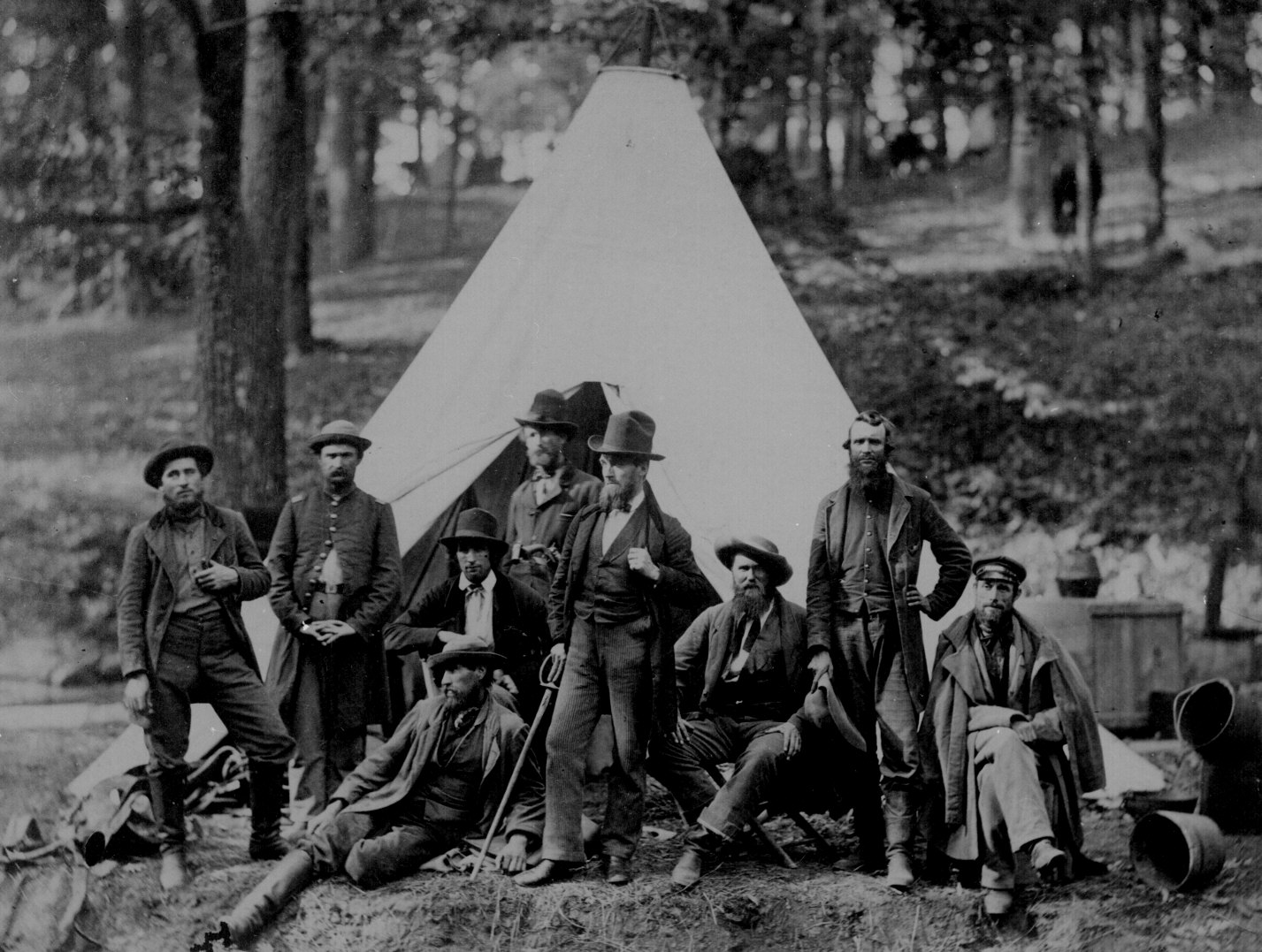
This process necessitated the use of "Traveling Darkrooms"—heavy, horse-drawn wagons filled with volatile chemicals like ether, alcohol, and silver nitrate. Because exposure times ranged from several seconds to minutes, it was physically impossible to capture "action shots" of active combat. Any movement during the exposure resulted in a ghostly blur. Consequently, the "battle photography" of the Civil War is almost entirely composed of static subjects: landscapes, encampments, posed portraits, and, most famously, the grisly aftermath of engagement.
The role of the photographer was as much that of a chemist and laborer as it was an artist. They navigated treacherous terrain, often under the threat of sniper fire or disease, to set up their equipment. The resulting glass plate negatives provided a level of detail that woodcut illustrations—the standard for news at the time—could never replicate. This detail allowed viewers to see the individual buttons on a uniform or the bloated features of a fallen soldier, bridging the gap between the front lines and the home front.
The Shift from Romanticism to Realism
Prior to 1861, the American public’s understanding of war was shaped by heroic paintings and lithographs. These artworks often depicted generals on rearing horses, leading tidily uniformed troops into glorious, bloodless charges. Civil War photography shattered this illusion.
The turning point occurred in October 1862, when Mathew Brady opened an exhibition titled "The Dead of Antietam" in his New York City gallery. While Brady himself rarely took field photographs by this point—employing a staff of skilled operators instead—his name became synonymous with the medium. For the first time, civilians saw the bloated, twisted bodies of soldiers left on the field.
The New York Times famously remarked on the exhibition, stating that Brady had "brought home to us the terrible reality and earnestness of war." This shift in the role of photography moved it from a tool of portraiture to a tool of social and political influence. The images did not just record history; they forced a nation to confront the human cost of its ideological divisions.
Key Photographers and Their Contributions
The documentation of the war was not the work of a single individual but a loose network of commercial photographers and government-contracted operators. Each contributed a different perspective to the visual record of the conflict.
| Photographer | Primary Role/Contribution | Notable Work |
|---|---|---|
| Mathew Brady | Entrepreneur and organizer; popularized war photography as a commercial and historical endeavor. | The Dead of Antietam (Exhibition) |
| Alexander Gardner | Former Brady employee; specialized in post-battle scenes and the execution of the Lincoln conspirators. | Gardner's Photographic Sketch Book of the War |
| Timothy O’Sullivan | Noted for his stark, unblinking landscapes of death and the Western territories post-war. | A Harvest of Death (Gettysburg) |
| George N. Barnard | Documented General Sherman’s "March to the Sea" and the destruction of Atlanta. | Photographic Views of Sherman's Campaign |
| Andrew J. Russell | The only photographer employed by the U.S. Army (U.S. Military Railroads). | Documentation of engineering and transport. |
Alexander Gardner, in particular, realized that photography could be curated to tell a specific narrative. After splitting from Brady over credit disputes, Gardner published his two-volume Photographic Sketch Book of the War in 1866. This work was one of the first instances where photographs were paired with descriptive text to guide the viewer’s emotional and intellectual response, a precursor to modern long-form photojournalism.
Ethical Ambiguity and the Staging of History
While the role of Civil War photography was to provide a "truthful" account, the medium was not without its deceptions. The desire to create a compelling "story" sometimes overrode the commitment to objective documentation.
One of the most famous examples of this is Gardner’s "The Home of a Rebel Sharpshooter," taken at Gettysburg. Historical analysis of the glass plates revealed that Gardner and his assistants moved the body of a Confederate soldier several dozen yards to a more "photogenic" stone outcropping. They even placed a prop rifle against the wall to complete the scene.
In the 1860s, the concept of journalistic ethics was in its infancy. For Gardner and his contemporaries, "truth" was not necessarily found in the exact placement of a body, but in the general atmosphere of tragedy they sought to convey. However, by 2026 standards, these actions are viewed as a significant manipulation of historical evidence. This duality—photography as both a factual record and a constructed narrative—remains one of the most studied aspects of the era's visual culture.
Photography as a Tool for Military Intelligence and Logistics
Beyond the public-facing images of death, photography played a vital role in the logistical and tactical operations of the Union and Confederate armies. Capturing topographical data became essential for planning movements and fortifications.
- Topographical Mapping: Photographers captured panoramic views of terrain, which were then used by engineers to identify high ground and natural defenses.
- Infrastructure Documentation: Andrew J. Russell and others documented the construction and destruction of railroads and bridges. These images were used by the War Department to assess the efficiency of supply lines.
- Medical Records: The Army Medical Museum (now the National Museum of Health and Medicine) used photography to document wounds and surgical outcomes. These images helped surgeons share techniques and understand the devastating effects of the Minié ball, a soft-lead bullet that shattered bone upon impact.
- Identification: Photography was used to identify soldiers and, later, to document the faces of those who died in prisoner-of-war camps like Andersonville, helping families find closure.
The Long-term Impact on National Memory and Preservation
The role of Civil War photography did not end with the Appomattox surrender in 1865. In the decades that followed, the glass plates themselves became a contentious and fragile historical resource. Many plates were sold for their glass content and used in greenhouses, where the sun eventually bleached the images into nothingness.
It was not until the late 19th and early 20th centuries that the historical value of these archives was fully realized. Organizations like the Library of Congress and the National Archives began the massive task of acquiring and preserving what remained of the Brady and Gardner collections.
As of 2026, these images have been digitized in ultra-high resolution, allowing historians to zoom in on background details—a scrap of newspaper on the ground, the expression of a teamster in the distance—that were invisible to the original photographers. These photographs serve as the primary visual evidence for modern reenactors, filmmakers, and historians, ensuring that the 19th-century conflict remains a vivid part of the American consciousness.
Comparison: Woodcuts vs. Photographs in 1860s Media
| Feature | Woodcut Illustrations (e.g., Harper's Weekly) | Photographs (e.g., Brady/Gardner) |
|---|---|---|
| Speed of Production | Rapid; artists could sketch and engravers could carve quickly. | Slow; required chemical processing and physical transport of plates. |
| Subject Matter | Can depict active combat, movement, and heroism. | Restricted to still subjects, landscapes, and the dead. |
| Public Trust | Viewed as interpretations or "artistic renditions." | Viewed as literal, undeniable truth and "evidence." |
| Portability | Easily printed in mass-market newspapers. | Difficult to reproduce; often sold as expensive individual prints or books. |
Common Questions Regarding Civil War Photography
Why are there no photos of actual fighting during the Civil War?
The wet-plate collodion process used during the 1860s required exposure times of 5 to 30 seconds (or more in low light). Because combat involves rapid movement, any attempt to photograph a live battle would result in a blurred, unrecognizable image. Photographers were also limited by the need to develop plates immediately in a mobile darkroom, which was dangerous to position in the middle of active fire.
Did the soldiers themselves carry cameras?
Generally, no. Cameras were large, expensive, and required significant chemical expertise. While some soldiers had "tintypes" (small photos on metal) taken by camp-following photographers to send home to their families, the average soldier did not possess the means to take their own photographs.
How much did a photograph cost during the Civil War?
For a soldier, a small "carte-de-visite" or tintype portrait usually cost between 25 cents and one dollar—roughly a day or two's pay for a private. Larger landscape prints or "albumen prints" for the public were much more expensive, often sold in galleries for several dollars, which limited their ownership to the middle and upper classes.
How many Civil War photographs exist today?
Estimates suggest that tens of thousands of glass plate negatives were produced during the war. While many were lost to neglect or repurposed for their glass, the Library of Congress alone holds over 7,000 glass plate negatives from the Mathew Brady collection, and thousands more exist in private and institutional archives.
Summary of Next Steps for Researchers
For those looking to explore the role of Civil War photography further, the most effective next action is to access the digital archives of the Library of Congress. Their "Civil War Glass Negatives and Related Prints" collection provides free, high-resolution access to the original plates.
Researchers should also consult the Official Records of the Union and Confederate Armies to cross-reference photographic dates with military reports. This allows for a deeper understanding of the "why" behind specific images, such as why a certain bridge was photographed or why a photographer was present at a specific railway junction. By 2026, many of these resources are linked via metadata, making it easier than ever to reconstruct the visual timeline of the war.
Image Gallery