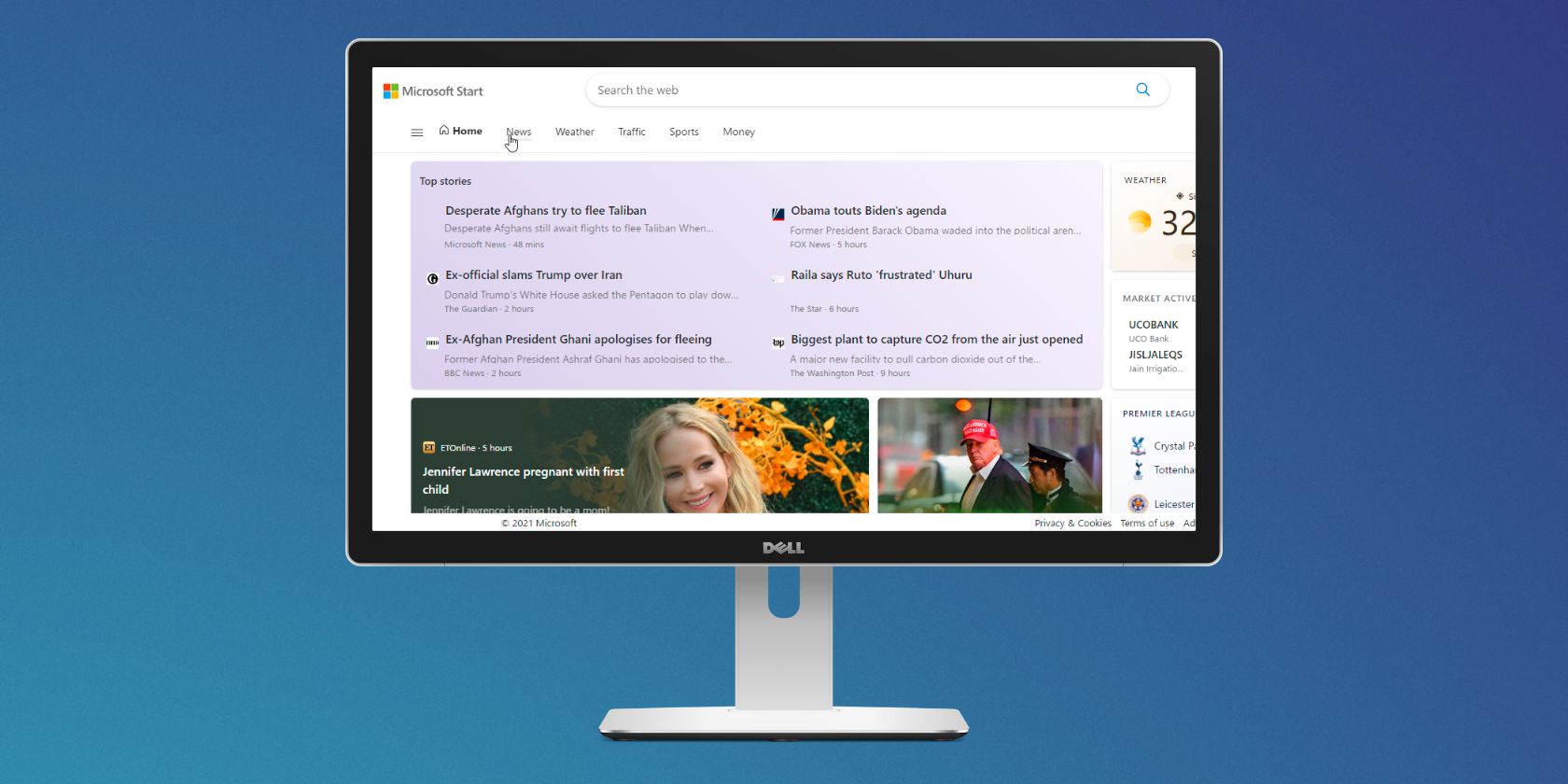
Engineering the Ultimate Personalized News Feed for Users in 2026
A personalized news feed for users is a dynamic content delivery system that utilizes machine learning algorithms to curate and rank information based on individual preferences, behaviors, and historical interactions. By filtering thro...
A personalized news feed for users is a dynamic content delivery system that utilizes machine learning algorithms to curate and rank information based on individual preferences, behaviors, and historical interactions. By filtering through massive datasets in real-time, these feeds ensure that every user receives a unique, high-relevance stream of articles, videos, or social updates tailored to their specific interests.
Contents
The digital landscape of 2026 is defined by an overwhelming abundance of information. For platform developers and content providers, the challenge is no longer just sourcing content, but effectively surfacing it. A personalized news feed serves as the primary interface between the user and the vast ocean of available data, acting as an automated editor that understands what the user needs before they even search for it. Implementing such a system requires a sophisticated blend of data engineering, algorithmic design, and user experience strategy.
The Architecture of Modern Personalization Engines
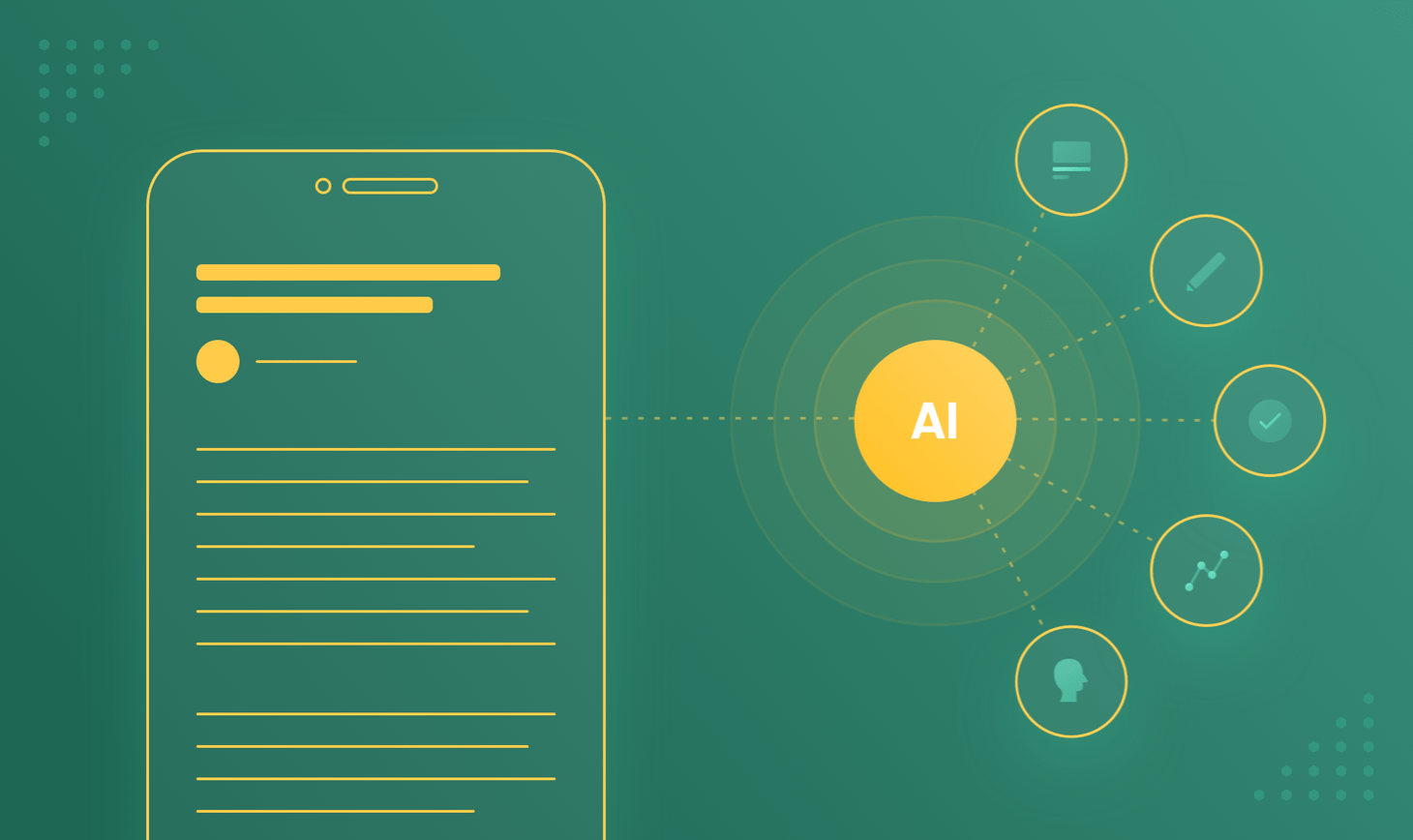
To build a robust personalized news feed for users, one must understand the multi-layered architecture that powers recommendation systems. By 2026, the transition from simple keyword matching to deep semantic understanding is complete. Modern systems are built on four primary pillars: data ingestion, embedding generation, ranking models, and the delivery interface.
Data Ingestion and Signal Processing
The first step in personalization is gathering signals. These signals are categorized into explicit and implicit data. Explicit data includes direct user actions like "following" a topic, "liking" a post, or setting specific interest categories in a profile. Implicit data, which is often more predictive of actual interest, includes dwell time (how long a user stays on a page), scroll depth, and click-through rates.
In 2026, high-performance feeds also incorporate "contextual signals." These include the user’s current location, the time of day, the device type, and even current global trends. For example, a news feed should prioritize financial markets in the morning for a professional user but might lean toward long-form lifestyle content or evening entertainment as the day winds down.
Vector Embeddings and Semantic Search
The core of personalization now relies on vector embeddings. Instead of matching words like "Apple" (the fruit) and "Apple" (the company), modern systems convert content and user profiles into high-dimensional mathematical vectors. This allows the system to calculate the "distance" between a user’s interests and a piece of content. If the vectors are close together in this mathematical space, the content is deemed relevant. This approach, often powered by vector databases like Milvus or Pinecone, ensures that a user interested in "sustainable energy" will also see content about "photovoltaics" even if the specific keyword "sustainable" is missing.
Algorithmic Approaches to Content Curation
Choosing the right algorithmic strategy is critical for the success of a personalized news feed. Most enterprise-level platforms use a hybrid approach to mitigate the weaknesses of individual methods.
Collaborative Filtering
Collaborative filtering operates on the principle of "wisdom of the crowd." It identifies patterns between users. If User A and User B both enjoyed articles on quantum computing and space exploration, and User B recently read a new piece on fusion energy, the system will recommend that fusion energy piece to User A.
- Pros: It discovers new interests for the user that they might not have explicitly stated.
- Cons: The "cold start" problem—it is difficult to recommend content to a new user with no history, or to recommend a brand-new article that no one has read yet.
Content-Based Filtering
This method focuses on the properties of the items themselves. If a user frequently reads about the Premier League, the system looks for other articles tagged with "soccer," "UK sports," or specific team names.
- Pros: It does not require a large user base to function and works well for niche interests.
- Cons: It can lead to "over-specialization," where the user only sees more of the same, creating a repetitive experience.
Hybrid AI Models and LLM Integration
By 2026, Large Language Models (LLMs) have been integrated into the ranking pipeline to provide "reasoning" capabilities. These models can summarize why a piece of content is relevant to a user and filter out clickbait by analyzing the actual substance of the text against the user’s demonstrated intellectual level and preferences. Hybrid models combine collaborative signals with deep content analysis to provide a balanced feed that is both familiar and surprising.
Technical Comparison of Feed Methodologies
| Feature | Collaborative Filtering | Content-Based Filtering | Hybrid AI (2026 Standard) |
|---|---|---|---|
| Primary Driver | User-to-User similarity | Item-to-Item similarity | Multimodal embeddings |
| Data Requirement | High (needs many users) | Medium (needs metadata) | High (needs compute power) |
| Discovery Potential | Excellent | Limited | Optimized for serendipity |
| Computational Cost | Moderate | Low | High |
| Privacy Profile | Requires cross-user data | Privacy-friendly | Requires robust encryption |
Solving the "Filter Bubble" and Ethical Curation
A significant challenge in providing a personalized news feed for users is the "filter bubble." When an algorithm becomes too efficient at showing users what they want to see, it may inadvertently hide dissenting viewpoints or important but unrelated news. This can lead to radicalization or a narrow worldview.
To combat this, modern feeds incorporate "Exploration vs. Exploitation" logic.
- Exploitation: The algorithm shows content it is 90% sure the user will like based on past behavior.
- Exploration: The algorithm injects "serendipitous" content—items outside the user’s usual bubble—to test for new interests and ensure a diverse information diet.
Furthermore, ethical curation in 2026 involves transparency. High-quality platforms now provide "Why am I seeing this?" labels, allowing users to see which behaviors triggered a specific recommendation. This builds trust and allows users to manually tune their algorithms.
Data Privacy and Regulatory Compliance
In 2026, building a personalized news feed requires strict adherence to evolving data protection laws, such as the GDPR (General Data Protection Regulation) and the California Consumer Privacy Act (CCPA). Users now demand "Privacy by Design."
On-Device Processing
To minimize data exposure, many modern feeds utilize edge computing. Instead of sending every click back to a central server, the user’s profile is stored and updated locally on their smartphone or browser. The server sends a broad pool of content, and the final ranking happens on the device. This ensures that sensitive reading habits never leave the user's control.
Zero-Party Data Utilization
Rather than relying solely on "creepy" tracking, 2026's best feeds prioritize zero-party data. This is information that users intentionally and proactively share with a brand. This includes preference centers where users can toggle topics on or off, specify preferred sources, or set a "mood" for their feed (e.g., "Educational," "Quick Updates," or "Deep Dive").
Implementation Steps for Developers
If you are tasked with deploying a personalized news feed for users, follow this structured roadmap:
- Define the Content Schema: Ensure all incoming content is enriched with high-quality metadata and vector embeddings. Use automated tagging tools to categorize content at scale.
- Select a Vector Database: Choose a database capable of sub-millisecond similarity searches to ensure the feed feels instantaneous.
- Build the Scoring Function: Create a formula that weighs different factors. A common starting point is:
Score = (Relevance * Freshness) / Penalty_Factor. The penalty factor might include "seen state" (don't show the same thing twice) or "source diversity." - Implement Real-Time Updates: Use WebSockets or Server-Sent Events (SSE) to push new, highly relevant items to the top of the feed without requiring a page refresh.
- A/B Test the Algorithms: Constantly run experiments comparing different weights. Measure success not just by clicks, but by long-term retention and user satisfaction surveys.
Common Pitfalls to Avoid
Even with advanced technology, many personalized feeds fail due to poor strategic choices. Avoid these common mistakes:
- Over-Indexing on Recency: While news needs to be fresh, "breaking news" often lacks the depth of older, more evergreen content that might be more relevant to a user’s specific research interest.
- Ignoring Negative Signals: If a user quickly closes an article or clicks "Show me less of this," the algorithm must react instantly. Ignoring negative signals is the fastest way to annoy a user.
- The "Feedback Loop": If you only show a user sports news, they will only click on sports news, leading the algorithm to believe they only want sports news. Break the cycle with regular "exploratory" content.
Frequently Asked Questions
How does a personalized news feed handle breaking news?
Breaking news is typically handled through a "high-priority" override. When an event is flagged as a major global or local emergency by trusted editorial sources, the algorithm temporarily bypasses individual preference weights to ensure the user is informed of critical information, regardless of their usual reading habits.
Can users reset their personalized feed?
Yes. Most modern platforms provide a "reset" or "clear history" option. This wipes the user's behavioral profile and starts the learning process over from scratch, which is particularly useful if a user’s interests have shifted significantly or if their device was used by someone else.
Does personalization slow down the loading time of an app?
If implemented correctly using vector indexing and caching, the latency is negligible. Most of the heavy lifting (embedding and initial filtering) is done asynchronously. The final ranking of the top 50-100 items for a specific user happens in milliseconds.
What is the difference between a curated feed and a personalized feed?
A curated feed is managed by human editors who select stories for a general audience. A personalized news feed is managed by algorithms that select stories for a specific individual. Many top-tier publications in 2026 use a "Human-in-the-loop" model where editors select a pool of top stories, and the algorithm decides which of those stories best fit each user.
Future Outlook: The Role of Generative AI
As we move further into 2026, the role of a personalized news feed is shifting from "finding" content to "reformatting" it. Generative AI now allows feeds to summarize long articles into bullet points for users on the go, or to translate technical jargon into simpler language for non-experts. The feed of the future isn't just about which stories you see, but how those stories are presented to match your cognitive style and available time.
For organizations looking to increase user engagement, the path forward is clear: invest in a feed that respects user privacy, offers radical transparency, and provides a balance between the comfort of the familiar and the growth of the new.
Image Gallery