What is the Range of the Airbus A220? A Comprehensive Technical and Operational Analysis
The range of the Airbus A220 varies by model, with the A220-100 flying up to 3,450 nautical miles (6,390 kilometers) and the larger A220-300 extending up to 3,600 nautical miles (6,667 kilometers) under standard operational conditions....
The range of the Airbus A220 varies by model, with the A220-100 flying up to 3,450 nautical miles (6,390 kilometers) and the larger A220-300 extending up to 3,600 nautical miles (6,667 kilometers) under standard operational conditions.
Contents
Understanding the range capabilities of modern commercial aircraft requires looking beyond simple distance figures. For operators, manufacturers, and aviation enthusiasts alike, knowing the exact operational parameters of a narrowbody aircraft like the Airbus A220 determines route network planning, fleet allocation, and airline economic viability. Originally developed by Bombardier as the CSeries (comprising the CS100 and CS300) before being acquired and rebranded by Airbus, this clean-sheet narrowbody design revolutionized regional and short-to-medium-haul markets. Analyzing its operational reach involves evaluating maximum design limits, payload-range trade-offs, aerodynamic efficiencies, and real-world airline deployment scenarios.
Evolution and Design Philosophy of the Airbus A220 Family
To fully grasp the range capabilities of the Airbus A220, one must understand the clean-sheet design choices that enable its efficiency. Unlike many narrowbody competitors that represent evolutionary updates of older airframes, the A220 was engineered from the ground up during the 2000s and 2010s to optimize performance in the 100-to-150-seat market segment.
The airframe incorporates extensive usage of advanced advanced composite materials, particularly on the wings and rear fuselage, which significantly reduce the aircraft's empty operating weight. A lighter structure requires less thrust to lift and propel, conserving fuel over long distances. Furthermore, the aircraft is powered exclusively by Pratt & Whitney PW1500G geared turbofan engines. These engines decouple the fan speed from the turbine speed, allowing both components to operate at their optimal velocities. This mechanical arrangement yields double-digit reductions in fuel burn and carbon emissions compared to previous-generation engines, directly translating into extended operational range and superior fuel efficiency per seat mile.
Detailed Range Breakdown by Variant
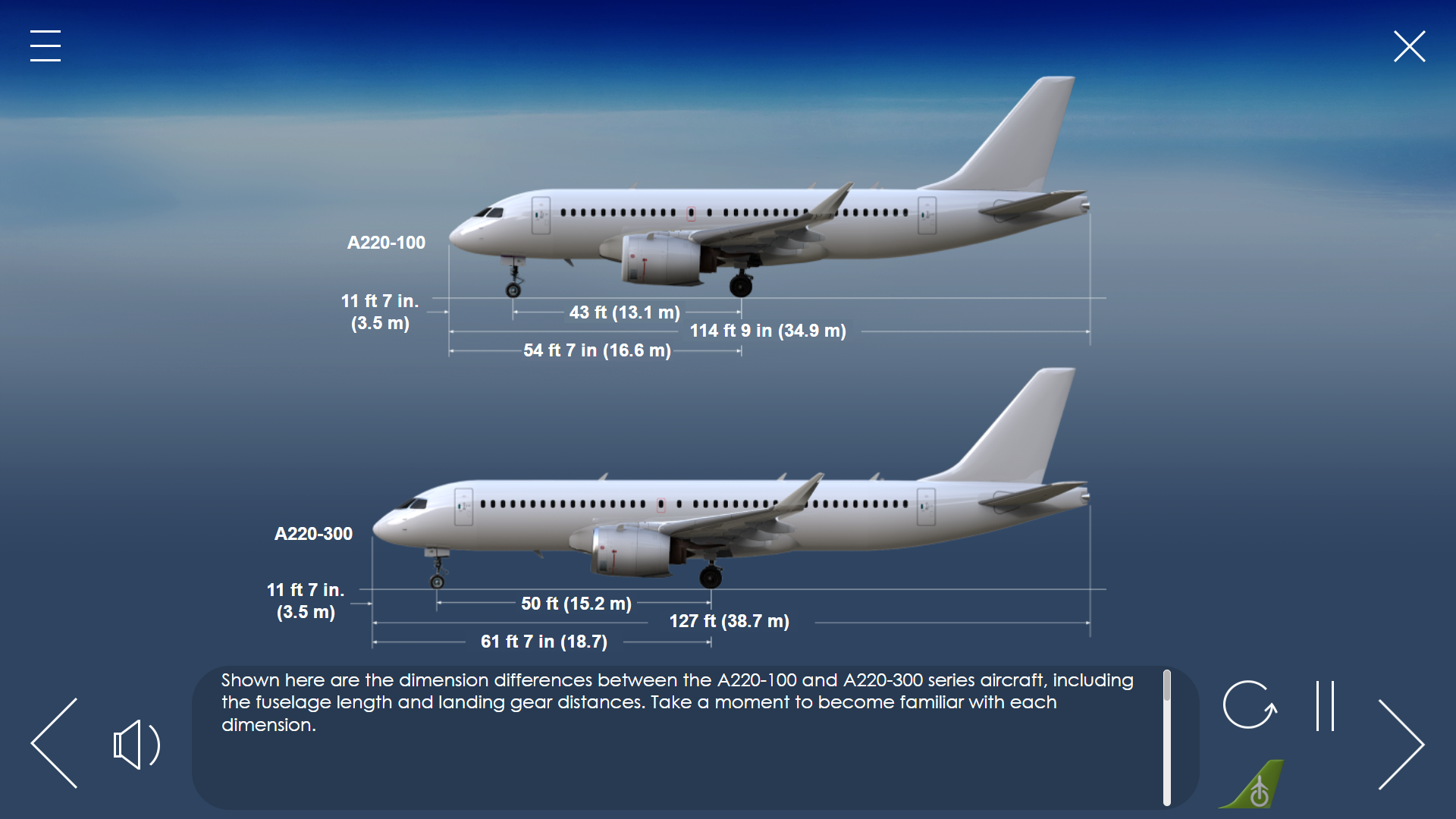
The Airbus A220 family consists of two distinct primary variants. While they share common systems, flight decks, and engine architectures, their physical dimensions, passenger capacities, and maximum take-off weights (MTOW) differ, leading to distinct performance envelopes.
Airbus A220-100 Range Specifications
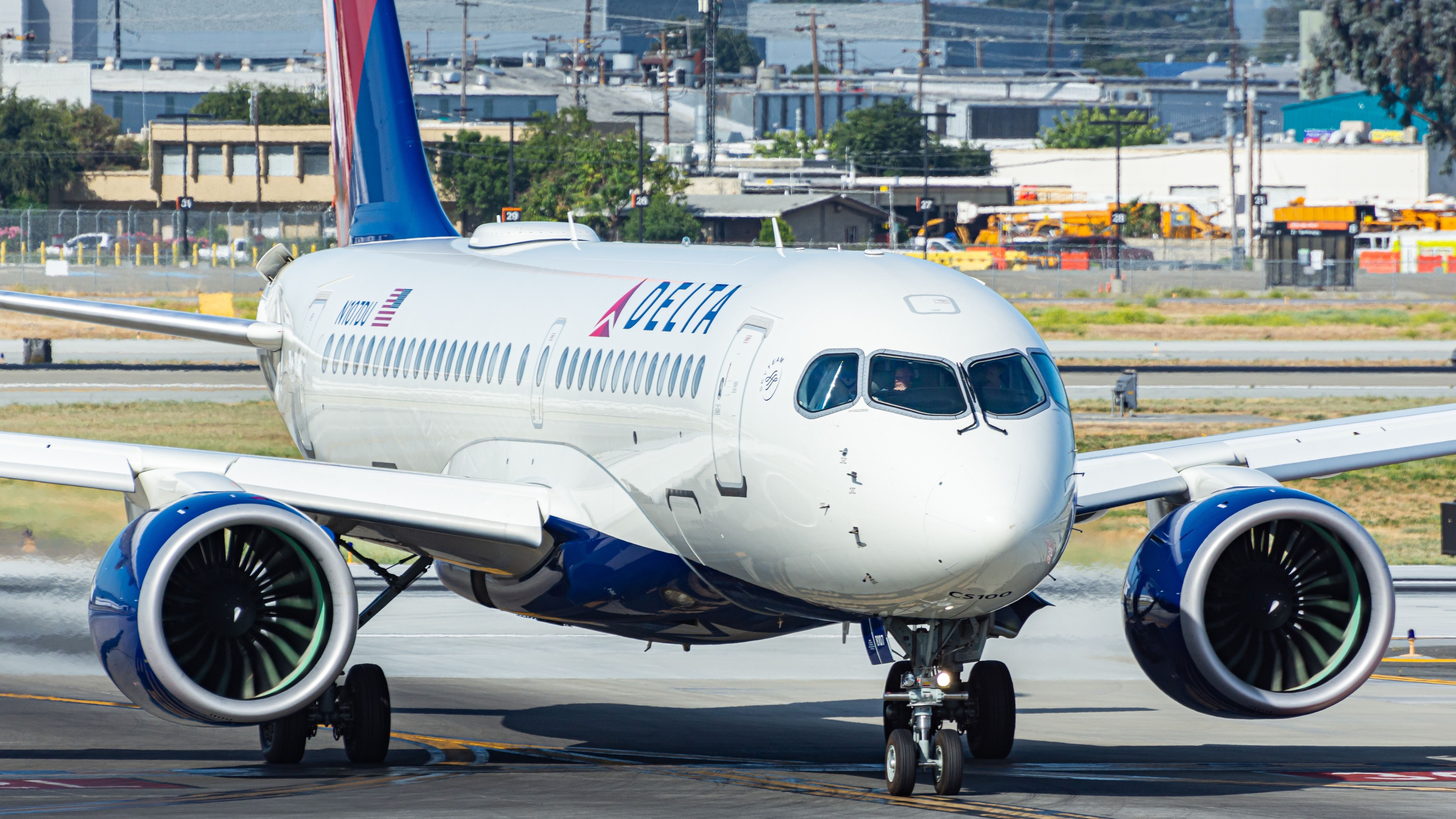
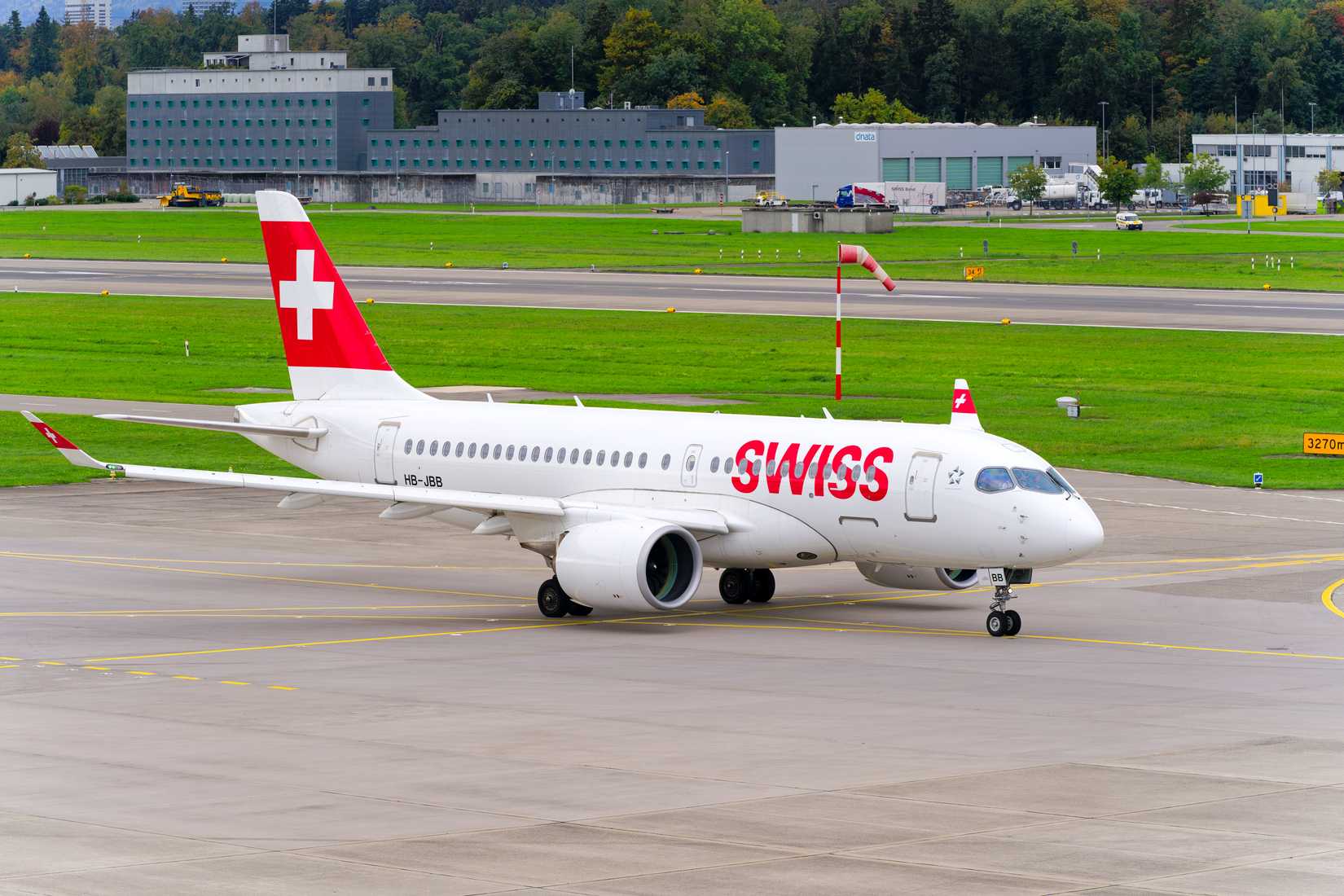
The smaller variant, the A220-100 (formerly the Bombardier CS100), typically seats between 100 and 135 passengers in a standard configuration.
- Standard Maximum Range: Up to 3,450 nautical miles (6,390 km).
- Target Market: Shorter regional routes, high-altitude or short-runway airports (such as London City Airport), and point-to-point niche markets that cannot economically sustain larger mainline jets.
Airbus A220-300 Range Specifications
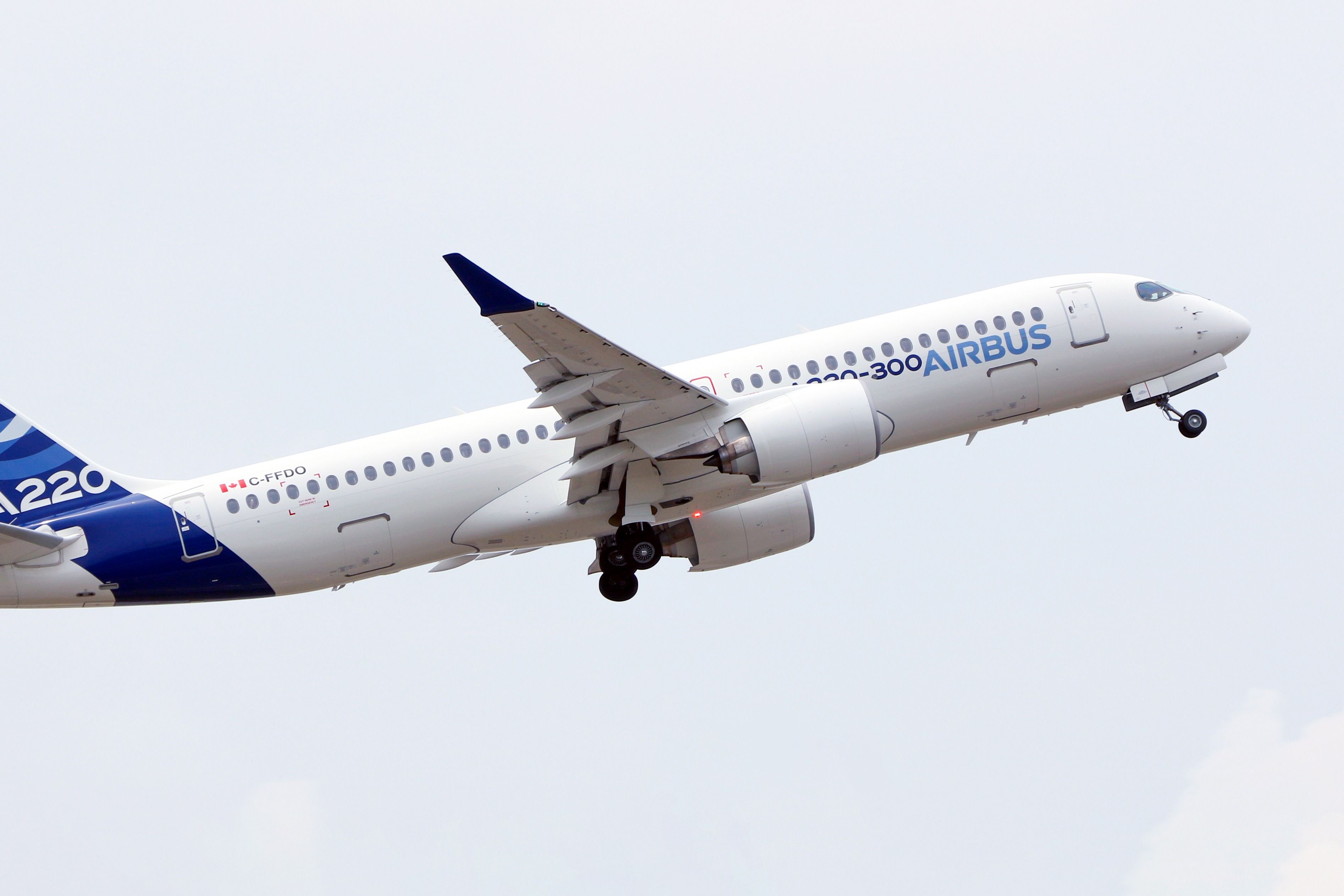
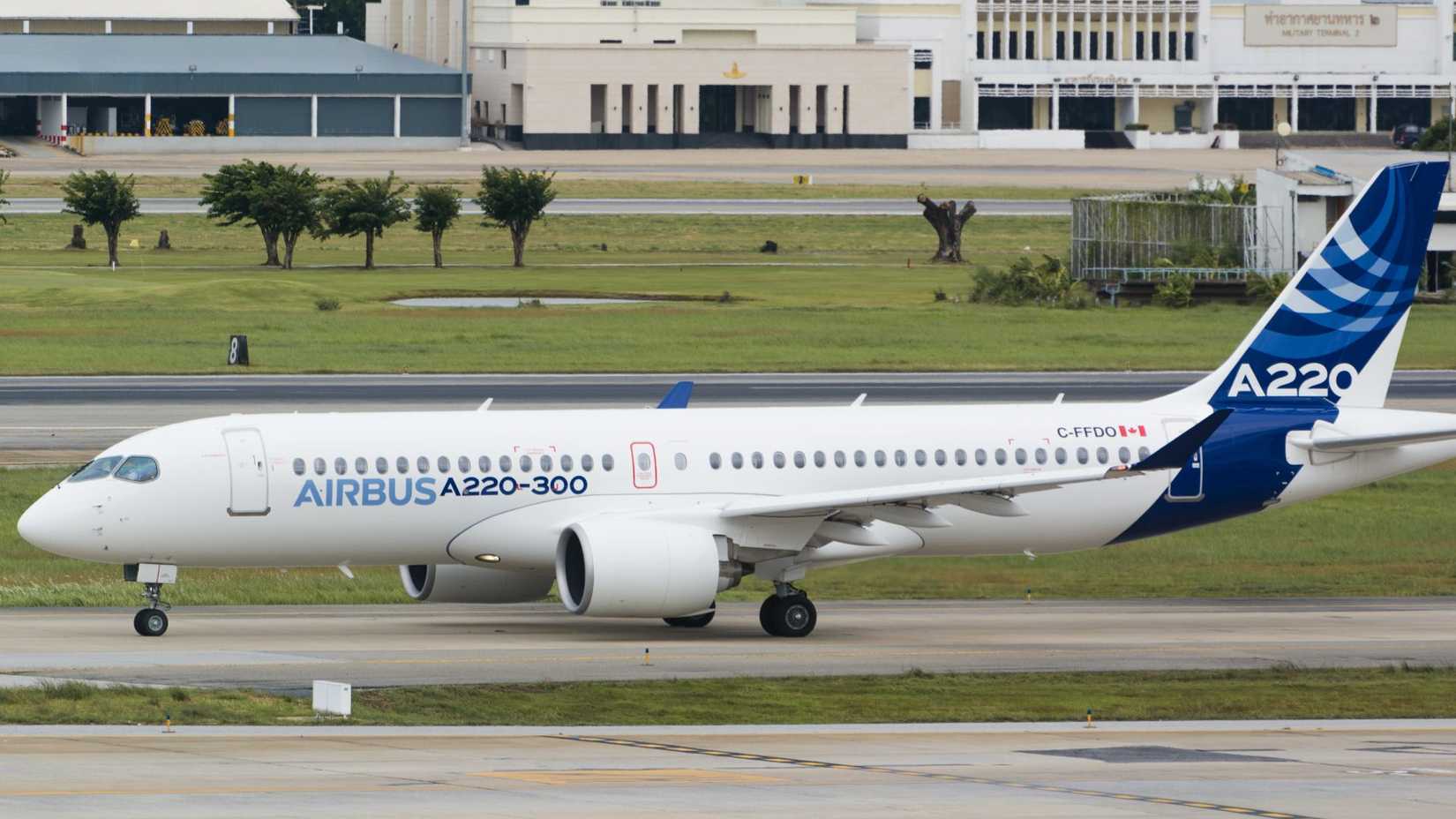
The larger variant, the A220-300 (formerly the Bombardier CS300), features a stretched fuselage accommodating between 120 and 160 passengers.
- Standard Maximum Range: Up to 3,600 nautical miles (6,667 km).
- Target Market: High-density domestic trunk routes and transcontinental operations. Despite carrying more payload, aerodynamic refinements and aerodynamic scaling allow the -300 variant to achieve a slightly higher maximum range envelope under specific loading conditions.
| Variant | Typical Seating Capacity | Maximum Fuel Capacity | Maximum Design Range | Primary Operational Niche |
|---|---|---|---|---|
| Airbus A220-100 | 100 – 135 seats | ~4,978 US gallons (18,844 L) | 3,450 nm (6,390 km) | Regional links, restrictive fields, premium point-to-point |
| Airbus A220-300 | 120 – 160 seats | ~4,978 US gallons (18,844 L) | 3,600 nm (6,667 km) | Transcontinental trunk routes, dense regional networks |
Payload-Range Trade-offs and Operational Variables
In commercial aviation, stated maximum range figures rarely translate directly to everyday route operations. The fundamental relationship between payload (passengers, baggage, and cargo) and fuel load dictates that as weight increases, maximum distance decreases.
The Weight-Distance Equation
An aircraft's maximum takeoff weight (MTOW) is a hard regulatory and structural limit. If an airline fills every seat of an A220-300 with passengers and baggage, the remaining weight allowance for fuel is restricted. Conversely, operating on a lighter payload profile allows carriers to uplift maximum fuel, stretching the aircraft to its outer range limits.
Environmental and Meteorological Factors
Real-world range is continuously modulated by external conditions:
- Headwinds: Transcontinental routes flying against prevailing jetstreams burn significantly more fuel, reducing practical range.
- Ambient Temperatures and Altitude: High-density altitude airports or hot-weather operations impose takeoff weight restrictions, indirectly affecting fuel capacity and achievable range.
- Air Traffic Control Routing: Indirect flight paths, holding patterns, and mandatory reserve fuel requirements mandated by aviation authorities (such as the FAA or EASA) reduce the usable fuel fraction dedicated to point-to-point travel.
ETOPS Certification and Trans-Oceanic Capabilities
One of the most consequential developments for the Airbus A220 family is its certification for Extended-range Twin-engine Operational Performance Standards (ETOPS). Regulatory approvals grant the aircraft ETOPS 180-minute capabilities, enabling airlines to fly long overwater sectors safely.
This capability has fundamentally shifted network planning for carriers in North America and Europe. Instead of being restricted strictly to domestic overland corridors, airlines can utilize the A220 to connect secondary and tertiary markets across the North Atlantic—such as connecting inland North American cities directly to European hubs—without relying on widebody aircraft. The combination of low trip costs and trans-oceanic range allows operators to test and maintain thin international routes profitably.
Comparative Analysis: A220 Versus Competing Single-Aisle Jets
To understand how the A220's range positions it within the global marketplace, it must be evaluated alongside competing narrowbody aircraft from Boeing and Airbus itself.
Airbus A220 vs. Airbus A320neo
While the A320neo is a larger aircraft seating up to 180–194 passengers with a range of approximately 3,300 to 3,500 nautical miles, the A220 targets a smaller capacity bracket with superior efficiency on shorter hops. However, the A220's maximum range actually matches or slightly exceeds the baseline A320neo in certain configurations, giving it exceptional flexibility for a smaller airframe.
Airbus A220 vs. Boeing 737 MAX 7
The Boeing 737 MAX 7 is the direct competitor to the A220-300 in terms of capacity. While the MAX 7 boasts a theoretical catalog range of up to 3,800 nautical miles, the A220 has secured a substantial head start in operational maturity, airline adoption, and passenger cabin preference, particularly regarding window size and seat width.
Abu Dhabi Department of Transport and global civil aviation authorities continually monitor these performance parameters to ensure compliance with safety and environmental standards. For specific regulatory filings, operators consult documentation from the Federal Aviation Administration and the European Union Aviation Safety Agency regarding type certificates and approved flight manual limits.
Frequently Asked Questions
Can the Airbus A220 fly across the Atlantic Ocean?
Yes. With ETOPS 180 certification, the Airbus A220 is capable of operating trans-Atlantic routes connecting smaller city pairs in North America and Europe, provided the payload and weather conditions remain within the aircraft's fuel and weight margins.
How does passenger load affect the range of an A220?
Like all commercial aircraft, maximizing the passenger payload and cargo weight leaves less margin for fuel before reaching the maximum takeoff weight limit. Operating at a lower passenger density allows the aircraft to carry maximum fuel, achieving its utmost design range.
What engines power the Airbus A220, and how do they impact range?
The A220 is powered by Pratt & Whitney PW1500G geared turbofan engines. These engines significantly lower fuel consumption per seat mile, enabling the aircraft to achieve longer range boundaries than older, conventional turbofans of equivalent size.
Is the A220 range sufficient for standard domestic US transcontinental flights?
Yes. Both the A220-100 and A220-300 easily cover transcontinental United States routes—such as New York to Los Angeles or Seattle to Miami—with standard passenger loads and reserve fuel requirements.
Why do airlines choose the A220 over larger narrowbody jets for long-haul thin routes?
The A220 offers significantly lower trip costs than larger single-aisle aircraft. On routes with lower passenger demand, flying a smaller, ultra-efficient plane prevents airlines from suffering losses on empty seats while still maintaining the range required to complete the journey.
Practical Recommendations for Route Planning and Fleet Evaluation
When evaluating the Airbus A220 for commercial deployment or analyzing its capabilities, fleet planners and aviation analysts should account for seasonal wind patterns, airport runway limitations, and high-density altitude penalties. While maximum catalog range figures demonstrate the technical peak of the airframe, operational planning must always integrate local meteorological data, mandatory safety fuel reserves, and specific airline seating densities to ensure reliable, profitable scheduling.
Image Gallery