Julie Franke and the Edge Computing Debate: Infrastructure, Latency, and Architectural Strategy
The debate surrounding Julie Franke’s contributions to edge computing centers on the critical tension between centralized cloud reliability and distributed, low-latency processing. As an influential figure in systems architecture, Fran...
The debate surrounding Julie Franke’s contributions to edge computing centers on the critical tension between centralized cloud reliability and distributed, low-latency processing. As an influential figure in systems architecture, Franke’s work highlights the technical trade-offs organizations face when deciding whether to deploy localized edge nodes or maintain monolithic data centers for real-time application delivery.
Contents
Understanding the Edge Computing Paradigm
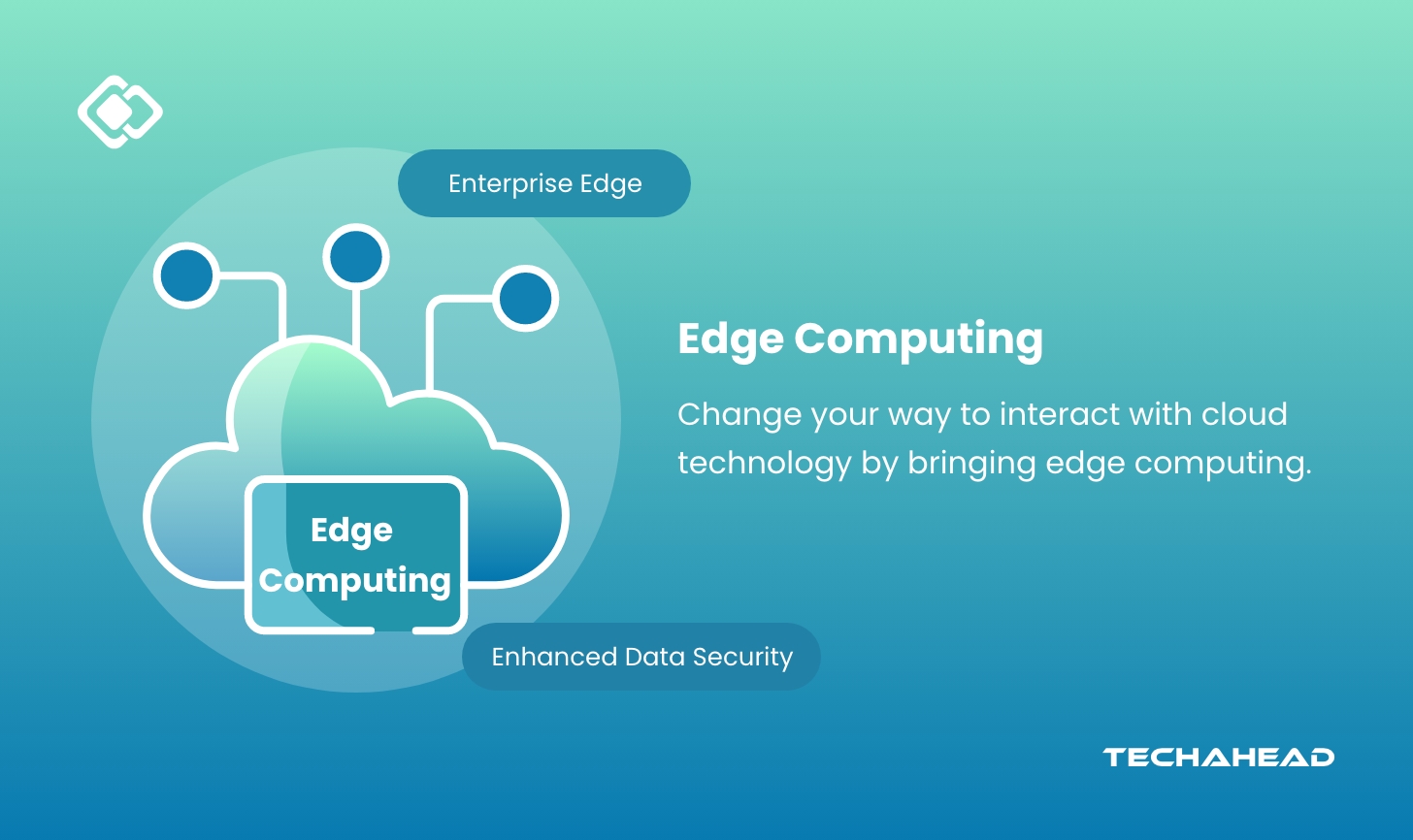
Edge computing represents a fundamental shift in how data is processed, moving the computational workload closer to the source of data generation rather than relying on a centralized cloud server. For industries requiring millisecond-level responsiveness—such as autonomous manufacturing, healthcare diagnostics, and high-frequency trading—this shift is not merely an optimization but a functional requirement.
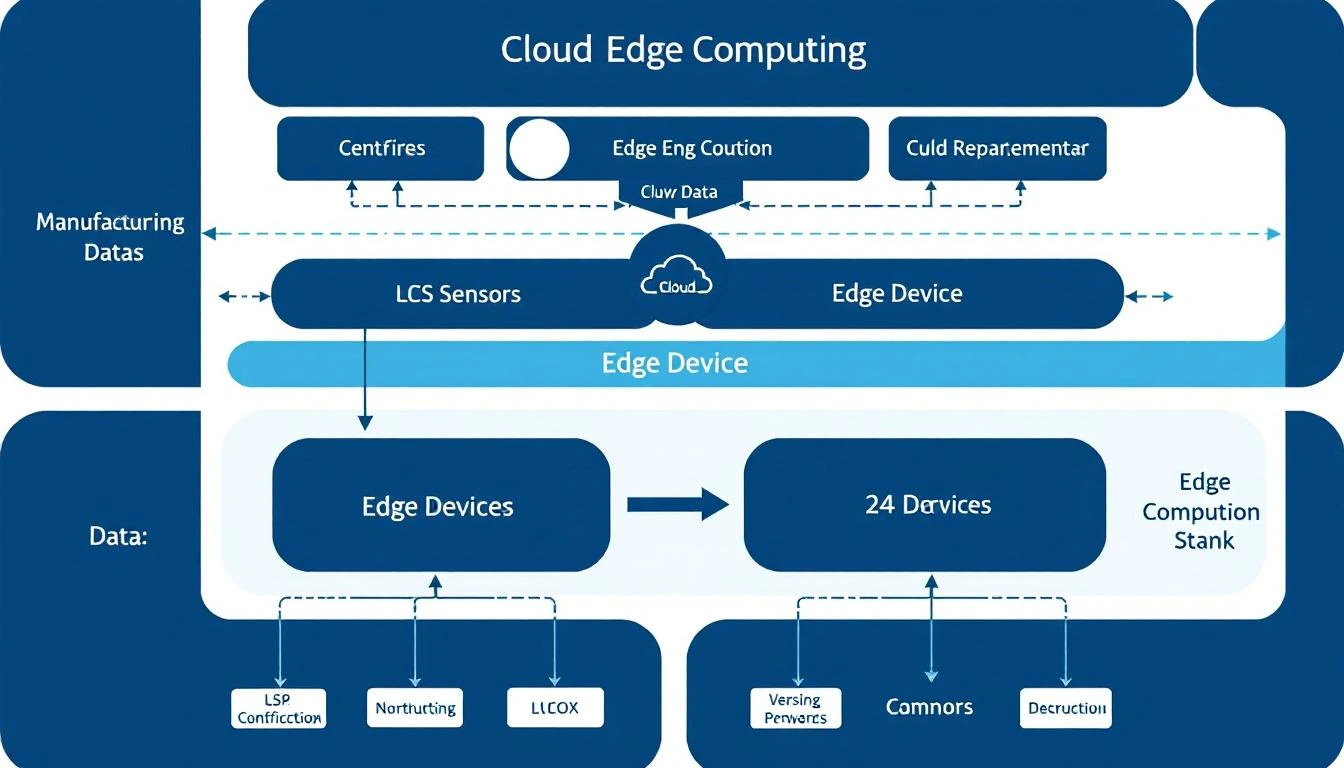
Julie Franke’s perspective on this debate underscores that the "edge" is not a monolith. Instead, it is a spectrum ranging from micro-data centers housed within industrial facilities to localized nodes at the base of 5G cell towers. The core of her argument suggests that the biggest challenge is not the technical hardware of the edge, but the orchestration and security of these distributed endpoints. As of 2026, the industry continues to grapple with this, as managing thousands of dispersed nodes introduces complexity that centralized cloud providers have spent decades solving.
The Technical Foundations of the Debate
The debate articulated by Franke and her contemporaries focuses on three primary pillars of infrastructure: latency, bandwidth optimization, and data sovereignty.
1. Latency and Deterministic Performance
In traditional cloud architectures, the "round-trip time" for data—the travel from a sensor to a server and back—creates a latency bottleneck. In time-sensitive environments, this delay can lead to system failure. Franke’s analysis emphasizes that edge computing provides a deterministic environment where processing happens in predictable cycles. By keeping data processing near the source, developers can guarantee the real-time feedback loops required for safety-critical systems.
2. Bandwidth and Network Costs
Sending raw data from millions of IoT devices to a centralized cloud is financially and operationally unsustainable. The "Edge Debate" often circles back to the economics of data transport. Franke argues that edge nodes act as filters, performing data reduction and aggregation locally. This ensures that only actionable intelligence, rather than redundant noise, is transmitted to the core network, significantly reducing bandwidth consumption and associated egress costs.
3. Data Sovereignty and Security
Centralized systems create massive targets for cyber threats. Franke has pointed out that while distributed systems expand the "attack surface"—because every edge node is a potential entry point—they also offer the benefit of containment. If one node is compromised, the failure does not necessarily cascade to the entire network, provided that the system architecture utilizes a zero-trust model.
Operational Trade-offs: A Comparative Framework
When evaluating edge computing strategies, architects must navigate several competing priorities. The following table outlines the key decision points often discussed in the context of Franke’s architectural frameworks.
| Feature | Centralized Cloud | Edge Computing |
|---|---|---|
| Latency | High (Distance-dependent) | Extremely Low |
| Data Throughput | Limited by backhaul | High local processing |
| Management | Uniform/Global | Distributed/Complex |
| Reliability | Centralized point of failure | High survivability |
| Initial Cost | Low (Pay-as-you-go) | High (CapEx intensive) |
The Human Element: Architectural Strategy
Beyond the hardware, Franke’s work highlights that the "debate" is also deeply organizational. Adopting an edge-first strategy requires a different skill set than managing a public cloud. Teams must be adept at DevOps workflows that encompass thousands of distinct, small-scale deployments. This necessitates advanced CI/CD (Continuous Integration/Continuous Deployment) pipelines that can push updates to geographically dispersed hardware without manual intervention.
In 2026, the maturation of containerization (such as Kubernetes-based orchestration) has mitigated some of these operational burdens, but Franke’s warnings about "configuration drift"—where individual edge nodes gradually fall out of synchronization with the master build—remain highly relevant. Maintaining consistency across a distributed fleet is the primary hurdle for enterprises moving beyond pilot testing.
Addressing the Common Pitfalls
Organizations often approach edge computing as a "cloud-in-a-box" strategy, which is a fundamental misunderstanding. Franke cautions that edge environments lack the physical security, cooling, and environmental controls of a dedicated data center. Planning for power fluctuations and hardware failures at the edge is not optional; it is a core design requirement.
Furthermore, developers often fall into the trap of over-processing at the edge. The objective should not be to replicate a data center at every branch office, but to selectively deploy only the workloads that benefit from proximity. Everything else should remain in the cloud, where it can be managed more efficiently.
Frequently Asked Questions
What is the core disagreement in the edge computing debate?
The debate centers on the balance between the efficiency and ease of centralized cloud management versus the performance and reliability benefits of decentralized, local processing. There is no one-size-fits-all solution, and the argument often revolves around where the "optimal" edge boundary lies for a specific use case.
How does edge computing improve network performance?
Edge computing improves performance primarily by reducing latency. By processing data closer to the device, the system avoids the time lost in traversing long-distance network backbones, which is essential for real-time applications like autonomous robotics or remote industrial monitoring.
Is edge computing more secure than cloud computing?
It is not inherently more secure, but it is different. It shifts the security focus from protecting one large perimeter to securing a vast, distributed network of endpoints. While this increases the number of potential entry points, it also reduces the impact of a single failure or compromise on the overall system.
What industries are currently leading in edge implementation?
As of 2026, the manufacturing, automotive, and healthcare sectors are the primary adopters. These industries require real-time processing and often operate in environments where constant, high-bandwidth connection to a centralized cloud is not guaranteed.
What is the primary role of an edge orchestrator?
An edge orchestrator is software designed to manage, deploy, and monitor applications across a fleet of geographically distributed nodes. It handles the complexity of updating software, managing connectivity, and ensuring that security patches are applied uniformly across the infrastructure.
Next Steps for Infrastructure Strategy
To effectively integrate edge computing, organizations must begin with a clear audit of their latency requirements. If an application can tolerate 100ms of delay, the complexity of an edge deployment may not be justified. However, if the application requires sub-10ms response times, begin by identifying "bottleneck" locations in your existing topology.
Assess your existing CI/CD pipelines to ensure they are equipped for remote deployment at scale. Finally, treat edge security as an independent domain; leverage hardware-based identity modules (like TPMs) to ensure that every device in your distributed network can be independently verified. By focusing on these foundations, technical leaders can navigate the edge computing debate and successfully implement robust, performant architectures.
Image Gallery