Maternity Leave and Life Insurance Myths Debunked: A 2026 Guide for New Parents
Securing life insurance while pregnant or on maternity leave is not only possible but often essential for family financial security. Most insurers view maternity leave as active employment provided there is a documented intent to retur...
Securing life insurance while pregnant or on maternity leave is not only possible but often essential for family financial security. Most insurers view maternity leave as active employment provided there is a documented intent to return to work, and pregnancy itself does not automatically lead to higher premiums unless specific medical complications arise.
Contents
The transition into parenthood is one of the most significant "life events" that triggers a need for financial planning. However, many expectant and new parents delay applying for life insurance due to persistent misinformation regarding eligibility, costs, and employment status. As of 2026, the life insurance industry has refined its underwriting processes to be more inclusive of pregnant applicants, yet many consumers still operate under outdated assumptions.
This guide dismantles the most common myths surrounding life insurance and maternity leave, providing a technical look at how underwriters evaluate risk and what steps you can take to protect your family’s future.
Understanding the Underwriting Process During Pregnancy
To understand why certain myths exist, one must first understand how life insurance underwriting works during pregnancy. Underwriting is the process by which an insurance company evaluates the risk of insuring an individual to determine their premium.
When you apply for a policy, the insurer examines your medical history, current health, and lifestyle. For pregnant applicants, underwriters pay close attention to pregnancy-specific health markers. These include blood pressure readings, glucose levels (to check for gestational diabetes), and weight gain.
In 2026, most top-tier carriers continue to use traditional underwriting categories: Super Preferred, Preferred, Standard Plus, and Standard. If a pregnancy is progressing normally without complications, an applicant can still qualify for the "Super Preferred" rate. The primary technical hurdle is often the "evidence of insurability," which usually requires a paramedical exam. While insurers are comfortable with pregnancy, they may postpone an application if the applicant is in the third trimester or has a history of high-risk pregnancies, simply to wait for a clean bill of health post-delivery.
Myth 1: You Cannot Apply for Life Insurance While Pregnant
One of the most pervasive myths is that insurance companies will automatically reject an application from someone who is currently pregnant. This is factually incorrect. In reality, the first and second trimesters are often the ideal times to apply.
Insurers generally treat a healthy pregnancy as a temporary physiological state rather than a chronic illness. If your lab results are within normal ranges for a pregnant person, your application will proceed as usual. The misconception likely stems from the fact that insurers may "postpone" a decision if a complication is detected. For example, if an applicant develops preeclampsia or significant gestational diabetes, the underwriter cannot accurately predict the long-term health impact until after the birth. In these cases, the company will ask the applicant to re-apply 6 to 12 weeks postpartum.
Waiting until after the baby is born is not always the best strategy. If you wait, and then experience a complication during delivery or develop postpartum depression, you may find it even more difficult to secure a policy at a preferred rate. Securing a policy early in the pregnancy locks in your health status at that moment.
Myth 2: Maternity Leave is Considered "Unemployment"
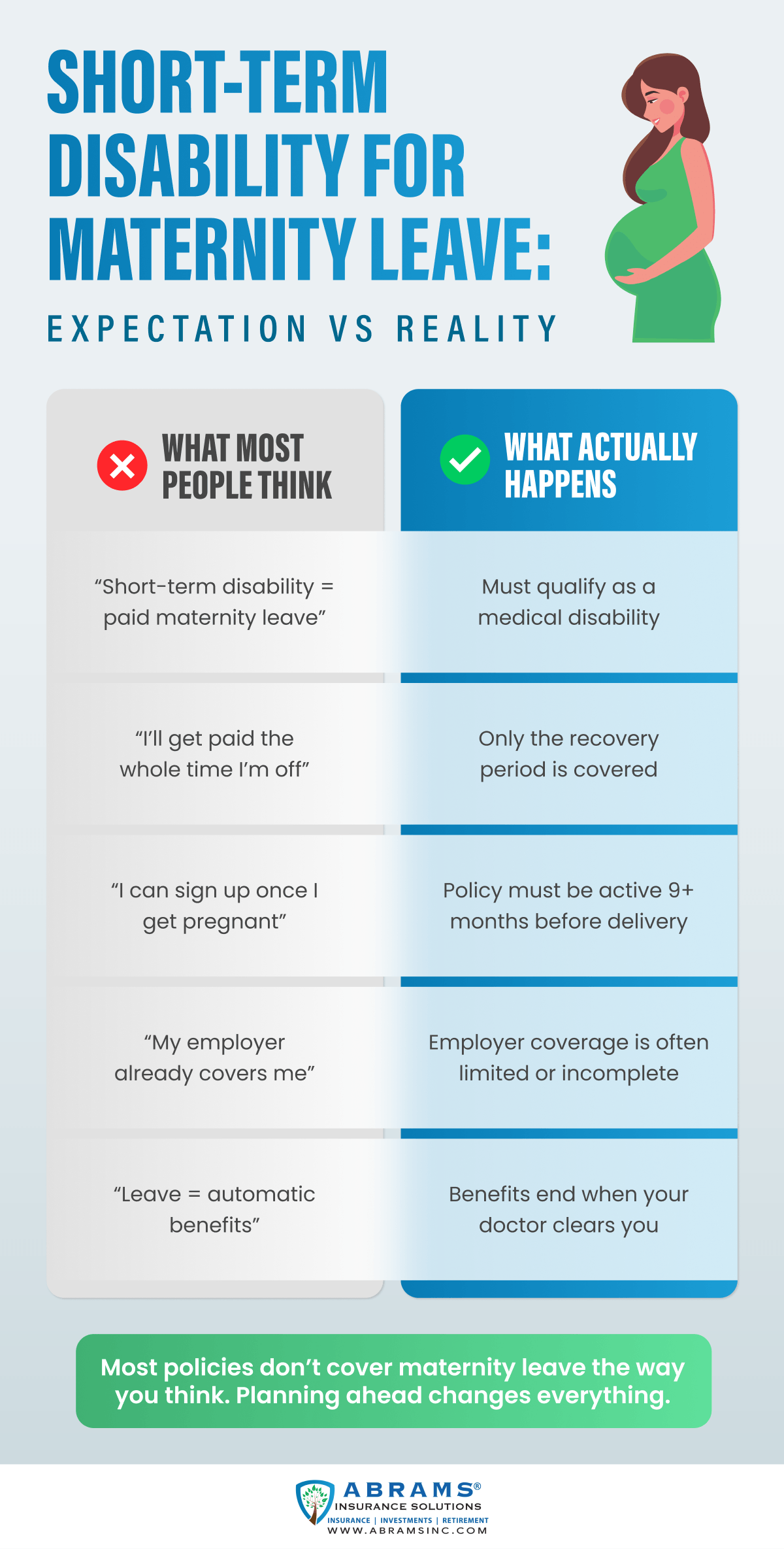
There is a common fear among parents that being on maternity leave—especially if it is unpaid—will lead an insurer to classify them as "unemployed." This is a critical distinction because life insurance companies use your income to justify the "face amount" (the total death benefit) of the policy.
As of 2026, standard industry practice among major carriers is to treat maternity leave as a continuation of employment. To satisfy the underwriter, you typically need to provide:
- A statement of intent to return to work.
- Confirmation of your pre-leave salary.
- The expected date of return.
If you plan to transition to a "stay-at-home parent" role after your leave, you are still eligible for significant coverage. Underwriters recognize the immense economic value of a stay-at-home parent (often called "human life value"). In such cases, the amount of coverage you can qualify for is usually tied to your spouse's income and coverage level rather than your own previous salary.
Myth 3: Pregnancy Automatically Increases Your Premiums
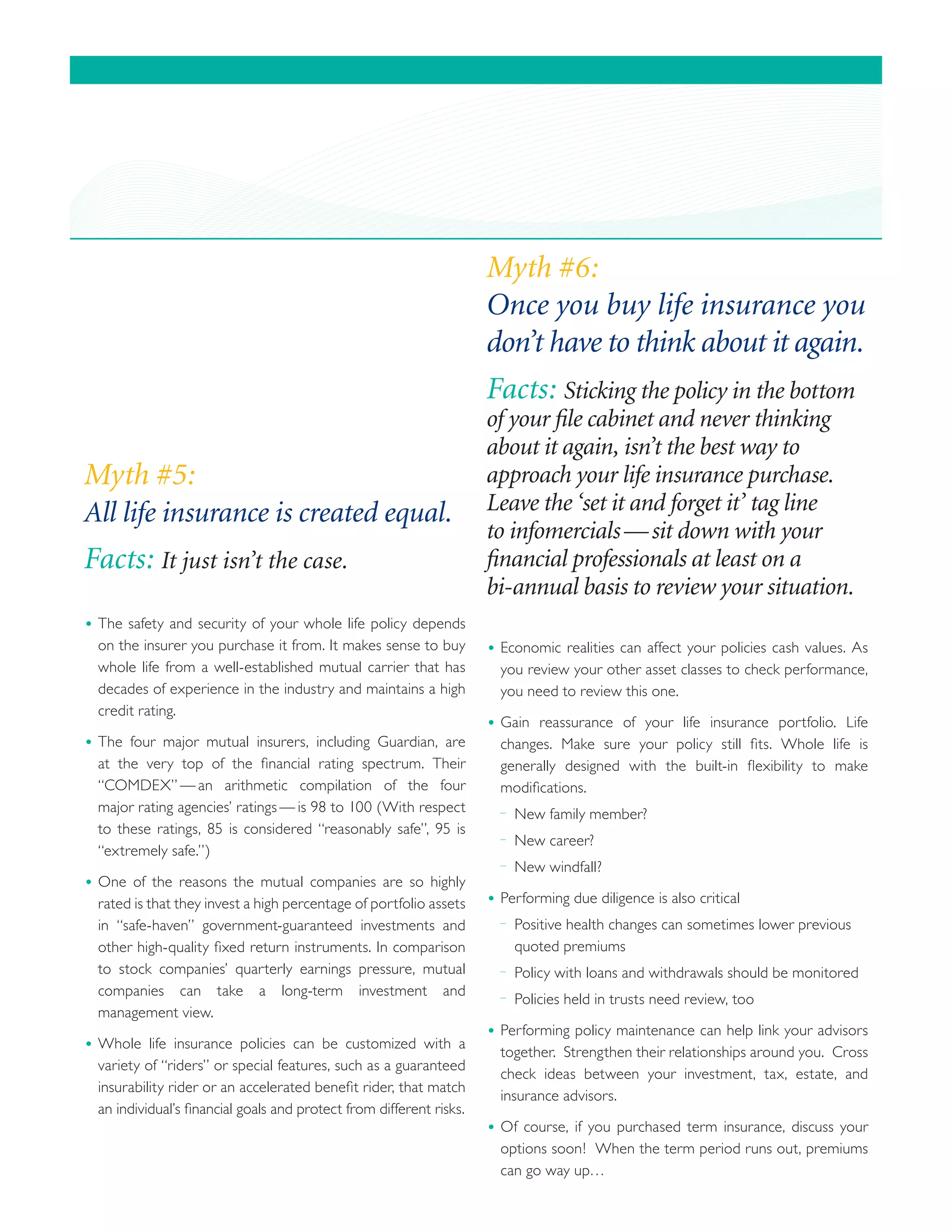
Many parents believe that because they are "higher risk" during pregnancy, their premiums will be significantly higher than if they had applied a year earlier. This is a myth rooted in a misunderstanding of how actuarial tables work.
Life insurance is designed to cover a span of 10, 20, or 30 years—or even your entire life. A 40-week pregnancy is a very small window of time relative to the life of the policy. Underwriters focus on whether the pregnancy indicates a long-term health shift.
If your weight gain is within the CDC-recommended guidelines and your blood pressure remains stable, you will likely be charged the same rate as a non-pregnant person of the same age and general health profile. The only scenario where premiums "automatically" increase is if the pregnancy uncovers a permanent condition, such as Type 2 diabetes or chronic hypertension, which would have affected your rates regardless of the pregnancy.
Myth 4: Group Life Insurance Through Work is Sufficient
New parents often rely on the group life insurance policy provided by their employer, thinking it provides enough protection. While group life is a valuable benefit, it is rarely sufficient for a growing family for several reasons:
- Portability: If you decide not to return to work after your maternity leave, or if you change jobs in the future, you typically lose your group coverage.
- Coverage Limits: Group policies usually offer a death benefit equal to 1x or 2x your annual salary. For a family with a new mortgage and a child to put through college, most financial planners recommend 10x to 15x your annual income.
- Policy Control: With a private individual policy, you own the contract. It stays with you regardless of your employment status, ensuring your child remains protected even if your career path shifts.
| Feature | Group Life Insurance (Employer) | Individual Term Life Insurance |
|---|---|---|
| Portability | Usually ends with employment | Remains active regardless of job |
| Cost | Often free or very low cost | Fixed premium based on health/age |
| Coverage Amount | Limited (e.g., 1-2x salary) | Custom (e.g., $500k to $5M+) |
| Medical Exam | Usually not required | Typically required for best rates |
| Control | Employer chooses the carrier | You choose the carrier and terms |
Myth 5: You Must Disclose a Pregnancy You Don't Know About Yet
In the context of legal and technical accuracy, an applicant is only required to disclose medical facts that are known to them at the time of the application. If you apply for life insurance, undergo a medical exam, and a week later find out you are pregnant, your policy remains valid at the rate quoted, provided you were truthful on the application based on your knowledge at the time.
Life insurance policies contain a "contestability period"—usually the first two years of the policy. During this time, the insurer can investigate if there was any material misrepresentation. However, being unaware of a pregnancy is not misrepresentation. Once the policy is "in force" (meaning the first premium is paid and the contract is signed), the insurance company cannot cancel the policy or increase your rates just because you became pregnant or went on leave.
Medical Considerations and Postpartum Timing
If you have already given birth or are in the late stages of the third trimester, timing your application becomes a technical decision.
The "Postponement" Window Most insurers prefer to wait until at least 6 to 8 weeks after delivery to conduct a medical exam. This allows your body to return to its "baseline" health. Specifically, underwriters are looking for the resolution of temporary conditions like:
- Gestational Hypertension: High blood pressure that occurs only during pregnancy.
- Gestational Diabetes: Blood sugar issues that usually resolve after the placenta is delivered.
- Postpartum Depression (PPD): Insurers take mental health seriously. If you are diagnosed with PPD and prescribed medication, some carriers may postpone your application until you have been stable on the medication for 6 to 12 months.
If you are currently experiencing any of these, it is often better to wait and provide the insurer with a "clean" medical record later rather than applying now and being rated at a higher (more expensive) risk class.
Financial Planning: Riders to Consider
When applying for a policy during maternity leave, consider adding specific "riders"—optional add-ons that customize your coverage.
- Child Term Rider: This allows you to add a small amount of life insurance coverage for your newborn (and any future children) to your own policy. It is often very inexpensive and can be converted to a permanent policy for the child later in life regardless of their health.
- Waiver of Premium Rider: This is particularly relevant for new parents. If you become totally disabled and cannot work, the insurance company will pay your premiums for you, ensuring the policy doesn't lapse when your family needs it most.
- Accelerated Death Benefit: This allows you to access a portion of the death benefit while you are still alive if you are diagnosed with a terminal illness.
Common Questions About Maternity Leave and Life Insurance
Can I apply for life insurance while on unpaid FMLA leave?
Yes. As long as you have a documented agreement with your employer to return to your position, insurers will generally treat you as an active employee. You will need to provide your pre-leave income figures for the financial underwriting portion of the application. The U.S. Department of Labor provides guidelines on how FMLA protects your employment status, which can be useful documentation if an insurer questions your "active" status.
What if I decide not to return to work after my leave?
If you decide to become a stay-at-home parent, you should inform your agent. You can still qualify for coverage based on your spouse's income. It is a common myth that stay-at-home parents don't need life insurance. In reality, the cost of replacing the services a stay-at-home parent provides (childcare, transportation, household management) is significant, and insurance provides the funds to cover those costs.
Does breastfeeding affect the life insurance medical exam?
Breastfeeding can occasionally impact certain lab results, such as cholesterol levels or weight readings, but it is rarely a reason for a higher premium. It is helpful to note on your application that you are breastfeeding so the underwriter can interpret the lab results with that context.
Will my rates go down if I lose the pregnancy weight later?
If you are assigned a higher premium because of your weight during pregnancy, most insurance companies allow for a "rate reconsideration" after the policy has been in force for at least a year. You can request a new medical exam, and if you have returned to a lower BMI, the company may reduce your future premiums.
Is it better to get Term or Whole Life insurance while on leave?
For most new families, Term Life Insurance is the preferred choice. It provides the highest amount of coverage for the lowest cost during the years when your financial obligations (mortgage, child-rearing) are highest. Whole Life is much more expensive and is typically used for estate planning or as a specialized investment vehicle, which may not be the priority while managing the costs of a new baby.
Next Steps for Expectant and New Parents
The best course of action is to start the application process as early as possible. If you are in your first or second trimester, you are in a strong position to lock in a "Preferred" or "Super Preferred" rate.
- Consult an Independent Agent: Unlike "captive" agents who work for one company, independent agents can compare dozens of carriers to find the one with the most favorable underwriting guidelines for pregnancy and maternity leave.
- Gather Income Documentation: Have your most recent W-2s or pay stubs from before your leave began.
- Be Transparent: Disclose your pregnancy and your return-to-work plans clearly. Concealing a pregnancy can lead to a denial of claims later due to material misrepresentation.
- Review Existing Coverage: Don't assume your work policy is enough. Calculate your family's actual needs, including debt, education costs, and income replacement.
Securing life insurance is an act of love and responsibility. By debunking these myths, you can move forward with confidence, knowing that your growing family is protected regardless of your current employment status or stage of pregnancy.
Image Gallery