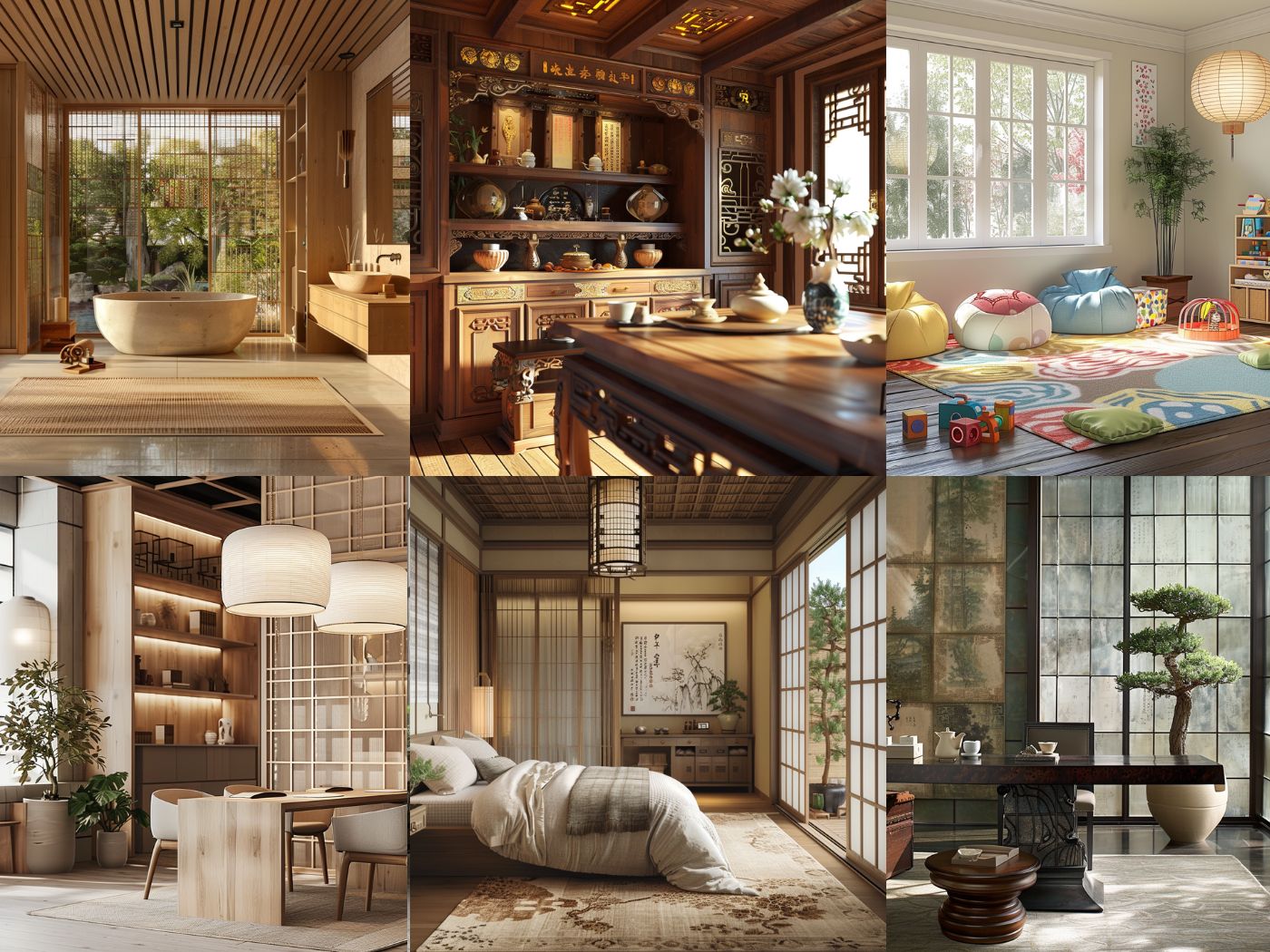
Minecraft Japanese Interior Design: Merging Tradition with Blocky Creativity
Achieving an authentic Japanese interior in Minecraft requires balancing the game’s rigid grid with the minimalist philosophy of traditional architecture. By utilizing specific block palettes like cherry wood and bamboo, implementing t...
Achieving an authentic Japanese interior in Minecraft requires balancing the game’s rigid grid with the minimalist philosophy of traditional architecture. By utilizing specific block palettes like cherry wood and bamboo, implementing techniques for Shoji screens and Tatami mats, and respecting the concept of negative space, players can create serene, culturally resonant living environments.
Contents
Traditional Japanese architecture, known as Washitsu, is defined by its relationship with nature, its modularity, and its focus on simplicity. In Minecraft, where the default tendency is to fill every block with detail, the "merging" of tradition and creativity involves a shift in mindset. As of 2026, the building community has refined these techniques, moving beyond simple aesthetics into high-fidelity recreations that honor historical Japanese design principles.
The Philosophy of Space: Ma and Wabi-Sabi
Before placing the first block, a designer must understand the concepts of Ma (negative space) and Wabi-Sabi (beauty in imperfection). In Minecraft, players often suffer from horror vacui—the fear of empty spaces—leading to cluttered rooms that feel more like storage units than living spaces.
Embracing Ma (Negative Space)
In Japanese interior design, the space between objects is as important as the objects themselves. To implement this in Minecraft:
- Avoid Centralized Clutter: Instead of a massive table in the center of a room, keep the central floor area open.
- Verticality: Use tall ceilings with exposed structural beams (dark oak or spruce logs) to draw the eye upward, creating a sense of breathability.
- Strategic Placement: A single flower in a pot (a Tokonoma arrangement) placed against a plain white wall is more impactful than a row of ten different plants.
Wabi-Sabi and Texture
Minecraft’s textures are inherently repetitive. To achieve Wabi-Sabi, builders should mix blocks that suggest age and natural wear. Using a combination of Stripped Spruce Logs, Mud Bricks, and Tuff can simulate the organic, earthy tones found in traditional rural Minka houses.
The Essential Palette: 2026 Block Selection
The introduction of the Trails & Tales update and subsequent 2024-2025 additions provided the ultimate toolkit for Japanese builds. Selecting the right materials is the foundation of the aesthetic.
Wood and Bamboo
Wood is the primary element of Japanese construction.
- Cherry Wood: Its soft pink hue is perfect for decorative accents or "Sakura" themed rooms, but it should be used sparingly to maintain sophistication.
- Bamboo Wood: The plank texture of bamboo closely resembles traditional reed matting or woven wall panels.
- Dark Oak and Spruce: These are the "structural" woods. They provide the necessary contrast against lighter walls, mimicking the blackened timber frames of ancient Kyoto temples.
Walls and Infills
Traditional walls (Shinkabe) often feature exposed timber frames with plaster infill.
- Calcite and Mushroom Stems: These offer a soft, off-white texture that looks more like traditional plaster than the clinical brightness of White Concrete.
- Smooth Quartz: Best for modern interpretations of Japanese design, providing clean lines and sharp edges.
Key Interior Elements and Construction Techniques
To merge tradition with blocky creativity, you must translate specific Japanese architectural features into Minecraft's 1x1 meter grid.
Creating Authentic Shoji Screens
Shoji screens are translucent sliding doors or room dividers made of wood and paper. In Minecraft, the scale makes this challenging.
- The Banner Method: Use a White Banner as the base. Apply a "Border" pattern in brown or black, followed by a "Cross" or "Grid" pattern. Placing these banners against air or glass creates the illusion of a paper screen.
- The Trapdoor Method: Use Oak or Spruce Trapdoors placed in the open position. While they aren't translucent, their wooden lattice design captures the silhouette of a Shoji screen perfectly.
Tatami Mat Flooring
Tatami mats are a staple of Japanese flooring, traditionally made of rice straw. Their specific dimensions (usually 2:1 ratio) are crucial for an authentic layout.
- The Material: Use Moss Carpets for a rustic, aged look, or Yellow/Lime Carpets for a fresh straw appearance.
- The Pattern: Never place four corners together in a single point; this is considered bad luck in Japanese culture. Instead, use a "T-junction" layout where the mats are arranged in a dynamic, interlocking pattern.
The Tokonoma (Artistic Alcove)
The Tokonoma is a recessed space in a Japanese reception room used to display scrolls, flowers, or incense.
- Construction: Indent a 2x3 or 3x3 area into a wall.
- Content: Place a single Armor Stand with leather armor (dyed to look like a kimono) or a potted Azalea. A Painting can serve as a wall scroll. In 2026, many builders use custom player heads to represent small ceramic tea sets or incense burners.
Advanced Lighting and Atmosphere
Lighting in a Japanese interior should be soft and indirect. Harsh, visible torches break the immersion of a Zen space.
Hidden Lighting
Traditional Japanese homes used paper lanterns (Andon). To replicate this glow without visible light blocks:
- Under-floor Lighting: Place Froglights or Glowstone beneath the Tatami mats (carpets). The light will bleed through the carpet, providing a warm, invisible glow.
- Ceiling Beams: Hide Candles or Lanterns on top of horizontal spruce logs. The player won't see the light source, only the warm ambiance it creates.
The Irirori (Sunken Hearth)
The Irori is a traditional sunken fireplace used for heating and cooking.
- Build: Dig a 1x1 hole in the center of a room. Place a Campfire at the bottom. Surround the hole with Stone Slabs or Trapdoors.
- The Hook: Use a Chain hanging from the ceiling directly above the fire to simulate the Jizai-kagi (kettle hook).
Materials Comparison for Japanese Builds
| Traditional Element | Minecraft Block Equivalent | Best Use Case |
|---|---|---|
| Shoji Paper | White Stained Glass / White Banners | Room dividers and windows. |
| Tatami Straw | Moss Carpet / Dried Kelp Blocks | Main flooring in living areas. |
| Structural Timber | Dark Oak / Spruce Logs | Exposed ceiling beams and wall frames. |
| Plaster Walls | Calcite / Mushroom Stems | Wall infill between timber frames. |
| Roof Tiles (Kawara) | Deepslate Tile Slabs / Nether Brick | Exterior roofing and interior awnings. |
| Stone Lanterns | Walls + Lanterns / Candles | Interior decorative lighting. |
Common Mistakes in Japanese Interior Builds
Even experienced builders can fall into traps that undermine the authenticity of a Japanese-themed space.
- Over-scaling: Building rooms too large. Traditional Japanese rooms are often intimate. If a room is 10 blocks high, it will feel like a cathedral rather than a home. Keep ceiling heights between 3 and 5 blocks for a cozy, realistic feel.
- Symmetry Overload: While Japanese design is orderly, it rarely relies on perfect mirror-image symmetry. It prefers "balanced asymmetry," where a heavy object on one side is balanced by negative space on the other.
- Inconsistent Wood Tones: Mixing too many types of wood (e.g., Jungle, Acacia, and Birch) creates visual noise. Stick to a primary wood (Spruce) and one accent wood (Cherry or Bamboo).
- Neglecting the View: A Japanese interior is designed to look out at a garden. Always include large openings or Shoji-covered windows that face a curated courtyard or a single cherry blossom tree.
Troubleshooting Spatial Constraints
If your interior feels cramped despite following these rules, consider the Engawa technique. The Engawa is a wooden veranda that circles the house, acting as a buffer between the inside and outside. In Minecraft, you can use slabs and fences to create this walkway. By making the walls out of trapdoors or glass, you "borrow" the exterior landscape, making the small interior feel significantly larger and more integrated with the environment.
Furthermore, if the 1-meter thickness of Minecraft walls makes rooms feel too small, use "thin walls" made entirely of banners or trapdoors. This saves a full block of space on every side, which is vital for smaller 12x12 or 16x16 builds.
FAQs
What is the best wood for a traditional Japanese house in Minecraft?
Spruce is widely considered the best wood for the structural frame due to its dark, neutral brown tone. For the flooring and panels, Bamboo planks or Birch (if used with the right texture pack) provide the light, straw-like contrast needed for an authentic look.
How do I make a Japanese-style bed?
Traditional Japanese beds are Futons laid directly on the Tatami. In Minecraft, you can simulate this by placing a Bed and surrounding it with Carpets of the same color, or by using a White Carpet on top of a Snow Layer to create a slightly raised, minimalist sleeping mat.
Can I build Japanese interiors in the Nether or End?
Yes, but the color palette must change. In the Nether, use Crimson Hyphae as a stand-in for lacquered red wood, which is common in Shinto shrines. In the End, Purpur and End Stone can be used to create a "Celestial Zen" aesthetic that maintains the shapes of Japanese architecture with an alien palette.
How do I incorporate water into an interior Japanese design?
Use a Cauldron or a single water source block surrounded by Stairs to create a Tsukubai (washbasin). Adding a Dripleaf or Sugar Cane nearby suggests a small, indoor water garden, which promotes the Zen atmosphere.
Are there specific mods for Japanese interior design in 2026?
While vanilla Minecraft offers enough tools for most, the "Bamboo Everything" and "Macaw's Doors" mods remain popular in 2026 for providing actual sliding Shoji doors and more intricate paper-wall variations that are not yet available in the base game.
Next Steps for Your Build
To elevate your Japanese interior further, focus on the transition between the home and the garden. Start by building a small Karesansui (Zen rock garden) using Sand and Gravel with "raked" patterns created by using paths or different slab heights. Integrating your interior with an exterior that follows the same principles of simplicity and nature will complete the immersion and solidify the merge between traditional Japanese aesthetics and Minecraft’s blocky world.
Image Gallery