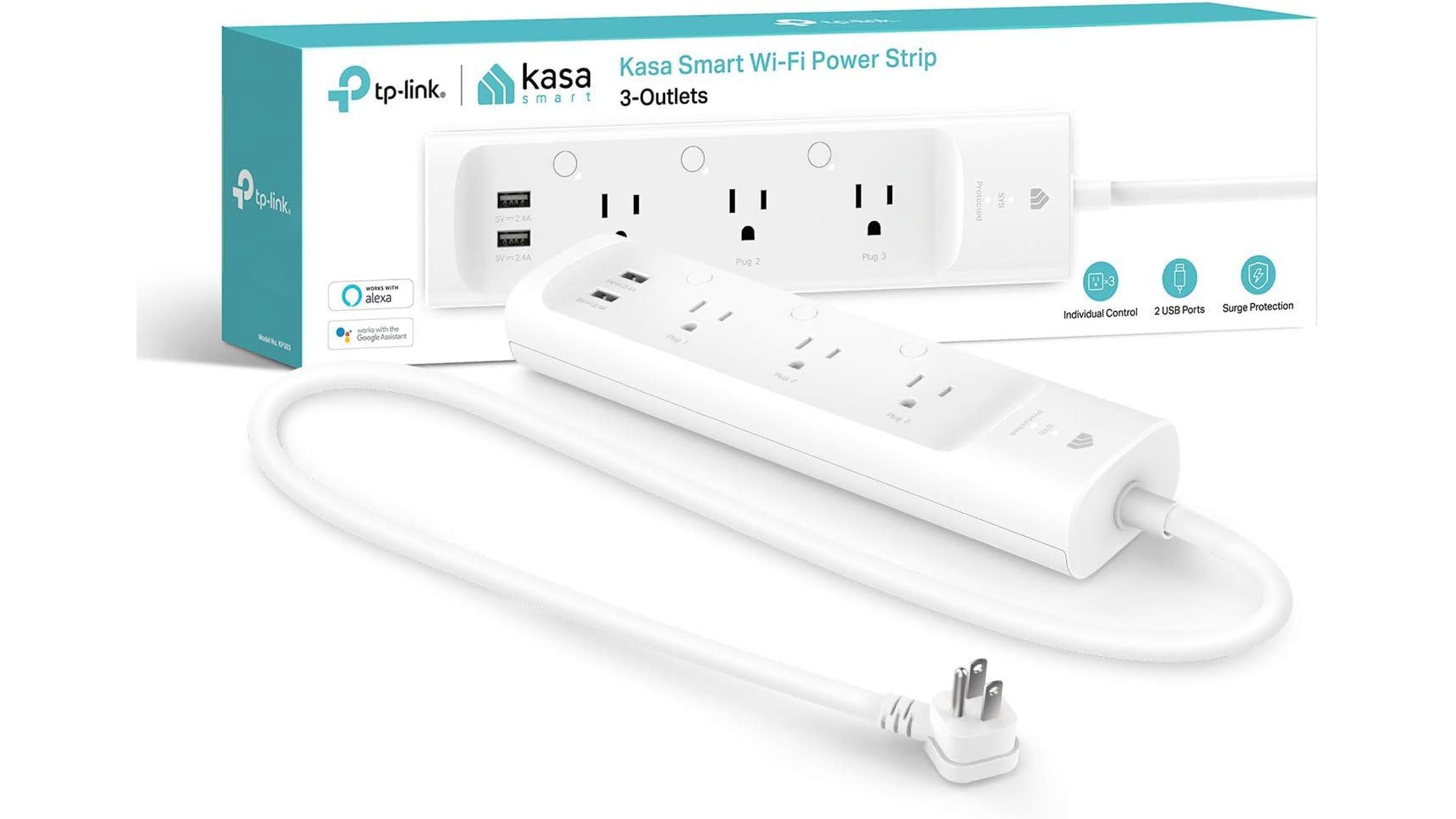
Why the OAPC Beats Traditional Power Strips in Smart Homes
The Overload-Aware Power Controller (OAPC) has fundamentally redefined power management by integrating intelligent monitoring, circuit-level protection, and bidirectional communication into the home energy ecosystem. Unlike traditional...
The Overload-Aware Power Controller (OAPC) has fundamentally redefined power management by integrating intelligent monitoring, circuit-level protection, and bidirectional communication into the home energy ecosystem. Unlike traditional power strips, which offer only passive distribution and rudimentary surge suppression, the OAPC provides the granularity required for modern, automated smart homes, ensuring device longevity and actionable energy insights.
Contents
The Evolution of Power Management in Smart Homes
For decades, the power strip remained essentially unchanged: a busbar contained within a plastic housing, typically featuring a thermal breaker and a metal-oxide varistor (MOV) for surge protection. While adequate for analog appliances, these passive devices are fundamentally incompatible with the requirements of a 2026 smart home.
The OAPC introduces an active layer between the utility power and the end device. By utilizing high-frequency sampling and localized firmware, an OAPC detects anomalies—such as micro-fluctuations, harmonic distortion, or current inrush patterns—that traditional strips ignore. In a smart home environment, where multiple high-sensitivity processors operate simultaneously, the OAPC acts as a diagnostic gatekeeper rather than a simple extension cord.
Comparative Mechanics: Passive vs. Intelligent Distribution
Traditional power strips rely on physical triggers to manage safety. If a current exceeds the thermal fuse's rating, the strip trips. This is a binary, "all-or-nothing" approach that often leaves equipment unprotected during "brownout" conditions or low-level electrical noise, which can degrade sensitive IoT hardware over time.
In contrast, the OAPC employs a software-defined power architecture. It monitors the voltage-current curve of every connected load. If an OAPC detects an impending failure—such as a power supply unit (PSU) beginning to oscillate or a motor starting to draw excessive current due to friction—it can isolate that specific outlet while maintaining power to other ports. This selective isolation is critical for smart home stability, preventing a single faulty peripheral from triggering a cascading failure of the entire hub or mesh network.
Why OAPCs Are Essential for Modern Ecosystems
1. Precision Energy Analytics
Smart homes are driven by data. Traditional strips provide zero visibility into energy consumption. An OAPC, however, reports power draw per outlet. This allows users to identify "vampire" loads—devices that continue to draw significant power while in standby mode—and automate their power state using smart home protocols like Matter or Thread.
2. Advanced Surge and Transient Protection
Standard surge protection is limited by the joule rating of the MOV inside the strip. Once that MOV absorbs a surge, its effectiveness degrades. Many users remain unaware that their "protected" equipment is effectively exposed. OAPCs utilize self-calibrating suppression circuits that provide real-time status reporting. When the OAPC determines its suppression capacity is compromised, it pushes a notification to the user’s mobile application, ensuring that maintenance is proactive rather than reactive.
3. Software-Controlled Load Shedding
During peak demand periods, or when the smart home is operating on a battery-backed storage system, load management becomes a priority. OAPCs can be programmed to perform "load shedding," where non-essential devices are automatically powered down based on user-defined priority queues. A traditional power strip cannot participate in this hierarchy; it is either on or off, requiring manual intervention or non-existent logic.
Technical Performance Comparison
The following table summarizes the operational differences between standard passive power strips and OAPC-enabled units.
| Feature | Traditional Power Strip | Overload-Aware Power Controller (OAPC) |
|---|---|---|
| Circuit Monitoring | None | Real-time, per-port telemetry |
| Fault Isolation | Global (all outlets trip) | Localized (per-outlet protection) |
| Data Reporting | None | Integration via IoT protocols (Matter/Thread) |
| Protection Type | Passive (MOV/Fuse) | Active (Software-defined / Multi-stage) |
| Maintenance | Blind / Unknown status | Automated diagnostic alerts |
| Load Management | None | Automated load-shedding capabilities |
Integration and Setup Requirements
Transitioning from traditional strips to OAPCs requires a fundamental shift in how home circuits are mapped. Because OAPCs often require a stable local network connection to unlock their full functionality, they should be placed within range of a primary access point or mesh node.
- Network Connectivity: Ensure your 2.4GHz or IoT-specific network is stable. An OAPC that cannot communicate with the gateway may default to a "dumb" safety mode, losing its advanced telemetry benefits.
- Firmware Governance: Unlike a standard strip that lasts for decades, an OAPC is a computing device. Check for firmware updates semi-annually. Manufacturers frequently optimize the current-sensing algorithms based on emerging power-grid conditions or known patterns of common IoT hardware failure.
- Power Budgeting: While OAPCs are "intelligent," they are still bound by the laws of physics. They cannot increase the amperage available from the wall circuit. Total load must remain within the limits defined by your local electrical code and the specific unit's rating.
Addressing Limitations and Safety Considerations
While OAPCs are superior in most smart home scenarios, they are not a replacement for electrical infrastructure upgrades. If your home has antiquated, ungrounded wiring, an OAPC cannot create a safe ground path. Furthermore, for high-amperage applications such as heavy-duty power tools or space heaters, the complexity of an OAPC is unnecessary and may actually be counterproductive. High-current, high-heat environments can accelerate the degradation of the sensors embedded within the OAPC.
Users should also consider the "all-eggs-in-one-basket" risk. If an OAPC fails at the controller level, all connected devices may lose power. For mission-critical infrastructure—such as home servers or security camera NVRs—it is common practice to utilize a dedicated UPS (Uninterruptible Power Supply) and reserve the OAPC for peripheral distribution and telemetry.
Frequently Asked Questions
Are OAPCs compatible with older smart home hubs? Yes, most OAPCs support standard communication protocols like Zigbee, Z-Wave, or Matter. As long as your hub supports these protocols, you can integrate the power telemetry data without upgrading your entire system.
Can an OAPC prevent a fire caused by a loose connection? Yes. An OAPC monitors for "arc faults," which occur when electricity jumps across a gap due to a loose contact. By detecting the unique frequency signatures of these arcs, the OAPC can shut down the port before the heating of the terminal causes combustion.
How does the OAPC impact electricity costs? By identifying standby power usage and allowing for automated scheduled shutdowns of non-essential devices, an OAPC can reduce base-load energy waste by 5% to 15% in a typical smart home setup.
Do I need a professional electrician to install an OAPC? No. OAPCs are designed as plug-and-play devices. They plug into existing NEMA-compliant wall outlets. They do not require hardwiring unless you are utilizing a wall-mounted professional distribution unit.
Final Recommendation
For those building or upgrading a smart home, the OAPC is no longer an optional accessory; it is a core component of system health. Start by identifying the "smart core" of your home—the area housing your hub, modem, router, and primary NAS. Replace the traditional, passive strips in these locations with OAPCs first. This provides the highest return on investment by protecting your most expensive equipment while granting immediate visibility into the power profile of your critical network infrastructure. Over time, expand to secondary zones to gain total home energy transparency.
Image Gallery