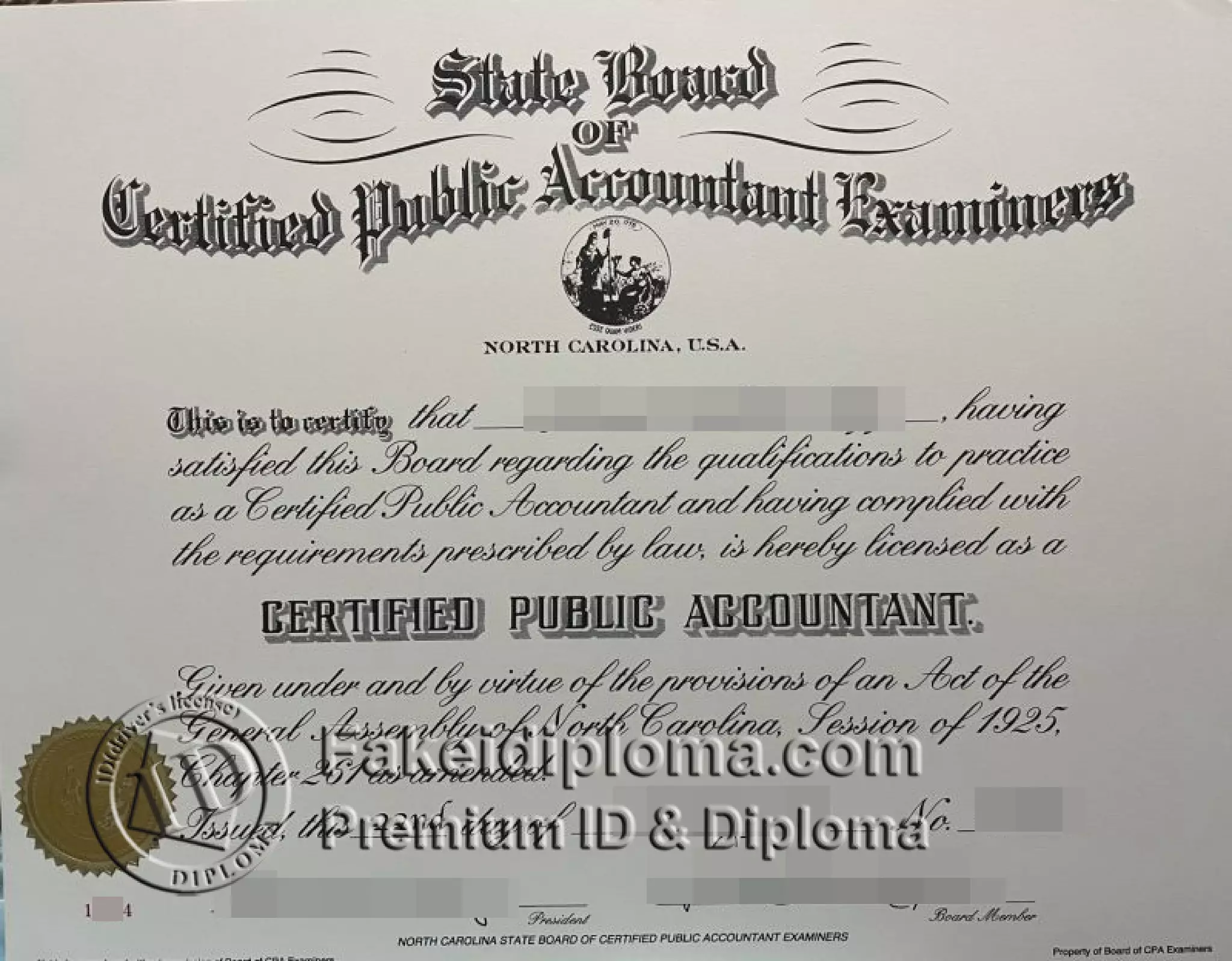
How to Become a CPA in North Carolina: A Step-by-Step Guide
To become a Certified Public Accountant (CPA) in North Carolina, you must earn 150 semester hours of education, pass the Uniform CPA Examination, and complete one year of supervised work experience. Additionally, candidates must pass a...
To become a Certified Public Accountant (CPA) in North Carolina, you must earn 150 semester hours of education, pass the Uniform CPA Examination, and complete one year of supervised work experience. Additionally, candidates must pass a state-specific ethics exam and submit a formal application to the North Carolina State Board of CPA Examiners.
Contents
The journey to obtaining a CPA license in North Carolina is a rigorous process designed to ensure that accounting professionals possess the technical expertise and ethical foundation required to protect the public interest. While the path is standardized, North Carolina has specific nuances regarding educational concentrations and application procedures that differ from other states. As of 2026, the profession continues to adapt to the CPA Evolution model, which emphasizes a core-plus-discipline approach to testing.
Step 1: Meet the Educational Requirements
The educational foundation for a North Carolina CPA license is built on the "150-hour rule." While a standard bachelor’s degree typically requires 120 credit hours, the North Carolina State Board of Certified Public Accountant Examiners requires an additional 30 hours to ensure a broad and deep understanding of accounting and business principles.
The Degree Requirement
You must possess a baccalaureate or higher degree from a college or university accredited by one of the regional accrediting associations. This degree serves as the baseline for your credentials, but the specific coursework within those credit hours is what determines your eligibility.
Specific Coursework Concentrations
North Carolina is specific about the distribution of credits. Within your 150 semester hours, you must include:
- Accounting Concentration: At least 30 semester hours in accounting courses. These must include foundational topics such as financial accounting, auditing, taxation, and management accounting. It is important to note that "principles" or "introductory" accounting courses may sometimes be limited in how they count toward this 30-hour requirement depending on the level of the institution.
- Business Courses: At least 24 semester hours in business-related courses. This can include subjects like economics, business law, finance, business statistics, management, and marketing.
For many students, the most efficient way to reach the 150-hour mark is through a Master of Accounting (MAC) or Master of Business Administration (MBA) with an accounting concentration. These programs are specifically designed to fulfill both the credit hour volume and the specific subject matter depth required by the state board.
Step 2: Apply for and Pass the Uniform CPA Examination
North Carolina is a "120 to sit" state, meaning you can begin taking the CPA Exam once you have completed your bachelor’s degree and have at least 120 semester hours, provided you meet the specific accounting and business course requirements. However, you cannot receive your license until the full 150 hours are documented.
The Exam Structure (CPA Evolution Model)
In 2026, the CPA Exam follows the Core + Discipline model. Every candidate must pass three Core sections and one Discipline section of their choosing:
- Core Sections:
- Financial Accounting and Reporting (FAR): Focuses on GAAP standards for business entities, non-profits, and state/local governments.
- Auditing and Attestation (AUD): Covers the entire auditing process, ethics, and professional responsibilities.
- Taxation and Regulation (REG): Focuses on federal taxation, business law, and professional ethics.
- Discipline Sections (Choose One):
- Business Analysis and Reporting (BAR): For those interested in assurance, financial statement analysis, and technical accounting.
- Information Systems and Controls (ISC): For those focusing on IT audit, cybersecurity, and data management.
- Tax Compliance and Planning (TCP): For those specializing in individual and entity tax compliance and planning.
Application Process in North Carolina
Unlike some states that use the NASBA Advisory Evaluation service, candidates in North Carolina apply directly through the North Carolina State Board of CPA Examiners. You must submit official transcripts from all post-secondary institutions attended. Once the Board determines you are eligible, you will receive a Notice to Schedule (NTS), which allows you to book your exam sections through Prometric testing centers.
The 30-Month Rule
As of recent updates to the Uniform Accountancy Act (UAA) adopted by North Carolina, candidates generally have a 30-month window to pass all four sections of the exam. The "clock" starts the moment you pass your first section. If you do not pass the remaining three sections within that 30-month period, the credit for the first section expires, and you must retake it.
Step 3: Fulfill the Work Experience Requirement
The North Carolina Board requires candidates to demonstrate practical competence through supervised work experience. This ensures that a CPA is not just "book smart" but has applied accounting principles in a professional environment.
Duration and Hours
You must complete at least one year (12 months) of experience, which is defined as a minimum of 2,000 hours. This experience can be gained through full-time or part-time work, but it must be documented and verified.
Qualifying Types of Experience
North Carolina accepts experience in several different sectors:
- Public Accounting: Working for a CPA firm in audit, tax, or consulting.
- Industry/Private Sector: Working in the accounting department of a corporation.
- Government: Accounting roles within federal, state, or local government agencies.
- Academia: Teaching accounting at an accredited college or university may qualify, though specific rules apply regarding the level of courses taught.
Supervision Requirements
Your experience must be supervised by someone who holds an active CPA license. This supervisor will eventually need to sign off on an Experience Affidavit, certifying that your work met the professional standards required for licensure.
Step 4: Complete the Ethics Requirement
Integrity is the cornerstone of the CPA profession. North Carolina requires all candidates to demonstrate a thorough understanding of professional conduct.
- The Ethics Course: Candidates must complete a course on the North Carolina Accountancy Statutes and Rules, including the Rules of Professional Ethics and Conduct.
- The Exam: This is typically an open-book online exam. You must achieve a passing score (usually 80% or higher) to fulfill this requirement. This is distinct from the AICPA ethics exam used by many other states; North Carolina emphasizes its own specific statutes.
Step 5: Submit the Final CPA License Application
Once you have passed the exam, completed your 150 hours, finished your work experience, and passed the ethics course, you are ready to apply for the actual license.
Required Documentation
The final application package is comprehensive and includes:
- The formal application for licensure.
- Experience Affidavits: Signed by your CPA supervisor(s).
- Moral Character References: Three references from individuals who can vouch for your integrity (at least one must be a CPA, though rules can vary slightly on the relationship to the applicant).
- Final Transcripts: If you sat for the exam with only 120 hours, you must now provide proof of the full 150 hours.
- Fees: Payment of the application and certification fees.
The Board reviews applications on a rolling basis, but the final approval typically occurs during their monthly meetings. Once approved, you will receive your CPA certificate and license number.
Summary of Costs and Fees (2026 Estimates)
The cost of becoming a CPA is an investment in your career. Below is a breakdown of the estimated fees associated with the process in North Carolina.
| Category | Estimated Fee | Frequency |
|---|---|---|
| Initial Exam Application | $100 - $150 | One-time |
| Section Fees (per section) | $250 - $300 | Per attempt |
| License Application Fee | $100 - $150 | One-time |
| Ethics Exam Fee | $50 - $100 | One-time |
| Annual License Renewal | $60 - $100 | Annually |
| CPE Reporting | Variable | Annually |
Note: These figures are subject to change by the Board and NASBA. Always check the official NC State Board website for current fee schedules.
Maintaining Your North Carolina CPA License
Obtaining the license is not the final step; you must maintain it through Continuing Professional Education (CPE) and annual renewals.
Continuing Professional Education (CPE)
North Carolina CPAs must complete 40 hours of CPE every calendar year. This must include an annual two-hour ethics course. The Board is strict about CPE compliance, and failure to meet the December 31 deadline can result in fines or the suspension of your license.
Annual Renewal
Licenses must be renewed annually by July 1. This process involves paying a renewal fee and confirming that you have met your CPE requirements for the previous year.
Common Mistakes to Avoid
- Incomplete Credits: Many candidates assume any business class counts. Ensure your "Accounting" credits are truly classified as accounting by the registrar.
- Missing the 30-Month Window: Life events can derail exam schedules. Track your expiration dates carefully in the NASBA candidate portal.
- Supervision Issues: Ensure your supervisor has an active license. If their license is "Inactive" or "Expired," your experience hours may not be accepted.
- CPE Procrastination: Waiting until late December to complete 40 hours of CPE is a common pitfall that leads to stress and potential non-compliance.
Frequently Asked Questions
Can I become a CPA in North Carolina if my degree is from another country?
Yes, but you must have your credits evaluated by an approved international credential evaluation service, such as NASBA’s International Evaluation Services (NIES). They will determine if your education is equivalent to a U.S. regional accreditation and if you meet the 150-hour requirement.
Does North Carolina offer CPA reciprocity for licenses from other states?
North Carolina does offer licensure by reciprocity for CPAs who hold a valid, active license in another jurisdiction. The process involves submitting an application, proof of your current license, and potentially meeting the North Carolina-specific ethics requirement if your home state's requirements aren't deemed equivalent.
Is there a residency requirement to be a CPA in North Carolina?
No, North Carolina does not require you to be a resident of the state or a U.S. citizen to become a CPA, provided you meet all the educational, exam, and experience requirements.
Can I count internship hours toward my 2,000-hour experience requirement?
Internships can sometimes count toward the experience requirement if they are performed after you have completed a significant portion of your accounting education and are properly supervised by a CPA. However, the Board reviews internship hours strictly to ensure the work performed was of a professional accounting nature.
What happens if I fail an exam section?
If you fail a section, you can apply to retake it almost immediately. Under the current continuous testing model, you do not have to wait for a specific window to re-apply, though you must receive your previous score before you can schedule the retake of that specific section.
Next Actions for Aspiring CPAs
If you are ready to begin, your first action should be to request an unofficial transcript from your university and compare your credits against the North Carolina Board’s 30/24 requirements. If you have gaps, look into local community colleges or online master's programs that offer the specific "Accounting" or "Business" credits you lack. Once your education is on track, create a candidate account on the North Carolina State Board of CPA Examiners website to monitor your progress and eventually submit your exam application.
Image Gallery