Choosing the Best Hair Curler for Every Texture: A Comprehensive 2026 Guide
Choosing the right hair curler requires matching the tool's barrel material, diameter, and temperature range to your specific hair texture and density. Fine hair requires ceramic tools with lower heat settings to prevent damage, while...
Choosing the right hair curler requires matching the tool's barrel material, diameter, and temperature range to your specific hair texture and density. Fine hair requires ceramic tools with lower heat settings to prevent damage, while thick or coarse hair necessitates titanium barrels and higher temperatures to ensure the curl pattern remains stable throughout the day.
Contents
The landscape of hair styling has evolved significantly by 2026, with professional-grade technology now accessible for home use. Achieving the perfect curl is no longer a matter of luck but a result of understanding the physics of your hair and the technical specifications of the tools available. To find a truly "good" hair curler, you must look beyond the brand name and focus on the interaction between heat, material, and hair health.
Understanding Hair Texture and Its Role in Styling
Before selecting a tool, it is critical to distinguish between hair texture and hair density, as both dictate how a curler will perform. Texture refers to the diameter of an individual hair strand (fine, medium, or coarse), while density refers to how many hairs are on your head (thin, medium, or thick).
Fine Hair Characteristics
Fine hair has the smallest diameter and often lacks a medulla (the innermost layer of the hair shaft). This makes it extremely susceptible to heat damage. If a curler is too hot, it can "melt" the delicate protein structures of fine hair. For this texture, tools with precise digital temperature controls that go as low as 250°F (120°C) are essential.
Medium Hair Characteristics
Medium hair is the most common texture and is generally more resilient than fine hair. It usually holds a curl well and can withstand moderate heat. However, it still requires a balanced tool that offers consistent heat distribution to avoid hot spots that could lead to localized breakage.
Coarse and Thick Hair Characteristics
Coarse hair has the largest diameter and often a very robust cuticle layer. It is naturally resistant to changing shape, meaning it requires higher heat—typically between 380°F and 410°F (193°C to 210°C)—to break the hydrogen bonds and reset them into a curl. Without a tool that provides high, steady heat, curls in coarse hair will often fall out within an hour.
The Science of Materials: Ceramic, Titanium, and Tourmaline
In 2026, the material of your curling iron is the primary factor in determining the finish of your style. Manufacturers utilize these materials because of how they conduct energy and interact with the hair's surface.
Ceramic: The Gold Standard for Most
Ceramic is a non-metallic material that is prized for its ability to heat up evenly. Unlike metal alloys that can develop "hot spots," ceramic distributes heat across the entire surface of the barrel. This prevents scorching. Furthermore, ceramic produces far-infrared heat, which penetrates the hair shaft from the inside out. This is a gentler way of styling that preserves the moisture in the hair's cortex.
Titanium: The Powerhouse for Coarse Hair
Titanium is a lightweight, durable metal that heats up much faster than ceramic. It has a high ionic output, which helps seal the hair cuticle quickly. For those with thick, coarse, or "stubborn" hair, titanium is often the best choice because it maintains a high, stable temperature even when moved through large sections of hair. However, it is generally too aggressive for fine or damaged hair.
Tourmaline: The Frizz-Fighter
Tourmaline is a semi-precious gemstone that is crushed into a fine powder and used to coat ceramic or titanium barrels. Its primary benefit is that it produces six times more negative ions than standard ceramic. These negative ions neutralize the positive ions found in dry or damaged hair, effectively "closing" the cuticle and resulting in a smooth, shiny finish with zero frizz.
Selecting Barrel Sizes for Desired Outcomes
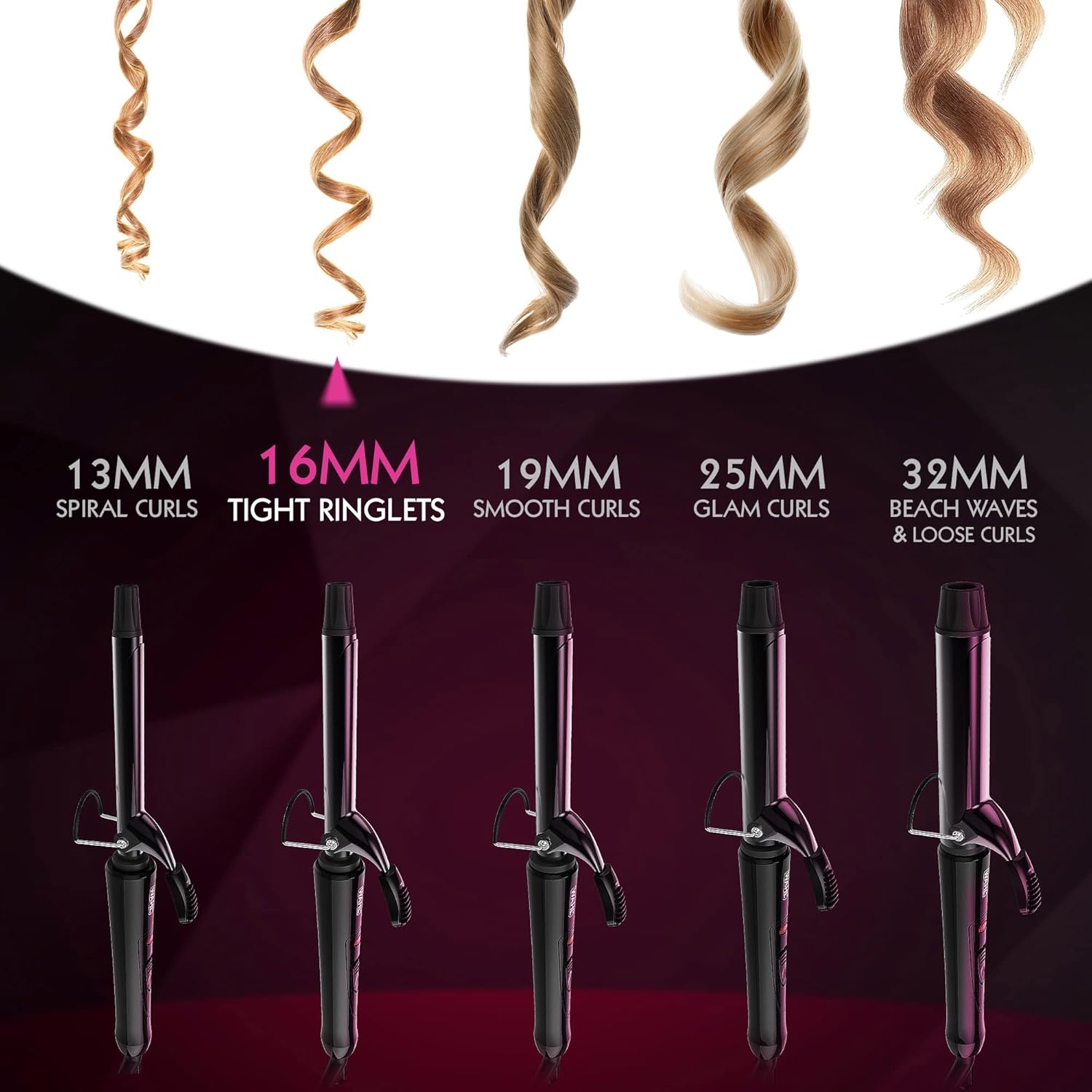
The diameter of the curler determines the type of curl or wave produced. In the professional market of 2026, barrel sizes are standardized, yet the results vary based on the length of the hair being styled.
| Barrel Size | Resulting Style | Best Hair Length |
|---|---|---|
| 0.5 inch (13mm) | Tight ringlets, "corkscrew" curls | Short to Medium |
| 0.75 inch (19mm) | Vintage waves, structured curls | Short to Medium |
| 1 inch (25mm) | The "Classic" curl, versatile bouncy look | All Lengths |
| 1.25 inch (32mm) | Beachy waves, loose romantic curls | Medium to Long |
| 1.5 inch (38mm) | Voluminous "blowout" look, soft bends | Long |
| 2 inch (50mm) | Round-brush effect, volume at the root | Very Long |
Wand vs. Clip: Which Mechanism is Better?
- Curling Irons (with Clip): These are ideal for structured, uniform curls that last. The clip holds the hair in place, allowing the heat to saturate the strand from both sides. This is often the preferred tool for beginners or those seeking a polished, "done" look.
- Curling Wands (Clip-less): Wands allow for more freedom of movement. Because there is no clip, there are no "telltale" creases in the hair. Wands are the standard for creating beachy, natural-looking waves where the ends are left straight.
Advanced Features to Look for in 2026
As of 2026, several technical advancements have become standard in high-quality curling tools. When evaluating a "good" hair curler, ensure it includes these modern safety and performance features:
- Microprocessor Heat Sensors: High-end tools now use sensors that check the barrel temperature up to 100 times per second. This ensures that the heat never dips or spikes, providing a uniform curl from root to tip.
- Universal Voltage: For the global traveler, tools that automatically adapt to 110V or 220V are essential to prevent the tool from shorting out in different regions.
- Automatic Shut-off: A critical safety feature that disables the heating element after 30 to 60 minutes of inactivity.
- Cool Tip and Swivel Cord: A 360-degree swivel cord prevents tangling during use, while a heat-resistant "cool tip" allows for two-handed styling without the risk of burns.
- Smart Memory Settings: Many 2026 models allow users to save their "ideal" temperature, so the tool automatically returns to the safest setting for their specific texture every time it is powered on.
Customizing Your Routine by Hair Type
Simply having a good tool is not enough; the technique must match the texture.
For Fine and Thin Hair
Start by applying a lightweight volumizing mousse to damp hair. Once dry, set your ceramic curling iron to no more than 300°F (150°C). Hold the hair on the barrel for no longer than 5 seconds. Use a "clip and set" method: after removing the iron, pin the curl to your head until it cools completely. This uses the cooling process to "lock" the shape into place without needing excessive heat.
For Thick and Coarse Hair
Sectioning is paramount. Use a titanium iron set to approximately 390°F (200°C). Work in small, 1-inch sections to ensure the heat can penetrate to the center of the hair bundle. Apply a firm-hold heat protectant spray to each section immediately before curling. Unlike fine hair, coarse hair can stay on the barrel for 8-10 seconds to ensure the hydrogen bonds are fully reset.
For Naturally Curly or Coily Hair
If you are using a curler to define your natural pattern, look for a tourmaline-infused wand. This helps to smooth the existing cuticle and prevent the frizz that often occurs when heat meets curly textures. Ensure the hair is 100% dry before styling to avoid "bubble hair," a condition where water inside the hair shaft boils and causes permanent structural damage.
Common Mistakes to Avoid
- Curling Damp Hair: This is the most destructive habit in hair styling. When heat is applied to damp hair, it creates steam that expands rapidly inside the hair shaft, literally exploding the hair fibers from the inside out. Always ensure hair is bone-dry.
- Ignoring Heat Protectant: A heat protectant acts as a sacrificial barrier. It absorbs the thermal energy so your hair doesn't have to. Skipping this step leads to "hot spots" and split ends.
- Wrong Direction: For a natural look, always curl the hair away from the face. This opens up the features rather than closing them in.
- Touching Curls Too Soon: A curl is not "set" until it is cool. If you brush through your curls while they are still warm, they will lose their shape and become limp waves.
FAQs
What is the difference between a marcel iron and a regular curling iron?
A marcel iron lacks a spring-loaded clip. It features a manual handle that the stylist controls entirely with their hand. While it offers superior control for creating intricate waves, it has a steep learning curve and is generally recommended for professional stylists or very experienced home users.
Can I use a titanium curler on bleached hair?
It is generally discouraged. Bleached hair is highly porous and compromised. Titanium's fast heat transfer can easily singe bleached strands. If you must use one, keep the temperature at the absolute minimum and use a high-quality, protein-enriched heat protectant.
How do I clean my curling iron?
Over time, hairspray and heat protectants build up on the barrel, creating a sticky residue that can snag hair. To clean it, wait until the iron is slightly warm (not hot), unplug it, and wipe the barrel with a damp cloth or a cotton pad soaked in rubbing alcohol. Never submerge the tool in water.
Why do my curls fall out even with a good curler?
This usually happens because the sections were too large for the heat to penetrate, or the hair was not allowed to cool before being manipulated. Additionally, using too much heavy conditioner before styling can weigh the hair down, making it harder for the curl to hold its structure.
Is a cordless curling iron worth it in 2026?
Cordless technology has improved drastically by 2026, with lithium-ion batteries providing up to 60 minutes of consistent heat. These are excellent for touch-ups or travel, but for a full head of thick hair, a corded iron is still recommended for guaranteed, uninterrupted power.
Professional Recommendation
To ensure the longevity of your hair's health and the quality of your style, invest in a ceramic-tourmaline hybrid iron with a 1-inch barrel. This specific combination is the most versatile "all-rounder" tool for 2026. It provides the gentle far-infrared heat needed for fine hair while producing enough negative ions to smooth coarse textures. Always pair your tool with a professional-grade thermal defense spray containing silicone or polymers to create a protective seal around the hair cuticle.
Image Gallery