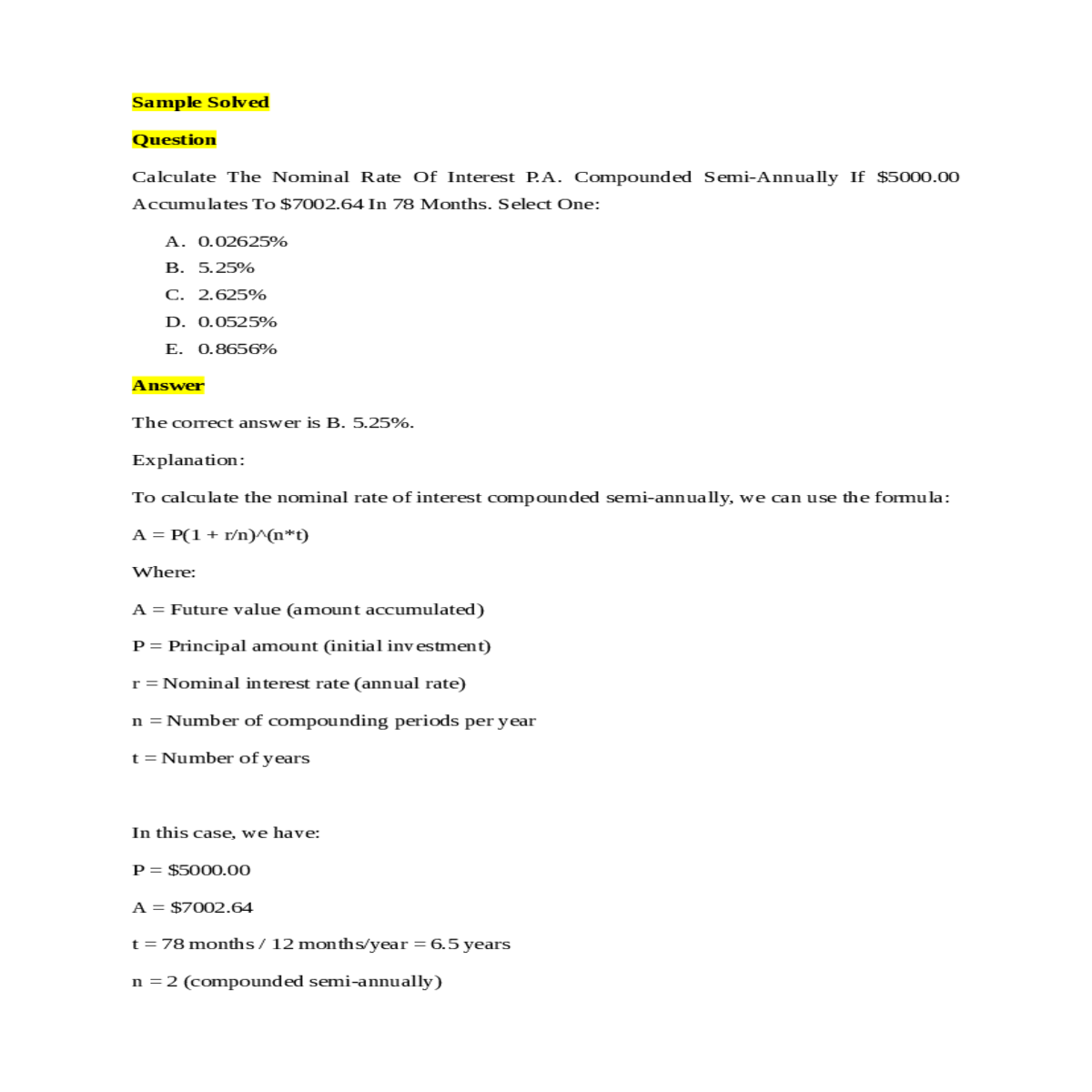
Understanding the Compound Semi-Annually Formula and Its Financial Impact
The compound semi-annually formula is A = P(1 + r/n)^(nt), where n is 2. This mathematical model calculates the future value of an investment or loan where interest is added to the principal balance twice per year, allowing the interes...
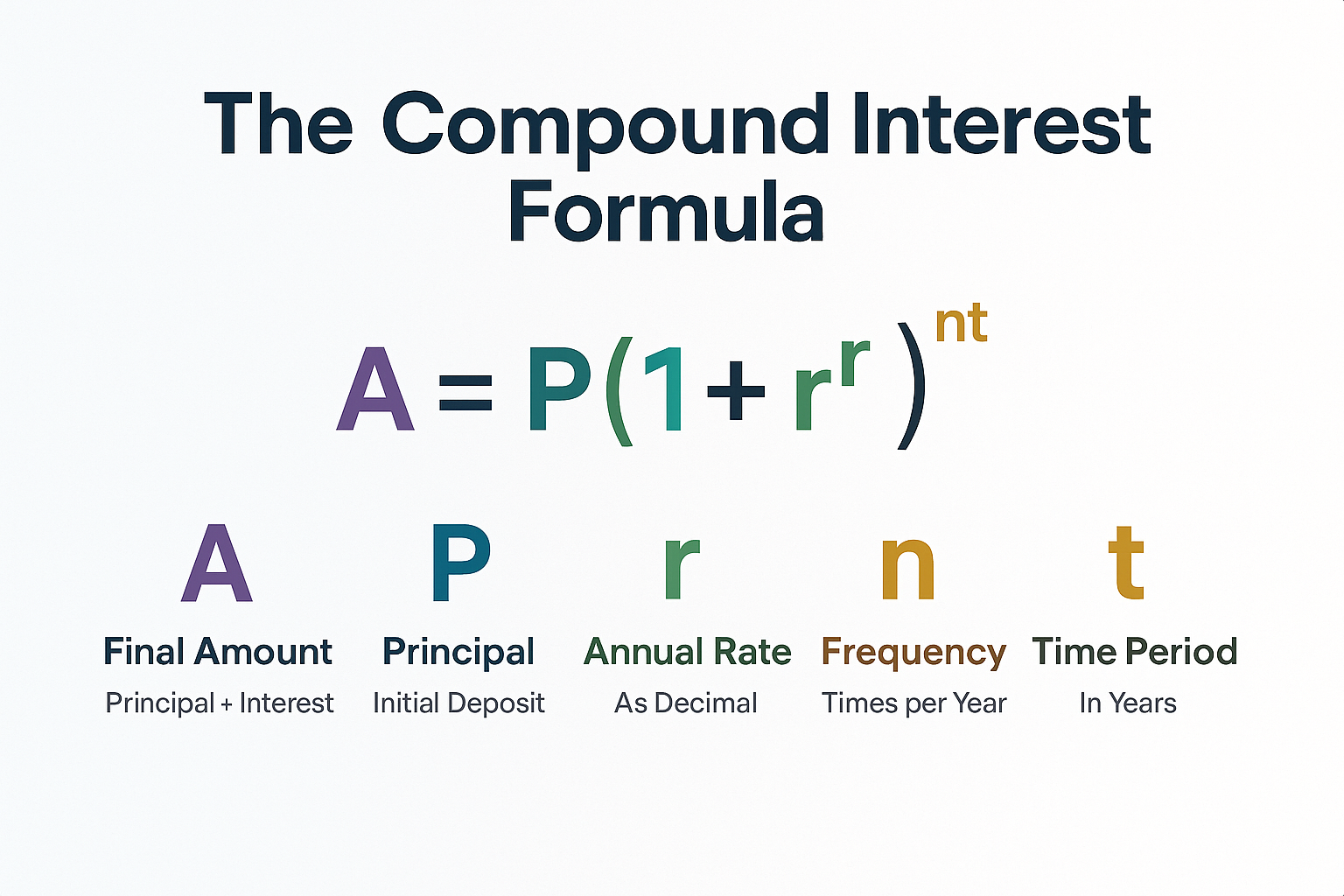
The compound semi-annually formula is A = P(1 + r/n)^(nt), where n is 2. This mathematical model calculates the future value of an investment or loan where interest is added to the principal balance twice per year, allowing the interest earned in the first six months to generate its own earnings in the second.
Contents
Compounding frequency is one of the most critical factors in determining the long-term growth of capital or the total cost of debt. While annual compounding is the simplest form, semi-annual compounding is a standard convention in many global financial markets, particularly within the fixed-income sector and corporate bond structures. By calculating interest every six months rather than once a year, the effective yield of an asset increases, a phenomenon known as "interest on interest."
As we navigate the financial landscape of 2026, understanding the mechanics of semi-annual compounding is essential for both individual investors managing retirement portfolios and corporate treasurers balancing debt obligations.
The Mathematical Components of the Semi-Annual Formula
To utilize the compound semi-annually formula effectively, one must understand the interaction between its five primary variables. The formula is expressed as:
A = P (1 + r / 2)^(2t)
Where:
- A (Final Amount): This represents the total value of the investment or the total balance of the loan at the end of the specified period, including the original principal and all accumulated interest.
- P (Principal): The initial sum of money invested or borrowed. This is the starting point of the calculation before any interest has been applied.
- r (Annual Interest Rate): The nominal interest rate expressed as a decimal. For example, a 5% interest rate must be converted to 0.05 for the formula to function correctly.
- 2 (Compounding Periods per Year): In semi-annual compounding, the number of periods (n) is always 2, representing the two six-month halves of a calendar year.
- t (Time in Years): The total duration for which the money is invested or borrowed.
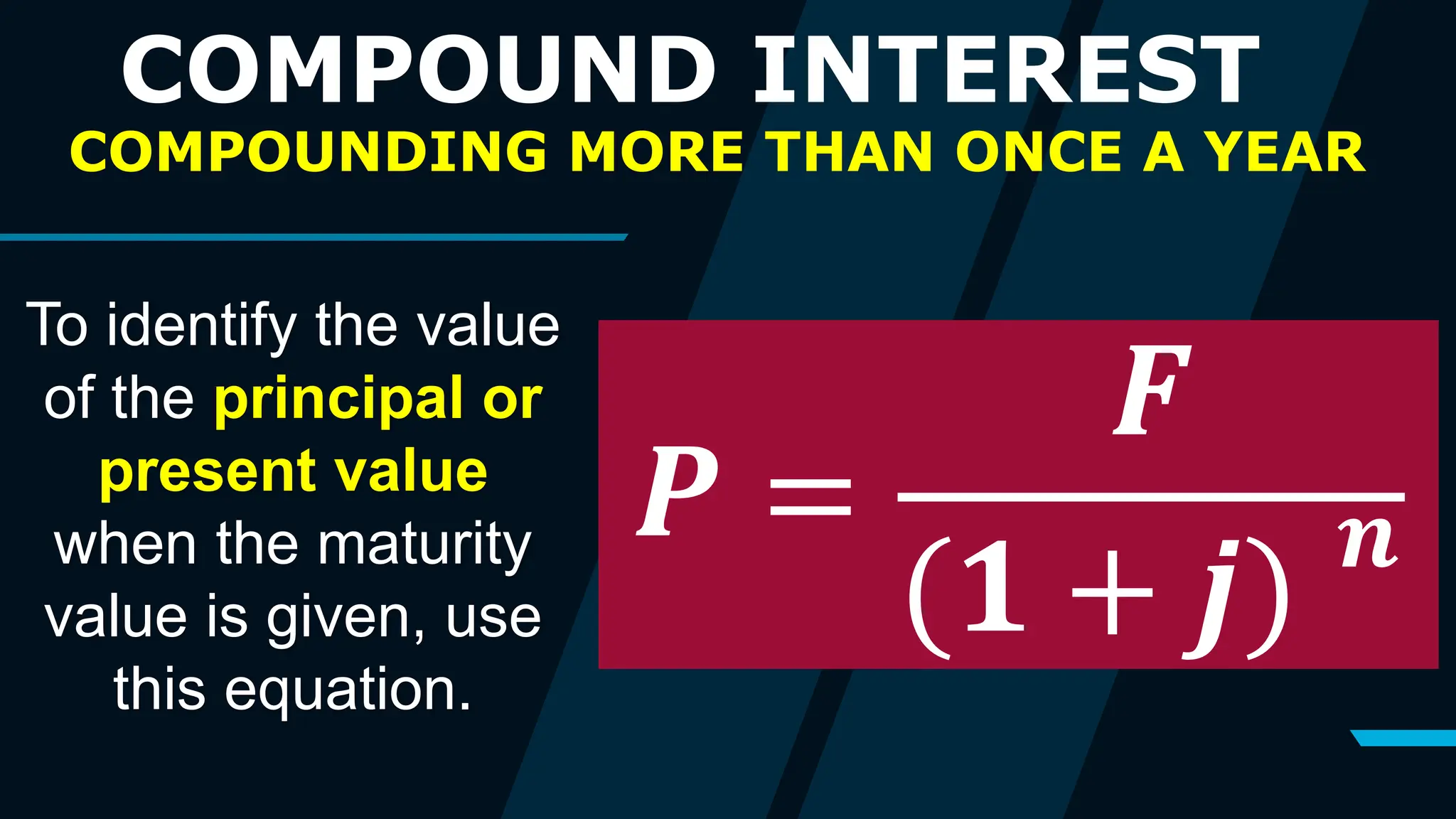
The logic behind the formula involves two specific adjustments to the standard annual compound interest model. First, the annual interest rate (r) is divided by 2 to find the "periodic interest rate." Second, the total number of years (t) is multiplied by 2 to determine the total number of "compounding periods." This ensures that the math reflects the reality of the interest being applied twice as often as it would under an annual schedule.
Step-by-Step Calculation Guide
Calculating the future value of an asset using semi-annual compounding requires a systematic approach to ensure accuracy, particularly when dealing with large sums or long time horizons.
1. Identify and Convert the Variables
Start by gathering the known data. Suppose an investor places $10,000 into a fixed-term deposit with a 6% annual interest rate for 5 years, compounded semi-annually.
- P = 10,000
- r = 0.06 (6% expressed as a decimal)
- n = 2 (standard for semi-annual)
- t = 5
2. Calculate the Periodic Interest Rate
Divide the annual rate by the number of periods.
- 0.06 / 2 = 0.03 This means the investment earns 3% every six months.
3. Determine the Total Number of Periods
Multiply the years by the compounding frequency.
- 5 years × 2 periods/year = 10 total periods.
4. Solve the Exponential Component
Add 1 to the periodic rate and raise it to the power of the total periods.
- (1 + 0.03)^10 = (1.03)^10
- Using a calculator: 1.03^10 ≈ 1.343916
5. Final Multiplication
Multiply the result by the principal to find the final amount.
- 10,000 × 1.343916 = $13,439.16
In this scenario, the investor earned $3,439.16 in interest. If this had been simple interest, they would have earned only $3,000. If it had been compounded annually, the total would have been $13,382.26. The semi-annual frequency provided an additional $56.90 due to the mid-year compounding effect.
Semi-Annual vs. Other Compounding Frequencies
The frequency of compounding has a direct, non-linear relationship with the final amount. As the number of compounding periods per year increases, the Effective Annual Yield (EAY) also increases. Semi-annual compounding serves as a middle ground between the conservative annual approach and the more aggressive monthly or daily frequencies.
| Compounding Frequency | Periods per Year (n) | Formula Variation | Effective Annual Yield (on 5% APR) |
|---|---|---|---|
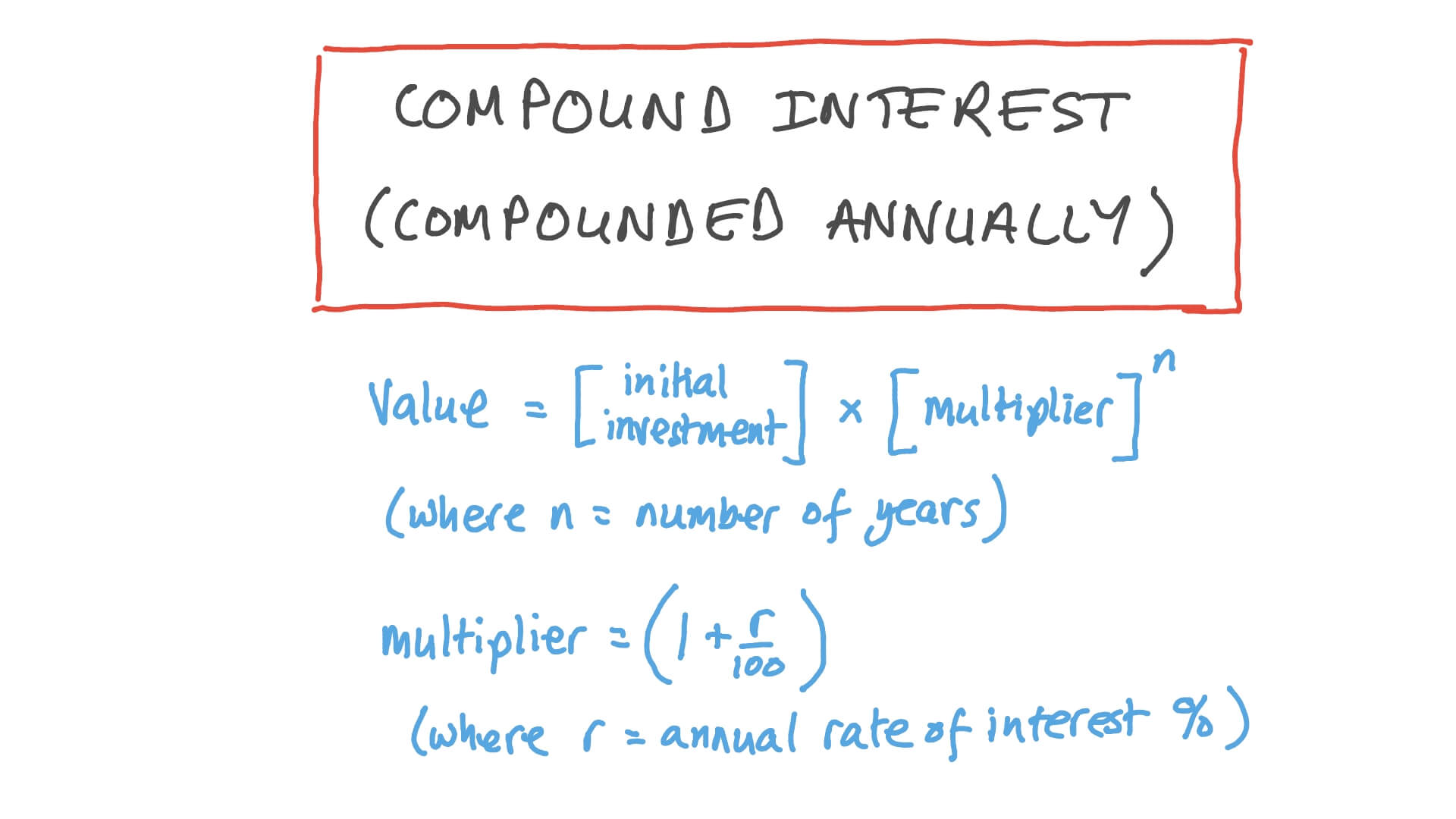
| Annual | 1 | A = P(1 + r)^t | 5.000% |
| Semi-Annual | 2 | A = P(1 + r/2)^2t | 5.063% |
| Quarterly | 4 | A = P(1 + r/4)^4t | 5.095% |
| Monthly | 12 | A = P(1 + r/12)^12t | 5.116% |
| Daily | 365 | A = P(1 + r/365)^365t | 5.127% |
The table illustrates that while moving from annual to semi-annual compounding provides a noticeable jump in yield (6.3 basis points in this example), the marginal gains begin to diminish as the frequency becomes extremely high (e.g., daily). This is why semi-annual compounding remains a popular standard for institutional finance; it provides a balance of enhanced yield without the administrative complexity of high-frequency calculations.
Practical Applications in 2026 Financial Markets
In 2026, the use of the compound semi-annually formula remains deeply embedded in several key financial instruments. Understanding where this formula is applied helps investors verify their returns and borrowers understand their obligations.
Government and Corporate Bonds
Most coupon-bearing bonds, including U.S. Treasury bonds and many high-grade corporate issues, pay interest semi-annually. When an investor buys a bond with a 4% coupon rate, they generally receive 2% of the par value every six months. If these payments are reinvested back into the same bond or a similar vehicle, the semi-annual compounding formula accurately predicts the total return at maturity.
Certificates of Deposit (CDs)
While many modern savings accounts use daily compounding to attract retail customers, traditional mid-to-long-term Certificates of Deposit often utilize semi-annual compounding. Banks use this to offer a competitive rate that is mathematically superior to annual compounding while maintaining a simpler structure than monthly compounding.
Mortgage and Loan Calculations
In certain jurisdictions, particularly in Canada and parts of Europe, mortgage interest is legally required to be compounded semi-annually, even if the borrower makes monthly payments. This creates a specific mathematical nuance where the "advertised" rate must be adjusted using the semi-annual formula to determine the actual interest charged per month.
The Concept of Effective Annual Rate (EAR)
When comparing different financial products, the nominal interest rate (the stated rate) can be misleading. To make a true "apples-to-apples" comparison, savvy investors use the Effective Annual Rate (EAR). This represents the actual interest rate earned or paid after compounding is taken into account.
For semi-annual compounding, the EAR formula is: EAR = (1 + r/2)^2 - 1
If a bank offers a 6% semi-annual rate and another offers a 5.95% monthly rate, the EAR allows you to see which is truly better.
- Semi-annual EAR: (1 + 0.06/2)^2 - 1 = 6.09%
- Monthly EAR: (1 + 0.0595/12)^12 - 1 = 6.11%
Despite the lower nominal rate, the monthly compounding option in this example results in a higher effective yield. This distinction is vital in 2026 as automated trading and AI-driven portfolio management tools prioritize EAR over nominal rates to optimize returns.
Common Pitfalls and Troubleshooting
Errors in calculating semi-annual compounding often stem from simple input mistakes rather than a misunderstanding of the core concept.
- Time Unit Mismatches: The variable t must be in years. If a loan is for 18 months, t should be 1.5. Entering "18" into the formula would result in a calculation for 18 years, leading to a massive error.
- Decimal Confusion: Always convert percentages to decimals. A 0.5% rate is 0.005, not 0.5. Misplacing the decimal point is the most common cause of unrealistic results.
- Incorrect Value for 'n': Ensure that n is specifically set to 2. If you are using a financial calculator or Excel, verify that the "periods per year" setting matches the semi-annual requirement.
- Rounding Errors: When calculating manually, do not round the periodic interest rate or the exponential result too early. Keep at least six decimal places throughout the intermediate steps to ensure the final dollar amount is accurate to the cent.
Frequently Asked Questions
What is the main advantage of semi-annual compounding over annual compounding?
The primary advantage is a higher total return for the investor. Because interest is calculated and added to the principal at the six-month mark, that "new" interest begins earning its own interest for the remainder of the year. This results in a higher final balance compared to waiting until the end of the year to apply interest to the original principal only.
Can I use the semi-annual formula if I make monthly deposits?
No, the standard compound semi-annually formula assumes a one-time initial investment (a "lump sum"). If you are making regular monthly contributions, you must use the Future Value of an Annuity formula, adjusted for the semi-annual compounding frequency. The math becomes significantly more complex because each individual deposit has a different amount of time to compound.
How do I calculate semi-annual compounding in Excel?
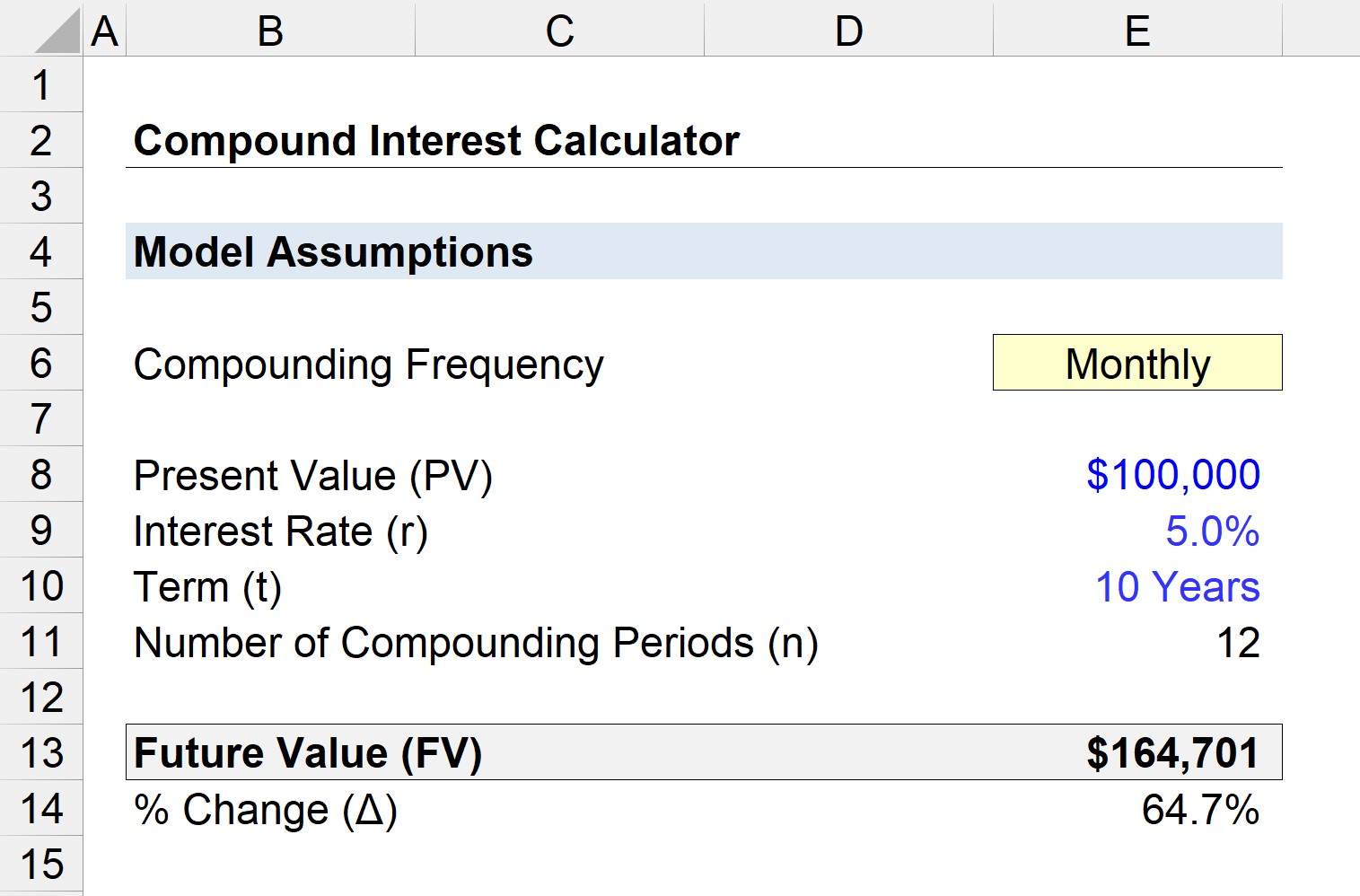
You can use the FV (Future Value) function. The syntax is =FV(rate/2, nper*2, 0, -pv). For example, for $10,000 at 5% for 10 years compounded semi-annually, the formula would be =FV(0.05/2, 10*2, 0, -10000). The negative sign before the principal is used because it represents an outflow of cash (an investment).
Is semi-annual compounding common for credit cards?
Typically, no. Credit cards almost exclusively use daily compounding to maximize the interest charges on outstanding balances. Semi-annual compounding is more common in "investment-side" finance, such as bonds and long-term notes, rather than consumer revolving credit.
What is the "Rule of 72" in the context of semi-annual compounding?
The Rule of 72 is a quick mental shortcut to estimate how long it takes for an investment to double. You divide 72 by the annual interest rate. While it is an approximation, it is slightly more accurate for semi-annual and monthly compounding than it is for annual compounding, as the rule inherently accounts for the "boost" provided by frequent compounding.
Practical Recommendation
When evaluating any financial product—whether it is a corporate bond, a high-yield savings account, or a commercial loan—always ask for the compounding frequency and the Effective Annual Rate (EAR). If the provider only gives you the nominal annual rate, use the compound semi-annually formula to verify the actual growth of your capital. For long-term wealth building, even the small difference between annual and semi-annual compounding can result in thousands of dollars of difference over several decades. In the current 2026 economic environment, where every basis point counts toward outperforming inflation, mastering these calculations is a prerequisite for financial literacy and success.
Image Gallery