Understanding the Life Insurance Assignment Agreement
A life insurance assignment agreement is a legal contract that transfers the ownership rights or the death benefit interest of a life insurance policy from the current policy owner to another person or entity. This transfer allows the...
A life insurance assignment agreement is a legal contract that transfers the ownership rights or the death benefit interest of a life insurance policy from the current policy owner to another person or entity. This transfer allows the recipient, known as the assignee, to claim part or all of the policy’s value for purposes such as securing a loan or gifting assets.
Contents
The life insurance assignment agreement is a versatile financial tool that bridges the gap between personal protection and liquid capital. While many policyholders view life insurance solely as a way to provide for heirs, the law treats these policies as personal property. Like a house or a car, a life insurance policy can be used as collateral or transferred to a new owner entirely. As of 2026, these agreements remain a standard requirement in commercial lending and sophisticated estate planning, provided the policyholder understands the legal mechanics and the long-term impact on their beneficiaries.
The Core Mechanics of a Life Insurance Assignment
At its most fundamental level, an assignment involves two primary parties: the assignor (the original policy owner) and the assignee (the person or institution receiving the rights). Unlike a change of beneficiary, which merely designates who receives the money upon the insured's death, an assignment transfers specific legal "incidents of ownership."
When an assignment agreement is executed, the insurance company is notified of the change in interest. It is important to note that the insurance carrier is generally not a party to the assignment agreement itself; the contract exists between the assignor and the assignee. However, the insurer must acknowledge the assignment for it to be enforceable against them. Most insurers provide standard forms to facilitate this, though the underlying legal obligations are governed by the specific agreement signed by the parties.
Roles and Responsibilities
- The Assignor: Retains the obligation to ensure premiums are paid (unless the agreement states otherwise) but gives up certain rights, such as the right to surrender the policy or take out further loans against it.
- The Assignee: Gains a legal claim to the policy. In a business context, this is often a bank. In a personal context, it might be a family member or a trust.
- The Insurer: Acts as the record-keeper. They do not guarantee the validity of the assignment but are legally bound to pay the death benefit according to the assignments on file.
Absolute vs. Collateral Assignment: Choosing the Right Path
The search intent for understanding these agreements usually centers on the distinction between a permanent transfer and a temporary lien. Choosing the wrong type can lead to unintended tax consequences or the loss of a policy you intended to keep.
Absolute Assignment
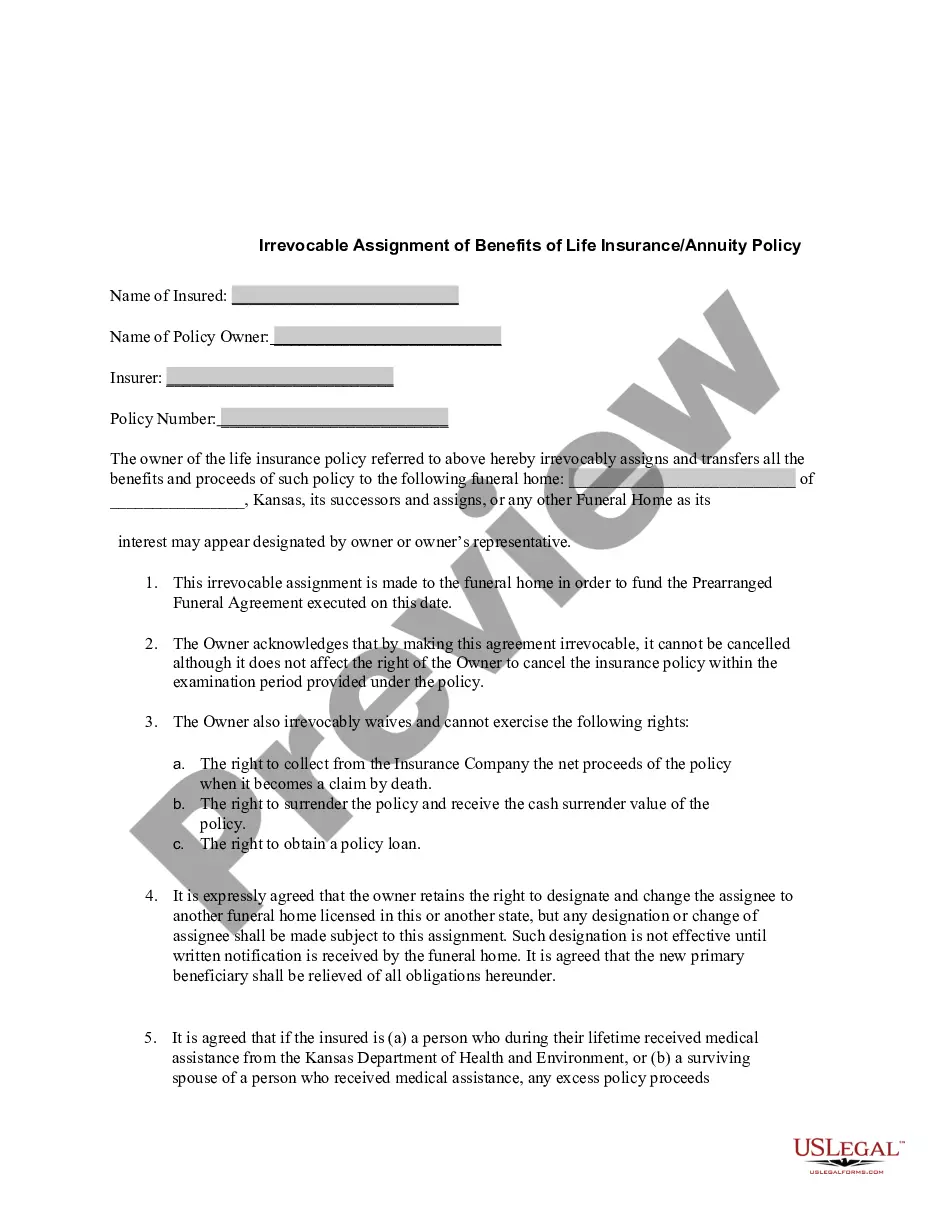
An absolute assignment is a complete and permanent transfer of all rights, title, and interest in the policy. Once the agreement is signed and filed, the assignor no longer owns the policy. The assignee becomes the new owner and can change the beneficiary, borrow against the cash value, or even surrender the policy for its cash value.
- Primary Use Case: Gifting a policy to a child or transferring it to an Irrevocable Life Insurance Trust (ILIT) to remove the death benefit from a taxable estate.
- Irrevocability: This transfer cannot be undone without the consent of the new owner.
Collateral Assignment
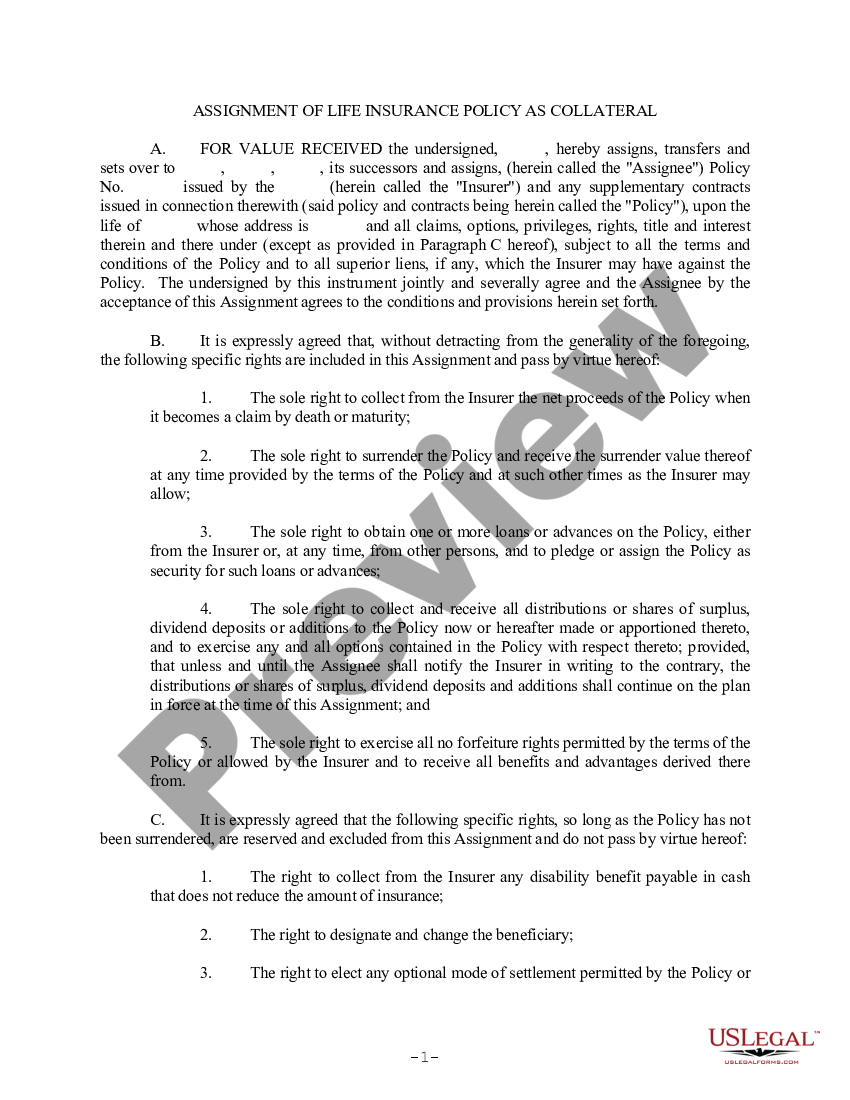
A collateral assignment is more restrictive and is typically used as security for a debt. The assignor retains ownership of the policy, but the assignee (the lender) is given a priority claim on the death benefit or cash value, but only up to the amount of the outstanding debt.
- Primary Use Case: Securing a small business loan (such as an SBA loan) or a private mortgage.
- Revocability: Once the debt is paid in full, the assignee releases the assignment, and the policy rights revert fully to the original owner.
| Feature | Absolute Assignment | Collateral Assignment |
|---|---|---|
| Ownership Transfer | Full transfer of all rights | Partial transfer of specific interests |
| Duration | Permanent | Temporary (lasts for the duration of the debt) |
| Beneficiary Control | Assignee chooses the beneficiary | Assignor chooses, but Assignee is paid first |
| Cash Value Access | Assignee has full control | Assignee can only access if the loan defaults |
| Typical Purpose | Gifting, Estate Planning, Policy Sales | Security for loans, business credit |
The Legal Process of Executing an Assignment
Executing a life insurance assignment agreement requires more than a simple handshake. Because it involves the transfer of property rights, specific steps must be followed to ensure the agreement is legally binding and recognized by the insurance carrier.
Step 1: Verification of Policy Terms
Not all life insurance policies are assignable. Before drafting an agreement, the policyholder must review the "General Provisions" section of their policy. Group life insurance provided by employers often contains "non-assignability" clauses to prevent employees from selling their benefits. Term life and permanent life policies (Whole or Universal) are generally assignable, but it is essential to confirm this with the carrier.
Step 2: Drafting the Agreement
While many banks have their own standard collateral assignment forms (such as the ABA Form 10 or similar variations used in 2026), an absolute assignment may require a more detailed legal contract. The agreement should clearly define the extent of the rights being transferred, the consideration (payment or loan) involved, and the conditions under which the assignment is released.
Step 3: Notification and Recording
The insurance company must be formally notified. This is usually done by submitting a "Notice of Assignment" form. The insurer will then record the assignment in their systems. It is a common misconception that the insurer "approves" the assignment; legally, they merely "record" it. If the assignor fails to notify the insurer and then dies, the insurer may pay the original beneficiary, leaving the assignee to sue the estate to recover the funds.
Impact on Beneficiaries and Death Benefits
One of the most critical aspects of a life insurance assignment agreement is its effect on the named beneficiaries. Under a collateral assignment, the assignee's claim is superior to the beneficiary's claim.
If a policyholder has a $1,000,000 policy and a $400,000 debt secured by a collateral assignment, the lender is paid the $400,000 first upon the policyholder's death. The remaining $600,000 is then distributed to the named beneficiaries. This hierarchy is established by the assignment agreement and overrides the standard beneficiary designations.
In an absolute assignment, the original beneficiaries are essentially erased. Because the assignee becomes the new owner, they have the right to name entirely new beneficiaries. For those using assignments for estate planning, this is a desired outcome, but for those unaware of the implications, it can lead to significant family disputes.
Tax Implications and the "Transfer for Value" Rule
The tax treatment of a life insurance assignment is a complex area of law, particularly regarding the Transfer for Value rule (Internal Revenue Code Section 101(a)(2)). Generally, life insurance death benefits are income tax-free. However, if a policy is transferred to another party for "valuable consideration" (money or something of value), the death benefit may become taxable as ordinary income.
There are specific exceptions to this rule, such as transfers to the insured party, a partner of the insured, or a corporation in which the insured is an officer. In 2026, tax authorities remain vigilant about policy assignments that look like "disguised sales." If you are considering an absolute assignment for a policy sale (a life settlement), it is vital to consult a tax professional to determine if the proceeds will be taxed.
Collateral assignments generally do not trigger the transfer-for-value rule because the ownership of the policy has not fundamentally changed; the policy is merely being used as a "pledge."
Common Pitfalls and Troubleshooting
Errors in the assignment process can lead to delayed loan approvals, rejected death claims, or litigation.
- Failure to Release: One of the most frequent issues occurs when a loan is paid off, but the lender fails to file a "Release of Assignment" with the insurance company. Years later, when the policyholder dies, the insurer sees an active assignment and refuses to pay the beneficiaries until the defunct bank (which may no longer exist) signs off.
- Incomplete Information: Assignment forms often require the exact policy number and the full legal name of the carrier. Small errors here can invalidate the recording of the assignment.
- Conflict with Automatic Premium Loans: If a policy has an "automatic premium loan" (APL) provision, the cash value might be depleted to pay premiums, reducing the collateral available to the assignee. Lenders in 2026 typically require the APL provision to be disabled as a condition of the assignment.
Frequently Asked Questions
Can I assign a term life insurance policy?
Yes, term life insurance policies can be assigned, but they are generally only used for collateral assignments. Since term insurance has no cash value, it is only valuable to an assignee if the insured dies during the term. Lenders often require the term length to exceed the loan duration.
Does an assignment affect my credit score?
No, the act of assigning a life insurance policy does not directly impact your credit score. However, it can help you secure a loan that you might otherwise be ineligible for, and the underlying debt will be reported to credit bureaus as usual.
How do I cancel a collateral assignment?
To cancel a collateral assignment, the assignee must provide a written release to the insurance company. If you have paid off your loan, you should proactively request a "Release of Assignment" document from your lender and ensure they have forwarded it to your insurance carrier.
What happens if the assignee dies or goes out of business?
If the assignee is an individual and they die, the rights to the policy usually pass to their estate. If the assignee is a business that goes bankrupt or closes, the policy rights can become legally "clouded." This is why it is essential to work with reputable institutional lenders when using life insurance as collateral.
Can I assign only a portion of my policy?
Yes. In a collateral assignment, you are effectively assigning a portion of the proceeds equal to the debt. In an absolute assignment, you can sometimes split a policy into two separate policies (if the insurer allows) and assign one while keeping the other.
Strategic Recommendation
If you are using a life insurance assignment agreement to secure a loan in 2026, ensure you obtain a "Release of Assignment" form at the same time you sign the final loan payoff documents. Storing this release in your permanent records is the best way to prevent your beneficiaries from facing legal hurdles in the future. For those considering an absolute assignment for estate or gift purposes, always perform a formal valuation of the policy to ensure compliance with gift tax reporting requirements.
Image Gallery