Why Lying About Weight on a Life Insurance Application Matters
Lying about your weight on a life insurance application is a critical misrepresentation that can lead to immediate policy denial, denied death benefits for your beneficiaries, or severe legal accusations of insurance fraud. Applying fo...
Lying about your weight on a life insurance application is a critical misrepresentation that can lead to immediate policy denial, denied death benefits for your beneficiaries, or severe legal accusations of insurance fraud.
Contents
Applying for life insurance requires absolute transparency regarding your health history, medical records, and physical measurements. While some applicants feel tempted to shave off a few pounds to secure a lower rate tier, life insurance underwriters rely heavily on accurate data to assess mortality risk. Understanding the mechanics of medical underwriting, how insurers verify physical stats, and the legal repercussions of falsifying information clarifies why honesty remains essential when securing financial protection.
The Role of Weight in Life Insurance Underwriting
Underwriting is the process by which an insurance company evaluates an applicant's risk profile to determine whether to issue a policy and what premium to charge. Weight is a foundational metric in this assessment, primarily used to calculate your Body Mass Index (BMI). Insurers do not evaluate weight in a vacuum; they correlate it with height, age, blood pressure, cholesterol levels, and family medical history.
Insurance companies categorize applicants into distinct rate classes, ranging from "Preferred Plus" (exceptional health) to standard or substandard tiers. Every rate class corresponds to a specific pricing schedule. Because weight directly influences BMI, a lower weight can push an applicant into a more favorable pricing tier, resulting in lower monthly premiums. Conversely, higher weight or a high BMI can lead to higher rates or require a specialized policy.
Underwriters use weight guidelines because epidemiological studies consistently demonstrate a statistical correlation between extreme body mass indices and long-term health risks, including cardiovascular disease, type 2 diabetes, and certain cancers. By misrepresenting your weight, you disrupt the actuarial calculations that insurers use to maintain financial solvency across their risk pools.
How Life Insurance Companies Verify Your Weight
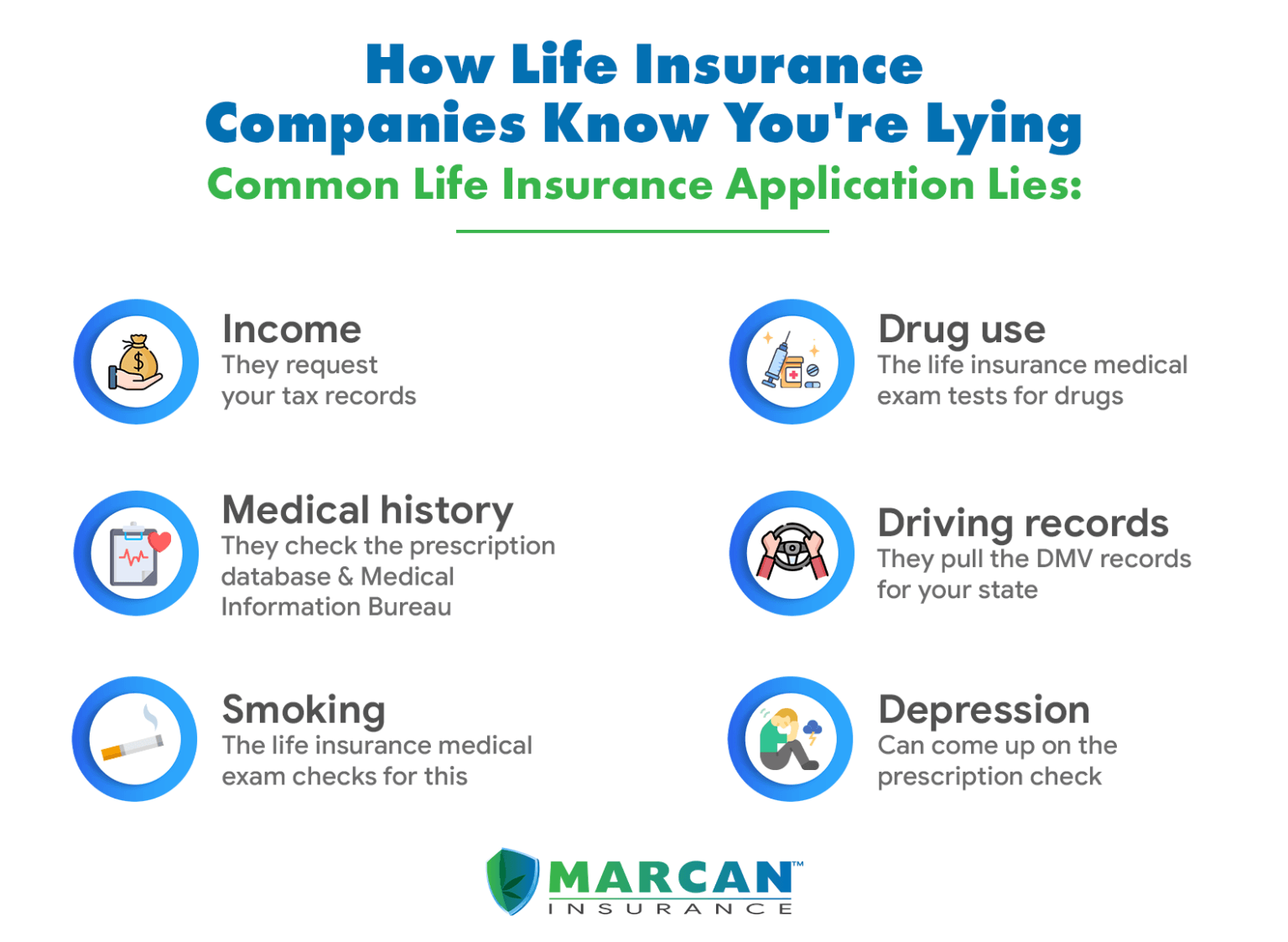
Many applicants assume that life insurance companies simply take their word for it, but the application process includes multiple layers of verification. Lying or exaggerating on the initial questionnaire rarely goes unnoticed once the underwriting machinery begins its review.
The Paramedical Exam
For the vast majority of traditional term and permanent life insurance policies, carriers require a free paramedical examination. A licensed medical professional typically visits your home or office to draw blood, collect a urine sample, record your blood pressure, and physically measure your height and weight. This exam completely neutralizes any attempt to falsify your measurements on the application paperwork.
Medical Records and Prescription History
Even in cases where a policy offers "accelerated underwriting" or no-exam options, insurers do not rely solely on self-reported data. They cross-reference your application against comprehensive databases, such as the Medical Information Bureau (MIB), and review your electronic health records, past doctor visits, and prescription history. A physician's recent clinical notes almost always document your exact weight, easily exposing discrepancies between your reported figures and your actual medical history.
The Consequences of Misrepresentation
Falsifying information on a life insurance application is legally classified as material misrepresentation. A misrepresentation is deemed "material" if knowing the truth would have influenced the insurer's decision to issue the policy, charge a higher premium, or alter the coverage terms.
Policy Denial During Underwriting
If the paramedical exam or medical record review reveals that you lied about your weight, the insurer will immediately halt the underwriting process. They may issue a counter-offer with adjusted, higher premiums based on your accurate weight class. In cases of blatant, intentional fraud, the company can outright reject the application. Once an application is declined or denied for fraud, that status is recorded in industry databases like the MIB, making it significantly harder and more expensive to secure coverage with any other carrier in the future.
Contestability Period and Denied Death Benefits
The stakes escalate dramatically after a policy is issued. Every life insurance policy includes a standard two-year contestability period, which begins on the effective date of coverage. During this window, the insurance company has the legal right to investigate the accuracy of the original application, especially if the insured passes away.
If you die within the first two years of the policy and the insurer discovers during the claims investigation that you lied about your weight—or any other material health factor—they have the legal authority to deny the death benefit entirely. Instead of paying out the policy proceeds to your grieving family, the insurance company may simply refund the premiums you paid, leaving your beneficiaries entirely unprotected.
Post-Contestability Fraud Investigations
While the contestability period typically expires after two years, exceptions exist in cases of active, deliberate fraud. If an insurer uncovers evidence that an applicant engaged in systemic, calculated fraud to secure coverage, they may contest the policy even after the two-year window closes, depending on state insurance regulations and statutory guidelines.
| Scenario | When It Happens | Insurer Action | Consequence for Policyholder / Beneficiaries | | :igo | :--- | :--- | :--- | | Caught During Underwriting | Before policy issuance (Paramedical exam / MIB check) | Counter-offer or immediate application denial | Higher premiums or recorded denial in industry databases. | | Caught During Contestability Period | Within 2 years of policy issuance (Post-mortem investigation) | Claim denial and policy rescission | Beneficiaries receive only a refund of paid premiums, not the death benefit. | | Honest Disclosure | At the time of application | Standard underwriting and fair rate classification | Policy issued smoothly with predictable premiums and guaranteed payouts. |
Alternative Options for Higher Weight Classes
Fears of high premiums drive many applicants to lie about their weight, yet honesty rarely justifies the risks of misrepresentation. The life insurance market is diverse, and numerous carriers specialize in underwriting applicants who fall outside traditional, slender weight charts.
Working with an independent insurance broker allows you to shop across dozens of different carriers. Underwriting guidelines vary dramatically from one insurance company to another. Company A might penalize a specific BMI heavily, while Company B views it as acceptable within a standard rate class.
Furthermore, if your weight prevents you from qualifying for traditional term or whole life insurance at an affordable rate, alternative products exist:
- Guaranteed Issue Life Insurance: These policies require no medical exam and no health questions. Anyone within the eligible age bracket is accepted, though they feature higher premiums and lower death benefit caps.
- Simplified Issue Life Insurance: These require no medical exam, though you must answer a brief questionnaire about your health. While weight may still be addressed, it offers a middle ground for individuals with minor health complications.
Frequently Asked Questions
What happens if my weight fluctuates after I buy the policy?
Your life insurance premium and coverage are locked in based on your health status and weight at the time of underwriting. Once the policy is active, subsequent weight gain or loss does not alter your premiums or invalidate your death benefit, as long as the initial application was entirely truthful.
Is a minor discrepancy in weight considered fraud?
Minor fluctuations or slight discrepancies of a few pounds are common and generally do not trigger fraud investigations. Underwriters understand that weight varies daily. However, substantial discrepancies—such as claiming to weigh 170 pounds when you actually weigh 230 pounds—are classified as material misrepresentations because they actively alter your insurance risk tier.
Do no-exam life insurance policies check my weight?
No-exam policies do not require a physical paramedical appointment, but insurers still verify your identity and medical background through electronic databases, prescription history checks, and MIB records. Lying on a no-exam application carries the exact same legal risks and consequences as lying on a fully underwritten application.
Can an insurance company deny a claim years after I die?
Generally, the two-year contestability period protects beneficiaries from policy rescission after a policy has been active for 24 months. However, if the insurer can prove active, fraudulent intent in court—depending on state laws—they may challenge a claim outside that window, though such cases are rare and legally complex.
How can I get a better rate if I am working on losing weight?
If you are actively losing weight, you can purchase a standard term life insurance policy now to lock in coverage, and then request a reconsideration or re-rate with the same carrier or a new one after maintaining your weight loss for 12 to 24 months.
Next Actions and Best Practices
Securing life insurance requires complete candor regarding your physical measurements and medical history. Rather than risking policy cancellation or leaving your family without financial security due to a contested claim, partner with an independent insurance broker. Provide exact, truthful measurements on your application, and let your broker match your specific profile with a carrier whose underwriting guidelines view your weight favorably. Honesty ensures your policy remains an ironclad financial safety net for your beneficiaries.
Image Gallery