The Etymology of Idaho Explained: Origins, Myths, and Linguistic Realities
The name "Idaho" originated as an invented word introduced to the U.S. Congress in 1860 by lobbyist George M. Willing, who claimed it was a Shoshone phrase meaning "Gem of the Mountains." Although Congress rejected the name for Colorad...
The name "Idaho" originated as an invented word introduced to the U.S. Congress in 1860 by lobbyist George M. Willing, who claimed it was a Shoshone phrase meaning "Gem of the Mountains." Although Congress rejected the name for Colorado after discovering the translation was fabricated, the word gained regional popularity in the Pacific Northwest and was officially adopted when President Abraham Lincoln signed the Idaho Territory bill in 1863.
Contents
The Political Origins: George M. Willing and the Congressional Hoax
The documented paper trail of the word "Idaho" begins in Washington, D.C., during the 36th United States Congress in 1860. As settlers flooded the Pike's Peak region following the 1859 gold strike in the Rocky Mountains, Congress sought to organize a new federal territory out of parts of Kansas, Nebraska, Utah, and New Mexico.
George M. Willing—an eccentric physician, politician, and prospector—arrived in the capital claiming to be the delegate-elect from the unrecognised Jefferson Territory. Willing proposed that Congress name the new Rocky Mountain territory "Idaho." When asked by lawmakers for the origin and meaning of the word, Willing asserted that it was an indigenous Shoshone term translating directly to "Gem of the Mountains" or "the sun coming over the mountains."
- 1860: George M. Willing proposes "Idaho" to U.S. Senate for Rocky Mountain territory
- Claims Shoshone origin: "Gem of the Mountains"
- Senate approves bill with "Idaho"
- Etymological fraud exposed by linguists/delegates
- Bill amended to "Colorado" (Feb 1861)
- Name "Idaho" migrates West via steamboat & mining camps
- Congress creates Idaho Territory (March 1863)
- Name "Idaho" migrates West via steamboat & mining camps
- Bill amended to "Colorado" (Feb 1861)
- Etymological fraud exposed by linguists/delegates
- Senate approves bill with "Idaho"
- Claims Shoshone origin: "Gem of the Mountains"
The Senate initially accepted the suggestion, incorporating the name into the territorial organization bill. However, as the legislation progressed into late 1860 and early 1861, questions surrounding the word's authentic roots emerged. Representative Isaac I. Stevens of Washington Territory and Senator Henry Wilson of Massachusetts investigated the claim with linguistic authorities and Native American representatives. They discovered that no such Shoshone word existed and that "Gem of the Mountains" was a complete fabrication.
Upon learning that Willing had concocted the word—or at least invented its romanticized translation—the Senate removed "Idaho" from the bill. On February 28, 1861, the territory was officially named Colorado, derived from the Spanish word for "reddish" or "ruddy," referring to the Colorado River.
How "Idaho" Moved West: Steamships, Counties, and Mining Rushes
Although rejected in Washington, D.C., the word "Idaho" did not disappear. During the months it was debated in Congress, the name circulated widely in national newspapers. Western pioneers, entrepreneurs, and miners adopted the catchy, melodic word before its fraudulent origin became widespread public knowledge.
THE WESTWARD MIGRATION OF "IDAHO"
- Columbia River Steamboat (1860)
- Steamship 'Idaho' built by Oregon Steam Navigation Co.
- Carried miners, supplies, and news up the Columbia & Snake Rivers.
- Mining District Expansion (1861–1862)
- Gold discovered along Clearwater & Salmon Rivers.
- Camps and trading posts adopted the name "Idaho" locally.
- Washington Territorial Legislation (1862)
- Washington Legislature creates "Idaho County" in northern region.
- Federal Authorization (March 3, 1863)
- President Lincoln signs territorial charter; "Idaho" finalized.
The Steamboat Idaho
In 1860, while Congress was still debating the Colorado legislation, business partners John S. Ruckle and Michael Fallon began constructing a steamboat on the Columbia River to carry passengers and freight between the Cascades and The Dalles. A friend of Ruckle, former Oregon delegate George Williams, suggested the name Idaho, which he had heard during territorial debates in the East. Launched in July 1860, the steamship Idaho became one of the primary transport vessels for prospectors heading toward northern goldfields.
Mining Camps and County Creation
Gold was discovered along E.D. Pierce’s expedition route on the Clearwater River in late 1860, sparking a massive migration into what was then eastern Washington Territory. As prospectors traveled aboard the steamboat Idaho to reach the mines, the term attached itself to the entire region. Mining camps, springs, and trading posts adopted the name.
Recognizing the rapid influx of miners, the Washington Territorial Legislature officially established Idaho County in December 1862. By the time Congress revisited the necessity of dividing Washington and Dakota Territories to handle the sprawling mining population, "Idaho" had become the established regional identifier across the Pacific Northwest.
When Congress chartered the new territory on March 3, 1863, President Abraham Lincoln signed the legislation officially naming the region the Idaho Territory, cementing a name that had been rejected for Colorado just two years prior.
Evaluating the Linguistic Theories: Fabrication vs. Native Roots
Etymologists and linguists have spent over a century dissecting the true linguistic origins of "Idaho." While George M. Willing's fabrication remains the primary driver of the state's modern name, several legitimate Native American linguistic connections have been proposed to explain where Willing may have heard or adapted the sound sequence.
LINGUISTIC ORIGIN THEORIES
- Willing Hoax
- Pure coinage / pseudo-Native fabrication
- Shoshone Dawn
- ee-da-how
- "Morning is coming"
- Phonetic mishearing
- Apache Enemy
- idaa'hé
- Plains Apache term for Comanches
1. The Direct Invention Hypothesis (The Willing Hoax)
The most widely accepted historical explanation is that George M. Willing simply coined the word out of thin air, blending pleasing phonetic sounds to create a pseudo-Native American name. In an 1875 article published in the Rocky Mountain News, writer William O. Stoddard—who had served as President Lincoln's private secretary—recounted that Willing admitted to fabricating the word during a conversation in Washington. According to Stoddard, Willing claimed he made up the name while sitting in his room, choosing sounds that sounded authentic to European-American ears, and attaching the poetic translation "Gem of the Mountains" to increase its political appeal.
2. The Shoshone Morning Greeting (Ee-da-how)
Linguist Sven Liljeblad, who spent decades studying Shoshone, Bannock, and Northern Paiute languages at Idaho State University, provided a detailed analysis of potential Shoshone roots. Liljeblad demonstrated that while there is no Shoshone word meaning "Gem of the Mountains," there is an authentic Shoshone exclamatory phrase used to signal the dawn:
- ee-da: Approaching or coming down.
- ka-how or how: An exclamatory suffix indicating dawn, light, or morning atmosphere.
The combined expression—roughly pronounced ee-dap-hoo or ee-da-how—translates functionally to "The sun is coming up" or "It is morning." Liljeblad theorized that non-Native fur traders or settlers in the Intermountain West may have overheard Shoshone speakers using this morning call, mispronounced the phrase, and passed it along as a noun. While Willing may have claimed full authorship, he could also have heard this existing vocalization and retrofitted his own romantic definition.
3. The Plains Apache Connection (Idaa'hé)
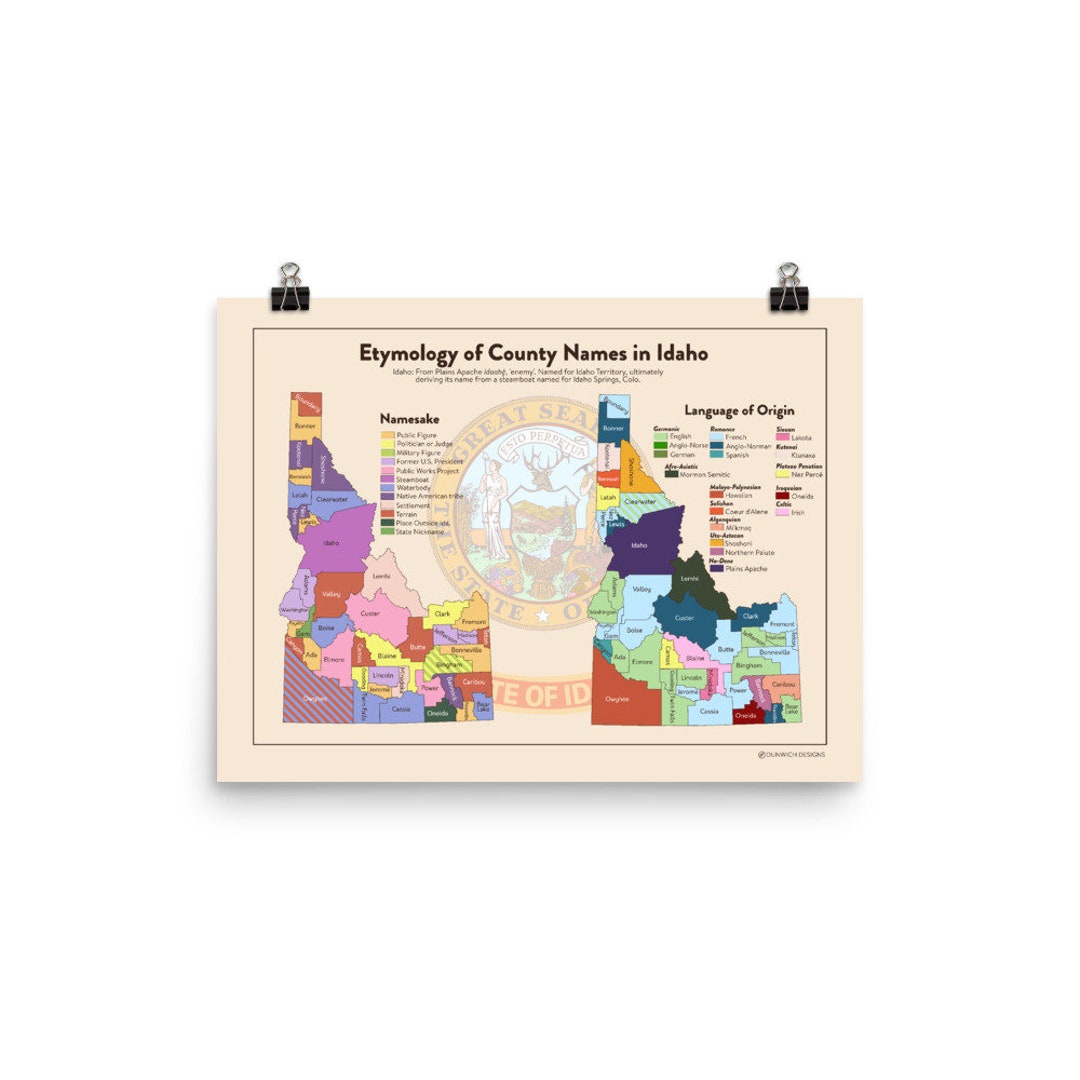
Prominent linguist William Bright, author of Native American Placenames of the United States, offered an alternative Uto-Aztecan and Athabaskan hypothesis. Bright identified the Plains Apache (Kiowa Apache) word idaa'hé, which means "enemy."
This term was used by Plains Apache speakers to refer specifically to the Comanche tribes, who inhabited areas spanning from the southern Plains up into northern territory. Through intertribal trade networks and border contacts, the term idaa'hé circulated among traders across the Great Plains and Southern Rockies. Bright suggested that white settlers or prospectors encountered the word on the frontier and anglicized its pronunciation without understanding its adversarial meaning.
4. Nez Perce and Sahaptin Misconceptions
Early 20th-century popular local histories frequently claimed the name derived from Nez Perce (Nimíipuu) phrases, suggesting roots like Kootenai-ee-dah-hoo. Modern Sahaptin linguistic analysis has entirely disproven this connection. The Nez Perce language lacks the phonetic structure and lexical roots to produce "Idaho," and indigenous Nez Perce historical accounts confirm the word was absent from their language prior to Euro-American arrival.
Etymological Comparison of Idaho's Origin Hypotheses
The following table summarizes the primary theories regarding the origin of the name "Idaho," comparing their linguistic roots, proposed meanings, historical supporters, and scientific probability.
| Theory / Origin | Proposed Meaning | Primary Language Group | Attributed Source / Analyst | Historical & Linguistic Credibility | Key Evidence & Flaws |
|---|---|---|---|---|---|
| George Willing Fabrication | "Gem of the Mountains" | None (Coinage) | Dr. George M. Willing / W.O. Stoddard | High (Historical Record) | Congressional records show 1860 rejection after translation proved fake. |
| Shoshone Sunrise Call | "The sun is coming up" / Morning greeting | Uto-Aztecan (Shoshone) | Dr. Sven Liljeblad (Linguist) | Moderate to High (Phonetic match) | Matches real Shoshone phrase ee-dap-hoo; rejected as meaning "gem." |
| Plains Apache Term | "Enemy" (Referring to Comanches) | Athabaskan (Plains Apache) | Dr. William Bright (Linguist) | Moderate (Etymological precedent) | Valid Athabaskan word idaa'hé; path to Willing or regional use remains indirect. |
| Nez Perce Origin | Various romanticized translations | Sahaptin (Nez Perce) | 19th-Century Regional Folklore | Uncredible (Disproven) | Does not align with Sahaptin phonology or historical Nez Perce lexicon. |
The Persistence of the Myth: "Gem of the Mountains" in State Identity
Despite clear documented evidence that "Gem of the Mountains" was a 19th-century marketing myth, the phrase became deeply embedded in the cultural identity of Idaho.
STATE IDENTIFIER TRADITION
- Official Latin Motto
- "Esto Perpetua" ("It is perpetual" - Adopted 1890)
- State Nickname
- "The Gem State" (Derived from Willing's hoax)
When Idaho was admitted as the 43rd state of the Union on July 3, 1890, the state constitutional convention selected the official Latin motto "Esto Perpetua" ("It is perpetual"), crafted by artist Emma Edwards Green. However, the popular moniker "The Gem State" remained the dominant informal nickname, appearing on state seals, official signage, commemorative coins, and modern license plates.
This persistence reflects a common pattern in American westward expansion during the mid-19th century. Federal and local authorities routinely selected placenames that sounded indigenous to lend an air of antiquity, natural beauty, and regional legitimacy to newly occupied territories. Even after the political trickery behind Willing's proposal was documented, the poetic imagery of mountain peaks catching the morning light matched the landscape of the Pacific Northwest so well that the public permanently embraced it.
Historical Timeline of the Naming of Idaho
To understand how a rejected proposal became a permanent state name, it helps to track the exact sequence of events across the mid-to-late 19th century:
- 1859: Pike's Peak Gold Rush begins; demand grows for new Rocky Mountain Territory.
- 1860 (March): George M. Willing lobbies U.S. Congress to name territory "Idaho."
- 1860 (July): Steamboat 'Idaho' launched on Columbia River by Oregon Steam Navigation Co.
- 1861 (Feb): U.S. Senate discovers translation fraud; renames region Colorado Territory.
- 1861: Gold strikes on Clearwater River; miners adopt name "Idaho" locally.
- 1862 (Dec): Washington Territorial Legislature officially establishes Idaho County.
- 1863 (March 3): President Abraham Lincoln signs bill chartering Idaho Territory.
- 1890 (July 3): Idaho admitted to the Union as the 43rd State ("The Gem State").
Frequently Asked Questions
What does the word "Idaho" actually mean?
Etymologically, the word "Idaho" has no verified direct translation. It is primarily understood to be an invented pseudo-Native American word created by lobbyist George M. Willing in 1860. If derived from authentic Shoshone roots (ee-da-how), it functions as an exclamatory phrase meaning "the sun is coming up" or "morning is here," rather than any reference to gems or mountains.
Is "Gem of the Mountains" an authentic Native American translation?
No. The translation "Gem of the Mountains" was completely fabricated by George M. Willing in 1860 to persuade the U.S. Congress to adopt the name for what is now the state of Colorado. Congress rejected the translation after linguistic consultation revealed it had no basis in any Native American language.
Why was Colorado almost named Idaho?
In 1860, the U.S. Senate initially drafted legislation to name the newly formed Pike's Peak mining district the "Idaho Territory." However, after Senate leaders discovered that the claimed Shoshone meaning was a hoax, they amended the bill in February 1861 to use the Spanish word "Colorado."
How did Idaho get its name if Congress rejected it?
After the word was debated in Congress in 1860, news reports spread the name to the Pacific Northwest. Business owners named a Columbia River steamboat Idaho, which carried thousands of miners to gold strikes in northern Washington Territory. The name became so popular locally that Washington Territory created "Idaho County" in 1862, and Congress officially adopted "Idaho Territory" when chartering the region in 1863.
What is Idaho's official state motto and nickname?
Idaho's official state motto is the Latin phrase "Esto Perpetua", which translates to "It is perpetual" or "May she endure forever." Its official state nickname is "The Gem State," which directly traces its heritage back to the popular myth created during the 1860 territorial name debates.
Key Takeaways for Historical and Etymological Research
For researchers, educators, and historians examining Western U.S. toponymy, analyzing the etymology of Idaho requires separating political mythmaking from documented linguistic evidence:
- Verify Primary Records: Always reference the Congressional Globe debates from the 36th U.S. Congress (1860–1861) to observe how territorial naming bills were introduced, amended, and debated.
- Distinguish Etymology from Folklore: Recognize that popular state nicknames ("The Gem State") often reflect 19th-century romanticized folklore rather than genuine linguistic translations.
- Consult Native Language Specialists: Utilize academic research by recognized linguists—such as Sven Liljeblad's Shoshone studies or William Bright's Native American placename surveys—to evaluate Indigenous word claims.
- Trace Regional Transmission: Examine how non-governmental channels (such as steamboat lines, mining district registries, and local newspaper coverage) led to the regional adoption of placenames before official legislation occurred.
Image Gallery