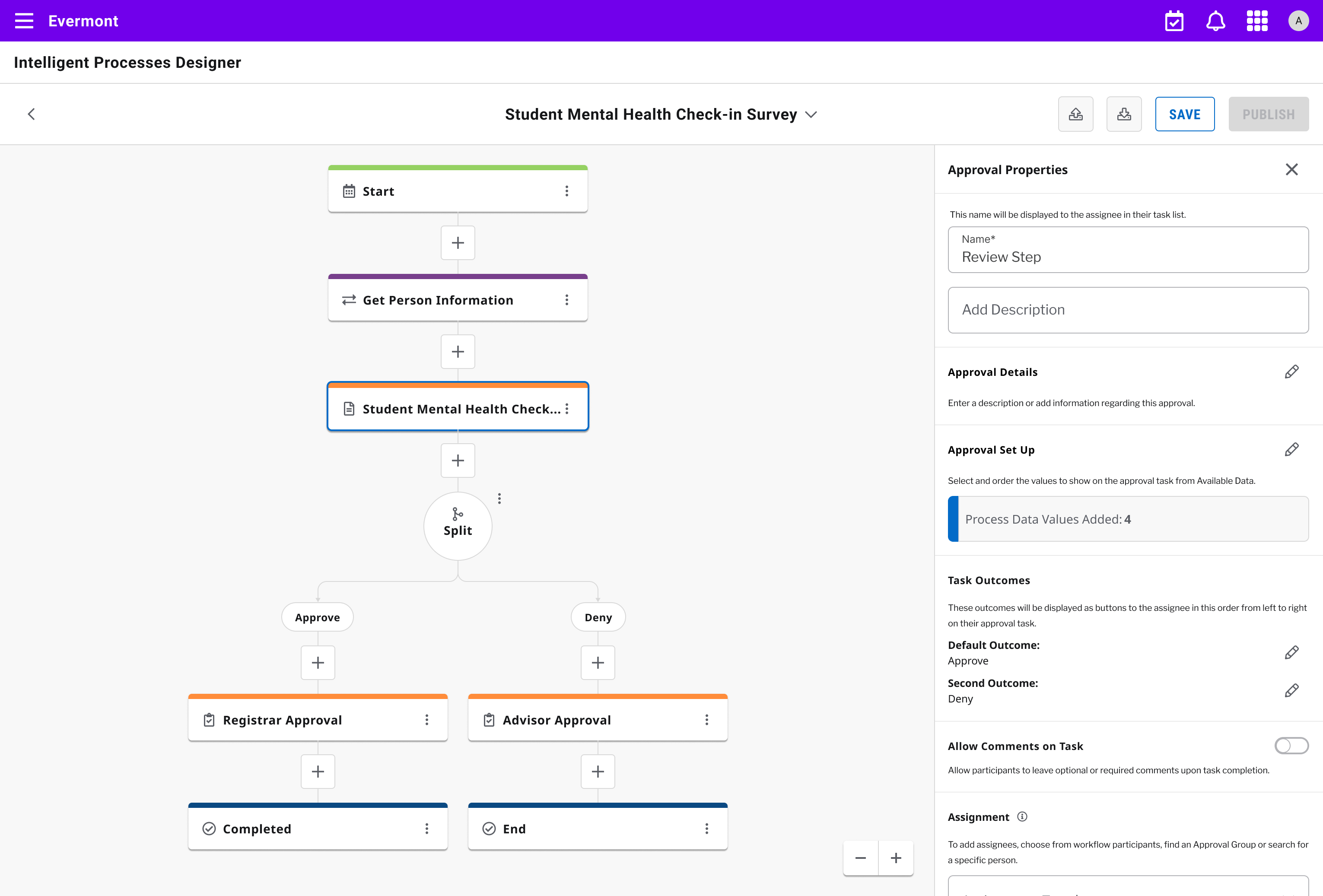
Understanding Ellucian Products for Higher Education: A Comprehensive Guide
Ellucian provides a specialized suite of Enterprise Resource Planning (ERP) and Student Information System (SIS) solutions designed exclusively for higher education. Its primary products, Banner and Colleague, manage student records, f...
Ellucian provides a specialized suite of Enterprise Resource Planning (ERP) and Student Information System (SIS) solutions designed exclusively for higher education. Its primary products, Banner and Colleague, manage student records, financial aid, and human resources, while the Ellucian Experience platform and Ethos integration layer facilitate cloud-native digital transformation and unified data management.
Contents
The landscape of higher education technology has shifted dramatically toward cloud-first environments. As of 2026, the transition from legacy on-premises installations to Software as a Service (SaaS) models is the defining priority for institutional IT departments. Ellucian has positioned itself as the dominant facilitator of this shift, offering tools that bridge the gap between administrative efficiency and student success. To understand the Ellucian product ecosystem, one must look at how these individual components interact to form a cohesive digital campus.
The Core ERP Systems: Banner and Colleague
At the heart of most institutions using Ellucian products is the ERP system. While both Banner and Colleague serve the same fundamental purpose—managing the lifecycle of a student from recruitment to alumni status—they are built on different architectures and historically targeted different types of institutions.
Ellucian Banner
Banner is generally considered the "large-scale" solution, favored by major research universities, multi-campus community college districts, and international institutions. Built on an Oracle database, Banner is highly customizable, which allows large institutions to tailor workflows to complex regulatory requirements and diverse academic structures. In 2026, Banner SaaS is the standard deployment, moving away from the heavy local server maintenance that characterized previous decades. It manages core functions including:
- Student: Registration, grading, and academic history.
- Financial Aid: Processing federal and institutional aid.
- Finance: Accounts payable, general ledger, and budgeting.
- Human Resources: Payroll, position management, and benefits.
Ellucian Colleague
Colleague has traditionally been the preferred choice for small-to-mid-sized private colleges and focused institutions. It is known for its streamlined user interface and out-of-the-box functionality, requiring less "coding" than Banner to get up and running. Colleague also offers a robust SaaS version that emphasizes ease of use for administrative staff who may wear multiple hats. Its integrated nature ensures that data entered in the admissions module flows seamlessly into the registrar's records without manual intervention.
The Modern Access Point: Ellucian Experience
By 2026, the way users interact with university data has evolved beyond the traditional "portal." Ellucian Experience serves as the centralized, web-based hub for students, faculty, and staff. It replaces the fragmented login screens of the past with a single, responsive dashboard.
The power of Experience lies in its widget-based architecture. Instead of forcing a student to navigate deep into the ERP to find their GPA or account balance, these data points are pulled via APIs and displayed as "cards" on a personalized home screen. For IT departments, this reduces the "knowledge debt" required to navigate complex systems. It also supports third-party integrations, meaning an institution can display library hours, dining hall menus, and Learning Management System (LMS) notifications—like those from Canvas or Blackboard—within the same interface.
Bridging the Data Gap with Ellucian Ethos
One of the most technical yet critical components of the Ellucian ecosystem is Ellucian Ethos. Historically, higher education data was siloed. The financial aid office used one database, while the advancement office used another, often leading to conflicting records.
Ethos acts as a sophisticated data exchange layer. It uses a common data model to ensure that every application—whether built by Ellucian or a third-party vendor—speaks the same language. If a student changes their address in the Banner SIS, Ethos ensures that change is immediately reflected in the CRM and the LMS. This interoperability is essential for 2026’s data-driven decision-making, allowing institutional researchers to pull clean, synchronized data for enrollment forecasting and student retention analytics.
Enhancing the Student Journey: Specialized Modules
Beyond the core ERP, Ellucian offers several specialized products that target specific pain points in the higher education lifecycle.
Degree Works
Degree Works is the industry standard for academic advising and degree audit. It provides students with a visual "checklist" of their graduation requirements. The "What-If" analysis tool is particularly valuable, allowing students to see how their completed credits would apply if they changed their major. For institutions, Degree Works provides critical data on course demand, helping registrars plan schedules based on what students actually need to graduate.
Ellucian CRM Suite
The CRM suite is divided into three primary categories to manage constituent relationships:
- CRM Recruit: A powerful tool for admissions offices to track prospects, manage applications, and automate communication plans.
- CRM Advise: Focuses on student retention by providing advisors with "early warning" indicators. If a student's grades drop or they stop attending classes (tracked via LMS integration), Advise alerts the staff to intervene.
- CRM Advance: Designed for university advancement and alumni relations, managing fundraising campaigns and donor portfolios.
Intelligent Learning Platform (ILP)
The ILP is the "glue" between the SIS (Banner or Colleague) and the LMS. It automates the creation of course shells, enrolls students based on their registration status, and pushes grades from the LMS back into the SIS at the end of the term. This eliminates the manual CSV uploads that once plagued registrars and faculty.
Comparing Deployment Models
As of 2026, institutions must choose between various deployment strategies. While on-premises installations still exist for specific high-security or legacy environments, the industry has moved toward the cloud.
| Feature | On-Premises | Ellucian Managed Cloud | Ellucian SaaS |
|---|---|---|---|
| Control | Full control over hardware/updates. | Controlled by institution; hosted by Ellucian. | Automated updates managed by Ellucian. |
| Customization | High (Direct database access). | High (Direct database access). | Configuration-based (API focused). |
| Cost Structure | High CapEx (Servers, local staff). | Predictable OpEx (Subscription). | Pure OpEx (Subscription). |
| Update Frequency | Manual (Usually 1-2 times per year). | Scheduled by institution. | Continuous delivery (Monthly/Weekly). |
| Disaster Recovery | Institutional responsibility. | Managed by Ellucian. | Built-in redundancy and failover. |
Strategic Implementation and Cost Considerations
Implementing Ellucian products is a significant undertaking that requires more than just technical migration; it requires business process re-engineering. Institutions moving to SaaS in 2026 often find that their decades-old "customizations" are the biggest hurdle. SaaS models prioritize standardized workflows, which means universities must often change their internal policies to match the software’s "best practice" configurations.
Costs for Ellucian products are generally based on Full-Time Equivalent (FTE) student counts. A large state university might pay millions annually for a full suite (Banner, CRM, Degree Works, Ethos), while a small private college using Colleague SaaS might have a much lower entry point. However, the true cost of ownership includes implementation partners, staff training, and the ongoing management of API integrations through Ethos.
Common Challenges and Troubleshooting
Despite the sophistication of these tools, institutions frequently face challenges:
- Data Integrity: If the initial data migration from a legacy system is flawed, Ethos will propagate those errors across all connected systems.
- User Adoption: Faculty and staff may resist moving from the familiar (if clunky) legacy interfaces to the modern Ellucian Experience dashboard.
- Integration Complexity: While Ethos simplifies connections, integrating a niche, non-standard third-party application still requires significant technical expertise.
To mitigate these issues, institutions are increasingly investing in "Center of Excellence" teams—internal groups dedicated to mastering the Ellucian ecosystem and ensuring that software updates are tested before being pushed to the live environment.
FAQ
What is the difference between Banner and Colleague?
Banner is an Oracle-based ERP designed for large, complex institutions requiring high levels of customization. Colleague is a more streamlined ERP intended for mid-sized colleges, focusing on ease of use and integrated administrative workflows. Both are now primarily delivered via SaaS.
Does Ellucian replace Canvas or Blackboard?
No. Ellucian provides the Student Information System (SIS) and ERP, while Canvas and Blackboard are Learning Management Systems (LMS). Ellucian’s Intelligent Learning Platform (ILP) acts as the bridge that connects the two, ensuring student rosters and grades stay synchronized.
Is Ellucian Experience a portal?
Ellucian Experience is the evolution of the traditional portal. It is a cloud-native, widget-based platform that aggregates data from the ERP, LMS, and other sources into a single, personalized user interface for students and faculty.
What is Ellucian Ethos?
Ethos is a data integration platform that uses a standard API and common data model to allow different higher education software applications to share data seamlessly. It prevents data silos and ensures consistency across the campus.
How does the 2026 SaaS migration affect institutional customizations?
The shift to SaaS generally limits "hard-coded" database customizations in favor of "configurations" and API-led integrations. This requires institutions to simplify their business processes but results in much easier software updates and better security.
Practical Recommendation
For institutions currently evaluating their technology stack in 2026, the priority should be SaaS readiness. Start by auditing existing Banner or Colleague customizations to determine which can be replaced by standard functionality. Prioritize the implementation of Ellucian Ethos early in the process; having a clean data integration layer will make the transition to Ellucian Experience and the SaaS ERP significantly smoother. Finally, ensure that your IT staff is trained in API management, as the future of Ellucian products lies in connectivity rather than local database management.
Image Gallery