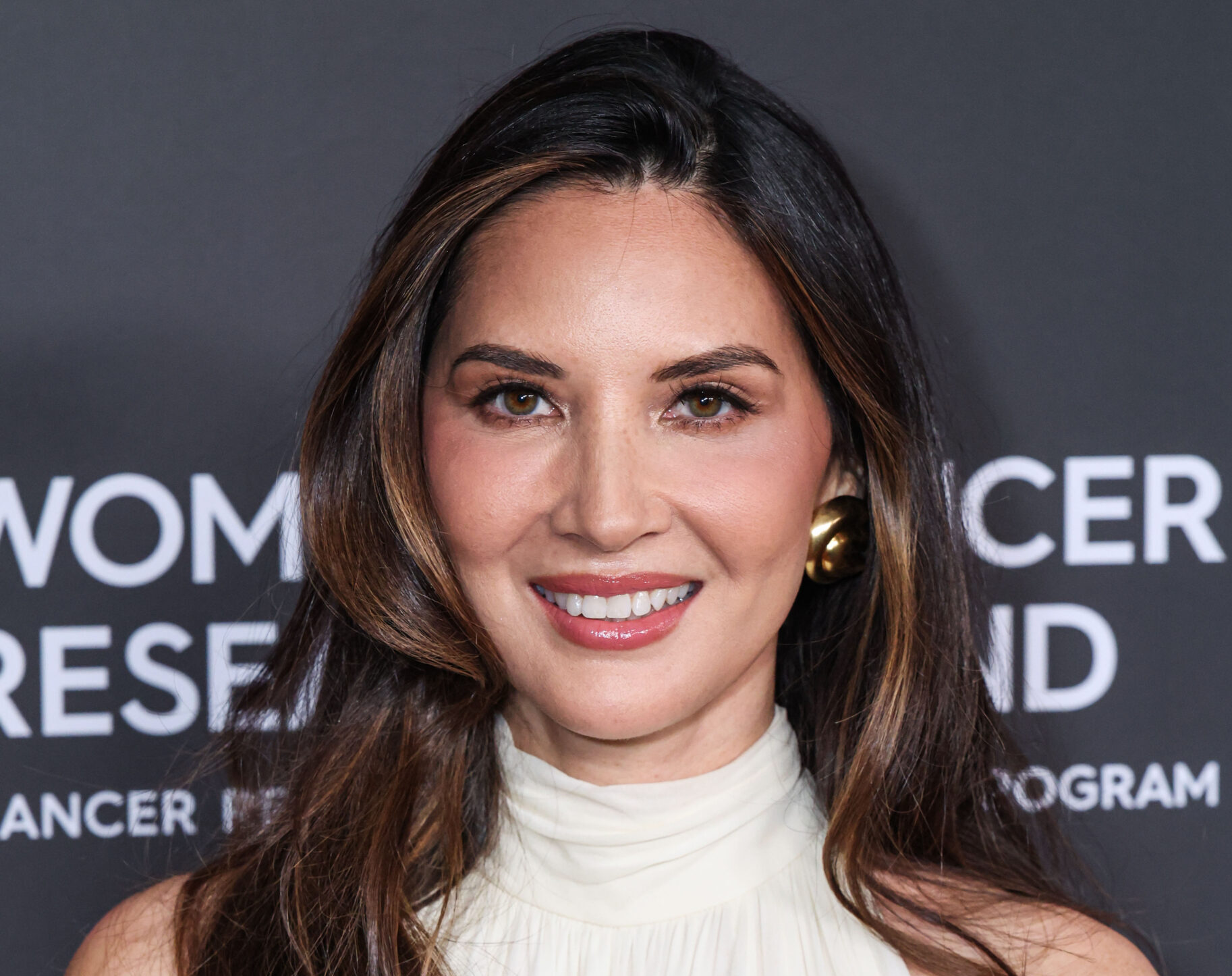
What Did Olivia Munn Say? Her Vital Advocacy for Breast Cancer Risk Assessment
Olivia Munn shared a life-saving message in early 2024, revealing her secret year-long battle with bilateral breast cancer. Her primary message urged women to calculate their Breast Cancer Risk Assessment Score, specifically the Tyrer-...
Olivia Munn shared a life-saving message in early 2024, revealing her secret year-long battle with bilateral breast cancer. Her primary message urged women to calculate their Breast Cancer Risk Assessment Score, specifically the Tyrer-Cuzick model, after her own mammogram and genetic tests initially returned clear results despite the presence of aggressive Luminal B cancer.
Contents
The Revelation That Changed the Conversation on Women’s Health
In March 2024, actress Olivia Munn took to social media to share a deeply personal and medical update that resonated across the globe. She revealed that in February 2023, despite testing negative for 90 different cancer genes and having a clear mammogram, she was diagnosed with breast cancer in both breasts. This announcement was not merely a personal update; it was a strategic public health intervention. Munn's statements focused on a specific medical tool: the Breast Cancer Risk Assessment Score.
What she said transformed the way many women view preventative care. She explained that her doctor, Dr. Thais Aliabadi, decided to calculate her lifetime risk of breast cancer using the Tyrer-Cuzick model. This assessment takes into account factors beyond just genetics and immediate imaging, such as age, family history, and reproductive history. Munn’s score came back at 37%, a high-risk category that prompted further investigation via MRI, ultrasound, and eventually a biopsy. This sequence of events, she stated, was the only reason her "aggressive, fast-moving" cancer was caught in time.
In the years following her announcement, leading into 2026, her advocacy has continued to highlight the limitations of standard screenings for certain individuals. She has been vocal about the fact that a clear mammogram does not always mean a clean bill of health, especially for women with dense breast tissue or high-risk profiles that are not captured by standard genetic testing.
Understanding Luminal B Breast Cancer: What Munn Shared
A significant part of Olivia Munn’s public statements involved the specific type of cancer she fought: Luminal B. This subtype is known for being more aggressive and having a poorer prognosis than Luminal A. By naming her specific diagnosis, Munn provided a platform for medical experts to explain why "one-size-fits-all" screening is often insufficient.
Luminal B tumors are characterized by:
- High levels of hormone receptors (estrogen and/or progesterone).
- Higher levels of Ki-67, a protein that indicates how fast cancer cells are dividing.
- A tendency to grow faster and respond differently to treatment compared to other hormone-receptor-positive cancers.
Munn spoke candidly about the "whirlwind" that followed her diagnosis. Within thirty days of her biopsy, she underwent a double mastectomy. She described the emotional and physical toll of waking up from a 10-hour surgery with significantly changed anatomy, but emphasized that she felt lucky they "caught it with enough time that I had options." Her transparency about the speed of the medical intervention served as a warning to others about the volatility of certain cancer types.
The Crucial Role of the Breast Cancer Risk Assessment Score (Tyrer-Cuzick)
The most actionable piece of advice Olivia Munn provided—and continues to advocate for—is the utilization of risk assessment models. Many women believe that if they do not carry the BRCA1 or BRCA2 gene mutations, their risk is low. Munn’s experience proved this false. She stated, "I hope by sharing this it will help others find comfort, inspiration and support on their own journey."
The Tyrer-Cuzick model (or IBIS tool) is a comprehensive algorithm used by clinicians to estimate the likelihood of a woman developing breast cancer over her lifetime. Unlike simpler models, it integrates:
- Personal health data: Age, BMI, and age of first menstruation.
- Reproductive history: Age of first childbirth and menopause status.
- Family history: Not just mothers and sisters, but also extended family and the age at which they were diagnosed.
- Benign breast disease: Previous biopsies or findings like atypical hyperplasia.
By highlighting this, Munn shifted the focus from reactive medicine (waiting for a lump) to proactive medicine (identifying who needs more frequent or more sensitive screening). In the wake of her comments, many healthcare providers reported an "Olivia Munn effect," where patients began asking for their lifetime risk scores during routine checkups.
The Evolution of Her Journey: Surgeries and Medically Induced Menopause
Beyond the initial mastectomy, Olivia Munn has been open about the subsequent steps in her treatment, which involved a total of five surgeries by mid-2024. One of the most significant developments she shared was her decision to undergo a full hysterectomy and oophorectomy (removal of the uterus, ovaries, and fallopian tubes).
She explained that because her cancer was hormone-sensitive (driven by estrogen), her medical team needed to suppress her body's estrogen production to prevent a recurrence. This led to "medically induced menopause." What Munn said about this transition was raw and educational; she spoke about the sudden onset of symptoms like "brain fog," hot flashes, and extreme fatigue.
"It’s a different kind of tired," she noted in interviews, describing the challenge of being a mother to a young toddler while navigating a body that was essentially being shut down hormonally. Her willingness to discuss the "un-glamorous" side of cancer recovery—the hair thinning, the exhaustion, and the emotional weight—has provided a roadmap for other survivors dealing with the side effects of endocrine therapy.
Family, Surrogacy, and Balancing Recovery
A central theme in Munn’s narrative is her family, particularly her partner John Mulaney and their children. In late 2024, the couple welcomed their second child, a daughter named Méi June, via surrogate. Munn’s public comments regarding this choice were deeply touching and clarified the medical necessity behind it.
She explained that due to her cancer treatment and the removal of her reproductive organs, carrying a second pregnancy was not a biological option. However, before her hysterectomy, she underwent egg retrieval. She shared the anxiety of that process, noting that at her age and with her diagnosis, they weren't sure if they would get any viable embryos. The success of that procedure and the subsequent birth of her daughter became a story of hope and the "magic" of modern medicine.
Munn frequently credits Mulaney for his support, stating that he was "the person who researched every medication and every side effect." This part of her story emphasizes the importance of a support system and how a health crisis impacts not just the patient, but the entire family unit.
Comparison of Breast Cancer Screening Tools
To better understand why Munn’s advocacy for risk assessment is so critical, it is helpful to compare the various tools available to women today.
| Tool/Method | What it Detects | Pros | Limitations |
|---|---|---|---|
| Mammogram | Physical changes/calcifications in breast tissue. | Standard of care; widely accessible. | Can miss tumors in dense breast tissue; "reactive" detection. |
| Genetic Testing | Inherited mutations (BRCA1, BRCA2, etc.). | Identifies high hereditary risk early. | Does not account for non-inherited (sporadic) cancers. |
| Breast MRI | Detailed images of soft tissue. | High sensitivity; excellent for dense tissue. | Higher cost; can lead to false positives and unnecessary biopsies. |
| Tyrer-Cuzick Score | Calculated percentage of lifetime risk. | Considers family history, lifestyle, and hormones. | Requires accurate data; only a prediction, not a diagnosis. |
The "Olivia Munn Effect" and Public Health Impact
As we look at the landscape in 2026, the impact of Munn's transparency is measurable. Public health researchers have noted a significant uptick in "preventative curiosity" among women in their 30s and 40s. By speaking out, Munn helped dismantle the myth that breast cancer is exclusively an "older woman's disease" or a "genetic disease."
She effectively localized the problem, making it about a specific number—the risk score—rather than a vague fear. Her advocacy has pushed for more insurance companies to cover supplemental screenings (like MRIs) for women who fall into the "intermediate to high risk" category based on their Tyrer-Cuzick scores, even if their mammograms are clear.
Common Misconceptions Addressed by Munn
Through her various interviews and social media posts, Munn has systematically addressed several misconceptions:
- "My mammogram was clear, so I'm fine." Munn proved that mammograms have limits, especially with aggressive subtypes like Luminal B.
- "No one in my family has it, so I'm not at risk." She highlighted that many cancers are sporadic or influenced by factors other than direct lineage.
- "Genetic testing covers everything." She tested negative for 90 genes but still had bilateral cancer.
- "I'm too young for this." Diagnosed in her early 40s, she joined a growing number of women facing early-onset breast cancer.
FAQs: Understanding the Details of Olivia Munn’s Statements
What is the specific risk score Olivia Munn talked about?
Olivia Munn specifically mentioned the Breast Cancer Risk Assessment Score, often calculated using the Tyrer-Cuzick model. This tool evaluates a woman’s lifetime risk of developing breast cancer by analyzing a variety of factors, including BMI, age of first period, age at first birth, menopause status, and extensive family history. A score above 20% is typically considered high risk and may warrant more intensive screening, such as annual MRIs.
What type of breast cancer did Olivia Munn have?
She was diagnosed with Luminal B breast cancer in both breasts. This is a molecular subtype of breast cancer that is hormone-receptor-positive (ER+ and/or PR+) but is more aggressive and faster-growing than the more common Luminal A subtype. It often requires more intensive treatment because the cells divide more rapidly.
Why did Olivia Munn have a hysterectomy?
Munn underwent a total hysterectomy and oophorectomy (removal of the uterus and ovaries) because her cancer was hormone-driven. Estrogen can act as "fuel" for Luminal B cancer cells. By removing the ovaries, the body's primary source of estrogen is eliminated, significantly reducing the risk of the cancer returning. This procedure immediately put her into medically induced menopause.
Is Olivia Munn cancer-free now?
As of her most recent public updates leading into 2026, Olivia Munn has focused on her recovery and maintenance therapy. While "cancer-free" is a term patients often use after successful surgery and clear margins, she remains under close medical surveillance and continues hormone suppression therapy to prevent recurrence. Her proactive approach and early detection significantly improved her long-term outlook.
Practical Next Actions for Women
Following the advice Olivia Munn has shared, the most important step any woman can take is to know her numbers. You do not need to wait for your next annual exam to start this process.
- Request your Tyrer-Cuzick Score: Ask your OB-GYN or primary care physician to calculate your lifetime risk score.
- Verify your breast density: Check your previous mammogram reports. If you have "dense" or "extremely dense" breast tissue, standard mammograms are less effective.
- Audit your family history: Gather information not just about breast cancer, but also ovarian, prostate, and pancreatic cancers in your family, as these can sometimes be linked to the same genetic risks.
- Discuss supplemental screening: If your risk score is high (above 20%), talk to your doctor about incorporating breast MRIs or ultrasounds into your preventative care routine.
Olivia Munn’s journey from a clear mammogram to a double mastectomy within months is a powerful reminder that being "proactive" requires more than just showing up for standard appointments—it requires being an informed advocate for your own health data.
Image Gallery