Understanding VLCC Spot Rates: Dynamics, Drivers, and Market Mechanics
Very Large Crude Carrier (VLCC) spot rates represent the current market price for transporting crude oil on massive tankers, typically between 250,000 and 320,000 deadweight tons (DWT). These rates fluctuate daily based on global oil d...
Very Large Crude Carrier (VLCC) spot rates represent the current market price for transporting crude oil on massive tankers, typically between 250,000 and 320,000 deadweight tons (DWT). These rates fluctuate daily based on global oil demand, tanker supply, geopolitical stability, and vessel availability, serving as a critical barometer for the health of the international energy shipping industry.
Contents
The Mechanics of the VLCC Spot Market
Unlike time charters, where a vessel is leased for a fixed duration (often years), the spot market operates on a voyage-by-voyage basis. When a charterer—typically a major oil company or a national oil firm—needs to move a specific cargo of crude, they enter the spot market to secure a vessel for a single "fixture."
The price paid for this service is quoted in Worldscale (WS) points or as a lump-sum dollar figure. Worldscale is a standardized system that allows participants to compare the cost of shipping along different routes by accounting for varying distances and port costs. A "flat rate" is established for every possible voyage; the quoted percentage (e.g., WS 60) represents the actual freight rate relative to that standardized flat rate.
For participants in this market, the spot rate is the realized revenue for the shipowner minus the voyage expenses, such as bunker fuel costs, port fees, and canal tolls (e.g., Suez Canal transit fees). This residual amount, known as Time Charter Equivalent (TCE), is the primary metric used by investors and operators to determine profitability.
Key Factors Influencing Rate Volatility
The volatility of VLCC spot rates is legendary in the shipping world. Because the supply of VLCCs is relatively inelastic in the short term—it takes years to build a new ship—small shifts in demand can cause dramatic price swings.
1. Global Oil Demand and Trade Flows
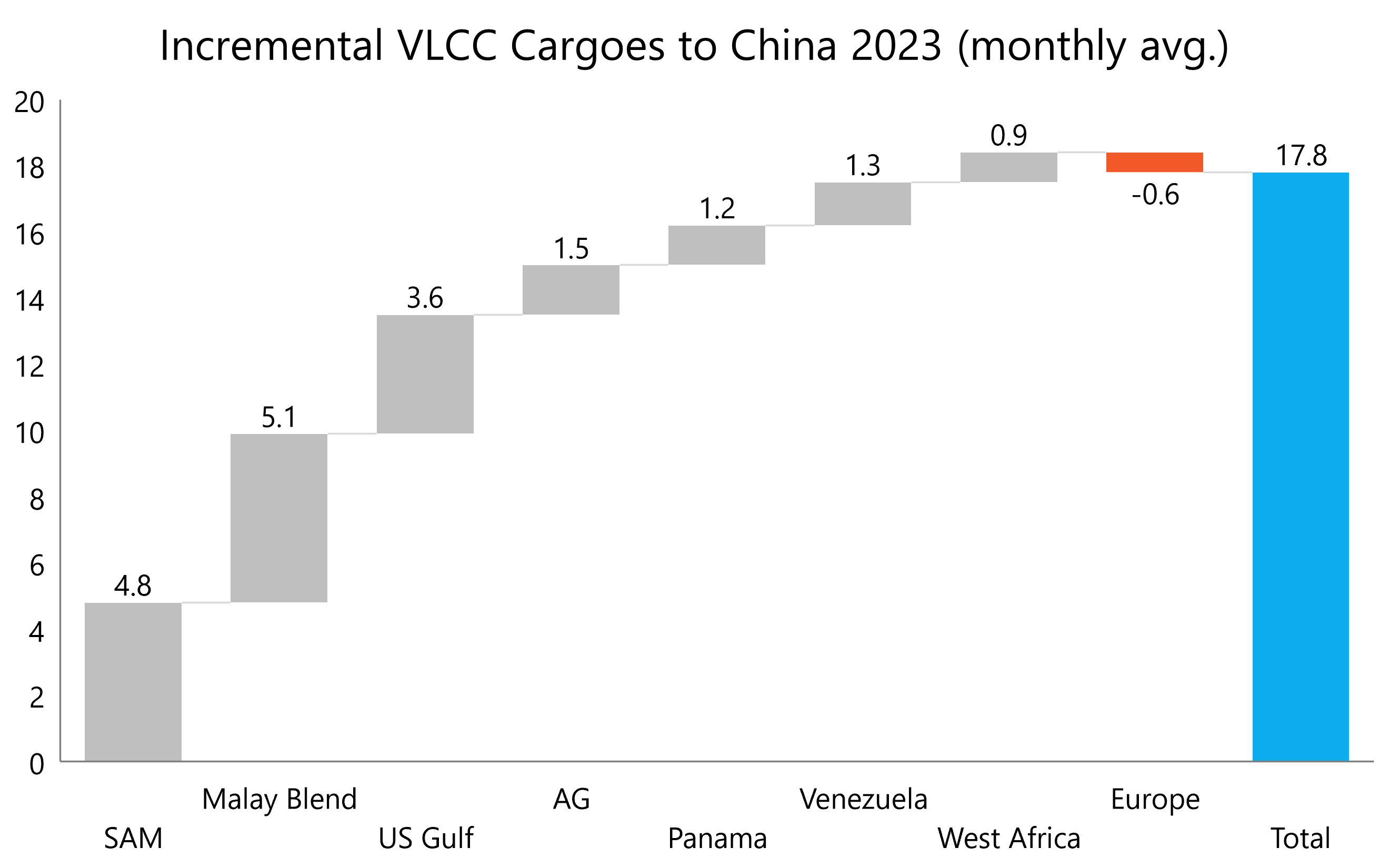
The primary driver of VLCC demand is the consumption patterns of major importers, specifically China, India, and the European Union. When refineries increase throughput to meet seasonal demand (such as heating oil in winter), the demand for crude tankers rises. Changes in production levels by OPEC+ also dictate the length and frequency of voyages. For example, if Saudi Arabia reduces production, tanker demand may shift toward longer-haul routes from the Atlantic Basin to Asia, increasing the ton-mile demand and supporting rates.
2. Vessel Supply and Fleet Utilization
The total available capacity of the global VLCC fleet is a constant limiting factor. Scrapping cycles—where older, less efficient ships are retired—and the delivery of new-build vessels influence the supply-side equilibrium. Additionally, regional congestion at major loading or discharge ports effectively removes vessels from the market, tightening supply and pushing rates upward.
3. Geopolitical Disruptions
International conflicts, sanctions, and maritime security concerns are among the most unpredictable factors. Disruptions in the Strait of Hormuz or the Red Sea force tankers to take longer routes, effectively absorbing vessel supply and causing spot rates to spike. Conversely, the lifting of sanctions or the reopening of blocked shipping lanes can lead to a sudden influx of available tonnage, causing rates to soften.
Comparative Market Structures: Spot vs. Time Charter
Navigating the shipping market requires understanding the trade-offs between spot market exposure and the stability of long-term contracts.
| Feature | Spot Market | Time Charter |
|---|---|---|
| Duration | Single Voyage | 1 to 5+ Years |
| Pricing | Highly Volatile (Daily) | Fixed or Indexed (Stable) |
| Risk Profile | High: Owner bears fuel/port risk | Low: Charterer bears fuel/port risk |
| Strategic Use | Opportunistic/Cyclical profit | Operational hedge/Fleet planning |
| Counterparty | Various Brokers/Charterers | Major Oil Majors/Traders |
Operational Considerations for Charterers and Owners
For an owner, maximizing revenue in the spot market requires precise "positioning." A vessel must be in the right geographic location at the right time. If a tanker completes a discharge in the U.S. Gulf, it must decide whether to wait for a high-paying export cargo or "ballast" (sail empty) to the Middle East, which incurs significant fuel costs and transit time.
Charterers, conversely, prioritize vessel vetting and reliability. Before fixing a ship, a charterer conducts a rigorous vetting process to ensure the vessel meets strict safety and environmental standards. Even if a spot rate is attractive, a vessel that fails a vetting inspection cannot be utilized, highlighting the importance of high-quality maintenance in the VLCC segment.
The Role of Bunker Fuel and Regulation
Bunker fuel is the single largest operating expense for a VLCC. Since the introduction of the International Maritime Organization (IMO) 2020 regulations, the industry has transitioned toward low-sulfur fuel oil (VLSFO) or transitioned ships to scrubbers (exhaust gas cleaning systems).
Spot rates are inherently tied to fuel prices. If fuel prices rise, shipowners must secure higher freight rates to maintain a break-even TCE. Modern tankers equipped with energy-saving devices or dual-fuel engines often command a premium in the spot market because they offer better fuel efficiency, which is highly attractive to charterers during periods of high bunker prices.
Frequently Asked Questions
How are VLCC spot rates calculated for different routes? Rates are calculated using the Worldscale index. The index provides a flat rate for every specific port-to-port combination. The market negotiates a percentage of this flat rate based on supply and demand, which is then adjusted for the actual costs of bunker fuel and port charges for that specific voyage.
What is the difference between a VLCC and a Suezmax tanker? A VLCC is significantly larger, typically carrying between 250,000 and 320,000 DWT, whereas a Suezmax carries roughly 120,000 to 160,000 DWT. Because of their size, VLCCs are limited to specific deep-water ports, whereas Suezmax vessels offer greater flexibility at the cost of less total cargo capacity per trip.
Why do spot rates sometimes fall below the cost of operations? Owners may accept a "loss-making" voyage to keep their vessel moving toward a region with better market prospects or to maintain a relationship with a major charterer. In rare cases, the cost of idling a vessel in port outweighs the loss incurred during a voyage.
How do analysts track current VLCC spot rates? Industry participants use specialized platforms such as the Baltic Exchange, which provides daily assessments of freight market indices. These reports aggregate data from shipbrokers to establish a benchmark rate for the most common global shipping routes.
What impact do interest rates have on the VLCC market? Interest rates influence the cost of capital for financing new tanker acquisitions. High-interest environments can slow down the order book for new ships, which may eventually support higher spot rates by limiting the growth of total fleet capacity.
Next Steps for Market Analysis
If you are evaluating market entry or cargo logistics, begin by monitoring the Baltic Dirty Tanker Index (BDTI). This provides a transparent, industry-standard snapshot of the crude oil shipping market. For operational planning, ensure you have access to a reliable ship-tracking service to monitor current ballast movements, as these indicate where the next supply of vessels will arrive, directly impacting local spot rate competitiveness.
Image Gallery